Food product manufacturers · Digital marketing
Plan the year around the festivals and the districts you supply.
Digital marketing for a food manufacturer is one plan across search, listings, social and trade outreach, tied to the seasons your category sells in. GullySales sets the calendar, names who owns each piece, and reports enquiries and orders against it.
Scope, fee, reporting and term are agreed in writing after we have read your brief and spoken to you.
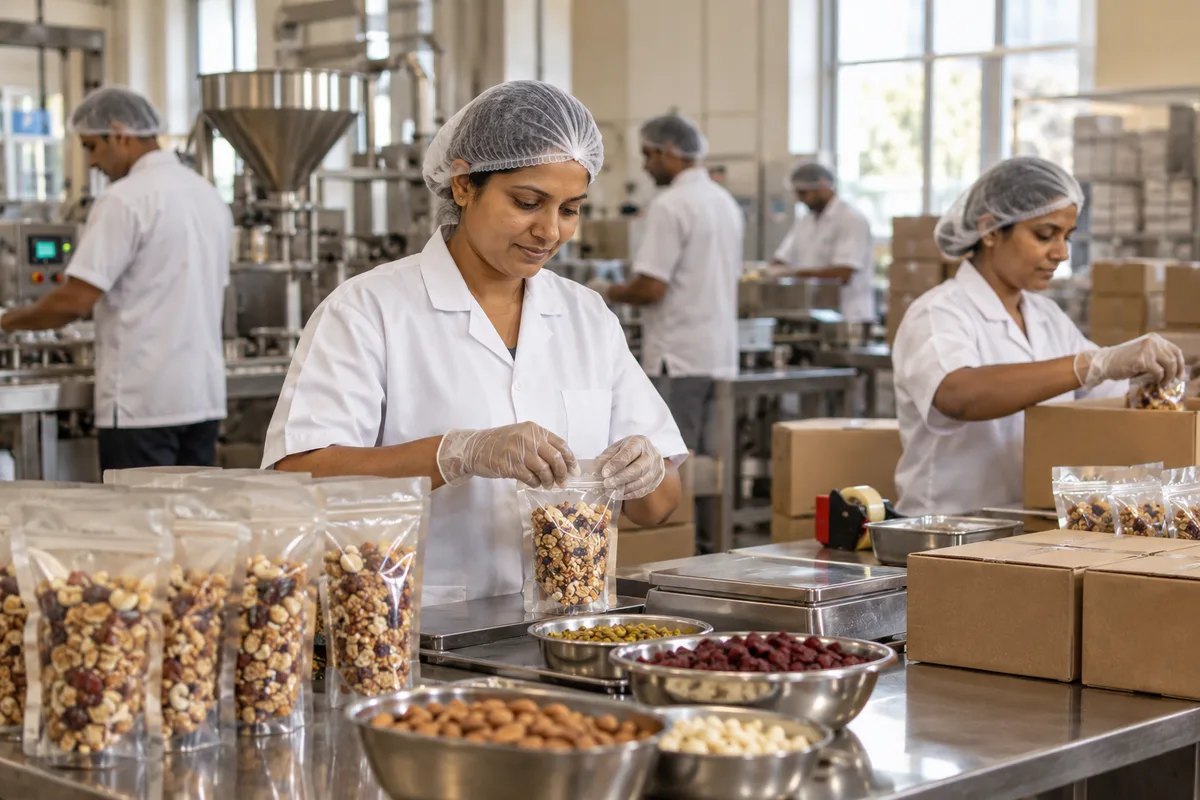
What digital marketing means
Digital marketing is the combined work of search, social media, advertising and website channels running together rather than as separate projects with separate people. GullySales runs these as one connected system so a change in one channel, such as a new offer, is reflected everywhere at once.
Also for food product manufacturers
- Buyer persona for food product manufacturers
- SEO for food product manufacturers
- PPC ads for food product manufacturers
- Lead generation for food product manufacturers
- Local SEO for food product manufacturers
- Social media marketing for food product manufacturers
- Content marketing for food product manufacturers
- Email marketing for food product manufacturers
Sales and marketing for food product manufacturers, the overview.
Last updated 5 Oct 2026. Rules for this trade differ by state and professional body, and they change. We describe restrictions in general terms, so check the current position with your own council or adviser before you publish anything.
For food product manufacturers
Where it usually goes wrong, and what we would do.
“The calendar is your brief”
Diwali gifting, Pongal, Ramzan, the summer pickle months and school reopening decide when anything you publish is worth reading.
“Two audiences, one budget”
Shoppers and distributors want different things from you, and a single Instagram page cannot do both jobs well.
“Marketing ahead of stock is a complaint”
Demand raised in a district your distributor has not covered turns into a shopper who cannot find the pack.
What we do
What we deliver for food product manufacturers.
Every deliverable, what it covers for you, and the result it is there to produce. Nothing here is an extra.
A year planned around your category's seasons
Festive gifting, the summer pickle months, school reopening and the financial year, with what goes out before each one written in.
Result: Nothing important is remembered a fortnight late.
Consumer and trade work kept separate
One plan aimed at shoppers where the pack is stocked, another aimed at distributors, chains and bulk buyers, with different material for each.
Result: Neither audience reads something written for the other.
Publishing matched to where stock sits
A district list checked before any campaign runs, so demand is raised only where a shopper can find the pack on a shelf.
Result: You stop creating enquiries your channel cannot fill.
A named owner for each channel
The listings, the social calendar and the trade outreach each given to somebody, with a fixed slot and a short list of what is due.
Result: Nothing stops when the plant has a busy week.
One report covering trade and consumer
Secondary sales movement, online orders and trade enquiries in a single report, against the baseline recorded before work began.
Result: You can tell which half of the spend is working.
How the result is measured
- Enquiries across channels
- Cost per enquiry overall
- Channel mix by contribution
Recorded as a baseline before work starts, so every later report has an honest comparison.
Where to start for food brands
Fix the distributor pitch and the pack information before you chase shoppers.
- A pack and product sheet
- Write the ingredients, the shelf life, the FSSAI licence number, the weight and the barcode for each pack. Check them against the label before you send anything to a buyer.
- A distributor pitch
- Prepare a one-page pitch with the margin, the case size, the credit terms and the area you cover. Record each distributor you sent it to and the reply.
- Secondary sales record
- Ask each distributor which shops took your stock this season. Write the shop names and the reorders, and compare them with what left the godown.
- Retailer kit
- Make a small counter display and a rate card for the kirana owner. Record which shops used it, and ask them what sold.
- Marketplace and quick commerce listings
- Check the title, images, weight and ingredients on each listing, and match them to the pack. Note the orders and the returns by platform.
- What to leave until later
- A consumer brand campaign in a new state and a heavy discount scheme. Wait until the distributor there has stock and a reorder plan.
Who it is for
This is written for these food product manufacturers.
- Spice, masala and blended powder makers
- Pickle, chutney and preserve manufacturers
- Namkeen, snack and savoury makers
- Sweets and traditional confectionery producers
- Ready-to-cook and instant mix brands
- Millet, health food and organic brands
- Flour mills and grain processors
- Beverage, juice and syrup makers
- Private label and contract food manufacturers
- Food exporters and merchant exporters
Not for
It is not the right fit if.
- Your distributors have not placed the pack in the districts you would promote, so posts and ads would send shoppers to empty shelves.
- You have no one to run a channel for a year, so a plan would stop after its first season.
- Your range changes every few months, so a year-long calendar would describe packs you no longer make.
How it works
How the digital marketing work runs
The work itself, in order. How an engagement starts, from your brief to a written scope, is set out on our method page.
- 1
Agree the one aim
We settle what the campaign must achieve, such as enquiries for a launch or footfall for an event, and the date it must be live.
- 2
Check what is ready
We list the channels you already run, who runs them, and what each can produce in the time available. Anything that cannot be done properly is left out.
- 3
Write the idea and the message sheet
We draft the one-sentence idea, test it against each planned format, and fix the wording that all channels will copy.
- 4
Brief every channel from the same sheet
Your agency, freelancer or in-house person receives the message sheet and calendar. Their work is checked against the sheet before it goes out.
- 5
Run on the shared calendar
Channels go live together. If the offer changes, every channel is changed on the same day from the same sheet.
- 6
Measure as one campaign
Enquiries and orders are read against the baseline. The reporting schedule is agreed in writing with the scope.
Where this fits
Three pieces of sales work, in this order.
This work sits inside sales process design, at stage 0, foundation. The audit comes before it, and sales management keeps it running.
Step 1
Sales audit
Find where deals are being lost and what to fix first.
Start here if you cannot say where orders are lost.
Step 2 · you are here
Sales process design
One written way to sell, from first enquiry to repeat order.
Start here if every salesperson sells differently.
Step 3
Sales management
A target, a review routine and someone who owns the number.
Start here if the team has targets and no routine.
FAQ
Questions owners ask before they call.
Not here? More answers, or ask on WhatsApp.
Should a small manufacturer market to shoppers at all?
What should we plan first?
Can we use words like pure, natural or healthy on the pack and online?
How do I know a social post sold any packets?
How much does it cost?
How long is the contract?
How soon will we see results?
Who will actually do the work?
What do you need from us?
What if we are not happy with the work?
From the blog
Further reading for food product manufacturers.
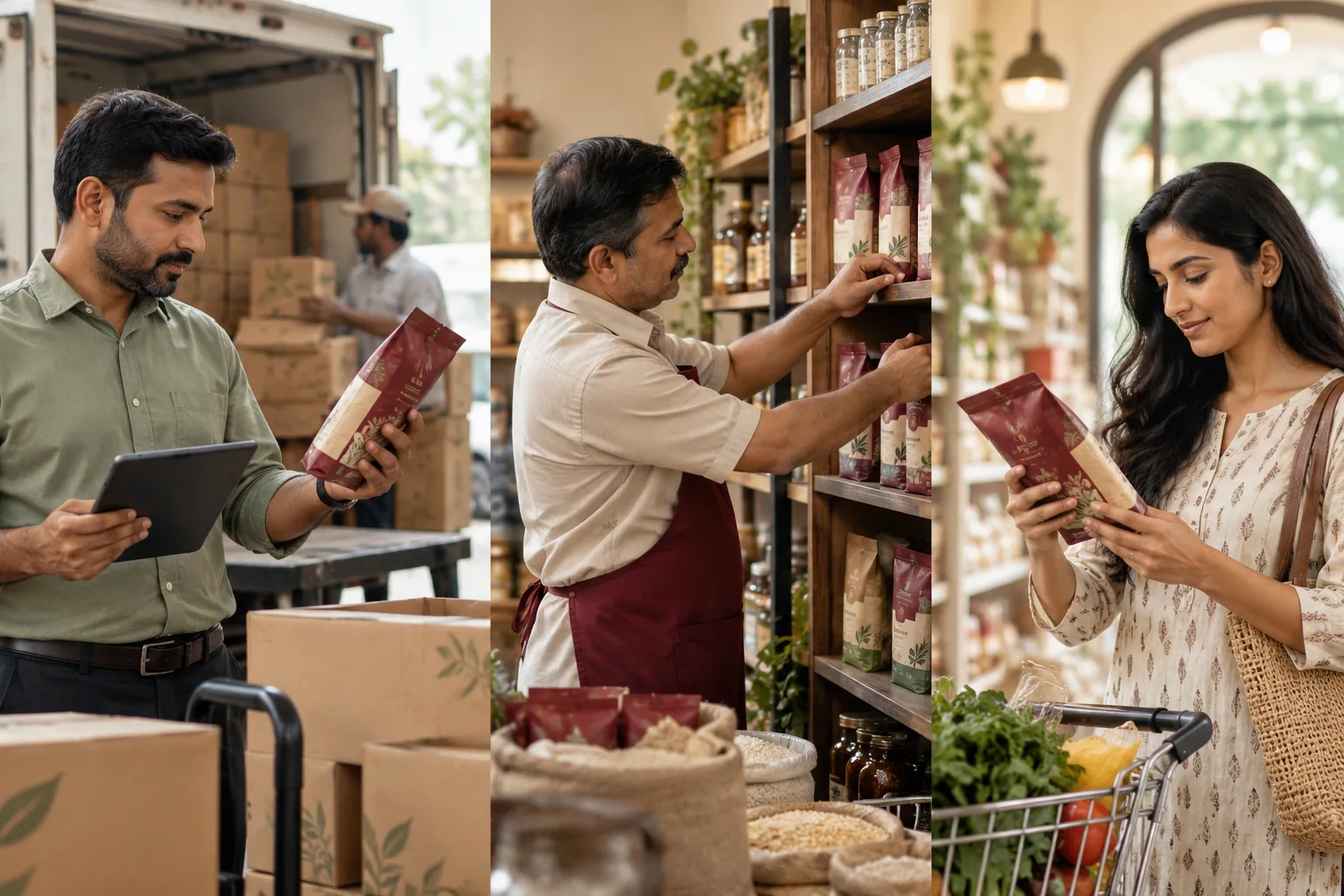 5 min read · 6 Oct 2026How food brands win the trade and the shopperA packed food or household brand is chosen twice: by the distributor, retailer or kitchen that stocks it, then by the shopper who picks it up. Here is what each buyer checks and where brands lose both.
 6 min read · 21 Sept 2026TV advertising vs OTT advertising: what are you actually buying?Television sells slots against ratings and prices the wastage in. OTT sells impressions to chosen people and charges for the choosing. Same film, two shops.
 8 min read · 21 Sept 2026How to advertise to distributorsA distributor is deciding whether to put working capital into your stock. Advertising that hides the investment, the margin and the territory brings you hundreds of enquiries and no distributor.
More for food product manufacturers
Everything else we would do for you.
Closest to this: strategy and research
Also for food product manufacturers
Or start from the overview: sales and marketing for food product manufacturers.
Your next practical step
Tell us what you are trying to grow, and we will read it before we call.
Eight short steps, mostly taps. Skip anything you would rather answer on the call.