Food product manufacturers · Social media
Show the food being made, not a festival greeting.
Social media for a food manufacturer is where a shopper decides an unknown brand is worth trying, and where retailers see the brand is alive. GullySales runs the calendar, films the making and the sampling, and keeps posting through the season.
Scope, fee, reporting and term are agreed in writing after we have read your brief and spoken to you.
What social media means
Social media is the ongoing posting your business does on platforms such as Instagram, Facebook and LinkedIn to stay visible to customers and prospects between purchases. GullySales plans a posting calendar, writes captions and designs the images so the page looks active and answers what a visitor would ask.
Also for food product manufacturers
- Content marketing for food product manufacturers
- SEO for food product manufacturers
- PPC ads for food product manufacturers
- Lead generation for food product manufacturers
- Digital marketing for food product manufacturers
- Local SEO for food product manufacturers
- Email marketing for food product manufacturers
- Buyer persona for food product manufacturers
Sales and marketing for food product manufacturers, the overview.
Last updated 5 Oct 2026. Rules for this trade differ by state and professional body, and they change. We describe restrictions in general terms, so check the current position with your own council or adviser before you publish anything.
For food product manufacturers
Where it usually goes wrong, and what we would do.
“The making is the content”
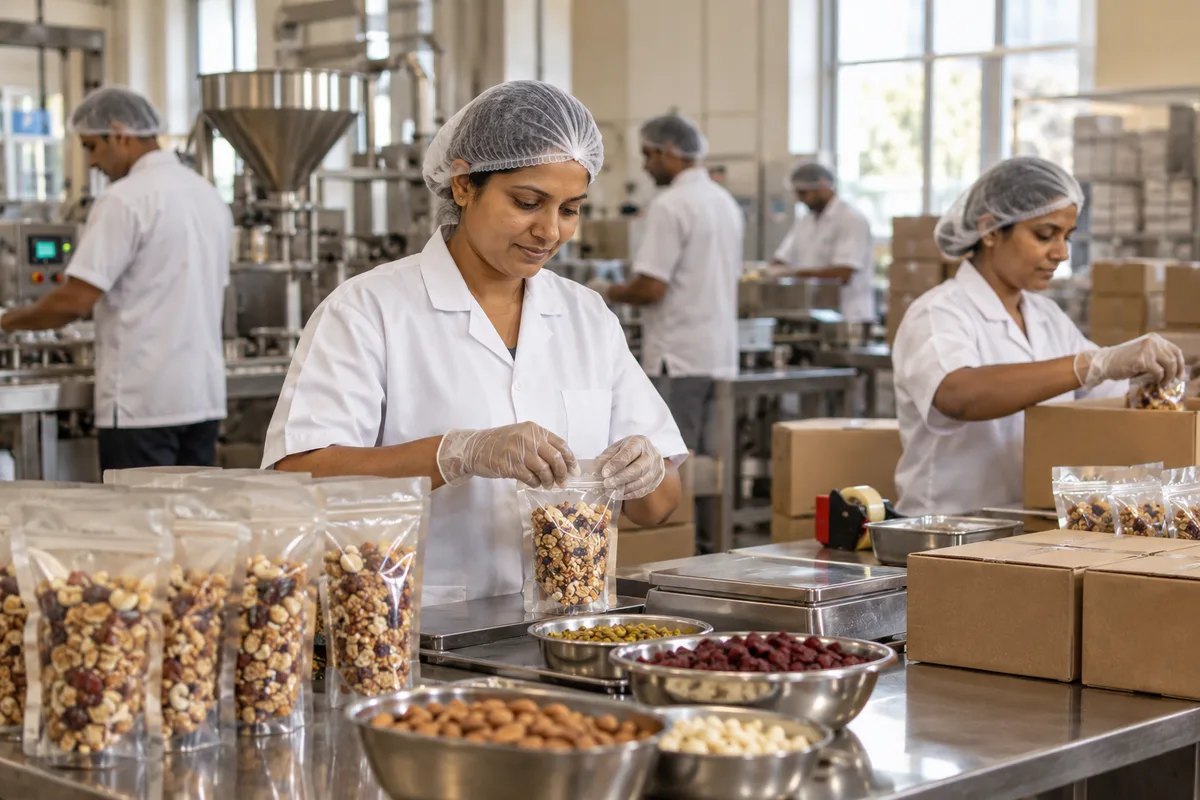
Masala being roasted and pickle being packed persuades more than any designed post about quality.
“Local language earns the home district”
A reel in Kannada or Marathi reaches the people who actually buy the pack, and the polished English one does not.
“Retailers and distributors are watching too”
A shopkeeper who sees demand being built gives the brand better shelf space when your salesman next calls.
What we do
What we deliver for food product manufacturers.
Every deliverable, what it covers for you, and the result it is there to produce. Nothing here is an extra.
A shoot day at the plant each quarter
Roasting, grinding, packing and the quality checks filmed in one visit, then cut into enough material for three months.
Result: The calendar stops depending on stock photographs.
Posts in the language your buyers speak
Captions and voiceovers in the language of the districts where you actually sell, with English kept for trade and marketplace audiences.
Result: The people who buy the pack understand the post.
Sampling and market visits filmed
The stall at an exhibition, in-store sampling and the retailer who has stocked you for a decade, captured while it is happening.
Result: Proof comes from the market, not a studio.
A seasonal calendar of recipes and festive packs
Festive packs, the summer pickle months and everyday cooking planned to the weeks people are actually cooking them.
Result: Posts land while the shopper is deciding.
WhatsApp used for the trade as well
A broadcast list for retailers and distributors carrying new packs, schemes and delivery dates, kept apart from consumer messaging.
Result: Your channel hears about a new pack first.
Messages and store visits counted
Enquiries and marketplace visits that started on social recorded by platform, against the baseline recorded before work starts.
Result: You learn which platform sells and which entertains.
How the result is measured
- Posts published
- Engagement rate
- Enquiries from social profiles
Recorded as a baseline before work starts, so every later report has an honest comparison.
Platforms for food buyers
Where shoppers and retailers look, and what to post for each.
- Instagram reels of the making
- Film chillies being roasted, dough being rolled or a batch being packed, with the product name shown. The action wanted is looking for the pack at the nearest shop, so show the pack clearly.
- WhatsApp broadcast for retailers and distributors
- Send a new pack, a scheme end date and the next supply route to those who joined. The action wanted is a reply with a quantity. Keep one scheme to one message.
- YouTube recipes in the regional language
- A short recipe using your product, in the language of the district, shown before a festival. The action wanted is looking for your pack, so put the retailer or location in the description.
- Facebook for district buyers
- Post pack photos, a retailer where it is sold and a short recipe in the local language. Older buyers often use Facebook. The action wanted is a visit to a named shop, not an online order.
- What not to post for a food maker
- Do not post health or cure claims, words like preservative-free that the label does not carry, or a missing licence number. Do not name a rival. Check the current food labelling and advertising rules.
Who it is for
This is written for these food product manufacturers.
- Spice, masala and blended powder makers
- Pickle, chutney and preserve manufacturers
- Namkeen, snack and savoury makers
- Sweets and traditional confectionery producers
- Ready-to-cook and instant mix brands
- Millet, health food and organic brands
- Flour mills and grain processors
- Beverage, juice and syrup makers
- Private label and contract food manufacturers
- Food exporters and merchant exporters
Not for
It is not the right fit if.
- The kitchen or plant is not ready for a camera, so a shoot would show conditions a buyer should not see.
- Nobody can reply to a message about a damaged pack, so a public complaint would sit unanswered.
- Your label claims are not settled with your quality head, so every caption risks a statement the pack cannot support.
How it works
How the social media work runs
The work itself, in order. How an engagement starts, from your brief to a written scope, is set out on our method page.
- 1
Confirm audience, platforms and access
We note which platforms your buyers use and check that the pages sit under your own business accounts, with you as owner and us as added roles.
- 2
Review the current presence
We read the existing pages, the posts that drew replies and the gaps in posting.
- 3
Build the calendar
Themes, formats and dates are set out for your approval, with space for offers and news.
- 4
Create, approve and publish
Posts are made, approved by you and scheduled. Replies to the public are handled in your voice.
- 5
Record enquiries and adjust
Enquiries are logged against the post or platform where they began, and the mix changes to follow what brings them.
Where this fits
Three pieces of sales work, in this order.
This work sits inside sales process design, at stage 0, foundation. The audit comes before it, and sales management keeps it running.
Step 1
Sales audit
Find where deals are being lost and what to fix first.
Start here if you cannot say where orders are lost.
Step 2 · you are here
Sales process design
One written way to sell, from first enquiry to repeat order.
Start here if every salesperson sells differently.
Step 3
Sales management
A target, a review routine and someone who owns the number.
Start here if the team has targets and no routine.
FAQ
Questions owners ask before they call.
Not here? More answers, or ask on WhatsApp.
Do reels sell packs?
Which platform matters for a food brand?
How do we send samples to food creators and ask for disclosure?
Can we post nutrition or health benefits of our product?
How much does it cost?
How long is the contract?
How soon will we see results?
Who will actually do the work?
What do you need from us?
What if we are not happy with the work?
From the blog
Further reading for food product manufacturers.
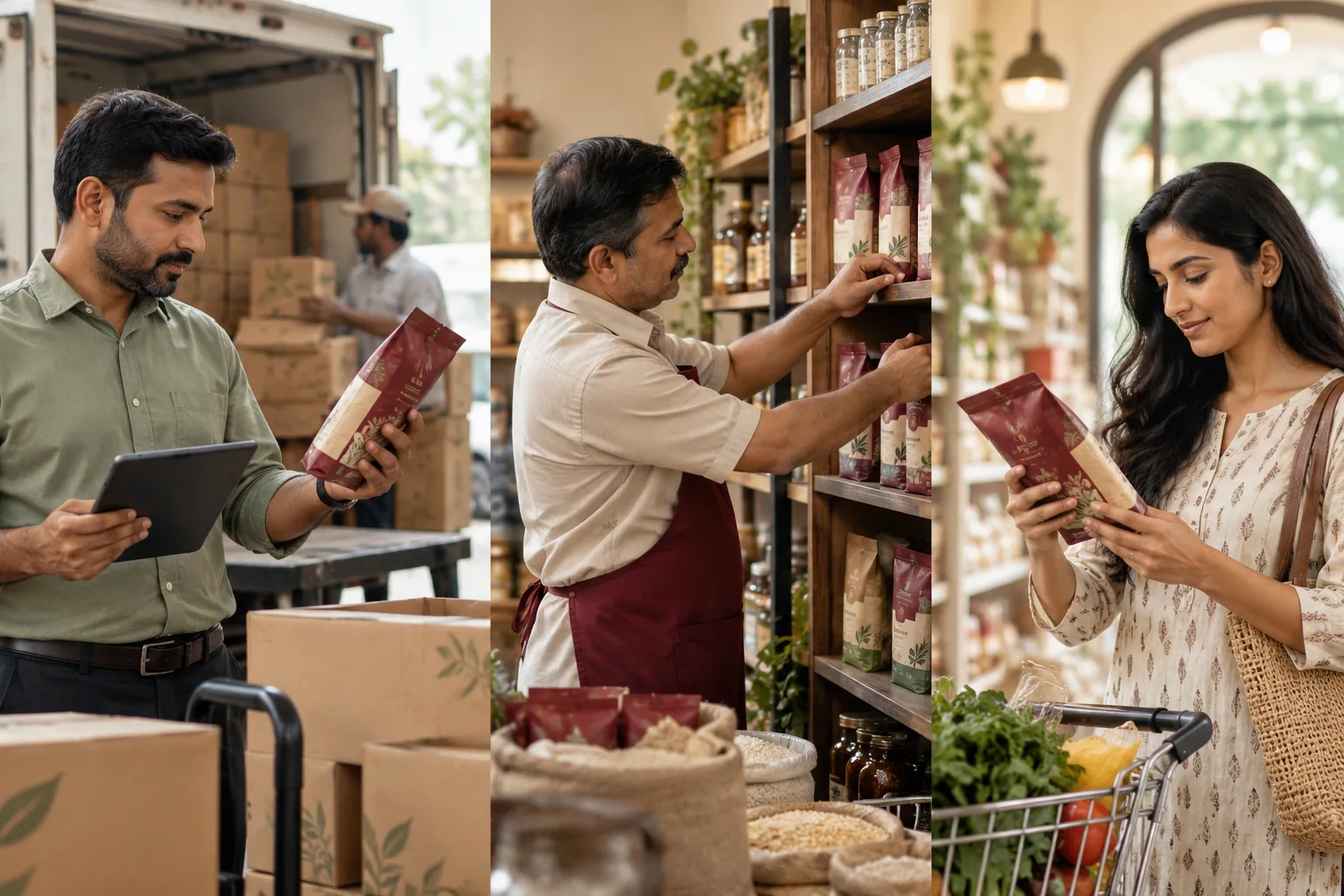 5 min read · 6 Oct 2026How food brands win the trade and the shopperA packed food or household brand is chosen twice: by the distributor, retailer or kitchen that stocks it, then by the shopper who picks it up. Here is what each buyer checks and where brands lose both.
 6 min read · 21 Sept 2026TV advertising vs OTT advertising: what are you actually buying?Television sells slots against ratings and prices the wastage in. OTT sells impressions to chosen people and charges for the choosing. Same film, two shops.
 8 min read · 21 Sept 2026How to advertise to distributorsA distributor is deciding whether to put working capital into your stock. Advertising that hides the investment, the margin and the territory brings you hundreds of enquiries and no distributor.
More for food product manufacturers
Everything else we would do for you.
Closest to this: content and social
Also for food product manufacturers
Or start from the overview: sales and marketing for food product manufacturers.
Your next practical step
Tell us what you are trying to grow, and we will read it before we call.
Eight short steps, mostly taps. Skip anything you would rather answer on the call.