Garment manufacturers · Pay per click advertising
Ads bring the three-hundred-piece order, and you have to decide first.
Paid advertising for a garment unit buys search clicks from founders hunting a private label manufacturer, and LinkedIn attention from merchandisers. GullySales sets the campaigns against the order sizes you actually want, screens enquiries at the form, and reports on samples and orders.
Scope, fee, reporting and term are agreed in writing after we have read your brief and spoken to you.
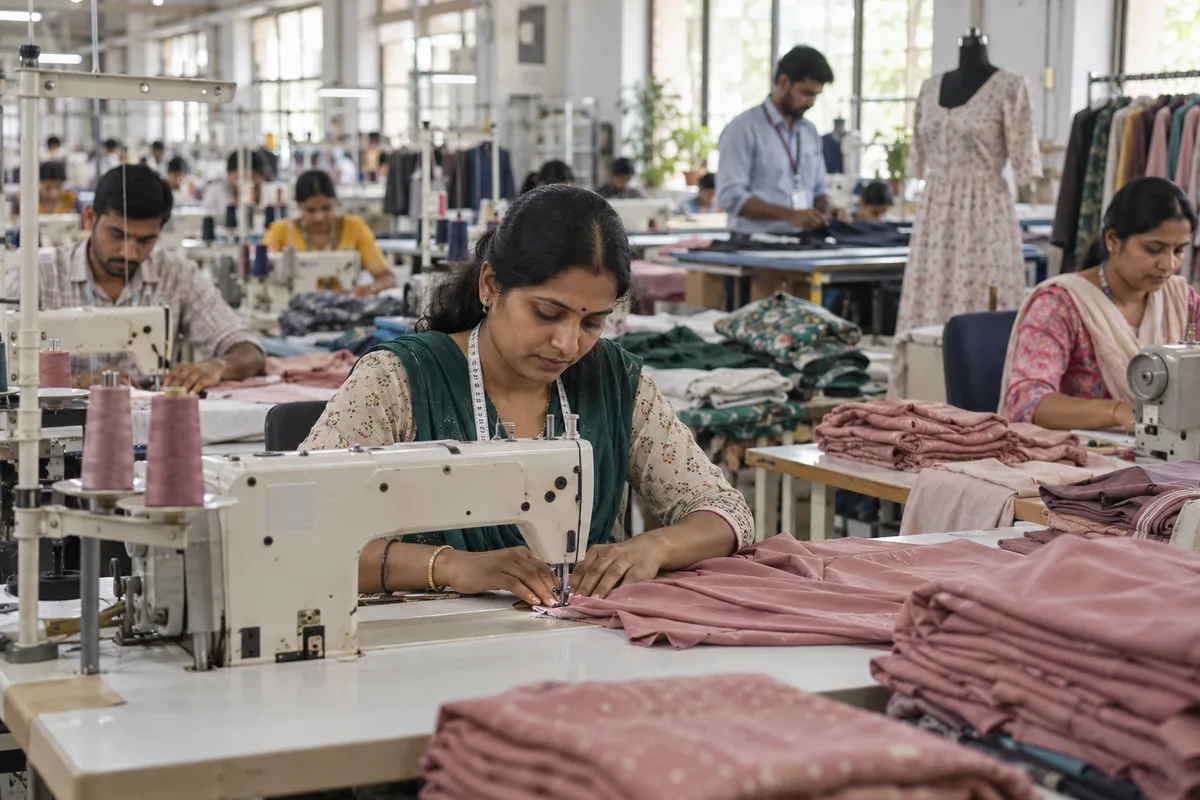
What pay per click advertising means
Pay per click advertising (PPC) is paying a fee each time someone clicks your advert on Google or another platform. It puts you at the top of a search page immediately, instead of waiting for ranking to build. GullySales sets the targeting, writes the ad text and checks spend against enquiries received.
Also for garment manufacturers
- SEO for garment manufacturers
- Lead generation for garment manufacturers
- Digital marketing for garment manufacturers
- Reputation management for garment manufacturers
- Local SEO for garment manufacturers
- Branding for garment manufacturers
- Social media marketing for garment manufacturers
- Content marketing for garment manufacturers
Sales and marketing for garment manufacturers, the overview.
Last updated 5 Oct 2026.
For garment manufacturers
Where it usually goes wrong, and what we would do.
“Search brings small orders, and that is the trade-off”
The people typing manufacturer into Google are mostly starting out with a few hundred pieces. Decide whether a trial order is worth a slot on the line before spending anything.
“Negative keywords save a garment unit more than bidding does”
Wholesale, buy t-shirts, jobs, franchise and fabric supplier all cost money and bring nobody. That list matters more here than the bid.
“LinkedIn reaches the merchandiser, never the founder”
Sourcing managers sit there and do not search for factories. Reaching them takes a company page and outreach, not a search campaign.
What we do
What we deliver for garment manufacturers.
Every deliverable, what it covers for you, and the result it is there to produce. Nothing here is an extra.
Campaigns built round the order sizes you want
Search campaigns for private label and contract manufacturing in your products, with the piece count you accept stated inside the ad.
Result: The clicks come from buyers who can meet your minimum.
A negative keyword list before the first rupee
Wholesale, resale, retail buying, jobs, machinery, fabric supply and training enquiries blocked, so the budget reaches sourcing buyers.
Result: Your spend stops feeding people looking for something else.
Three qualifying questions on every form
Product, piece count and delivery month asked before the enquiry reaches a merchandiser, with the tech pack invited as an attachment.
Result: Only enquiries worth costing reach your team.
A landing page per product
The polo campaign lands on knitted polos, with fabric options, GSM, minimum quantity, sampling time and the factory photographs.
Result: The click sees what it searched for.
A corporate and uniform campaign for slow months
Search campaigns for corporate T-shirts, event merchandise and uniforms, timed ahead of the months your lines have space.
Result: Bulk repeat orders fill capacity between seasons.
Reporting to samples and orders
Each click followed through to the costing, the sample and the order, by product, against the starting baseline.
Result: You can say which campaign produced a programme.
How the result is measured
- Cost per click
- Cost per enquiry
- Enquiries from paid search
Recorded as a baseline before work starts, so every later report has an honest comparison.
Searches to bid on and block
The searches worth paying for as a garment maker, and the ones to keep out.
- Private label clothing manufacturer, such as T-shirt manufacturer in Tirupur
- Bid. A founder looking for a factory searches this way. Say the products you make, your minimum order and what you handle, such as cutting, stitching and finishing.
- Uniform and corporate T-shirt supplier searches
- Bid, as its own campaign. Schools, hotels and companies order in lots with a date. Ask for the quantity, the fabric and the delivery date on the form.
- Activewear, kidswear or ethnic wear manufacturer searches
- Bid for the categories you specialise in. Give each its own ad group and page showing the garments, the fabric and the range of sizes.
- Wholesale garments, cheap readymade and single piece searches
- Block. Wholesale kurtis, readymade cheap, one piece and sample price bring small buyers. Add them as negatives or send them to a page that states the minimum quantity.
- Tailoring course, fashion designing, job and machine searches
- Block. Tailoring job, fashion designing course, stitching machine price and garment factory job come from workers and students. Add them as negatives.
- Where the click lands, and what to count
- Send each click to a product page with a form asking garment type, quantity, fabric and a tech pack. Count a form with a real quantity, a sample requested and a sample that led to an order.
Who it is for
This is written for these garment manufacturers.
- Knitwear and T-shirt manufacturers
- Woven shirt and trouser manufacturers
- Women's ethnic wear manufacturers
- Kids' wear manufacturers
- Export-oriented garment units
- Private label and contract manufacturers for D2C brands
- Corporate, promotional and uniform garment makers
- Activewear and athleisure manufacturers
- Job work and CMT units
Not for
It is not the right fit if.
- Nobody replies to a form the same day, and a paid enquiry left unanswered is money spent on a buyer who writes to the next factory.
- You have not decided the smallest order you will accept, so the ads would bring in the price shoppers you wanted to avoid.
- The unit has no landing page that states the minimum quantity, and ads sent to a general home page waste each click.
How it works
How the pay per click advertising work runs
The work itself, in order. How an engagement starts, from your brief to a written scope, is set out on our method page.
- 1
Agree the whole budget
We fix the total paid budget across platforms, who owns each ad account, and how much is open to moving.
- 2
Audit tracking and accounts
We check that conversions fire once, that calls and WhatsApp chats are counted, and that your enquiry sheet matches what the platforms say.
- 3
Set one definition of success
You and we agree what a qualified enquiry is and what an order is, so every platform is judged the same way.
- 4
Build and launch the plan
Campaigns are structured across platforms with shared naming and tags from day one.
- 5
Read search terms and lead quality
We review the queries that triggered ads and the enquiries that arrived, and remove waste before moving money.
- 6
Reallocate and report
Budget moves toward what is earning, within agreed limits. Results are reported against the baseline, at the frequency agreed in writing.
Where this fits
Three pieces of sales work, in this order.
This work sits inside sales process design, at stage 1, prospecting and lead generation. The audit comes before it, and sales management keeps it running.
Step 1
Sales audit
Find where deals are being lost and what to fix first.
Start here if you cannot say where orders are lost.
Step 2 · you are here
Sales process design
One written way to sell, from first enquiry to repeat order.
Start here if every salesperson sells differently.
Step 3
Sales management
A target, a review routine and someone who owns the number.
Start here if the team has targets and no routine.
FAQ
Questions owners ask before they call.
Not here? More answers, or ask on WhatsApp.
Should we advertise on IndiaMART or Google?
How do we stop ad enquiries wasting a merchandiser's day?
Should we bid on competitors' names or on IndiaMART?
Do we need LinkedIn as well?
How much does it cost?
How long is the contract?
How soon will we see results?
Who will actually do the work?
What do you need from us?
From the blog
Further reading for garment manufacturers.

More for garment manufacturers
Everything else we would do for you.
Or start from the overview: sales and marketing for garment manufacturers.
Your next practical step
Tell us what you are trying to grow, and we will read it before we call.
Eight short steps, mostly taps. Skip anything you would rather answer on the call.