Garment manufacturers · Website
Show the sourcing team your machines, minimum order and samples on one page.
A website for a garment unit is the place a brand, agent or retailer checks after hearing your name, to see what you make, how much you can run and how you work. GullySales builds the pages around the questions a sourcing team asks before writing.
Scope, fee, reporting and term are agreed in writing after we have read your brief and spoken to you.
What website means
A website is the page a customer lands on after searching, clicking an advert or scanning a code, and it decides whether they call or leave. GullySales builds and maintains sites that load quickly, explain the offer plainly and make the enquiry form or phone number easy to find.
Also for garment manufacturers
- SEO for garment manufacturers
- Local SEO for garment manufacturers
- PPC ads for garment manufacturers
- Lead generation for garment manufacturers
- Digital marketing for garment manufacturers
- Reputation management for garment manufacturers
- Branding for garment manufacturers
- Social media marketing for garment manufacturers
Sales and marketing for garment manufacturers, the overview.
Last updated 5 Oct 2026.
For garment manufacturers
Where it usually goes wrong, and what we would do.
“A sourcing team reads the site as an audit”
Before sending a tech pack, the merchandiser looks for product types, machine lines, certificates and the factory itself. A site with only a company story and a stock photograph of folded shirts fails that check and the tech pack goes elsewhere.
“The page that is missing is the minimum order”
Founders of small labels look for one thing first: whether the unit will take a small run. A site that hides the minimum order quantity makes every such founder write to ask, and some will not bother. Put it where it can be seen.
“Photographs of the floor carry more weight than a logo”
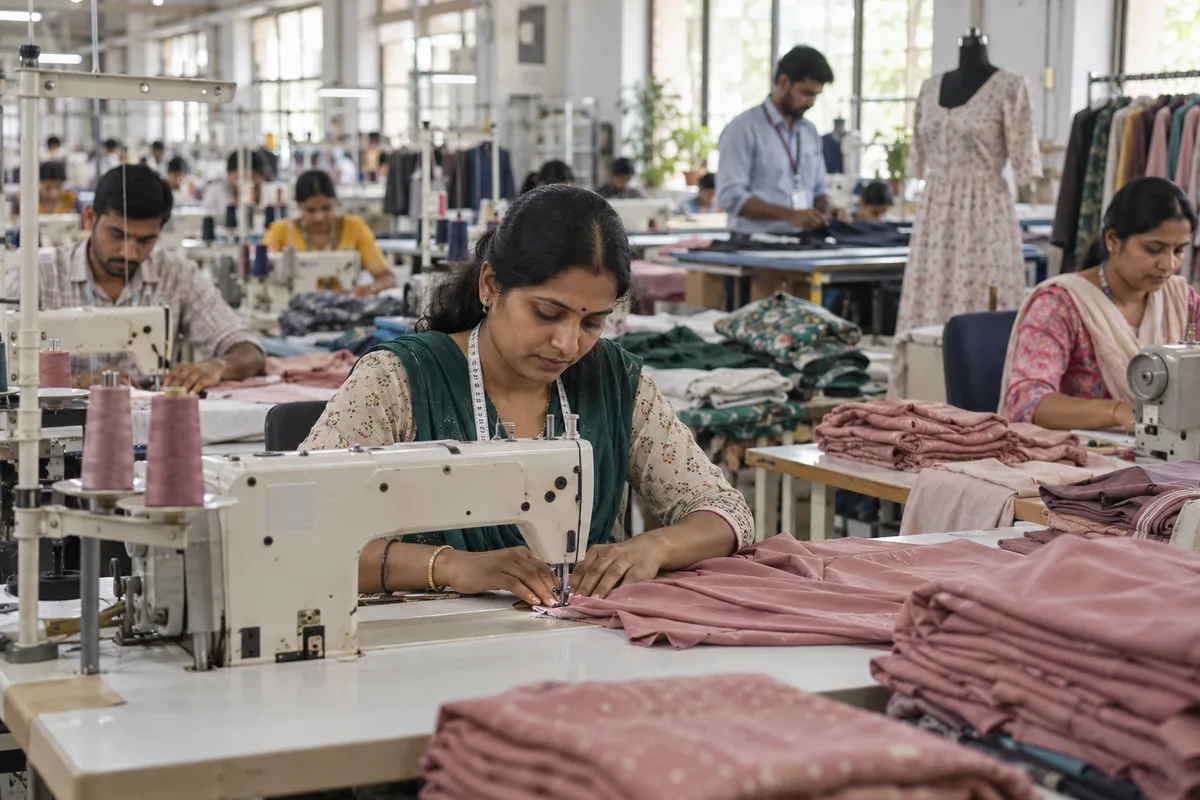
Cutting tables, stitching lines, the finishing area and the sampling room tell a buyer more than a brand mark. Real pictures of your own floor, with the workers' consent, answer whether the unit looks like it can deliver what it says.
“A form that asks too much loses the enquiry”
A brand wanting a first rate will not fill twelve fields. Ask for product, quantity and an uploaded tech pack or reference picture, and let the merchandiser ask the rest on the call.
What we do
What we deliver for garment manufacturers.
Every deliverable, what it covers for you, and the result it is there to produce. Nothing here is an extra.
A capability page with machines and capacity
Product types, machine lines, stages in house, the capacity you can run and quality checks, set out so a merchandiser can paste them into a comparison sheet.
Result: A sourcing team can judge the unit before visiting.
A page for each product type you want
Separate pages for knitted polos, women's kurtas, kids' wear or activewear, each stating fabric options, minimum quantity and the sampling process.
Result: Brands searching for one product type land on the right page.
A compliance and certificates section
The certificates held, the policies in place and a downloadable document set, kept current.
Result: Audit questions are answered before they are asked.
A short enquiry form with file upload
Fields for product, quantity and delivery month, plus a place to attach a tech pack, which sends the enquiry to your CRM and WhatsApp number.
Result: Enquiries arrive complete enough to cost.
Pages that load on a phone and are set up for search
Layouts a merchandiser can open on a mobile, with page titles and descriptions written for the searches you want to appear in.
Result: The site works for the person checking it between meetings.
How the result is measured
- Page load time
- Bounce rate
- Enquiries from the website
Recorded as a baseline before work starts, so every later report has an honest comparison.
Searches your buyers type
What a sourcing team types, and the page it should land on.
- garment manufacturer with low MOQ
- A minimum order page stating the quantity per style and colour, how mixed sizes are counted and what changes for a small first run.
- women's ethnic wear manufacturer in Jaipur
- A product page for ethnic wear naming the cluster, the fabrics worked, the embroidery and printing done in-house and the samples that can be shown.
- garment factory with ISO or social audit
- A compliance page listing only the certificates held with their dates, and what a buyer may ask to see on a visit.
- send tech pack to garment manufacturer
- An enquiry page with a short form that accepts a file, asks quantity and fabric and tells the buyer what happens after submission.
- job work stitching unit near me
- A CMT page describing the machines, the operators' skills and the product types the line handles, with a photo of the floor.
Who it is for
This is written for these garment manufacturers.
- Knitwear and T-shirt manufacturers
- Woven shirt and trouser manufacturers
- Women's ethnic wear manufacturers
- Kids' wear manufacturers
- Export-oriented garment units
- Private label and contract manufacturers for D2C brands
- Corporate, promotional and uniform garment makers
- Activewear and athleisure manufacturers
- Job work and CMT units
Not for
It is not the right fit if.
- The factory does not allow photographs of the floor, so the site would lack the proof a sourcing team looks for first.
- Your capacity and minimum order terms are not settled, and a site would publish promises you may have to retract.
- All your orders come through one buyer who has asked you not to be listed online.
How it works
How the website work runs
The work itself, in order. How an engagement starts, from your brief to a written scope, is set out on our method page.
- 1
Confirm structure and content
We agree the page list, what each page must answer, and who supplies the text and photographs, before any design starts.
- 2
Design the templates
The home page, a service page, a location page and the enquiry page are designed first, on phone and desktop, and shown to you.
- 3
Build and test
The site is built and checked on real phones and the common browsers. Every form, call button and WhatsApp link is tested end to end.
- 4
Load real content
Actual copy, images and information replace placeholders. Pages are read through once by you, since you spot wrong details we cannot.
- 5
Check before launch
Tracking, page titles, the sitemap and the privacy page are checked on the staging site. If an old site exists, its addresses are mapped so old links still land somewhere.
- 6
Launch and hand over access
The site goes live and we record the domain, hosting, content login and analytics in your name. The first live enquiry is traced to confirm tracking works.
Where this fits
Three pieces of sales work, in this order.
This work sits inside sales process design, at stage 1, prospecting and lead generation. The audit comes before it, and sales management keeps it running.
Step 1
Sales audit
Find where deals are being lost and what to fix first.
Start here if you cannot say where orders are lost.
Step 2 · you are here
Sales process design
One written way to sell, from first enquiry to repeat order.
Start here if every salesperson sells differently.
Step 3
Sales management
A target, a review routine and someone who owns the number.
Start here if the team has targets and no routine.
FAQ
Questions owners ask before they call.
Not here? More answers, or ask on WhatsApp.
Do we need a website if we are on IndiaMART?
Should the website show our client brands?
What should the site not say?
What is the constraint on showing machines and capacity online?
How much does it cost?
How long is the contract?
How soon will we see results?
Who will actually do the work?
What do you need from us?
What if we are not happy with the work?
From the blog
Further reading for garment manufacturers.

More for garment manufacturers
Everything else we would do for you.
Closest to this: search and visibility
Also for garment manufacturers
Or start from the overview: sales and marketing for garment manufacturers.
Your next practical step
Tell us what you are trying to grow, and we will read it before we call.
Eight short steps, mostly taps. Skip anything you would rather answer on the call.