Heavy equipment and forklift dealers · Buyer persona
Know which of four buyers is calling before the salesman picks up.
A buyer persona for an equipment dealership is a written description of who signs for a machine, what that buyer compares and who else has a say. GullySales builds those descriptions from your own quotes, work orders and salesmen's memory, then fits the replies, pages and follow-up to each one.
Scope, fee, reporting and term are agreed in writing after we have read your brief and spoken to you.
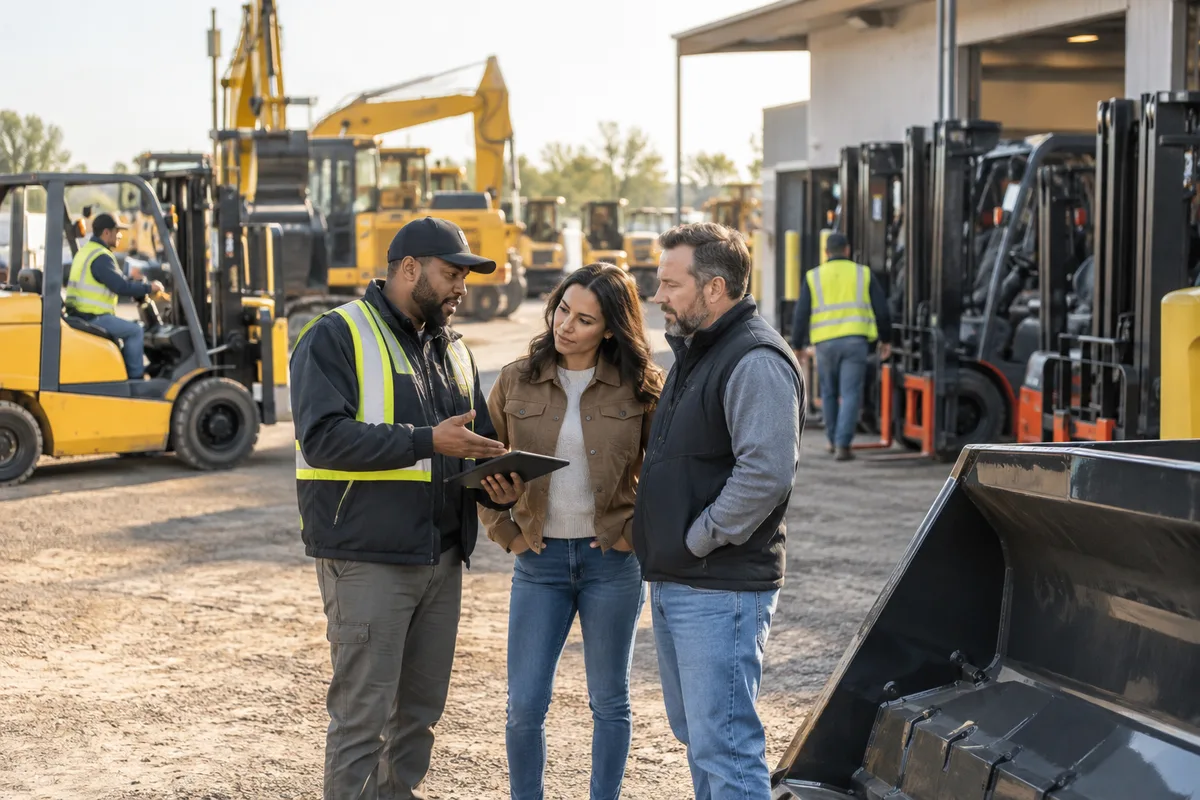
What buyer persona means
A buyer persona is a plain description of the kind of customer who actually buys from you. It includes what they search, what worries them and who else they ask before deciding. GullySales builds this from real enquiries and past sales rather than a generic template, then uses it to write every page and advert.
Also for heavy equipment and forklift dealers
- Digital marketing for heavy equipment dealers
- SEO for heavy equipment dealers
- PPC ads for heavy equipment dealers
- Lead generation for heavy equipment dealers
- Reputation management for heavy equipment dealers
- Local SEO for heavy equipment dealers
- Branding for heavy equipment dealers
- Social media for heavy equipment dealers
Sales and marketing for heavy equipment and forklift dealers, the overview.
Last updated 14 Nov 2026.
For heavy equipment and forklift dealers
Where it usually goes wrong, and what we would do.
“The owner-operator pays from the machine's own earnings”
A one-excavator contractor buys against a job already won. The payment, the delivery date and whether the machine starts on Monday count for more than the brand. The owner is also the operator, the mechanic and the bookkeeper, so the call arrives at odd hours and from a truck cab.
“The fleet manager buys on what the last machine cost to keep working”
A contractor with a large fleet does not open with price. The manager asks about parts on the shelf, technician response and the maintenance agreement. The owner signs, so your reply has to give the manager something to forward upward.
“The plant manager needs a survey, not a catalogue”
A forklift buyer has aisle widths, lift heights, shifts and a charging room to think about. Fuel type and battery choice follow from the building. Procurement joins late and compares your purchase quote against a lease from the incumbent.
“The public buyer reads a specification written before you spoke”
A municipality or school district buys through bids and co-operative contracts. The dealer who learned the solicitation timetable and the contract vehicle earlier does not have to guess at what the specification will ask for.
What we do
What we deliver for heavy equipment and forklift dealers.
The work available for this need. We agree the deliverables and responsibilities for your engagement in writing.
One sheet for each buyer
Owner-operator, fleet manager, plant or warehouse manager and public buyer, each described by what the buyer asks first, what decides the sale and who else sits at the table.
Result: Your salesmen read the same description before the first call.
The first questions, written in the order buyers ask them
Availability, hours, delivery, finance and service response, ordered differently for each buyer and turned into a script for the desk that takes the enquiry.
Result: The first reply answers the question that buyer actually has.
Quote packs built for the person who will read them
A payment and delivery sheet for the owner-operator, a service terms sheet for the fleet manager, an application summary for the plant manager.
Result: The quote is shaped for the reader who has to defend it.
Roles recorded on every account
Who signs, who operates, who books service and who approves finance, recorded against the customer rather than held in a salesman's memory.
Result: A contact leaving the customer no longer ends the relationship.
Reasons taken from won and lost quotes
A review of the quotes you won and lost, with the reasons your salesmen heard written next to the figures.
Result: The personas rest on your deals, not on a guess.
The personas put to work on pages and outreach
Model pages, listing wording, email openings and LinkedIn messages written to one named buyer each, rather than to everybody.
Result: Each page reads as if written for the person who landed on it.
How the result is measured
- Enquiry match to persona
- Conversion rate by persona
- Content aligned to persona
Recorded as a baseline before work starts, so every later report has an honest comparison.
Who is asking
The buyers who call a heavy equipment dealer, and what each wants before talking price.
- Owner-operator buying against a won job
- Wants to know the machine starts Monday, the payment and the delivery date. Calls from a truck cab at odd hours, so the first reply must carry all three.
- Fleet manager at a large contractor
- Wants parts on the shelf, technician response and the maintenance agreement terms, and something to forward to the owner who signs.
- Warehouse manager choosing a forklift
- Wants aisle width, lift height, shifts and the charging room considered, and a survey visit instead of a catalogue.
- Procurement comparing a lease
- Joins late with the incumbent's lease in hand. Wants the lease end, service terms and the total cost laid beside it.
- Public buyer working to a bid specification
- Wants the contract vehicle named, each specification line matched and delivery terms set out in the order the solicitation asks.
- Rental customer thinking of buying
- Wants to know how rent paid counts toward a purchase where your rules allow it, and what the machine would cost to keep.
Who it is for
This is written for these heavy equipment and forklift dealers.
- Full-line construction equipment dealers for a single manufacturer
- Independent used equipment dealers and brokers
- Forklift and material handling dealers running a service fleet
- Compact tractor and agricultural equipment dealers
- Crane, telehandler and aerial lift specialists
- Attachment, tyre and wear parts suppliers
- Dealers running a rental fleet alongside sales
- Single-location dealers competing with a multi-state group
Before you decide
When this may not be the right fit.
- Your salesmen have never written down who signs, who operates and who books service, so personas would be guesses.
- Your sales are to a handful of long-standing fleets, where the contact list already tells you who is asking.
- Nobody will change what the desk says on the first call, so the sheets would sit unread.
Before you decide
Agree the work. Know how to judge it.
Buyer personas for heavy equipment dealers: use these checks to prepare, choose the scope, and review what changes.
Bring the right evidence
Write the decision the research must support, such as entering a market or choosing a buyer group. Separate what you know from sales records from what the team currently assumes.
Make the scope clear
Agree which buyers to speak to, which sources to review, and what access you can provide. Include lost enquiries and people who chose another supplier, where they are willing to take part.
Check the work in use
Look for source dates, sample limitations, and evidence that disagrees with the preferred answer. A recommendation should show how it follows from the findings.
Know when to change course
Do not treat a few positive conversations as proof of demand. Test the proposed offer with an actual buying decision before committing to a wider launch.
These are discussion points, not a fixed package. GullySales confirms the deliverables, responsibilities, fee, and term in writing after reading your brief and speaking with you.
Before we start
What to have ready before the work starts.
The records, access and decisions this work needs from heavy equipment and forklift dealers. Anything missing is noted in the written scope, with who will supply it.
- Twenty recent quotes, won and lost
- Quote files with the reasons recorded, if any. Paper copies are acceptable. Without them the sheets are drawn from memory, and memory favours the buyers who were easy to deal with. Mark the machine and the buyer's role on each.
- Two hours with the sales manager
- The person who knows the buyers must be in the room to correct our reading. Without them the personas stay generic, and the salespeople ignore them.
- Names of buyers willing to be called
- A handful of customers across the roles, introduced by the owner. If none are available, the sheets rest on the files and the desks' view alone and are labelled that way.
- A sample of public tender documents
- Any bid specification that named a brand or a requirement you could not meet. Copies are enough. Without them, the public buyer persona is thin, and replies to such bids stay improvised.
How it works
How the buyer persona work runs
The work itself, in order. How an engagement starts, from your brief to a written scope, is set out on our method page.
- 1
Choose the buyers worth describing
From a sample of your quotes and invoices we find the roles that sign: owner-operator, fleet manager, plant manager, public buyer. You choose which are worth a sheet. We leave out a role if it reaches you only occasionally, so each sheet earns its place. A role that reaches you rarely is noted but not given a sheet of its own.
- 2
Open the won and lost quote files
We read a set of recent won and lost quotes with the sales manager, noting the machine, the route to purchase, who raised objections and what the customer compared. You supply the files. The reasons written in the files, and not the opinions of the room, become the base of each sheet.
- 3
Talk to the salespeople and the service desk
Each salesperson tells us how a typical buyer in each role approaches them, what they ask first and who else has a say. The service writers add what the same customer asks after the sale. You decide which differences between salespeople are worth keeping.
- 4
Speak to a few buyers directly
With your introduction we put the same few questions to buyers of each role: how they searched, who they asked, what they compared, what nearly stopped them. You choose the customers. Their words are used as written, with names removed.
- 5
Review the sheets and apply them to replies
You and the sales manager read each persona and correct it. We then rewrite the first reply, the quote pack and the follow-up questions for each buyer, so a plant manager receives a survey offer and a fleet manager receives running costs. The first test is on live enquiries.
Where this fits
Three pieces of sales work, in this order.
This work sits inside sales process design, at stage 0, foundation. The audit comes before it, and sales management keeps it running.
Step 1
Sales audit
Find where deals are being lost and what to fix first.
Start here if you cannot say where orders are lost.
Step 2 · you are here
Sales process design
One written way to sell, from first enquiry to repeat order.
Start here if every salesperson sells differently.
Step 3
Sales management
A target, a review routine and someone who owns the number.
Start here if the team has targets and no routine.
FAQ
Questions owners ask before they call.
Not here? More answers, or ask on WhatsApp.
How many personas does a dealership need?
Our salesmen already know their customers. Why write it down?
Do we need to interview customers?
How do we answer a public buyer whose bid names another brand?
Why write personas if the salespeople already know their customers?
How much does it cost?
How long is the contract?
How soon will we see results?
Who will actually do the work?
What do you need from us?
More for heavy equipment and forklift dealers
Related work to consider.
Closest to this: strategy and research
Also for heavy equipment and forklift dealers
Or start from the overview: sales and marketing for heavy equipment and forklift dealers.
Your next practical step
Tell us what you are trying to grow, and we will read it before we call.
Eight short steps, mostly taps. Skip anything you would rather answer on the call.