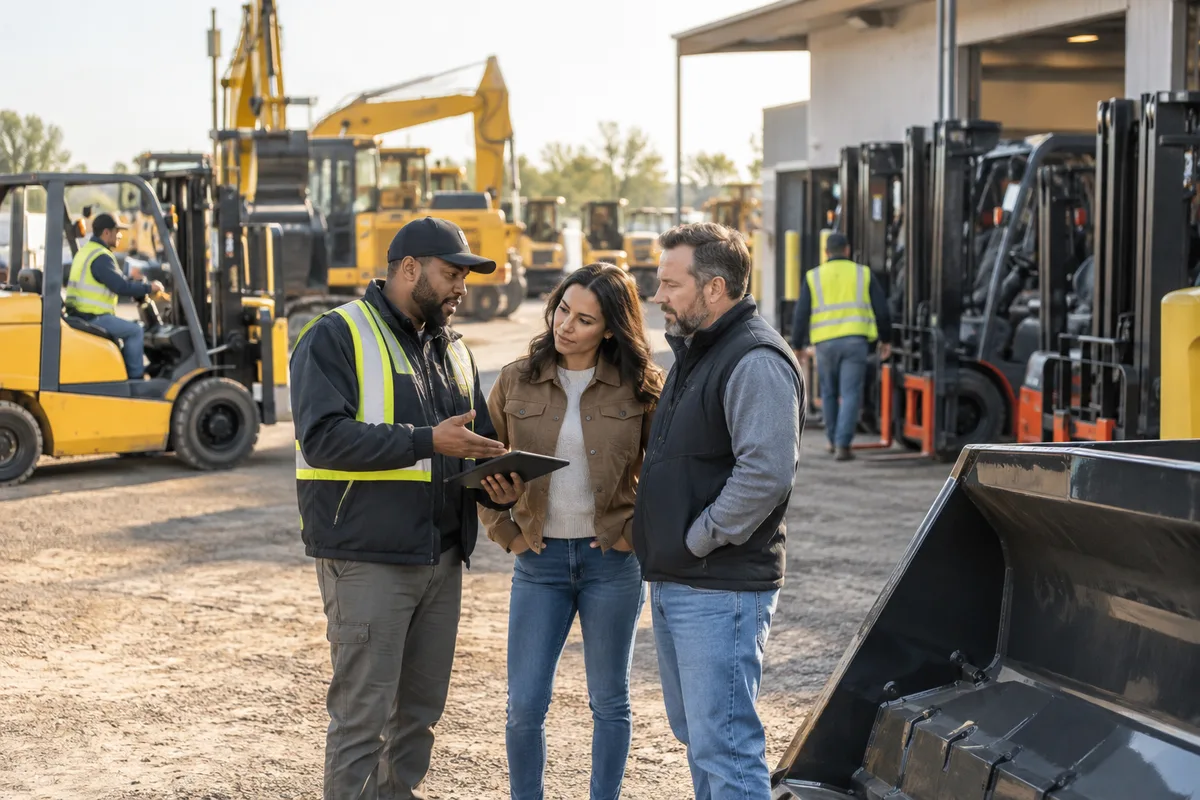
How people choose in this industry
The search starts on a listing site, not on your website. MachineryTrader, EquipmentTrader, Machinio and the auction sites are where a buyer filters by model, year, hours and distance. Your own site matters second. The contractor types your dealership name to see whether you are real, where the service shop sits and how far a field technician has to drive.
Forklift buyers behave differently. A plant or warehouse manager starts at the manufacturer's dealer locator, because the brand is already settled by the existing fleet or the racking. Then comes a site visit, an application survey for aisle width and lift height, and a quote that sets a purchase against a 60-month lease. Procurement asks for three numbers, and one of them is a national account price no local dealer can match.
In both cases the decision turns on availability and service response. A contractor two days into a breakdown has no interest in your brochure. The buyer wants to hear that the part is on your shelf and a technician can be on site tomorrow. Say that in writing, with the service manager's direct number, and the buyer has a reason to come back for the second machine as well as the first.
The decision before implementation
A direct-only business may not need a partner programme. Agree the channel role and conflict boundaries first.
Existing industry priorities to review
- Used machines with verified hours and photos
- Mini excavators and compact track loaders
- Forklift fleet replacement and lease renewals
- Parts, tyres and wear items
- Planned maintenance agreements
These describe the industry's wider priorities. The written scope identifies which this service will address.