Innerwear manufacturers · WhatsApp marketing
Use WhatsApp to take orders, share catalogues and keep distributors informed.
WhatsApp marketing for an innerwear manufacturer means using the app distributors and shopkeepers already open each day to share catalogues, new arrivals, scheme details and reorder reminders. It must respect consent. GullySales plans the messages and lists, and you control who is messaged.
Scope, fee, reporting and term are agreed in writing after we have read your brief and spoken to you.
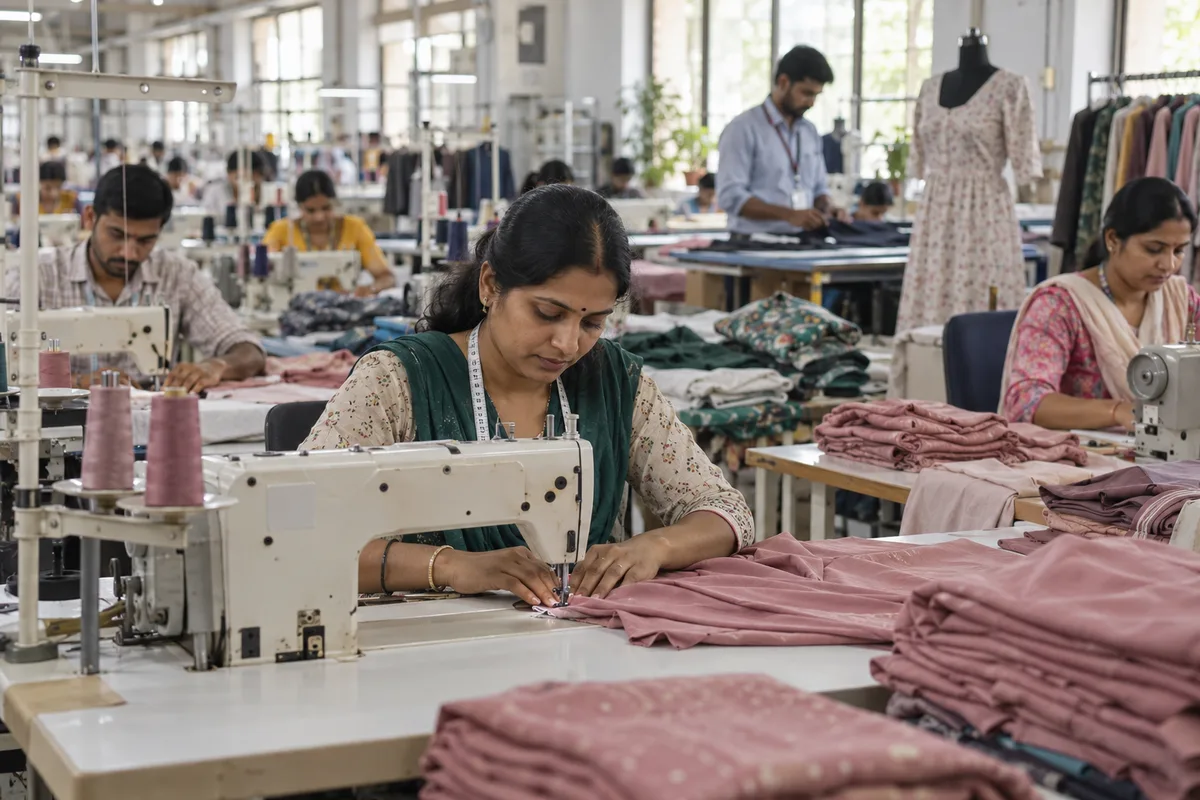
What WhatsApp marketing means
WhatsApp marketing is sending updates, offers and reminders to customers on the app most Indian buyers already check daily. GullySales sets up business WhatsApp, writes the message templates and keeps the list consented and current.
Also for innerwear manufacturers
- Lead generation for innerwear manufacturers
- SEO for innerwear manufacturers
- Social media marketing for innerwear manufacturers
- Content marketing for innerwear manufacturers
- Buyer personas for innerwear manufacturers
- CRM for innerwear manufacturers
- Follow-up systems for innerwear manufacturers
- Digital marketing for innerwear manufacturers
Sales and marketing for innerwear manufacturers, the overview.
Last updated 14 Nov 2026.
For innerwear manufacturers
Where it usually goes wrong, and what we would do.
“Distributors and retailers already live on WhatsApp”
Orders, price lists and photographs of new stock travel by chat in the hosiery trade. A brand that is easy to reach and quick to share a catalogue fits how the shopkeeper already works.
“A broadcast to the wrong list damages the brand”
Sending every message to every contact fills a shopkeeper's phone with notices for ranges they do not stock. Lists split by product line and territory keep messages relevant.
“Consent and platform rules apply to business messaging”
Messaging people who have not agreed to hear from you risks complaints and restrictions. Collect permission, offer a way out and check the platform's current rules for business messages.
What we do
What we deliver for innerwear manufacturers.
The work available for this need. We agree the deliverables and responsibilities for your engagement in writing.
Contact lists by role and territory
Separate lists for distributors, retailers and bulk buyers, grouped by town and product line, with consent noted.
Result: Each message goes only to those who asked for it.
Catalogue and price list sharing
A catalogue set up on WhatsApp Business, with the range and ordering details a retailer needs.
Result: A shopkeeper can browse and order from one chat.
Message templates
Ready messages for new arrivals, scheme reminders, season starts and order confirmation.
Result: Nobody on the team drafts a reminder or confirmation afresh.
Order handling flow
Steps for receiving an order on chat, confirming it and passing it to billing.
Result: Orders on chat reach the record without loss.
Opt-in and opt-out process
A simple way for contacts to agree to messages and to stop them.
Result: Your lists show who has given consent.
How the result is measured
- Messages delivered
- Reply rate
- Enquiries from WhatsApp
Recorded as a baseline before work starts, so every later report has an honest comparison.
What to capture or send
Decide what the company number records and what it sends.
- Opt-in from a distributor or retailer
- Record the person, the role and the town, with the date they agreed. Broadcasts go only to those names, grouped by territory.
- Catalogue and price list
- Send the current line sheet as a file, with the date shown. Log who received it, so an out-of-date price is not quoted from an old file.
- Order message
- A retailer's list of sizes and quantities. Copy it into the order record the same day, so the chat is never the only copy.
- Photo of a defect or wrong size
- A picture sent with a complaint. Store it on the account with the batch noted, so returns are traced to a cause.
- New season announcement
- A short message with the line sheet link, sent to the dealers who carry that range. It needs the booking contact in the first line.
- Opt-out
- A request to stop. Remove the person from every list and note it on the account.
Who it is for
This is written for these innerwear manufacturers.
- Men's vest and brief manufacturers
- Women's bra and panty manufacturers
- Thermal and winter innerwear units
- Kids' innerwear and school vest makers
- Lounge wear and night wear manufacturers
- Shapewear and sports bra specialists
- Private label units for retail chains and online brands
- Regional hosiery brands selling through distributors
Before you decide
When this may not be the right fit.
- Your salesmen run accounts on personal numbers and will not move to a company number, so conversations would stay outside your records.
- You have no consent record for the numbers you hold, and broadcasts to them would be unwelcome.
Before you decide
Agree the work. Know how to judge it.
WhatsApp marketing for innerwear manufacturers: use these checks to prepare, choose the scope, and review what changes.
Bring the right evidence
Describe how the contact list was collected, what people asked to receive, and which messages are currently sent. Include opt-outs and replies when reviewing campaign performance.
Make the scope clear
Agree the audience, message purpose, sending system, and response owner. Separate promotional communication from order or service updates, and check current platform requirements before launch.
Check the work in use
Test the message with a small appropriate audience before wider use. Check links, reply handling, opt-outs, and whether the response leads to a relevant conversation or order.
Know when to change course
Do not use an unexplained contact list as a shortcut to demand. If recipients do not expect the message, resolve the permission and relevance questions before sending.
These are discussion points, not a fixed package. GullySales confirms the deliverables, responsibilities, fee, and term in writing after reading your brief and speaking with you.
Before we start
What to have ready before the work starts.
The records, access and decisions this work needs from innerwear manufacturers. Anything missing is noted in the written scope, with who will supply it.
- The current distributor and retailer contacts
- Phone lists from the sales team and the accounts department, with territory and type against each name. They become the lists. Where numbers are held only on personal phones, the owner should tell the team to hand them over, as otherwise the lists miss the accounts that matter. We also ask for the date each contact was last in touch, so lapsed accounts can be placed in a separate list for a personal call.
- A business number held by the company
- A number registered to the firm and kept on a company phone, so the chats stay when someone leaves. The sales team may continue to use their numbers for routine talk, but official catalogues and prices should come from the business number only.
- The current price list and scheme file
- One dated price list and the schemes now running, approved by the owner. Only a single current version should exist. If several versions are in circulation, we first help you withdraw the old ones, since a wrong price sent on chat is binding in the buyer's mind. We keep the old versions for the accounts person, so a disputed rate can be traced to the list that carried it.
- Photographs and article codes
- A clear picture of each article with its code, colours and sizes. The catalogue is built from them. Without codes, orders by chat become descriptions that the dispatch team must guess at, which causes wrong shipments.
- A person to enter chat orders
- A named member of the accounts or dispatch team who turns an accepted chat order into a billing entry. Without this person, orders sit in chats and the factory learns of them late, which is the main risk of the whole flow.
How it works
How the whatsapp marketing work runs
The work itself, in order. How an engagement starts, from your brief to a written scope, is set out on our method page.
- 1
Find where the chats live today
We ask who in your team uses WhatsApp with distributors and shopkeepers, on what numbers, and whether groups already exist. We look at how catalogues and prices are shared now. You tell us which groups are official. This shows the real traffic and the risks, such as price lists floating in old chats. We also note which chats hold price lists or schemes that are still being quoted, since those must be replaced first.
- 2
Sort contacts by role and territory
We group your distributors, retailers, private label buyers and the field team into separate lists by territory and type. You approve the groups, and contacts who have not agreed to receive business messages are marked. A new arrival notice for one territory should never reach another, so the lists are cut before anything is sent.
- 3
Set up the catalogue and the price list flow
We build a catalogue with article codes and photographs, and agree how price lists are issued: one current file, dated, sent by one person. The sales head decides which prices go in the catalogue and which go only to distributors. Old price lists are withdrawn as new ones are sent. The catalogue is checked against the stores register so that no article is shown that the godown has already run out of.
- 4
Write message templates and the order handling flow
We draft templates for new arrivals, scheme details and reorder prompts, and write the path an order takes once placed in chat: who confirms it, where it is entered and how a voice note is turned into a written order. The accounts team tests it with real orders.
- 5
Put the opt-in and opt-out in place
We write the line that asks a distributor or retailer to agree to business messages, and the simple way to stop them. Your adviser confirms the wording. We check the platform's current rules on business messaging before any broadcast is sent, and decide with you whether a business account or a business tool is needed.
- 6
Read order and reply records against the start
Before the new flow, we noted how many orders and enquiries arrived by chat and how many were missed or entered late. Now we compare the same points. You see whether orders were captured, which messages brought reorders and which lists should be trimmed or split further.
Where this fits
Three pieces of sales work, in this order.
This work sits inside sales process design, at stage 0, foundation. The audit comes before it, and sales management keeps it running.
Step 1
Sales audit
Find where deals are being lost and what to fix first.
Start here if you cannot say where orders are lost.
Step 2 · you are here
Sales process design
One written way to sell, from first enquiry to repeat order.
Start here if every salesperson sells differently.
Step 3
Sales management
A target, a review routine and someone who owns the number.
Start here if the team has targets and no routine.
FAQ
Questions owners ask before they call.
Not here? More answers, or ask on WhatsApp.
Should we use broadcast lists or a business API?
Can salesmen use their personal WhatsApp?
How do we handle price changes sent over WhatsApp?
Can retailers place orders by voice note?
Can retailers place orders by sending photographs of the article?
How do we stop old price lists being used?
How long is the contract?
How soon will we see results?
Who will actually do the work?
What do you need from us?
More for innerwear manufacturers
Related work to consider.
Or start from the overview: sales and marketing for innerwear manufacturers.
Your next practical step
Tell us what you are trying to grow, and we will read it before we call.
Eight short steps, mostly taps. Skip anything you would rather answer on the call.