Laser cutting companies · Content marketing
Write down what you know about sheets and cuts so buyers trust the rate.
Content marketing for a laser cutting shop means turning shop-floor knowledge on materials, nesting, tolerance and file preparation into pages and guides that buyers read before they send a file. GullySales plans and drafts that material with your operators.
Scope, fee, reporting and term are agreed in writing after we have read your brief and spoken to you.
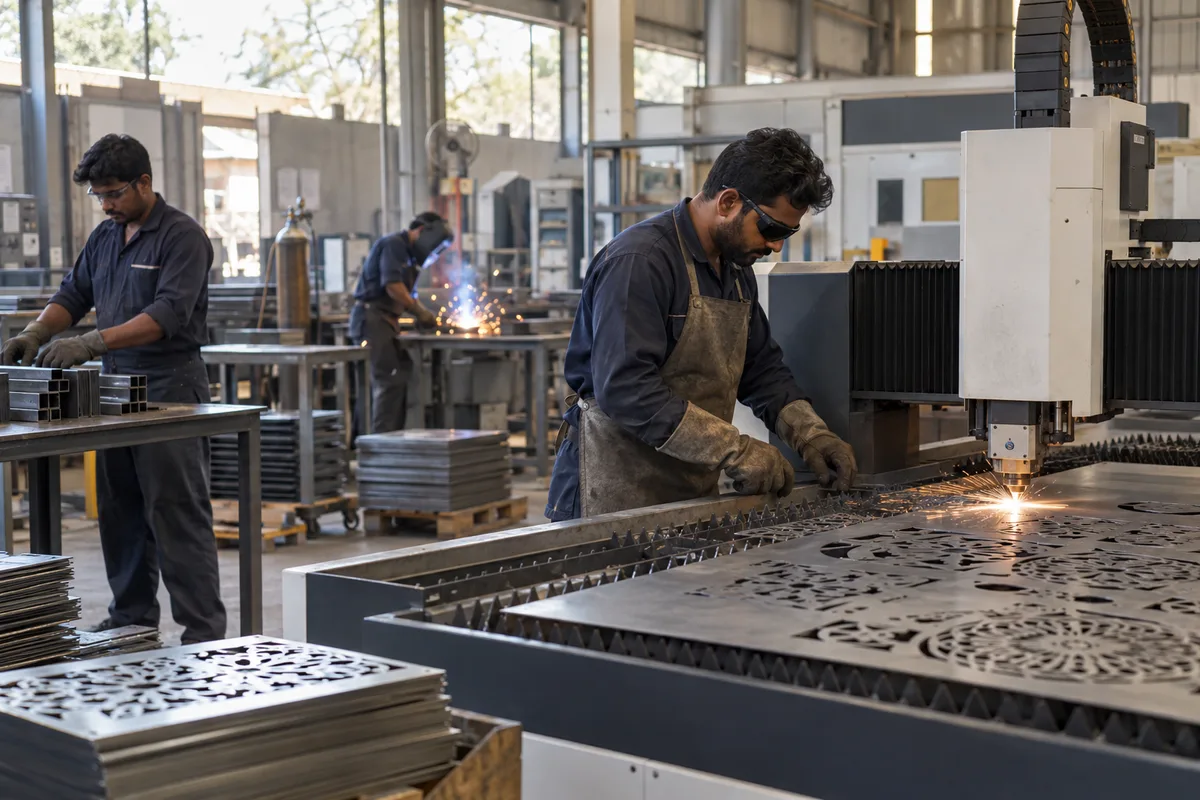
What content marketing means
Content marketing is writing articles, guides and pages that answer the questions buyers search before they are ready to enquire. This makes your business visible and trusted before the first call. GullySales plans this content from the first conversation onward, choosing topics that match real search demand rather than guesses.
Last updated 14 Nov 2026.
For laser cutting companies
Where it usually goes wrong, and what we would do.
“Buyers ask the same questions every time”
What thickness can the laser cut in stainless? How should a DXF be drawn? Who keeps the offcut? Each is answered by phone, many times a day. Written once and kept on a page, the answer saves the call and shows the shop knows the work.
“File preparation is a real pain point”
Open contours, overlapping lines, text left as fonts and wrong units delay a quote. A short guide on preparing a DXF for cutting prevents bad files and marks the shop as careful. Fabricators keep such guides and share them.
“Material choice confuses small buyers”
A signage maker or interior contractor may not know why 304 and 316 differ, or why a thin aluminium sheet warps. A plain guide helps them choose and makes the shop the one they call for advice.
“Finished work belongs on the page”
A case written around one real job, such as a batch of kitchen counter panels, shows material, quantity, nesting and delivery. Without a customer's name if they prefer, it still answers what a buyer wants to know.
What we do
What we deliver for laser cutting companies.
The work available for this need. We agree the deliverables and responsibilities for your engagement in writing.
A file preparation guide
A one-page guide on drawing DXF and DWG files for cutting: closed contours, units, layers and what to leave out.
Result: A guide you can link in every file reply.
Material and thickness guides
Short pieces on cutting MS, SS, aluminium, brass and copper, with what the machine does well and where it struggles.
Result: Pages that answer the questions buyers phone about.
A nesting and offcut explainer
Plain words on how sheets are nested, how wastage is counted and who keeps the offcuts.
Result: An explainer you can paste under a quote.
Job write-ups
Short accounts of real jobs with material, quantity and what the buyer needed, written with permission.
Result: Pages that show the shop's range through its own work.
A topic plan with your operators
A list of subjects drawn from questions the machine team hears, ordered by the number of buyers who ask.
Result: A plan built from your own shop's questions.
How the result is measured
- Pages published
- Organic traffic
- Enquiries from content pages
Recorded as a baseline before work starts, so every later report has an honest comparison.
Posts and pieces to plan
Write down the file, sheet and cut questions your operators answer at the machine.
- How to prepare a DXF for laser cutting
- A guide with annotated screenshots on closed contours, units and layers, written by the operator who rejects the files.
- Choosing between mild steel and stainless
- A material guide on finish, rust and cost drivers, ending with what the shop can cut.
- Why the edge colour changes with the gas
- An explainer on oxygen and nitrogen cutting and what each leaves on the edge, using photographs of your samples.
- Offcuts and who owns them
- A plain note on how the shop handles remnants, stating the policy the shop actually follows.
- Kerf and tolerance for fabricators
- A guide explaining what a designer should allow in the drawing, stated as the shop's practice.
- A job write-up from drawing to delivery
- A short case of a typical job with the material, steps and a photograph, and no buyer name without permission.
Who it is for
This is written for these laser cutting companies.
- Fibre laser job-work shops serving local fabricators
- Stainless steel kitchen and equipment makers' cutting partners
- Signage, nameplate and letter cutting shops
- Decorative jali and facade panel cutters
- Tube laser cutting shops for furniture and frames
- Laser cutting shops attached to a fabrication unit
- Panel and enclosure sheet cutting units for electrical makers
- Laser shops serving elevator, bus body and trailer builders
Before you decide
When this may not be the right fit.
- Your operators have no time to review a guide, and one with a wrong technical statement damages a precision trade.
- You have no finished samples to photograph, so guides would lean on stock images.
- You are not ready to state your tolerances, and a guide that avoids them tells the reader nothing.
Before you decide
Agree the work. Know how to judge it.
Content marketing for laser cutting shops: use these checks to prepare, choose the scope, and review what changes.
Bring the right evidence
Bring questions from sales calls and examples of objections that delay a decision. Choose a subject expert who can check the substance, and identify evidence that can be published.
Make the scope clear
Agree the reader, buying question, format, and distribution route for each piece. Set the approval process and distinguish new research from rewriting material you already have.
Check the work in use
Ask a colleague to use the draft in a real buyer conversation. It should answer the question, support its claims, and make the next step clear without requiring a sales pitch to explain it.
Know when to change course
If the same unanswered question appears in several articles, improve the strongest page before commissioning another. More words are not a substitute for missing evidence.
These are discussion points, not a fixed package. GullySales confirms the deliverables, responsibilities, fee, and term in writing after reading your brief and speaking with you.
Before we start
What to have ready before the work starts.
The records, access and decisions this work needs from laser cutting companies. Anything missing is noted in the written scope, with who will supply it.
- Three drawings that arrived in the wrong shape
- Real files with the problem the desk had to fix, with customer details removed. They show the guide what to teach. Without them, the guide covers file errors in general and misses the ones your buyers make.
- An operator's time for recorded explanations
- A stretch of time with the person who cuts, away from the machine. Their words are the content. If they cannot be released, we draft from the desk's account, which is second-hand and less exact.
- The list of materials and thicknesses on offer
- The range the machine cuts well, and the range you accept with care. Guides promise nothing beyond it. If the list is missing, the material notes stay general.
- A decision on whether rates are public
- Say whether the guides explain how pricing works, by metre of cut, by machine minute or by part, without giving figures. Only you can decide. Without it, we explain the method and leave out any number.
- Photographs of cut samples with a scale
- Clean pieces beside a coin or ruler, in each material. A buyer reads an edge from a photograph. Without them, the guides use diagrams, which carry less weight.
How it works
How the content marketing work runs
The work itself, in order. How an engagement starts, from your brief to a written scope, is set out on our method page.
- 1
List the questions the quote desk answers repeatedly
We sit with the person who takes calls and files and write down the questions asked again and again: can you cut this thickness, what format is the file, who supplies the sheet, what happens to the offcuts. You tell us which answers cost the desk the longest time. Those questions become the first topics and the plan is built on them.
- 2
Pick topics and name the operator who knows
We choose the first guides and agree which operator or programmer knows each answer best. A note on nesting comes from the person who nests, and a note on stainless edges from the one who cuts it. You approve the list and say which topics you will not publish, such as your rates.
- 3
Record the operators explaining it aloud
We sit with each named person and record their explanation in their own words, then collect a few real drawings that failed on arrival and why. You remove any customer detail. From this we have the facts for the guides, in the vocabulary that fabricators already use.
- 4
Draft the file guide, the material notes and write-ups
We write the file preparation guide, notes on material and thickness, the explainer on nesting and offcuts, and short write-ups of finished jobs without customer names. You read each draft against what the machine really holds. A tolerance or speed you cannot back is struck out before publication.
- 5
Place each piece where a buyer will meet it
We publish the guides on the website, put a short version on the profile and WhatsApp catalogue, and give the quote desk a link to send when a question arrives. Each piece ends with the route to send a file. You approve the first release before the others follow, and we change the order if the desk says a different guide would save more of its time.
- 6
Read file quality and questions against the start
We compare the share of files arriving with the right format, thickness and quantity, and the questions the desk still has to ask, against the counts taken at the start. You see which guides were opened or sent, which questions the desk still answers by hand and which new questions have appeared since, and you decide which guides to rewrite, extend or retire.
Where this fits
Three pieces of sales work, in this order.
This work sits inside sales process design, at stage 0, foundation. The audit comes before it, and sales management keeps it running.
Step 1
Sales audit
Find where deals are being lost and what to fix first.
Start here if you cannot say where orders are lost.
Step 2 · you are here
Sales process design
One written way to sell, from first enquiry to repeat order.
Start here if every salesperson sells differently.
Step 3
Sales management
A target, a review routine and someone who owns the number.
Start here if the team has targets and no routine.
FAQ
Questions owners ask before they call.
Not here? More answers, or ask on WhatsApp.
Who writes the content?
Do buyers really read guides?
Should we reveal our rates in content?
Should the guide list the tolerances our machine holds?
Do buyers really read guides before sending a file?
Should the guide say how we price a job?
How long is the contract?
How soon will we see results?
Who will actually do the work?
What do you need from us?
More for laser cutting companies
Related work to consider.
Closest to this: content and social
Also for laser cutting companies
Or start from the overview: sales and marketing for laser cutting companies.
Your next practical step
Tell us what you are trying to grow, and we will read it before we call.
Eight short steps, mostly taps. Skip anything you would rather answer on the call.