Laser cutting companies · Search engine optimisation
Appear when a workshop searches for laser cutting of the exact sheet it holds.
SEO for a laser cutting shop means writing pages for the material, thickness and place a buyer types into search, so the shop appears when a workshop needs sheets cut. GullySales works on those pages, the structure behind them and the search terms your buyers use.
Scope, fee, reporting and term are agreed in writing after we have read your brief and spoken to you.
What search engine optimisation means
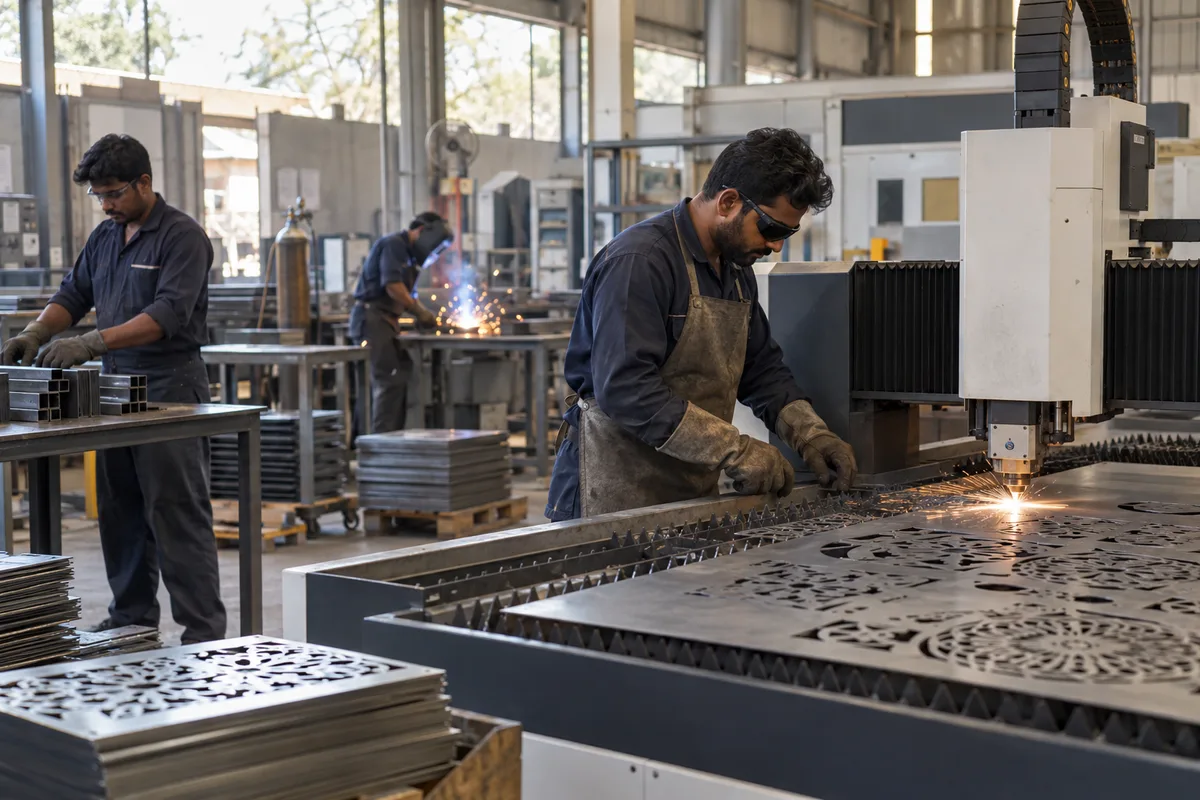
Search engine optimisation (SEO) is the work of getting your website to appear when a buyer searches Google for what you sell. GullySales builds pages around real search terms, fixes technical issues that block ranking, and tracks which searches actually bring enquiries.
Last updated 14 Nov 2026.
For laser cutting companies
Where it usually goes wrong, and what we would do.
“Buyers search by material and thickness”
A fabricator types stainless steel laser cutting near me, or a thickness with a metal, not laser cutting alone. A single page called services answers none of these. Separate pages for each metal and for tube work let search match the exact need.
“Place names carry the search”
Job work is picked close to the workshop because sheets travel by tempo and are collected the same day. Pages that name your industrial area and the neighbouring ones are matched against how buyers search, not how a brochure is written.
“Photographs of cut edges prove the claim”
A page that says clean edges persuades nobody. Images of an actual cut edge on 2 mm SS or thicker MS, with a note on the machine, give search and the reader something real to judge.
“Decorative work has different searchers”
An architect looking for jali panels or facade screens does not search like a fabricator. That work needs its own page, its own vocabulary and its own examples, or those searches go to a shop that wrote one.
What we do
What we deliver for laser cutting companies.
The work available for this need. We agree the deliverables and responsibilities for your engagement in writing.
A search term map
A list of the phrases fabricators, signage firms and designers use for your metals, thickness and area, grouped by the page that should answer them.
Result: A sheet that matches every phrase to a page.
Material and thickness pages
One page per metal group with the cuttable thickness, bed size, wattage and edge photographs from your own machine.
Result: Pages a buyer can read without phoning.
A tube cutting page
A page for tube and pipe work listing sections, sizes and wall thickness your tube laser takes.
Result: A page that tube buyers can find and check.
Decorative and signage pages
Pages for jali, nameplates and letters with finished work and the drawing formats you accept.
Result: Pages that suit designers searching for panels.
Page titles and structure
Titles, headings and internal links set so each page is clear about the work it covers.
Result: A site where each page has one subject and a clear title.
How the result is measured
- Ranking positions
- Organic traffic
- Enquiries from organic search
Recorded as a baseline before work starts, so every later report has an honest comparison.
Searches your buyers type
Answer the phrases a workshop types when it holds a sheet and needs it cut.
- laser cutting service for stainless steel sheet
- A material page stating grades handled, the thickness range of the machine and a photograph of a stainless edge.
- laser cutting job work near me
- A page naming the industrial estate and nearby areas served, with the route to send a file.
- tube laser cutting for furniture frames
- A page for tube work if the shop offers it, with sizes and sections handled written plainly.
- laser cut jali design for gate or facade
- A decorative page with patterns cut, panel sizes handled and the process from drawing to delivery.
- laser cutting charges per sheet
- A page explaining what a rate depends on, from material to cut length and quantity, without a fixed price.
- DXF file requirements for laser cutting
- A file-preparation guide telling the buyer what the operator needs to see.
Who it is for
This is written for these laser cutting companies.
- Fibre laser job-work shops serving local fabricators
- Stainless steel kitchen and equipment makers' cutting partners
- Signage, nameplate and letter cutting shops
- Decorative jali and facade panel cutters
- Tube laser cutting shops for furniture and frames
- Laser cutting shops attached to a fabrication unit
- Panel and enclosure sheet cutting units for electrical makers
- Laser shops serving elevator, bus body and trailer builders
Before you decide
When this may not be the right fit.
- Your machine details are not written down anywhere, and a page cannot describe a thickness range you have not confirmed.
- You have no photographs of your own cuts, and pages without proof of work look like every other shop.
- You take only regular buyers and have no spare hours, so search traffic would bring work you must refuse.
Before you decide
Agree the work. Know how to judge it.
SEO for laser cutting shops: use these checks to prepare, choose the scope, and review what changes.
Bring the right evidence
Bring the pages for the products or services you want to sell, the search queries available in your reports, and examples of enquiries from search. Separate branded searches from buyers discovering you for the first time.
Make the scope clear
Agree which pages and technical fixes come first, who can publish changes, and who supplies subject knowledge. Link search work to a relevant enquiry route on each priority page.
Check the work in use
Follow the trail from a relevant query to its landing page and then to an enquiry. Review whether those enquiries fit your offer, alongside indexing and search visibility.
Know when to change course
A ranking movement alone is not a buying signal. If traffic grows but relevant enquiries do not, revisit page intent and the offer before producing more pages.
These are discussion points, not a fixed package. GullySales confirms the deliverables, responsibilities, fee, and term in writing after reading your brief and speaking with you.
Before we start
What to have ready before the work starts.
The records, access and decisions this work needs from laser cutting companies. Anything missing is noted in the written scope, with who will supply it.
- The machine data sheet or maker's specification
- The sheet that states power, bed size and cutting range. Pages quote from it. If it is missing, we ask the operator to state the range from experience, and every claim is marked for your check.
- Owner login to Search Console and analytics
- Access in the owner's name so we can read real search data. If a past vendor holds it, we set up new properties, and history before that date is unavailable.
- Sample parts in each material you cut
- A few clean pieces in MS, stainless steel, aluminium or brass, kept aside for photography. Without samples we use shop photographs of jobs in progress, which show less of the edge.
- A list of materials you decline
- Some metals or coatings the machine cannot cut safely or well. State them. The pages then say so, and the quote desk is spared files it will refuse.
- Permission to show customer parts
- A yes from any buyer whose part appears in a photograph. A fabricator may not want a rival to see the design. Without permission, we shoot offcuts and test shapes only.
How it works
How the search engine optimisation work runs
The work itself, in order. How an engagement starts, from your brief to a written scope, is set out on our method page.
- 1
Write out the cuts to be found for
With your operators we list the materials, thicknesses and parts you want to cut, such as 3 mm stainless sheet or 2 mm MS panels, and the places that matter, from the industrial estate to the next town. You strike out the work that earns too little. What remains is the search list for the whole project.
- 2
Read what the site and listing show now
With owner access to Search Console and analytics, we read what the site appears for today, which pages draw visits, and whether any enquiry came from search. We record those figures. You confirm the machine details and the sheet sizes, since a page that overstates the thickness the laser can cut brings the wrong files.
- 3
Photograph the cut edge and the finished part
We arrange a visit to photograph sample cuts in each material, with a scale or a coin for size, the nested sheet and the machine at work. A buyer judges burr and finish from the edge. You choose which customer parts may be shown, and parts that carry a customer's design stay out unless permission is given.
- 4
Build the material pages and the tube page
We write one page for each material and thickness range, one for tube cutting if you offer it, and pages for decorative and signage work. Each states the bed size, the range, how to send a file and how to reach the quote desk. You read every claim against the machine's data sheet.
- 5
Set titles, links and the area wording
We write page titles and headings in the words a buyer types, link each material page to the file guide and the contact page, and add the place names buyers search. We check speed on a phone. You approve the live pages and we submit them for indexing.
- 6
Read searches and file enquiries together
After the pages have been live for a while, we read which searches brought visits and how many files arrived from them, against the baseline taken at the start. You see which material pages worked and which need rewriting, and we agree the next pages to add.
Where this fits
Three pieces of sales work, in this order.
This work sits inside sales process design, at stage 1, prospecting and lead generation. The audit comes before it, and sales management keeps it running.
Step 1
Sales audit
Find where deals are being lost and what to fix first.
Start here if you cannot say where orders are lost.
Step 2 · you are here
Sales process design
One written way to sell, from first enquiry to repeat order.
Start here if every salesperson sells differently.
Step 3
Sales management
A target, a review routine and someone who owns the number.
Start here if the team has targets and no routine.
FAQ
Questions owners ask before they call.
Not here? More answers, or ask on WhatsApp.
Can a laser shop rank without a big website?
Should we write about the machine brand?
How is SEO different from the Maps listing?
Do pages need to name the laser's make and power?
Should the pages name the make and power of our laser?
How does SEO differ from the Maps listing for a cutting shop?
How much does it cost?
How long is the contract?
How soon will we see results?
Who will actually do the work?
More for laser cutting companies
Related work to consider.
Closest to this: search and visibility
Also for laser cutting companies
Or start from the overview: sales and marketing for laser cutting companies.
Your next practical step
Tell us what you are trying to grow, and we will read it before we call.
Eight short steps, mostly taps. Skip anything you would rather answer on the call.