Laser cutting companies · Lead generation
Fill the machine with sheets from workshops that need cutting and nothing else.
Lead generation for a laser cutting shop means finding the fabricators, panel makers and signage firms that send out their cutting, and getting their files to you. GullySales works on the sources, the file intake and the list of workshops worth approaching.
Scope, fee, reporting and term are agreed in writing after we have read your brief and spoken to you.
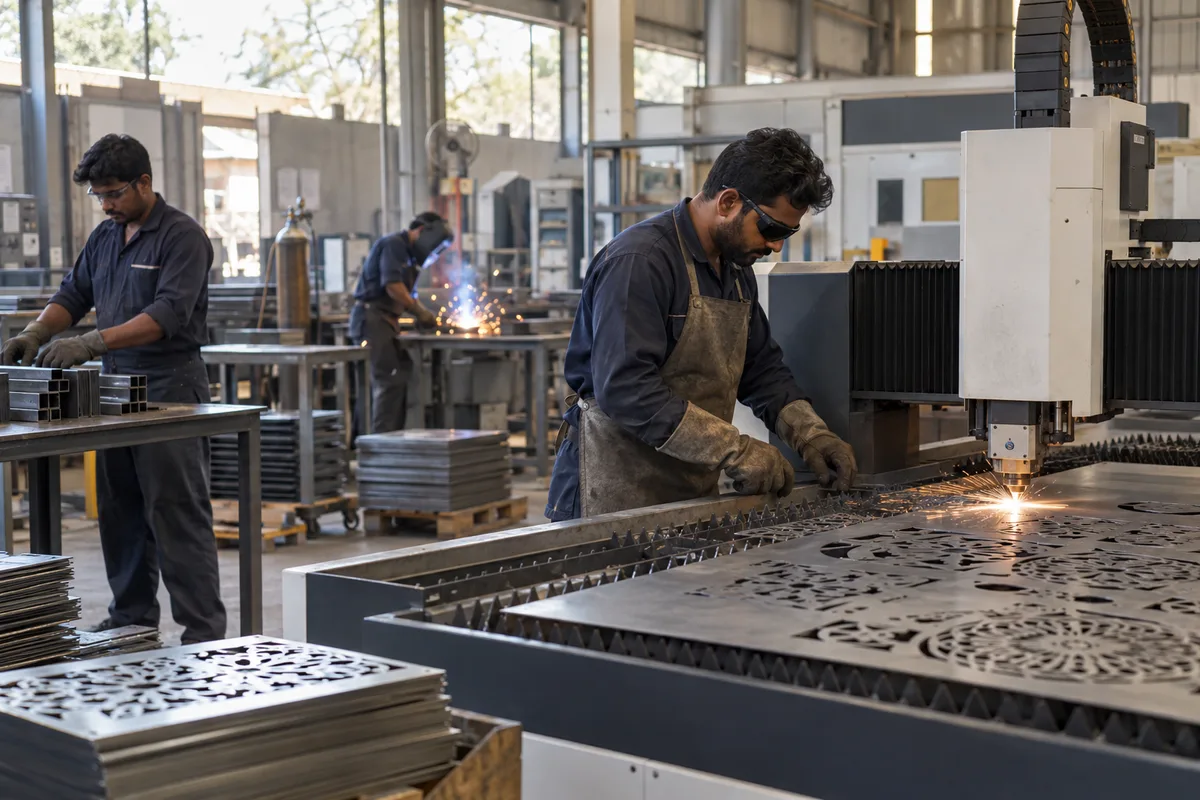
What lead generation means
Lead generation is the combined work of every channel that brings in a new enquiry, whether from search, adverts, referrals or a stall at an exhibition. GullySales runs these channels together and reports the number of enquiries each one produced, not the activity behind it.
Plan the next part of the work
Last updated 21 Nov 2026.
For laser cutting companies
Where it usually goes wrong, and what we would do.
“The best lead is a workshop that owns no laser”
A welding and bending unit with no cutting machine buys sheets cut every week. A signage firm that outsources letters does the same. These buyers are known by name in your industrial area, so a written list beats waiting for a search.
“A drawing with no thickness is half a lead”
A DXF that arrives without material, gauge or quantity cannot be priced. Shops lose the buyer in the exchange of questions that follows. Lead capture for this trade starts with asking those details at the first touch, not at the third.
“Enquiry sources differ in quality”
A Maps call, an IndiaMART message and a WhatsApp file from a known fabricator are not the same lead. One is a stranger comparing rates, another is a search for a product, and the last is a repeat buyer. Counting them together hides which source fills the bed.
“Idle machine hours need a different lead”
When the laser has free time, a one-off enquiry for a few sheets is welcome, but a standing buyer is better. Leads for a free week and leads for a regular arrangement need different messages and different follow-up.
What we do
What we deliver for laser cutting companies.
The work available for this need. We agree the deliverables and responsibilities for your engagement in writing.
A map of cut-only buyers
A named list of fabricators, kitchen equipment makers, panel units and designers in your area who have no laser of their own, each with the likely sheets they buy.
Result: A list you can read name by name and mark as called, quoted or placed.
A source-tagged enquiry log
Every file, call and message is tagged with where it came from, so the log shows Maps, IndiaMART, referral and repeat buyers apart.
Result: A sheet that shows which source sent each job, not only how many arrived.
A first-contact question set
Four questions on material, thickness, quantity and who supplies the sheet, built into the first reply to any file.
Result: Files that reach the quote desk ready to price.
A sample-part introduction
A short message and a photographed cut part with edge detail, prepared for workshops you approach cold.
Result: An introduction a fabricator can judge in one look.
A free-capacity offer
A message to past buyers and listed workshops for the days the laser has room, naming materials and thickness you can take.
Result: A ready note you send when machine time opens.
How the result is measured
- Relevant enquiries by source
- Duplicate and unsuitable enquiries
- Time to the first response
- Accepted enquiries reaching an agreed next step
Recorded as a baseline before work starts, so every later report has an honest comparison.
What to capture or send
Ask for the drawing, the material and the quantity before any rate leaves the shop.
- DXF or drawing in a cuttable format
- Asked with the first reply, so the operator can check the file opens and the contours are closed before quoting.
- Material grade and sheet thickness
- Mild steel, stainless or aluminium, and the thickness. This decides whether the machine can cut it and at what speed.
- Quantity and whether it repeats
- A one-off and a monthly run are priced and scheduled differently, so the answer is noted against the buyer.
- Who supplies the sheet
- Buyer's material or yours changes the rate and the responsibility for wastage, so it is asked at the start.
- Delivery or pickup point
- Where the cut parts go. A workshop on the same estate and one across the city need different handling.
- How the buyer found the shop
- Maps, a fabricator's reference, a listing or a sample part, ticked on the enquiry log.
Who it is for
This is written for these laser cutting companies.
- Fibre laser job-work shops serving local fabricators
- Stainless steel kitchen and equipment makers' cutting partners
- Signage, nameplate and letter cutting shops
- Decorative jali and facade panel cutters
- Tube laser cutting shops for furniture and frames
- Laser cutting shops attached to a fabrication unit
- Panel and enclosure sheet cutting units for electrical makers
- Laser shops serving elevator, bus body and trailer builders
Before you decide
When this may not be the right fit.
- Your machine is booked solid with regular buyers, so more enquiries would only bring quotes you cannot deliver.
- You have no one to open and check a file the day it arrives, so new enquiries would wait in a chat.
- Your machine cannot cut the thickness or material most callers ask about, and the first fix is the range, not the lead flow.
Before you decide
Agree the work. Know how to judge it.
Lead generation for laser cutting shops: use these checks to prepare, choose the scope, and review what changes.
Bring the right evidence
Define the organisations or buyers you can serve and the reasons they would consider a conversation. Bring examples of accepted and rejected prospects so the selection rule is visible.
Make the scope clear
Agree the research sources, contact approach, qualification rules, and handover. Clarify which meetings count as accepted and what happens to replies that are not ready to buy.
Check the work in use
Review why a prospect was selected and what was learned from the response. Count held, relevant conversations separately from contacts found, messages sent, or meetings booked.
Know when to change course
If the same objection appears repeatedly, adjust the offer or buyer group before increasing outreach. Respect a request to stop contact and keep the exclusion in the record.
These are discussion points, not a fixed package. GullySales confirms the deliverables, responsibilities, fee, and term in writing after reading your brief and speaking with you.
Before we start
What to have ready before the work starts.
The records, access and decisions this work needs from laser cutting companies. Anything missing is noted in the written scope, with who will supply it.
- The machine log for the idle stretches
- A record of sheets cut and the hours the laser ran, taken from the controller or the operator's sheet. It shows when capacity is free. If there is no log, the offer for idle hours is written without dates and the baseline starts from the first week of work.
- Names of regular buyers and what they send
- A list of the workshops you already serve with the materials and thicknesses they send. It tells us what type of buyer to find more of. Without it, the outreach list is broader and the first contacts waste time on work the machine does not suit.
- The limits of the machine in plain terms
- The bed size, the power, the thickness range for MS, SS, aluminium and brass, and the materials you decline. Buyers must not be promised what the machine cannot cut. If these limits are not stated, the intake questions screen less sharply and the quote desk takes more unsuitable files.
- A person to open every file on arrival
- Someone at the quote desk who opens the drawing, checks it and replies. A lead is only as good as the reply. Without a named person, files wait in a chat and the workshop sends them to another shop.
How it works
How the lead generation work runs
The work itself, in order. How an engagement starts, from your brief to a written scope, is set out on our method page.
- 1
Read the machine log against the order book
We start with the machine log of sheets cut and the order book, and mark the hours when the laser stood idle. You tell us which jobs came from regular fabricators and which came from a one-off call. That shows the gap the leads must fill and gives us the figures of enquiries, files received and jobs booked that this work is read against.
- 2
List the workshops within tempo range
With your operators we walk the industrial area on a map and name the fabricators, panel makers, signage firms and kitchen equipment units that send their cutting out or run no laser of their own. You mark the ones you already serve and the ones you would refuse. What remains is the first list of workshops worth approaching.
- 3
Write the file intake questions
We draft the short set of questions asked of every new buyer: material, thickness, quantity, file type, whether the sheet is supplied, and the date needed. You tell us which answers would make you decline a job. The questions go on the enquiry form, on WhatsApp and on the call sheet your quote desk holds.
- 4
Prepare the sample part and the free-hours offer
We choose with the shop manager a small, clean part that shows the edge you hold, and agree whether it is offered as a sample to new workshops. You decide the free-capacity offer for idle hours and which machine and material it covers. We write both so a workshop owner understands them in one reading.
- 5
Tag the sources and test one real file
We set a source tag on the listing, the website, IndiaMART, WhatsApp and each outreach list, then send a test drawing through each route. It must reach the quote desk with its tag. You approve the setup, and after leads begin we match each tag to the quotes and jobs booked, set against the baseline recorded in the first step.
Where this fits
Three pieces of sales work, in this order.
This work sits inside sales process design, at stage 1, prospecting and lead generation. The audit comes before it, and sales management keeps it running.
Step 1
Sales audit
Find where deals are being lost and what to fix first.
Start here if you cannot say where orders are lost.
Step 2 · you are here
Sales process design
One written way to sell, from first enquiry to repeat order.
Start here if every salesperson sells differently.
Step 3
Sales management
A target, a review routine and someone who owns the number.
Start here if the team has targets and no routine.
FAQ
Questions owners ask before they call.
Not here? More answers, or ask on WhatsApp.
Which buyers should we approach first?
Is IndiaMART enough for leads?
Do you promise a number of leads?
Should we take leads for work the machine cannot cut?
Should we approach workshops that already have their own laser?
What do we do with enquiries for work our machine cannot cut?
How much does it cost?
How long is the contract?
How soon will we see results?
Who will actually do the work?
More for laser cutting companies
Related work to consider.
Closest to this: leads and follow-up
Also for laser cutting companies
Or start from the overview: sales and marketing for laser cutting companies.
Your next practical step
Tell us what you are trying to grow, and we will read it before we call.
Eight short steps, mostly taps. Skip anything you would rather answer on the call.