Medical device manufacturers · Conference marketing
A specialty conference is where a device maker meets the clinicians who ask for it.
Conference marketing for a device manufacturer means choosing which medical and hospital engineering conferences to attend, speak at or sponsor, and treating each as a source of buyers. GullySales prepares the shortlist, session proposal, meeting list, lead capture and follow-up with your team, and records each conversation against the enquiry it led to.
Scope, fee, reporting and term are agreed in writing after we have read your brief and spoken to you.
What conference marketing means
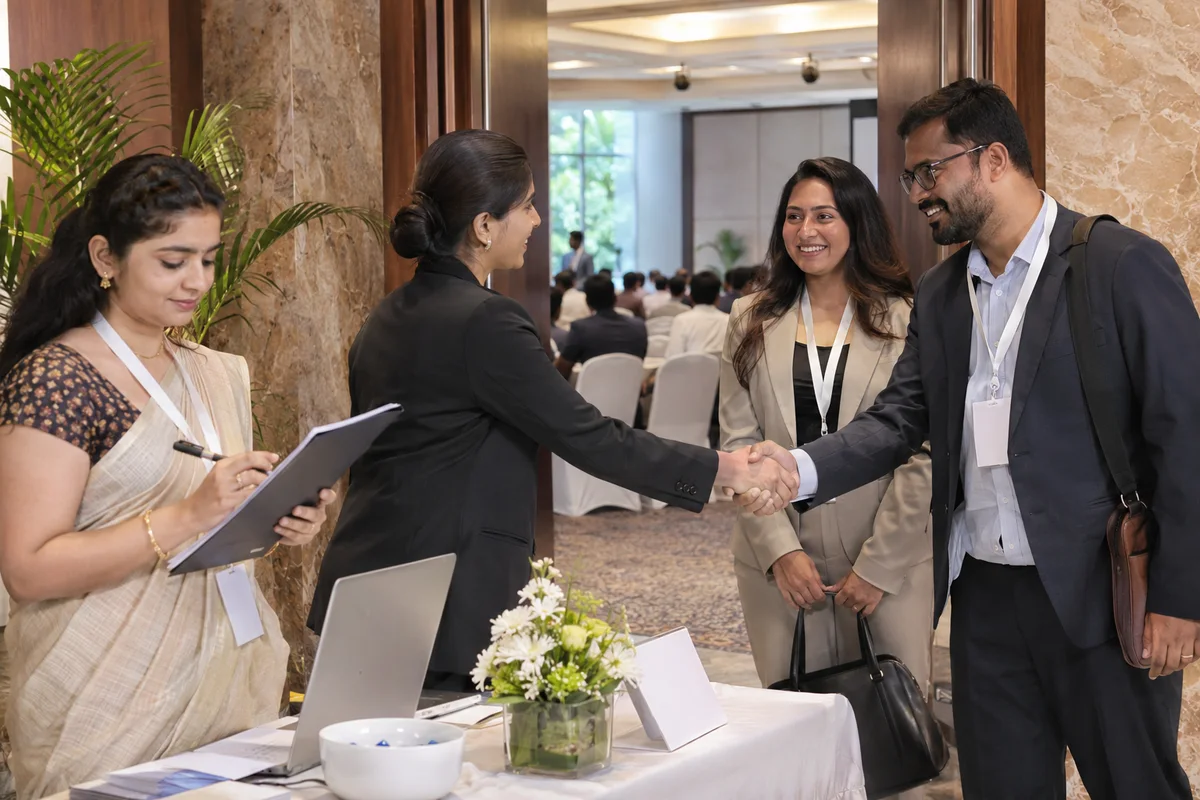
Conference marketing treats a conference as a source of buyers: which ones to attend, speak at or sponsor, the session proposal, meetings booked before the day, the table plan, lead capture and follow-up. GullySales prepares each of those with your team and records every conversation against the enquiry or order it led to.
Also for medical device manufacturers
- Digital marketing for medical device manufacturers
- Marketing strategy for medical device manufacturers
- Buyer journey for medical device manufacturers
- Buyer personas for medical device makers
- Product differentiation strategy for medical device manufacturers
- Product launch events for medical device manufacturers
- Product positioning and messaging for medical device manufacturers
- Revenue model and monetisation strategy for medical device manufacturers
Sales and marketing for medical device manufacturers, the overview.
Last updated 14 Nov 2026. Rules for this trade differ by state and professional body, and they change. We describe restrictions in general terms, so check the current position with your own council or adviser before you publish anything.
For medical device manufacturers
Where it usually goes wrong, and what we would do.
“The right conference is the one where your device's users gather”
A national association meeting for orthopaedic surgeons, radiologists or intensivists draws the specialists who use the device. A general healthcare fair draws everyone. The prospectus and past programmes show which one matches, and a conference with no relevant sessions should be skipped.
“A speaking slot carries more weight than a table, and has stricter limits”
A session proposal from a manufacturer is judged by the organising committee for scientific value. A sales pitch is rejected. The talk should deal with a clinical or technical problem, with the product named only where the programme allows, and with claims checked by your adviser.
“Meetings fixed before the day beat hoping for footfall”
A surgeon walking the hall has few minutes between sessions. A short message sent beforehand, naming the topic and a time, gives a reason to stop. Without it, the table depends on whoever happens to pass and the conversation stays shallow.
“Specialist contact data is collected under rules that vary”
Scanning a delegate badge or noting a doctor's number carries consent and data questions. Whether follow-up messages are allowed depends on how the organiser and the delegate agreed to share details. Check the organiser's terms and your own adviser's view before messaging anyone.
What we do
What we deliver for medical device manufacturers.
The work available for this need. We agree the deliverables and responsibilities for your engagement in writing.
Conference shortlist and fit note
A comparison of the conferences you are considering using the prospectus, past speaker lists and delegate mix for your device type, with questions for the organiser. Each is marked attend, speak, sponsor or skip.
Result: You can explain why each conference is on the calendar or off it.
Session proposal draft
A title, abstract and speaker biography written to the call for papers and its limits, built around a clinical or technical problem. Your speaker approves what is submitted.
Result: A proposal exists that the committee can judge on its subject, not its sponsor.
Pre-event meeting list and invitations
Specialists, hospital biomedical heads and distributors you want to meet, drawn from the speaker list and event app, with short messages carrying a reason and a time. You approve every recipient.
Result: Meetings are fixed before the first morning.
Table plan
A one-page plan of who stands at the table, when each person takes a break, where a private conversation happens and which device or sample is shown. The organiser or your contractor handles anything physical.
Result: The table is never left without someone who can answer a technical question.
Lead capture form
A form recording name, hospital, role, the device discussed, the requirement and the colleague who spoke to them, with a consent line your adviser has reviewed.
Result: Each conversation can be traced to a next step and an owner.
Conference cost and result record
A sheet listing ticket, travel and sponsor spend against the enquiries, demonstrations and orders that traced back to the event.
Result: The next year's decision rests on your own record.
How the result is measured
- Meetings accepted before the conference, against invitations sent
- Conversations recorded with a stated requirement
- Qualified opportunities accepted by sales
Recorded as a baseline before work starts, so every later report has an honest comparison.
Who it is for
This is written for these medical device manufacturers.
- Diagnostic equipment manufacturers
- Surgical instrument manufacturers
- Hospital furniture and equipment makers
- Disposable and consumable device manufacturers
- Implant and orthopaedic device makers
- Home healthcare device manufacturers
- In-vitro diagnostic kit manufacturers
- Export-focused medical device units
Before you decide
Agree the work. Know how to judge it.
Conference marketing for medical device manufacturers: use these checks to prepare, choose the scope, and review what changes.
Bring the right evidence
Bring a recent won order and an enquiry that went nowhere. Trace how each buyer found you, what they asked, and who handled the next step. A channel list alone will not explain the difference.
Make the scope clear
Choose one offer and one buyer group first. Agree which part needs attention: being found, getting a useful enquiry, or turning an enquiry into an order. Separate recommendations from the work required to carry them out.
Check the work in use
A useful plan names the first change, its owner, the evidence behind it, and the number that will show whether it worked. Ask what has deliberately been left out and why.
Know when to change course
If your team cannot answer the enquiries it already receives, improve that handover before buying more traffic. If the offer itself is unclear, test it with buyers before adding channels.
These are discussion points, not a fixed package. GullySales confirms the deliverables, responsibilities, fee, and term in writing after reading your brief and speaking with you.
Before we start
What to have ready before the work starts.
The records, access and decisions this work needs from medical device manufacturers. Anything missing is noted in the written scope, with who will supply it.
- Past exhibition and conference results
- Bring what you remember and any records of events attended: cost, contacts and orders traced to them. If none exist, we ask the sales head to reconstruct it. This is the baseline against which the new plan is judged. Even a rough memory of which events brought a quotation is better than none, and we mark reconstructed figures as such.
- Your budget and the staff available to attend
- Conference attendance depends on money and on who can leave the office. Tell us the budget and the people who can go. We plan to fit, and we leave out an event that would be staffed by someone without knowledge of the device.
- Registration status of the devices to be shown
- Only registered devices are shown or discussed as available. Bring the status for each device you might take. Units in trial are labelled as not for sale, in words that your adviser approves. A device that has not yet received its registration is not shown or described as available, and the table plan leaves its place empty.
- A contact list of buyers to invite
- Meetings before the event need names. Bring the hospitals and distributors you want to meet, with the person's role. Without it, the table depends on chance footfall. A list built from the enquiry record, with one named contact per hospital, lets us book meetings with decision makers and not with whoever walks past.
- Your adviser's view on speaking slots and sponsorship
- Industry sponsorship of clinical sessions is sensitive. Bring written guidance on what you may sponsor and say. We take the proposal no further than that guidance allows.
How it works
How the conference marketing work runs
The work itself, in order. How an engagement starts, from your brief to a written scope, is set out on our method page.
- 1
Write down who must be in the room
We begin by naming the buyers you want to meet above all this year: biomedical engineers at private hospitals, clinicians in one specialty, state procurement officers or distributors. You tell us where you met your best accounts before. The conference choice follows the people, not the other way round. The sales head brings the names of three or four accounts that were won after a conversation at an event, so that the choice of conference is tested against what has really worked for you.
- 2
Shortlist conferences and read their rules
We list the medical and hospital engineering conferences the chosen buyers attend, with the type of delegates, sponsorship options and any limits on what a manufacturer may do. You see the shortlist with the reasons. We drop events where your device's users are absent, however large the event is. We also note which conferences publish a delegate list or a programme early enough to plan meetings, and which ones restrict how a manufacturer may contact attendees.
- 3
Prepare the proposal and book the meetings
Where a speaking slot or a symposium is open, we write a proposal around a problem the audience has, not around the device. The regulatory lead checks it. For the days of attendance, we draft invitations to buyers you already know, so that meetings are fixed before you arrive. The proposal states in plain words which parts of the talk describe the registered use and which describe general practice, so the reviewer and the audience can tell them apart.
- 4
Plan the table and test the capture form
We plan the table or stand: which devices, who staffs it and when. A short capture form records each contact's role, institution and need on a phone. We test it on the actual network at the venue if possible. Your team practises saying what the device is registered for and no more.
- 5
Record every conversation against an enquiry
During the conference, each conversation is entered into the enquiry record with the device and the next step. We check the records with your team in the evening of the conference days. After the event, the follow-up begins from the record and not from a bundle of cards.
- 6
Compare the cost with what it produced
We set the full cost of the conference, including travel and staff time, against the meetings held, demonstrations booked and quotations requested, using the enquiry record. You see which conferences deserve a return and which do not. The result decides next year's shortlist.
Where this fits
Three pieces of sales work, in this order.
This work sits inside sales process design, at stage 0, foundation. The audit comes before it, and sales management keeps it running.
Step 1
Sales audit
Find where deals are being lost and what to fix first.
Start here if you cannot say where orders are lost.
Step 2 · you are here
Sales process design
One written way to sell, from first enquiry to repeat order.
Start here if every salesperson sells differently.
Step 3
Sales management
A target, a review routine and someone who owns the number.
Start here if the team has targets and no routine.
FAQ
Questions owners ask before they call.
Not here? More answers, or ask on WhatsApp.
Should a device maker sponsor a symposium inside a clinical conference?
Our biomedical engineers attend different events from our surgeons. Which first?
Can GullySales staff represent us at the table?
How do we choose between speaking and taking a table?
Who staffs the table, and what do they carry?
How much does it cost?
How long is the contract?
How soon will we see results?
Who will actually do the work?
What do you need from us?
From the blog
Further reading for medical device manufacturers.
 6 min read · 6 Oct 2026What healthcare buyers check before they choose youA patient, a referring doctor and a hospital purchase team each check different things before choosing a provider. See what each looks at.
 7 min read · 21 Sept 2026How to advertise to hospital ownersA hospital owner operates on Tuesday and signs cheques on Sunday. Sell to the consultant who starts the purchase, and lead with the finance structure.
 8 min read · 21 Sept 2026How to advertise to hospital administratorsThe administrator scopes the purchase, the head of department asks for it and the trust signs. Write the specification and be one of the three quotations.
More for medical device manufacturers
Related work to consider.
Closest to this: strategy and research
- Digital marketing for medical device manufacturers
- Marketing strategy for medical device manufacturers
- Buyer journey for medical device manufacturers
- Buyer personas for medical device makers
- Product differentiation strategy for medical device manufacturers
- Product launch events for medical device manufacturers
- Product positioning and messaging for medical device manufacturers
- Revenue model and monetisation strategy for medical device manufacturers
Also for medical device manufacturers
Or start from the overview: sales and marketing for medical device manufacturers.
Your next practical step
Tell us what you are trying to grow, and we will read it before we call.
Eight short steps, mostly taps. Skip anything you would rather answer on the call.