Medical device manufacturers · Product launch events
A launch day works when the right biomedical engineers and surgeons see the device in use.
A product launch event for a device manufacturer is the one occasion when invited clinicians, biomedical teams and distributors handle a new device and ask their questions in the same room. GullySales plans the guest list, invitations, demonstration order and lead capture with your team, and prepares the follow-up calls.
Scope, fee, reporting and term are agreed in writing after we have read your brief and spoken to you.
What product launch events means
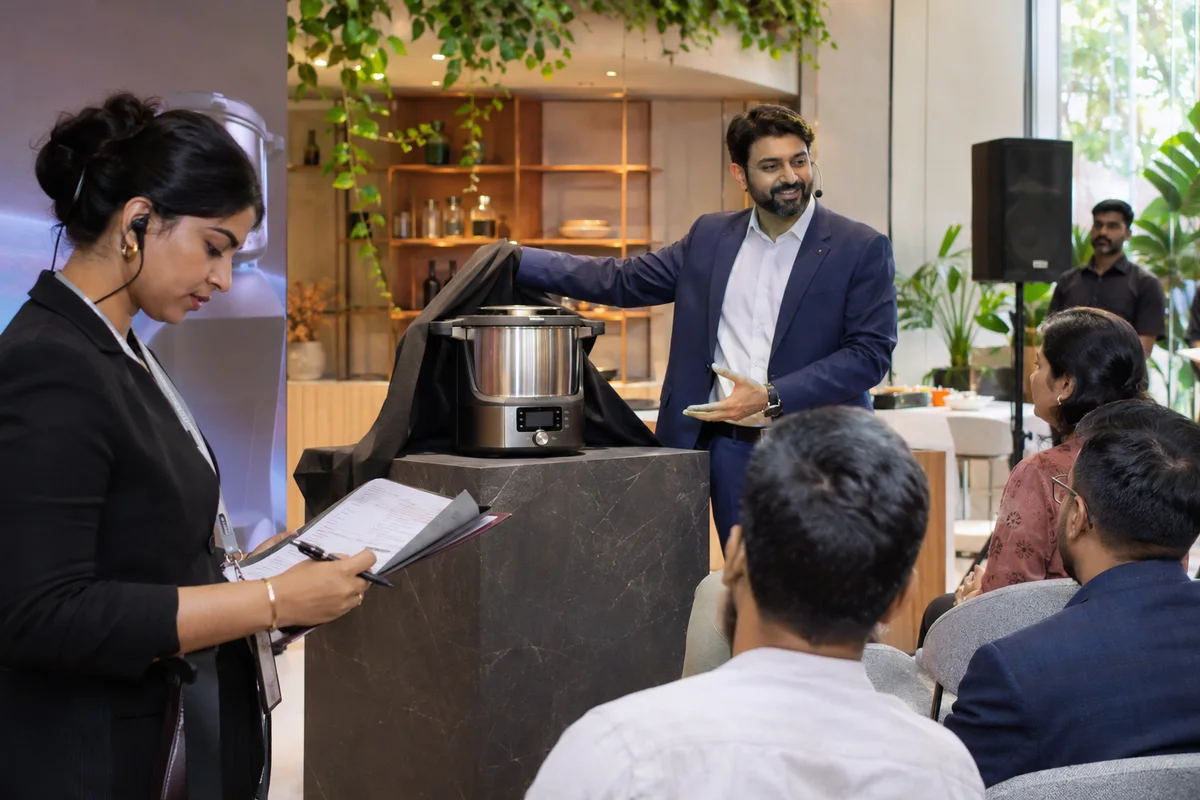
A product launch event is the one day, in a hall, showroom or plant, when invited buyers see a new offer first-hand. GullySales plans the guest and dealer list, invitations, run-sheet, demonstration and lead capture with your team, and prepares the follow-up so each guest gets a call that refers to what they saw.
Also for medical device manufacturers
- Digital marketing for medical device manufacturers
- Marketing strategy for medical device manufacturers
- Buyer journey for medical device manufacturers
- Buyer personas for medical device makers
- Product differentiation strategy for medical device manufacturers
- Conference marketing for medical device manufacturers
- Product positioning and messaging for medical device manufacturers
- Revenue model and monetisation strategy for medical device manufacturers
Sales and marketing for medical device manufacturers, the overview.
Last updated 14 Nov 2026. Rules for this trade differ by state and professional body, and they change. We describe restrictions in general terms, so check the current position with your own council or adviser before you publish anything.
For medical device manufacturers
Where it usually goes wrong, and what we would do.
“The room has to hold both the user and the buyer”
A surgeon or department head judges how the device feels in hand, while the biomedical engineer reads the specification and the purchase officer waits for terms. A launch that only gathers distributors or only gathers doctors leaves half the decision outside the hall.
“A live demonstration is a risk that needs a stand-by”
Equipment moved to a hotel ballroom meets unfamiliar power, a different network and a nervous audience. A device that stalls in front of invited clinicians costs more than a missed slot. The run-sheet needs a second unit or a recorded sequence ready.
“Talk of outcomes at the podium becomes advertising”
A speaker who tells a mixed audience what the device achieves in patients is making a claim in public. Rules on promoting medical products differ by device type and by state. Speaker notes should stick to specification, intended use as registered and handling, checked by your adviser.
“Business cards collected on the day go cold by the next quarter”
A launch produces names, but a name without the device discussed, the buyer's role and a named owner for the call is not a lead. Distributor enquiries and direct hospital enquiries also need separate follow-up, because they want different answers.
What we do
What we deliver for medical device manufacturers.
The work available for this need. We agree the deliverables and responsibilities for your engagement in writing.
Invitee list with a reason for each name
A sheet of hospitals, departments, distributors and referring specialists, each with the person to be hosted and why they are asked. Every name is yours to approve, and the contact data stays yours.
Result: You can see which departments and which distributors are in the room before invitations leave.
Invitation and reply sheet
Invitation wording for email and WhatsApp, a reminder and a reply sheet recording who accepted and who needs a personal call from the account owner.
Result: Each confirmed guest is tied to a named host.
Demonstration run-sheet
The order of what guests see, the question each part answers, who handles the device, and the stand-by plan if a unit or a connection fails.
Result: The team rehearses against a written sequence and a named technician.
Speaker notes checked for claims
Notes for each presenter limited to specification, registered intended use and handling, with lines flagged for your regulatory adviser to confirm.
Result: Your adviser has read what will be said aloud before the day.
Lead capture form
A phone form or desk sheet recording the guest, the device discussed, their role in the purchase, the stated timeline and who calls next, with a consent line for follow-up messages.
Result: Every conversation lands in your record with an owner.
Follow-up messages and call list
Messages that refer to the device handled, and a call list split between hospital guests and distributors. Quotation and demonstration requests are routed to the right person.
Result: No guest receives a generic circular after meeting your team.
How the result is measured
- Invited guests, confirmed guests and guests who attended
- Capture records with a stated requirement and next action
- Time to first call after the event
Recorded as a baseline before work starts, so every later report has an honest comparison.
Who it is for
This is written for these medical device manufacturers.
- Diagnostic equipment manufacturers
- Surgical instrument manufacturers
- Hospital furniture and equipment makers
- Disposable and consumable device manufacturers
- Implant and orthopaedic device makers
- Home healthcare device manufacturers
- In-vitro diagnostic kit manufacturers
- Export-focused medical device units
Before you decide
Agree the work. Know how to judge it.
Product launch events for medical device manufacturers: use these checks to prepare, choose the scope, and review what changes.
Bring the right evidence
Name the buyers you want to meet and the reason for them to speak with you. Bring a product or service story that can lead to a useful next conversation after the event.
Make the scope clear
Agree the event activity, demonstration material, enquiry capture, and follow-up responsibilities. Separate venue or sponsorship spend from production and sales preparation.
Check the work in use
Review the conversations that had a recorded need and agreed next step. Track them through proposals and orders instead of treating badge scans as qualified opportunities.
Know when to change course
If nobody can follow up after the event, reduce the activity to what the team can handle. A full contact list with no next action is not a sales pipeline.
These are discussion points, not a fixed package. GullySales confirms the deliverables, responsibilities, fee, and term in writing after reading your brief and speaking with you.
Before we start
What to have ready before the work starts.
The records, access and decisions this work needs from medical device manufacturers. Anything missing is noted in the written scope, with who will supply it.
- The registration status of the device being launched
- Before invitations go out, we need the registration or approval for the launch device in writing, and confirmation of what may be said. An event for a device whose approval is pending creates difficulty later. If the status is uncertain, we plan a technical preview and not a launch.
- A shipment and stand-by unit plan
- Bring the plan for moving the demonstration unit, who accompanies it and whether a second unit is available. A failed live demonstration is the greatest risk of the day. Without a spare, the run-sheet includes a recorded demonstration as a fallback. The service head signs the transport plan, because the engineer who must reinstall the unit knows what a journey can damage.
- A guest list with last contact dates
- Bring your best contacts, with the device they have used or enquired about and the last time anyone spoke to them. Cold names are less useful. If the list is short, we say so, and the event is kept smaller.
- Your adviser's guidance on hospitality
- Meals, travel and gifts for clinicians are regulated in the medical trade. Bring written guidance and the limits set. We plan within them and do not suggest anything beyond. If there is no guidance, the event offers no hospitality beyond a simple refreshment.
- Two people to run the lead capture desk
- Contacts gathered on the day need people who can talk to each guest and fill the form well. Name two members of the sales team. Without them the forms are half filled and the follow-up has little to work from.
How it works
How the product launch events work runs
The work itself, in order. How an engagement starts, from your brief to a written scope, is set out on our method page.
- 1
Name the guests and the reason for each
We begin with a guest list built with your sales head: clinicians who will use the device, biomedical engineers who will check it, procurement officers who will sign and distributors who will carry it. Beside each name goes one line on why they are invited. You strike names without a reason. A room needs both users and buyers, or the event produces applause and no orders. The sales head marks guests who have asked for this device before, so the room includes people who already have a question to put.
- 2
Fix the venue, format and demonstration order
We choose the venue and the format with you, such as a hotel hall or a hospital auditorium, depending on whether the device can be moved. We write a run-sheet that puts the hands-on demonstration before the speeches. You decide who demonstrates and who stands by with a spare unit if the first one fails.
- 3
Review the speaker notes with the regulatory lead
Each speaker sends their slides and notes, and the regulatory lead marks any sentence that promises an outcome, uses the device beyond its registration or compares it unfairly. Speakers correct them before the event. The same notes are used to brief the person who answers questions from the floor.
- 4
Send invitations and chase the replies
Invitations go out to each guest in the form that suits them, a printed card for senior clinicians and an email for engineers. We keep a reply sheet and the sales team phones those who have not replied. Any hospitality offered is first cleared with your adviser, in line with the rules on clinicians. Hospital guests receive the same schedule as the speakers, so nobody arrives expecting a session that has been moved.
- 5
Rehearse the day and test lead capture
We rehearse the demonstration, the sound and the transport of the unit, and test the lead capture form on a phone and on paper. Each attendee's form records the role, the institution and what they want next. Your team confirms who stands where and who greets whom.
- 6
Make the follow-up calls and review the room
On the day after the event the follow-up messages and calls begin, using the record of who attended and what they asked. After the calls, we compare demonstrations booked and quotations requested with the enquiry figures from before the launch. You see which guests became conversations.
Where this fits
Three pieces of sales work, in this order.
This work sits inside sales process design, at stage 1, prospecting and lead generation. The audit comes before it, and sales management keeps it running.
Step 1
Sales audit
Find where deals are being lost and what to fix first.
Start here if you cannot say where orders are lost.
Step 2 · you are here
Sales process design
One written way to sell, from first enquiry to repeat order.
Start here if every salesperson sells differently.
Step 3
Sales management
A target, a review routine and someone who owns the number.
Start here if the team has targets and no routine.
FAQ
Questions owners ask before they call.
Not here? More answers, or ask on WhatsApp.
Can we invite doctors to a launch and offer them hospitality?
Do you book the hotel and the equipment shipment?
How do we handle distributors who attend the same launch?
Who answers technical questions from the floor?
Should the launch be held in a hospital or a hotel?
How much does it cost?
How long is the contract?
How soon will we see results?
Who will actually do the work?
What do you need from us?
From the blog
Further reading for medical device manufacturers.
 6 min read · 6 Oct 2026What healthcare buyers check before they choose youA patient, a referring doctor and a hospital purchase team each check different things before choosing a provider. See what each looks at.
 7 min read · 21 Sept 2026How to advertise to hospital ownersA hospital owner operates on Tuesday and signs cheques on Sunday. Sell to the consultant who starts the purchase, and lead with the finance structure.
 8 min read · 21 Sept 2026How to advertise to hospital administratorsThe administrator scopes the purchase, the head of department asks for it and the trust signs. Write the specification and be one of the three quotations.
More for medical device manufacturers
Related work to consider.
Closest to this: strategy and research
- Digital marketing for medical device manufacturers
- Marketing strategy for medical device manufacturers
- Buyer journey for medical device manufacturers
- Buyer personas for medical device makers
- Product differentiation strategy for medical device manufacturers
- Conference marketing for medical device manufacturers
- Product positioning and messaging for medical device manufacturers
- Revenue model and monetisation strategy for medical device manufacturers
Also for medical device manufacturers
Or start from the overview: sales and marketing for medical device manufacturers.
Your next practical step
Tell us what you are trying to grow, and we will read it before we call.
Eight short steps, mostly taps. Skip anything you would rather answer on the call.