Product launch events · Marketing
Your launch day should end with a list of buyers and a call for each.
A launch day can fill a hall and still leave sales with nothing to act on. The dealer who stayed for the demonstration sits in the same list as the family member who came for lunch. Nobody wrote down who asked about price, so Monday starts with guesses.
Scope, fee, reporting and term are agreed in writing after we have read your brief and spoken to you.
In one paragraph
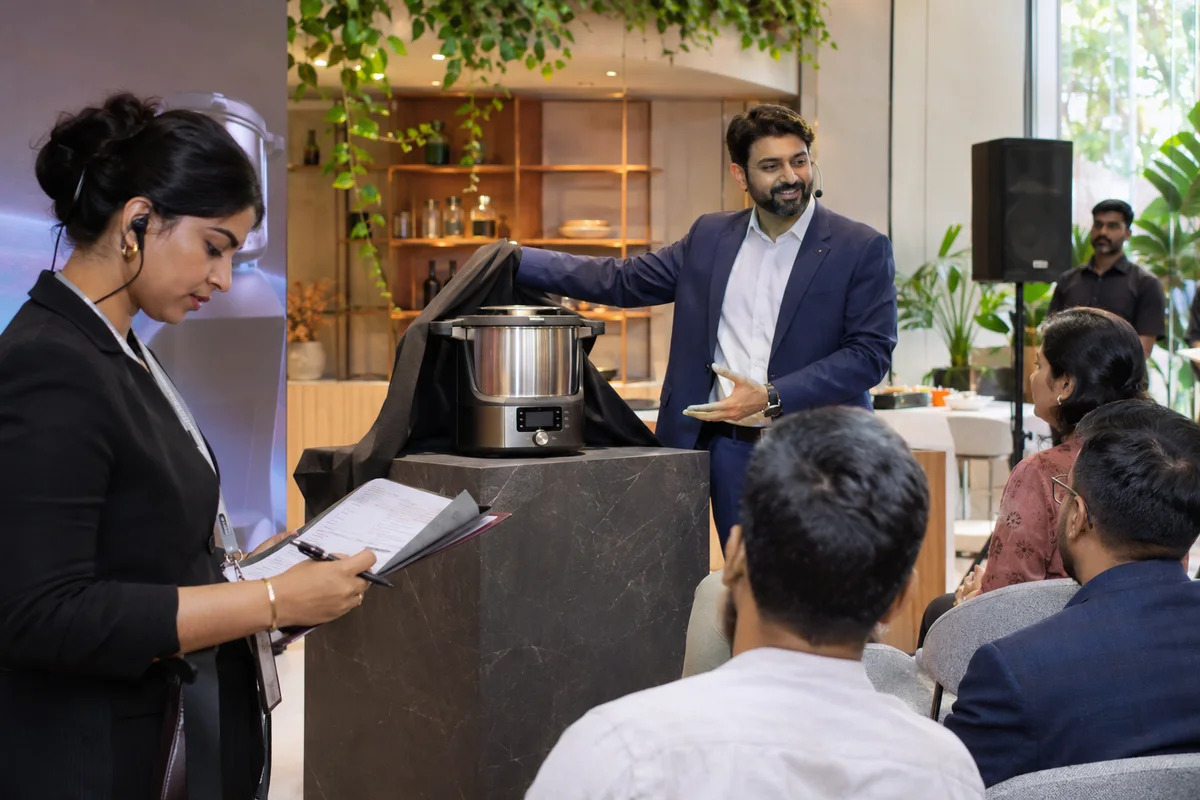
A product launch event is the one day, in a hall, showroom or plant, when invited buyers see a new offer first-hand. GullySales plans the guest and dealer list, invitations, run-sheet, demonstration and lead capture with your team, and prepares the follow-up so each guest gets a call that refers to what they saw.
GullySales plans the event as a sales instrument. We start from the guests you want in the room, whether dealers, institutional buyers, doctors, existing customers or local shoppers. The run-sheet, demonstration and capture desk are then built around them, and your team takes the conversations.
This page covers the event itself. The plan for the whole launch, including opening prices and sales readiness, sits under product and service launch strategy. Exhibitions run by an organiser belong to event and trade show marketing.
Who it is for
This is written for you if these sound familiar.
- Manufacturers unveiling a new model to dealers and distributors at a dealer meet
- Showrooms and shops introducing a new range to local buyers on a set day
- Clinics and hospitals opening a new department to referring doctors, with claims cleared by their own advisers
- Developers presenting a sample flat or new phase to invited buyers and channel partners
Not for
It is not the right fit if.
- The offer is not ready to sell. Fix price, stock and approvals first; an event only makes the gap public.
- You want an event company to supply stage, sound, catering and a crew. GullySales plans the sales side and does not run venues.
- Nobody on your team can own the guest conversations and the calls afterwards.
The problem
Does this sound like your business?
Common situations this work addresses.
“We filled the hall but cannot say who was a buyer”
The attendance sheet has names and numbers, nothing about interest. Sales cannot rank the guests, so the warm ones wait with the curious.
“Our dealers came, watched and left”
The demonstration showed features but never answered what the dealer would sell, at what margin, from which stock. They clapped and went home to the old model.
“The demonstration failed in front of guests”
The unit was never run on the venue's power, or the demo account loaded slowly on the hall's network. Rehearsal at the venue was skipped.
“Nobody called after the event”
Interested guests were promised a quotation. Without an owner for each name, the first call came when the interest had gone.
What we do
The work we can include.
Each deliverable and the purpose it serves. Your written scope confirms what is included, who is responsible, and what it costs.
Guest and dealer list
A sheet of invited customers, dealers, channel partners and named prospects, each with the reason to attend and the host who will greet them. You approve every name and own the contact data.
Venue and format brief
A written brief on the room, seating, power, internet, stage and demonstration space. Your event owner confirms the venue and its contractors; GullySales does not book or pay them.
Invitations and response sheet
Invitation wording for email and WhatsApp, a reply sheet, a reminder, and a short media invitation with fact sheet. The sheet shows who confirmed and who needs a personal call; coverage is never promised.
Run-sheet
A timed sequence for arrival, welcome, reveal, demonstration, questions and close, naming the person responsible for each slot. It includes the cue sheet for the technician and the stand-by plan if a demo fails.
Demonstration script and rehearsal checklist
The order of what guests see, the buyer question each part answers, and a checklist for testing the unit or software at the venue. Your product owner checks every claim before it is spoken.
Lead capture form and follow-up plan
A phone form or desk sheet recording the guest, the product discussed, the buying timeline and the owner of the next call. Prepared messages and a call list go to your sales head.
How the result is measured
- Invited guests, confirmed guests and guests who attended
- Capture records with a stated requirement and next action
- Time to first call after the event
- Quotations issued and orders traced to the event
- Full event cost against orders where they can be traced
Recorded as a baseline before work starts, so every later report has an honest comparison.
Before you decide
Agree the work. Know how to judge it.
Product launch events: use these checks to prepare, choose the scope, and review what changes.
Bring the right evidence
Name the buyers you want to meet and the reason for them to speak with you. Bring a product or service story that can lead to a useful next conversation after the event.
Make the scope clear
Agree the event activity, demonstration material, enquiry capture, and follow-up responsibilities. Separate venue or sponsorship spend from production and sales preparation.
Check the work in use
Review the conversations that had a recorded need and agreed next step. Track them through proposals and orders instead of treating badge scans as qualified opportunities.
Know when to change course
If nobody can follow up after the event, reduce the activity to what the team can handle. A full contact list with no next action is not a sales pipeline.
These are discussion points, not a fixed package. GullySales confirms the deliverables, responsibilities, fee, and term in writing after reading your brief and speaking with you.
How it works
How the product launch events work runs
The work itself, in order. How an engagement starts, from your brief to a written scope, is set out on our method page.
- 1
Guest and objective approval
You name the buyers who matter and what the day must produce, such as dealer sign-ups, booked demos or showroom visits. We draft the list and you approve it.
- 2
Venue, format and run-sheet sign-off
Your event owner confirms the room and contractors. The run-sheet and demonstration script are checked by your product and sales leads.
- 3
Invitation release
You approve recipients and wording before anything is sent. Personal calls to key dealers are assigned to named people on your team.
- 4
Rehearsal and capture test
Your team runs the demonstration at the venue and tests the capture form with a sample guest. Gaps are fixed before the day.
- 5
Event day handover
Hosts, demonstrators and the capture desk work from the run-sheet. Records are checked the same day for missing details.
- 6
Follow-up and review
Guests receive calls and messages that refer to what they saw. We then compare the guest list, quotations and orders with your baseline, and you decide what changes for the next event.
Before you hire anyone
Do this first yourself.
Settle who the event is for and what each guest should do next before you book a hall.
- Write the names of the twenty buyers or dealers you most want in the room, and why each should come.
- Decide the one action you want from a guest: an order, a demo booking, a dealer sign-up or a showroom visit.
- Run the demonstration once on the venue's own power and internet, with the people who will do it on the day.
- Name one person for each guest group who will greet them and make the follow-up call.
- Prepare a capture sheet with the product discussed, the buying timeline and the next action, and test it with a colleague.
- Check the offer is ready to sell: price sheet, stock or delivery capacity, and any approval needed for claims.
Judge any provider
What to ask any provider of this service.
Useful whoever you choose, including us.
- How will you decide who goes on the guest list, and who approves it?
- What will you rehearse at the venue before the day, and who attends the rehearsal?
- What happens to the run-sheet if the demonstration fails or the guests arrive late?
- What does the capture record contain, and who owns the call after the event?
- Which costs are yours and which are the venue's and contractors', written separately?
- How do you handle consent for guests' contact details after the event?
Where this fits
Three pieces of sales work, in this order.
This work sits inside sales process design, at stage 0, foundation. The audit comes before it, and sales management keeps it running.
Step 1
Sales audit
Find where deals are being lost and what to fix first.
Start here if you cannot say where orders are lost.
Step 2 · you are here
Sales process design
One written way to sell, from first enquiry to repeat order.
Start here if every salesperson sells differently.
Step 3
Sales management
A target, a review routine and someone who owns the number.
Start here if the team has targets and no routine.
FAQ
Questions owners ask before they call.
Not here? More answers, or ask on WhatsApp.
Do you book the venue and arrange the stage?
Can we use the same plan for a dealer meet and a customer launch?
Can we message every guest who gave us a number?
When is a roadshow or sampling a better fit?
What does it cost, and what happens first?
How long is the contract?
How soon will we see results?
Who will actually do the work?
What do you need from us?
What if we are not happy with the work?
By industry
Product launch events, written for your industry.
Related services
Often bought with this, or instead of it.
Your next practical step
Tell us what you are trying to grow, and we will read it before we call.
Eight short steps, mostly taps. Skip anything you would rather answer on the call.