Medical device manufacturers · Influencer marketing
Get a respected clinician to talk about your device at a medical conference.
Influencer marketing for a medical device manufacturer means working with respected clinicians, biomedical engineers or medical conference speakers who can credibly discuss your device to a professional audience. GullySales identifies and coordinates these relationships carefully, within what medical advertising rules allow.
Scope, fee, reporting and term are agreed in writing after we have read your brief and spoken to you.
What influencer marketing means
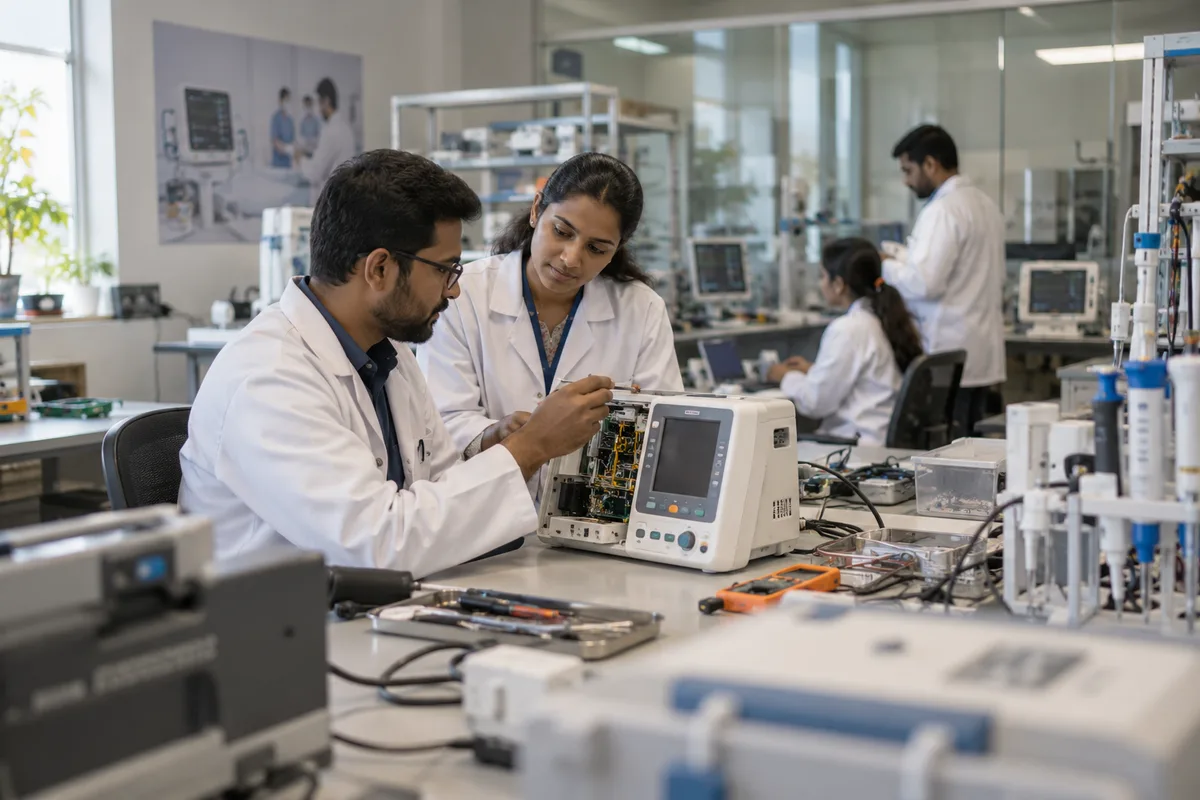
Influencer marketing means paying or partnering with local personalities and creators to talk about your business to their own audience. It works well where trust is built by a familiar face rather than an advert. GullySales finds creators whose audience matches your buyers and manages the brief and payment terms.
Also for medical device manufacturers
- Content marketing for medical device manufacturers
- Social media for medical device manufacturers
- AEO for medical device manufacturers
- Branding for medical device manufacturers
- Digital marketing for medical device manufacturers
- Email campaigns for medical device manufacturers
- Google Business Profile for medical device manufacturers
- Lead generation for medical device manufacturers
Sales and marketing for medical device manufacturers, the overview.
Last updated 17 Oct 2026. Rules for this trade differ by state and professional body, and they change. We describe restrictions in general terms, so check the current position with your own council or adviser before you publish anything.
For medical device manufacturers
Where it usually goes wrong, and what we would do.
“A clinician's opinion carries more weight than an advertisement”
A respected doctor mentioning your device's usefulness at a conference or in a professional forum influences hospital buyers far more than paid promotion.
“Compliance rules shape what can be said and by whom”
Any clinician collaboration needs to stay within medical advertising and ethics guidelines, which is a constraint general influencer marketing does not have.
“Conference presence beats social media reach for this audience”
A biomedical engineer or specialist is more likely to be influenced by a conference session or a professional journal mention than a social media post.
What we do
What we deliver for medical device manufacturers.
Every deliverable, what it covers for you, and the result it is there to produce. Nothing here is an extra.
Clinician shortlist within compliance rules
A shortlist of clinicians or conference speakers already active in your device category, checked against medical advertising and ethics rules.
Result: You get credible visibility without a compliance risk attached.
Conference session and presence coordination
Coordination for a clinician mention or session at a relevant medical conference where your device is genuinely used.
Result: Specialists hear about the device from a peer, not an advertisement.
Written terms for every clinician collaboration
A written agreement for each clinician relationship, keeping the collaboration within what medical advertising rules allow.
Result: The collaboration stays compliant and clearly documented.
Professional journal and forum placement
Outreach to place a factual mention of your device in a relevant professional journal or forum, not a paid endorsement.
Result: A specialist encounters your device where they already look for information.
How the result is measured
- Reach per creator
- Engagement rate
- Enquiries traced to a creator
Recorded as a baseline before work starts, so every later report has an honest comparison.
Who to work with
Work with clinicians and biomedical engineers within the rules that govern your device.
- Practising clinicians
- Choose a surgeon, physician or technologist who uses a device like yours and will speak from experience. Check that their hospital's rules allow it and that any engagement is recorded.
- Biomedical engineers
- A biomedical engineer at a hospital can speak about installation, calibration and service. Ask them what a purchase committee checks, and film how your team answers it.
- Conference and society speakers
- A speaker at a professional conference can present a case with your device. Offer support to the conference or the speaker's time openly, and let them present independently.
- Written terms and disclosure
- Record what you pay or provide, what the clinician may say and that any relationship is stated in the talk or article. Check your hospital customers' conflict-of-interest policies.
- Claims within registration
- Keep every claim inside your registered intended use and the labelling approved by your regulator. Rules on advertising devices differ by device class and change, so check them with your regulatory adviser.
- Who not to use
- Skip a social media creator who has no clinical or engineering background, and never push a prescription or implantable device at the general public.
Who it is for
This is written for these medical device manufacturers.
- Diagnostic equipment manufacturers
- Surgical instrument manufacturers
- Hospital furniture and equipment makers
- Disposable and consumable device manufacturers
- Implant and orthopaedic device makers
- Home healthcare device manufacturers
- In-vitro diagnostic kit manufacturers
- Export-focused medical device units
Not for
It is not the right fit if.
- Your compliance team has not decided what a clinician may be given or asked to say, and any arrangement would start without written terms.
- The device is not yet registered for the use the clinician would speak about, so their words could go beyond the approval.
- You expect a public social post from a clinician to bring hospital orders, though procurement works through committees.
How it works
How the influencer marketing work runs
The work itself, in order. How an engagement starts, from your brief to a written scope, is set out on our method page.
- 1
Define who needs to see it
We settle the buyer, the city and the language first. That decides which creators are worth approaching at all.
- 2
Audit the creators
We ask for audience screenshots from the creator's own account, read the comments, and look at earlier sponsored posts to see how the audience reacted.
- 3
Agree terms and brief
Fee, instalments, dates, exclusivity and paid-media rights go into one written agreement before any filming. The brief carries facts and limits, not a script.
- 4
Review the draft
We check prices, claims and disclosure on the draft. Edits are about accuracy, not about changing the creator's style.
- 5
Publish and trace
Posts go live on the agreed dates. Enquiries are matched to each creator's code or link and reported against the fee paid, in the format agreed in writing.
Where this fits
Three pieces of sales work, in this order.
This work sits inside sales process design, at stage 0, foundation. The audit comes before it, and sales management keeps it running.
Step 1
Sales audit
Find where deals are being lost and what to fix first.
Start here if you cannot say where orders are lost.
Step 2 · you are here
Sales process design
One written way to sell, from first enquiry to repeat order.
Start here if every salesperson sells differently.
Step 3
Sales management
A target, a review routine and someone who owns the number.
Start here if the team has targets and no routine.
FAQ
Questions owners ask before they call.
Not here? More answers, or ask on WhatsApp.
Is this the same as paying for a testimonial?
How do we find the right clinicians?
Can a clinician use our device and post their own opinion?
What if a clinician claims the device does more than it is registered for?
How much does it cost?
How long is the contract?
How soon will we see results?
Who will actually do the work?
What do you need from us?
What if we are not happy with the work?
From the blog
Further reading for medical device manufacturers.
 6 min read · 6 Oct 2026What healthcare buyers check before they choose youA patient, a referring doctor and a hospital purchase team each check something different before choosing a provider. This post lists what each one looks at and where a clinic, lab or supplier loses them.
 7 min read · 21 Sept 2026How to advertise to hospital ownersThe owner of a 60-bed hospital is operating on Tuesday and signs cheques on Sunday. Sell to the consultant who starts the purchase, and lead with the finance structure.
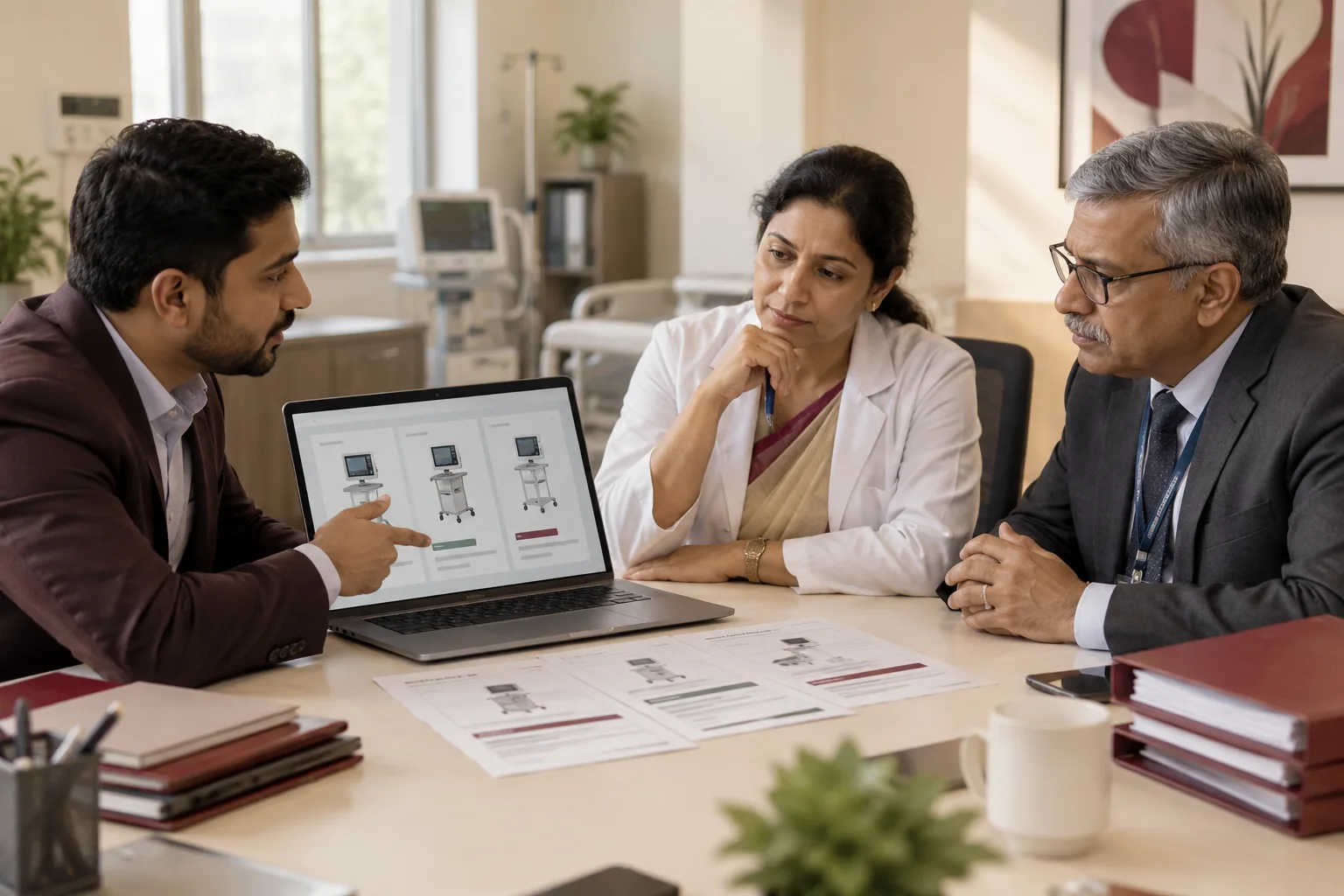 8 min read · 21 Sept 2026How to advertise to hospital administratorsThe administrator scopes the purchase, the head of department asks for it and the trust signs it. Three quotations are compulsory, so your job is to be one of the three and to write the specification.
More for medical device manufacturers
Everything else we would do for you.
Closest to this: content and social
Also for medical device manufacturers
Or start from the overview: sales and marketing for medical device manufacturers.
Your next practical step
Tell us what you are trying to grow, and we will read it before we call.
Eight short steps, mostly taps. Skip anything you would rather answer on the call.