Metal fabrication and laser cutting units · Branding
Look like a shop a purchase team can put on its vendor list.
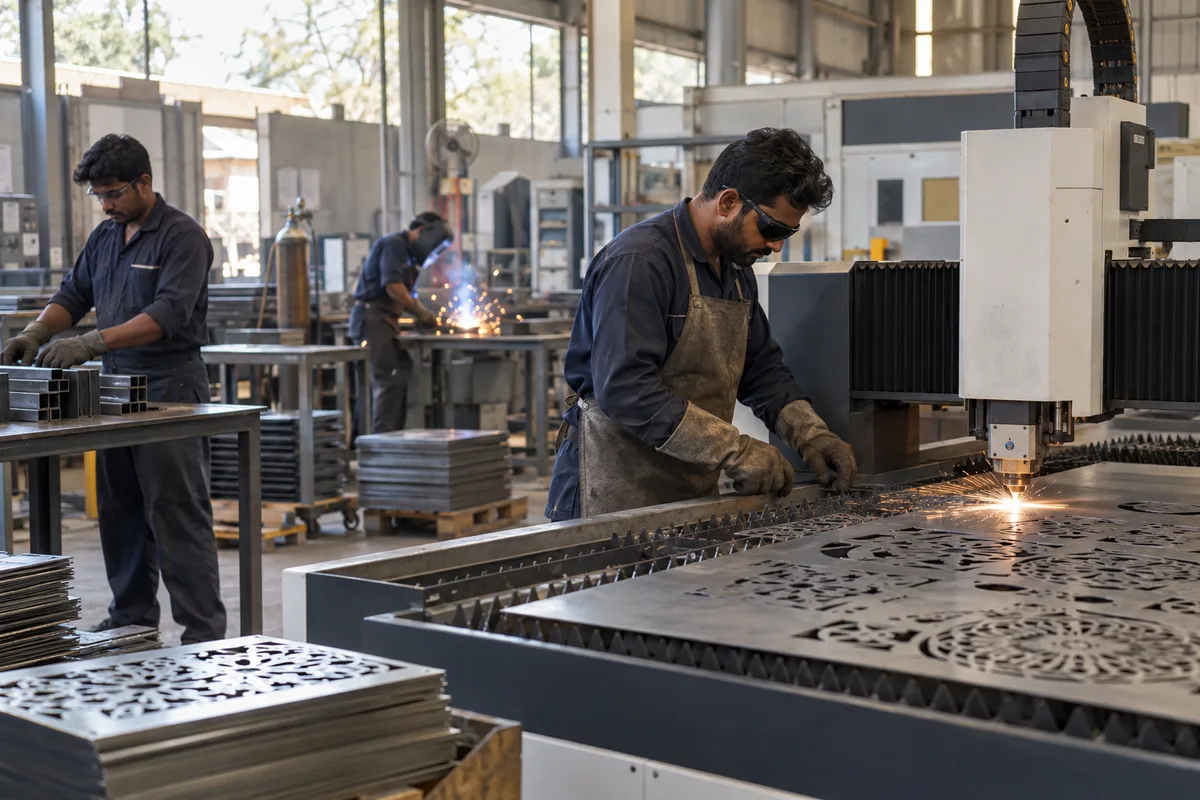
Branding for a fabrication unit is everything a buyer reads before trusting you with a batch: the capability sheet, the quotation, the shop floor and the photographs. GullySales settles that presentation and makes sure the same shop shows up on the website, the profile and a vendor registration form.
Scope, fee, reporting and term are agreed in writing after we have read your brief and spoken to you.
What branding means
Branding is what a customer remembers about your business beyond the product, including your name, colours, tone of voice and what you are known for locally. GullySales sets or corrects this once and applies it consistently across your website, signage and adverts so the business looks like one company everywhere.
Also for metal fabrication and laser cutting units
- SEO for metal fabrication and laser cutting units
- PPC ads for metal fabrication and laser cutting units
- Lead generation for metal fabrication and laser cutting units
- Digital marketing for metal fabrication and laser cutting units
- Reputation management for metal fabrication and laser cutting units
- Local SEO for metal fabrication and laser cutting units
- Social media marketing for metal fabrication and laser cutting units
- Content marketing for metal fabrication and laser cutting units
Sales and marketing for metal fabrication and laser cutting units, the overview.
Last updated 5 Oct 2026.
For metal fabrication and laser cutting units
Where it usually goes wrong, and what we would do.
“Your quotation is the document that gets compared”
Three shops send a rate. The one that states material, tolerance, finishing and lead time on the same sheet reads as the safer choice.
“A tidy floor photographs as a capable shop”
Buyers read housekeeping as quality. Sorted stock, marked bays and a clean machine area do more for you than a redesigned logo.
“Decorative work and job work need different faces”
An architect specifying a jali screen wants a portfolio. A panel builder wants tolerances. One brochure trying to do both convinces neither.
What we do
What we deliver for metal fabrication and laser cutting units.
Every deliverable, what it covers for you, and the result it is there to produce. Nothing here is an extra.
A capability sheet purchase teams can file
Machines, bed sizes, tonnage, materials, tolerances, finishing, quality checks and delivery reach, in one document kept current.
Result: Vendor registration stops stalling on missing details.
A quotation format that carries the shop
Material grade, thickness, process, finishing, tolerance, lead time and terms set out beside the rate, on your own letterhead.
Result: You are compared on what is supplied rather than on rate alone.
Photography of the floor, the machines and the work
One proper shoot covering the laser, the brake, the welding bay, finished panels and a fitted structure, used everywhere afterwards.
Result: Every place a buyer looks shows the same shop.
A separate portfolio for architectural work
A folder of jali screens, facade panels, staircases and custom frames, prepared for architects and interior designers rather than for purchase engineers.
Result: Designers can see whether you have made what they are drawing.
One positioning line used everywhere
A short agreed line on what your shop is for, applied to the site, the profile, the quotation and the stall panel.
Result: Buyers can describe your shop to a colleague accurately.
Signage, uniform and vehicle presentation
The board at the gate, shop floor identity cards and the delivery vehicle brought to one standard so a visiting buyer finds the place easily.
Result: A plant visit starts well rather than with a phone call for directions.
How the result is measured
- Recognition in customer feedback
- Consistency across channels
- Repeat enquiries by name
Recorded as a baseline before work starts, so every later report has an honest comparison.
Positioning in one sentence
The sentence a fabrication unit can fill in so a buyer with a drawing knows whether to send it to you.
We cut, bend and finish [material and thickness] for [OEMs, architects or shopfitters] in [area], and unlike [the next laser shop] we [one thing you do on every drawing].
- Who it is for
- Pick the buyer: an OEM with repeat sheet metal parts, an architect needing decorative screens, a shopfitter, or a one-off homeowner. Their drawings, tolerances and patience differ, and so does the quote.
- What you cut, bend and finish
- State materials, thickness range, bed size, bending capacity and finishing such as powder coating, in the units a drawing uses. 'All types of fabrication' tells a buyer nothing.
- What the buyer gets that the other laser shop does not
- It might be a quote returned from a DXF file by a named person, nesting that saves sheet, or in-house bending and powder coating so one vendor handles the part. Choose one you do on every job.
- The proof you can show
- Photographs of finished parts beside the drawing, a first-article inspection sample, a list of materials you hold in stock, and a repeat OEM willing to confirm the work.
- Words buyers ignore
- 'Precision', 'quality' and 'timely delivery' are on every card. Replace them with a tolerance you hold, the sheet thickness you cut and the way you inspect a first piece.
- The name and tagline test
- A name ending in 'Engineering' or 'Industries' gets lost among others on IndiaMART lists. Add the process and your industrial area to the display name, and keep the tagline to what you cut.
Who it is for
This is written for these metal fabrication and laser cutting units.
- CNC laser cutting job shops
- Sheet metal fabrication units
- Structural steel fabricators
- Precision sheet metal and enclosure makers
- Decorative and architectural metal work studios
- Gate, grill, railing and shed fabricators
- Stainless steel kitchen and equipment fabricators
- Powder coating and finishing units
How it works
From your first message to the first report.
No open-ended retainer. Every step gives you something in writing.
First
Your brief
You tell us what you need in a few short steps: your business, what you want, where enquiries come from and how they are handled.
After the brief
A conversation and a written scope
We read it, then talk with whoever handles your enquiries. If you want our help, the scope, the fee and the reporting come in writing, and nothing starts before you have read them.
Before work starts
Baseline recorded
The numbers this work is meant to move, such as enquiries, quotations, orders, visits or renewals, written down so every later report has an honest comparison.
After the baseline
The first fix goes live
The fix we agreed to start with is put in place and measured against the baseline, whether that is a reply, a follow-up, a page, a listing or the handover between marketing and sales.
As agreed
Report against the baseline
What moved, what did not, and what changes next, in plain words. How often you get it is set in writing before work starts.
At renewal
Renew on the numbers
The term ends and you decide whether to continue from the results. The length is agreed in writing before anything starts.
How the branding work runs
- 1
Interview customers and team
We talk to real buyers, won and lost, and to people inside the business who deal with customers daily.
- 2
Review the competitive field
We look at how the nearest competitors present themselves so the position is not accidentally identical.
- 3
Draft the position
A first version of the positioning statement and messaging pillars is written and checked against what customers actually said.
- 4
Test it against real conversations
The draft is tried out in a real sales call or two before it is finalised, since a position that does not survive a real conversation needs rework.
- 5
Hand over the rollout brief
The final position, pillars and not-for list are documented for your team and any agency to apply consistently.
Why us
Why owners pick GullySales over an agency.
Marketing and sales, as one job
Most agencies stop at the enquiry. We also fix what happens after it: the reply, the follow-up, the quote and the CRM.
The person on the first call does the work
No account managers in between. You are never handed to someone you have not met.
A baseline before anything starts
Your numbers are written down on day one, so every later report compares against something honest.
The fee in writing, split three ways
Our time, your media spend and production on separate lines. You always see what goes to us.
No guarantees we cannot keep
The term is agreed in writing and never a default twelve months. We never promise a ranking or a lead count, because nobody controls those.
One office, and we say so
Nagarbhavi, Bengaluru. We work across India by call and WhatsApp and travel when a session needs to be in person.
#257, 3rd floor, Sri Nanjundeshwara Complex, Nagarbhavi 8th Block, Outer Ring Road. How we work.
Your brief
Tell us what you need, and we will read it before we call.
Eight short steps about your business, what you want and who decides. Most questions are a tap, and you can skip any you would rather answer on the call.
FAQ
Questions owners ask before they call.
Not here? More answers, or ask on WhatsApp.
Does a job shop need a logo and a brand book?
How do we look bigger than we are without lying?
Our work goes out unmarked to OEMs. Can we put our name on the parts?
Should we list machine make and bed size on the website?
How much does it cost?
How long is the contract?
How soon will we see results?
Who will actually do the work?
What do you need from us?
What if we are not happy with the work?
From the blog
Further reading for metal fabrication and laser cutting units.
 7 min read · 21 Sept 2026How to advertise to purchase managersA purchase manager is unreachable until a requirement exists. The only work that pays before that is getting into the vendor file, and getting your model into the specification someone else writes.
 7 min read · 21 Sept 2026How to advertise to engineers, who buy from the specificationAn engineer writes the specification and purchase buys from it. If your make is not in the approved list before the tender, no budget reaches you afterwards.
 7 min read · 8 Jul 2026How to get plastic moulding job work and CNC machining ordersJob work orders come to shops that buyers can find, check and trust with a drawing. Here is how moulders and machine shops get on RFQ lists and win repeat orders.
More for metal fabrication and laser cutting units
Everything else we would do for you.
- SEO for metal fabrication and laser cutting units
- PPC ads for metal fabrication and laser cutting units
- Lead generation for metal fabrication and laser cutting units
- Digital marketing for metal fabrication and laser cutting units
- Reputation management for metal fabrication and laser cutting units
- Local SEO for metal fabrication and laser cutting units
Or start from the overview: sales and marketing for metal fabrication and laser cutting units.
Your next practical step
Tell us what you are trying to grow, and we will read it before we call.
Eight short steps, mostly taps. Skip anything you would rather answer on the call.