Packaging manufacturers · Social media
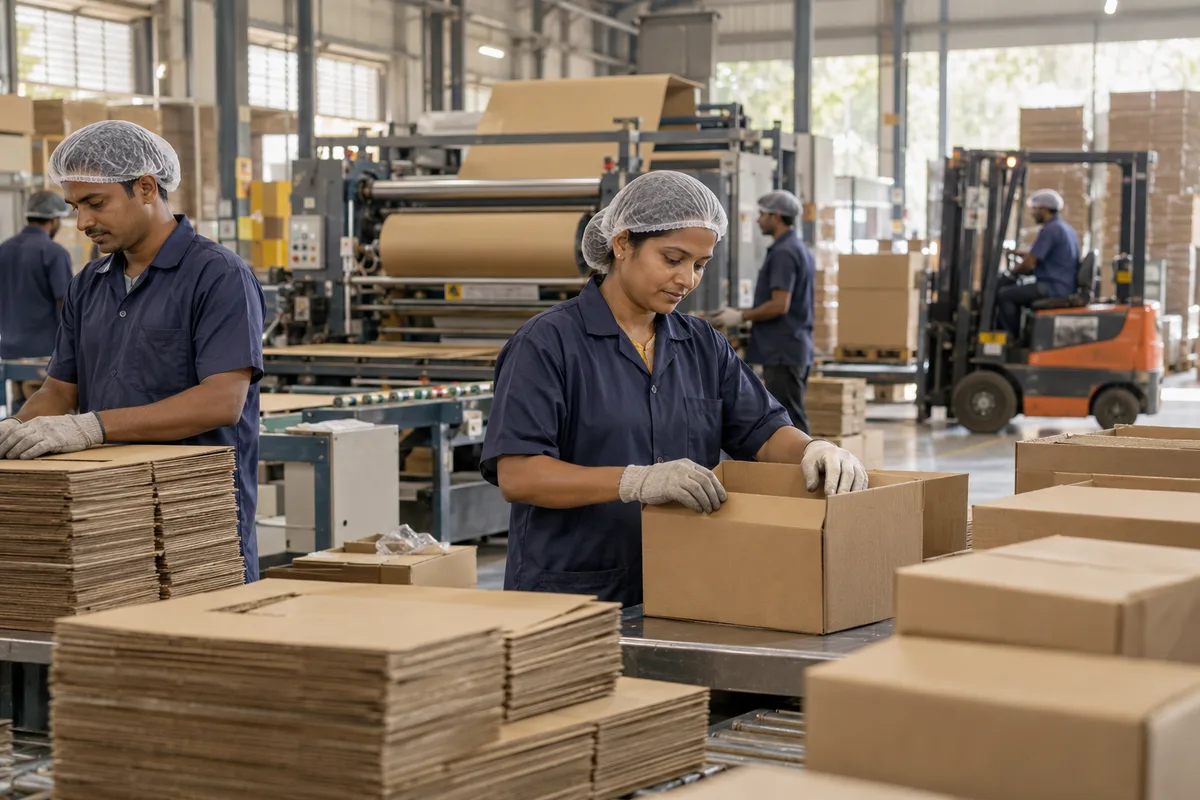
Show the die-cutter running, because founders buy on what they see.
Social media for a packaging unit does two separate jobs. One shows small brands your print and finishing quality on Instagram, the other keeps your name in front of purchase and brand managers on LinkedIn. GullySales runs both, with permission settled on a job before it is posted.
Scope, fee, reporting and term are agreed in writing after we have read your brief and spoken to you.
What social media means
Social media is the ongoing posting your business does on platforms such as Instagram, Facebook and LinkedIn to stay visible to customers and prospects between purchases. GullySales plans a posting calendar, writes captions and designs the images so the page looks active and answers what a visitor would ask.
Also for packaging manufacturers
- Content marketing for packaging manufacturers
- SEO for packaging manufacturers
- PPC ads for packaging manufacturers
- Lead generation for packaging manufacturers
- Digital marketing for packaging manufacturers
- Reputation management for packaging manufacturers
- Local SEO for packaging manufacturers
- Branding for packaging manufacturers
Sales and marketing for packaging manufacturers, the overview.
Last updated 5 Oct 2026.
For packaging manufacturers
Where it usually goes wrong, and what we would do.
“Permission comes before the post”
A carton on your floor carries somebody's unreleased product. Posting it early can cost the account, so the rule is agreed once and written into the order.
“Instagram sells the finish, LinkedIn sells the plant”
A founder watches the foiling and the pasting. A purchase head wants to hear about capacity, a material change or a new machine.
“A running machine holds attention, a stack of boxes does not”
Video of a rigid box being wrapped or a die-cutter feeding keeps a founder on the screen long enough to write to you.
What we do
What we deliver for packaging manufacturers.
Every deliverable, what it covers for you, and the result it is there to produce. Nothing here is an extra.
A posting plan split between the two platforms
Separate plans for Instagram and LinkedIn, each with its own buyer, subject list and frequency, rather than one post copied to both.
Result: Neither audience is served the other's content.
Permission wording added to your order process
A short clause and a routine ask, so photographing and posting a client's pack is settled at order stage rather than after the fact.
Result: You can show real work without risking an account.
Video of the printing, cutting and finishing lines
Short clips shot on the floor of the processes buyers care about, edited for a phone screen and reused across the year.
Result: The plant does the selling.
Material explainers written for founders
Simple posts on board choice, flute sizes, food contact grades and what a dieline is, aimed at a first-time buyer.
Result: Founders arrive knowing what to ask for.
Messages logged with every other enquiry
Instagram and LinkedIn messages routed into the same enquiry record as calls and marketplace leads, with a reply time agreed.
Result: A midnight message is answered, not lost in a notification.
Reporting on enquiries from social
Messages, enquiries and samples traced back to each platform, measured against the baseline taken at the start.
Result: You can tell whether the posting is earning its time.
How the result is measured
- Posts published
- Engagement rate
- Enquiries from social profiles
Recorded as a baseline before work starts, so every later report has an honest comparison.
Platform for this buyer
Where a brand buyer looks at a packaging supplier, and what to show there.
- LinkedIn for purchase and brand managers
- Post a finished carton or pouch with the board or film, print process and finish named. Tag the client only with written permission. The action is a message with the pack size and quantity.
- Instagram reels for small and D2C brands
- Film a die cut, a lamination pass or a foil stamp on the machine, then the finished box in a hand. Founders save these, then message to ask about minimum quantities.
- YouTube for material explainers
- Explain kraft, duplex board, BOPP or a laminate pouch in plain words, and when each suits a product. A founder choosing packs for the first time searches for exactly this.
- WhatsApp Business catalogue and Status
- List the standard box and pouch sizes you hold or make often, with a photograph and the minimum order. Customers who already buy from you reorder or enquire from it.
- What not to post
- Do not show an unreleased brand's artwork, a client's pack before launch or a rate quoted to a customer. Take written permission before filming a job, and blur the brand name where it has not been given.
Who it is for
This is written for these packaging manufacturers.
- Corrugated box and carton manufacturers
- Mono carton and printed folding box makers
- Flexible packaging, laminate and pouch manufacturers
- Label and sticker printers
- Paper bag and paper cup manufacturers
- Rigid box and premium gift packaging makers
- Paper and paper products converters
- Industrial and export packaging suppliers
- E-commerce and courier packaging suppliers
Not for
It is not the right fit if.
- You want a guaranteed Google ranking or a guaranteed number of leads. Nobody honest can promise either.
- You need enquiries by next week and have nobody to answer them.
- You want posts and reach reported, not enquiries and orders.
How it works
From your first message to the first report.
No open-ended retainer. Every step gives you something in writing.
First
Your brief
You tell us what you need in a few short steps: your business, what you want, where enquiries come from and how they are handled.
After the brief
A conversation and a written scope
We read it, then talk with whoever handles your enquiries. If you want our help, the scope, the fee and the reporting come in writing, and nothing starts before you have read them.
Before work starts
Baseline recorded
Enquiries by source, reply time, conversion and cost per order, written down so every later report has an honest comparison.
After the baseline
The first fix goes live
The fix we agreed to start with is put in place and measured against the baseline, whether that is reply time, a follow-up sequence, the page buyers land on or the handover between marketing and sales.
As agreed
Report against the baseline
What moved, what did not, and what changes next, in plain words. How often you get it is set in writing before work starts.
At renewal
Renew on the numbers
The term ends and you decide whether to continue from the results. The length is agreed in writing before anything starts.
How the social media work runs
- 1
Understand your audience and platforms
We identify which platforms your specific buyers actually use and what kind of content they respond to.
- 2
Audit current presence
We review existing pages, past content performance and any gaps in consistency.
- 3
Build the content calendar
A plan is created, balancing genuine value with occasional direct offers.
- 4
Implement and post
Content is created and published consistently on the agreed schedule.
- 5
Measure and optimise
We track enquiries alongside engagement and adjust the content mix based on what actually performs.
Why us
Why owners pick GullySales over an agency.
Marketing and sales, as one job
Most agencies stop at the enquiry. We also fix what happens after it: the reply, the follow-up, the quote and the CRM.
The person on the first call does the work
No account managers in between. You are never handed to someone you have not met.
A baseline before anything starts
Your numbers are written down on day one, so every later report compares against something honest.
The fee in writing, split three ways
Our time, your media spend and production on separate lines. You always see what goes to us.
No guarantees we cannot keep
The term is agreed in writing and never a default twelve months. We never promise a ranking or a lead count, because nobody controls those.
One office, and we say so
Nagarbhavi, Bengaluru. We work across India by call and WhatsApp and travel when a session needs to be in person.
#257, 3rd floor, Sri Nanjundeshwara Complex, Nagarbhavi 8th Block, Outer Ring Road. How we work.
Your brief
Tell us what you need, and we will read it before we call.
Eight short steps about your business, what you want and who decides. Most questions are a tap, and you can skip any you would rather answer on the call.
FAQ
Questions owners ask before they call.
Not here? More answers, or ask on WhatsApp.
Which platform matters most to a packaging unit?
What can we post when every job belongs to a client?
How do we post a job that is under a client's confidentiality terms?
Should the owner or the sales manager post on LinkedIn?
How do we get on a big brand's approved vendor list?
How should we talk to buyers when paper prices rise?
How long is the contract?
How soon will we see results?
Who will actually do the work?
What do you need from us?
From the blog
Further reading for packaging manufacturers.
 6 min read · 6 Oct 2026How industrial buyers decide which unit gets the RFQIndustrial buyers send the drawing to the units they can verify, then favour the first usable quote. This post lists what they check across nine manufacturing trades and where a unit drops off the shortlist.
 7 min read · 18 Aug 2026How to get printing orders that repeat every monthPrinting orders come from local searches, corporate and institutional buyers who reorder, and fast quotes. Pick the jobs you print best, show prices, and chase the reorder before the customer runs out.
 7 min read · 28 Jul 2026How to convert IndiaMART leads into ordersIndiaMART leads convert when you reply within minutes, qualify with one question, send a real quotation and follow up for weeks. How to handle enquiries, buy leads and the lead manager.
More for packaging manufacturers
Everything else we would do for you.
Closest to this: content and social
Also for packaging manufacturers
- SEO for packaging manufacturers
- PPC ads for packaging manufacturers
- Lead generation for packaging manufacturers
- Digital marketing for packaging manufacturers
- Reputation management for packaging manufacturers
- Local SEO for packaging manufacturers
- Branding for packaging manufacturers
- Email marketing for packaging manufacturers
Or start from the overview: sales and marketing for packaging manufacturers.
Your next practical step
Tell us what you are trying to grow, and we will read it before we call.
Eight short steps, mostly taps. Skip anything you would rather answer on the call.