Printing businesses · Lead generation
Answer the file on WhatsApp before the buyer sends it to another press.
Lead generation for a print shop is about the enquiry arriving with a design file, a quantity and a deadline, from WhatsApp, a directory or the counter. GullySales fixes the questions asked back, the quote that follows, and the record of which source is actually paying.
Scope, fee, reporting and term are agreed in writing after we have read your brief and spoken to you.
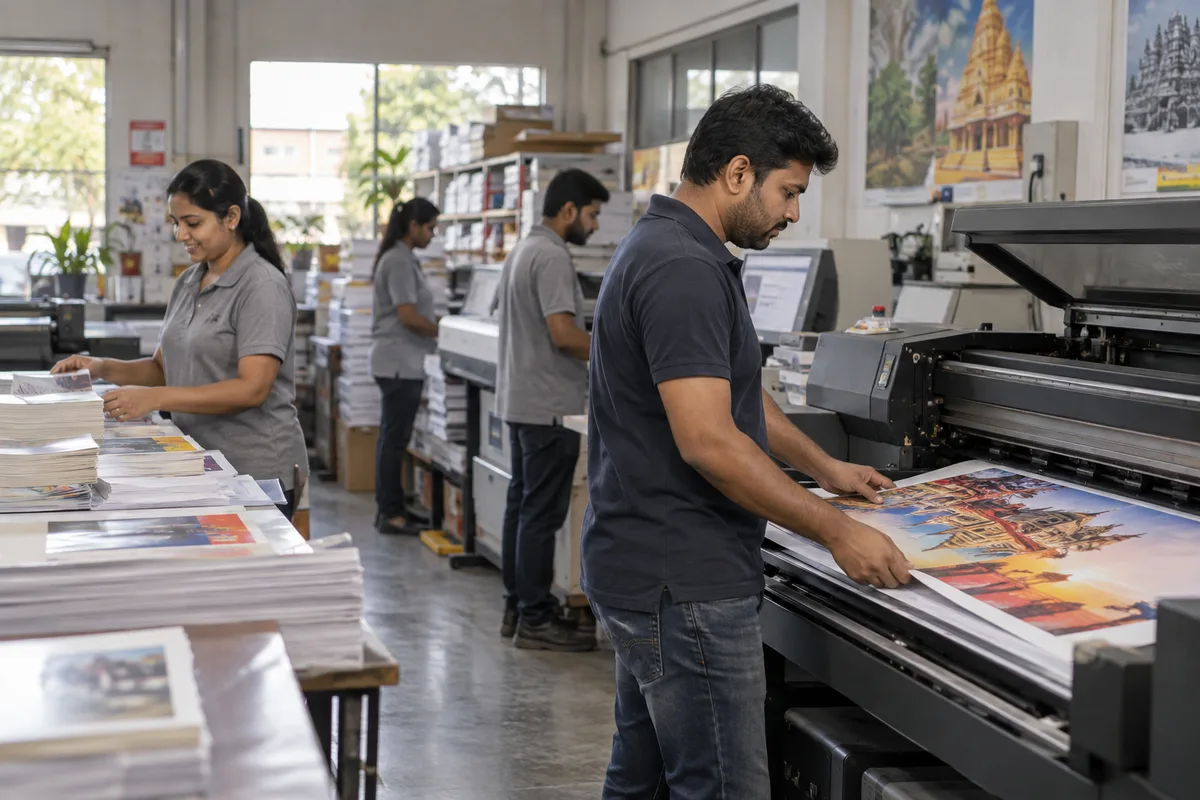
What lead generation means
Lead generation is the combined work of every channel that brings in a new enquiry, whether from search, adverts, referrals or a stall at an exhibition. GullySales runs these channels together and reports the number of enquiries each one produced, not the activity behind it.
Last updated 5 Oct 2026.
For printing businesses
Where it usually goes wrong, and what we would do.
“Half the specification is missing from every enquiry”
A message saying how much for 1000 leaves out paper, size, colours, finish and the date, and five messages later the buyer has ordered elsewhere.
“The IndiaMART inbox is a lead source only if someone opens it”
Bulk buyers post requirements there and take the first reply, so an unchecked inbox is a subscription you are paying for and not using.
“A repeat account is a different kind of lead”
An office reordering letterheads every quarter should never have to enquire again, and treating that reorder as a fresh lead is how it goes to another printer.
What we do
What we deliver for printing businesses.
Every deliverable, what it covers for you, and the result it is there to produce. Nothing here is an extra.
A fixed set of questions for every enquiry
Quantity, size, paper, colours, finish and the required date asked in one message, saved as a WhatsApp quick reply.
Result: You can price the job on the first reply.
Same-day quotes from stored rates
Rate references for your common job types, so a quote leaves within shop hours without hunting for an old file.
Result: The buyer has your price before a competitor visits.
Directory enquiries on a routine
A named person checking the IndiaMART and JustDial inboxes twice a day, with a reply template for bulk requirements and a note of what was quoted.
Result: A bulk enquiry is answered the day it arrives.
Proof approval kept with the job
Every proof sent on WhatsApp with a written approval asked for, and the thread saved against the job number.
Result: A later dispute is settled by the approval, not an argument.
An enquiry log by source and job type
Counter walk-ins, WhatsApp, directories and referrals logged separately, with the quote value and the outcome for each.
Result: You can see which source brings orders worth printing.
How the result is measured
- Enquiries generated
- Cost per enquiry
- Enquiries by source
Recorded as a baseline before work starts, so every later report has an honest comparison.
Where enquiries come from
A print shop's jobs arrive as files, photos and reorders, and each needs the size, paper and deadline noted.
- Walk-in with a pen drive or file
- Record the job type, the size, quantity, paper and finish, and whether the file is print-ready. Note the deadline and the person who will approve the proof.
- WhatsApp artwork
- Check the file opens and the resolution is enough, and reply with what is missing. Log the message as the job's start, and keep the final approved file with it.
- IndiaMART or directory enquiry
- Note the product named, the quantity and the city. Reply with the details you need and the nearest standard size, and tag the directory to see which of them sends printable jobs.
- Corporate purchase department
- Log the company, the buyer, the items they reorder and how they are billed. Ask who approves artwork, and whether they need a purchase order and a delivery challan.
- Wedding or event card
- Record the event date, the number of cards and the paper chosen. Work back from the date, and note when the proof must be approved to meet it.
- Label or packaging job
- Write the product, the size, the material and the quantity per roll or sheet. Ask for the regulatory text from the customer, and keep their approval of it with the job.
Who it is for
This is written for these printing businesses.
- Commercial offset printing businesses
- Digital and quick-print shops
- Packaging and label printing businesses
- Large format and signage printers
- Wedding and event stationery printers
- Corporate stationery and print suppliers
- Textile and garment printing businesses
- Print-on-demand and personalised merchandise printers
Not for
It is not the right fit if.
- Nobody opens the IndiaMART or WhatsApp inbox on a working day, so more enquiries would add to a pile that already goes cold.
- The shop has no stored rates for common jobs, so each new enquiry would wait for the owner to price it by hand.
How it works
How the lead generation work runs
The work itself, in order. How an engagement starts, from your brief to a written scope, is set out on our method page.
- 1
Understand your capacity
We ask how many enquiries your team can answer well, who answers after hours, and what a good enquiry looks like. Without this, the system fills a funnel nobody is watching.
- 2
Audit current sources
We read your call log, WhatsApp chats, enquiry sheet and platform dashboards. The baseline is recorded: enquiries by source, reply time, conversion and cost per order.
- 3
Strategise the channel mix
Search and maps are chosen for people ready to buy, ads for people who are not yet looking, and content and referrals for trust.
- 4
Implement capture and follow-up
Pages, forms, tags, the lead record and the first-reply message are built and tested end to end. We submit test enquiries ourselves before any media money is spent.
- 5
Measure and optimise
Enquiries are traced to source and judged by what became orders, not by volume alone. Channels that fill the sheet with poor enquiries are cut back. How often you are reported to is agreed in writing.
Where this fits
Three pieces of sales work, in this order.
This work sits inside sales process design, at stage 1, prospecting and lead generation. The audit comes before it, and sales management keeps it running.
Step 1
Sales audit
Find where deals are being lost and what to fix first.
Start here if you cannot say where orders are lost.
Step 2 · you are here
Sales process design
One written way to sell, from first enquiry to repeat order.
Start here if every salesperson sells differently.
Step 3
Sales management
A target, a review routine and someone who owns the number.
Start here if the team has targets and no routine.
FAQ
Questions owners ask before they call.
Not here? More answers, or ask on WhatsApp.
Most enquiries ask only for a price. How do we handle that?
Should we quote before seeing the artwork?
A customer sends artwork as a Word file or a phone screenshot. Is that a lead?
A customer says print the same as last time. How do we log it?
How long is the contract?
How soon will we see results?
Who will actually do the work?
What do you need from us?
What if we are not happy with the work?
From the blog
Further reading for printing businesses.
 6 min read · 18 Aug 2026Why your business is growing but profit is notRevenue rising while profit stays flat usually means discounts, the wrong customers or an uncalculated acquisition cost, all visible in your own records.
 7 min read · 18 Aug 2026How to get printing orders that repeat every monthPrinting orders come from local searches, corporate and institutional buyers who reorder, and fast quotes. Pick the jobs you print best, show prices, and chase the reorder before the customer runs out.
 6 min read · 8 Apr 2025How to create a sales process for a small businessA sales process is the stages a real order already passes through, each with what must be true before a deal can leave it, reviewed weekly.
More for printing businesses
Everything else we would do for you.
Closest to this: leads and follow-up
Also for printing businesses
Or start from the overview: sales and marketing for printing businesses.
Your next practical step
Tell us what you are trying to grow, and we will read it before we call.
Eight short steps, mostly taps. Skip anything you would rather answer on the call.