Printing businesses · Search engine optimisation
Rank for the job the buyer needs, from visiting cards to corrugated boxes.
Search engine optimisation (SEO) for a print shop decides whether a buyer searching for a specific job, such as corrugated box printing or wedding invitations, finds you. GullySales writes a page for each job type you can quote quickly, and fixes the site that currently lists everything on one page.
Scope, fee, reporting and term are agreed in writing after we have read your brief and spoken to you.
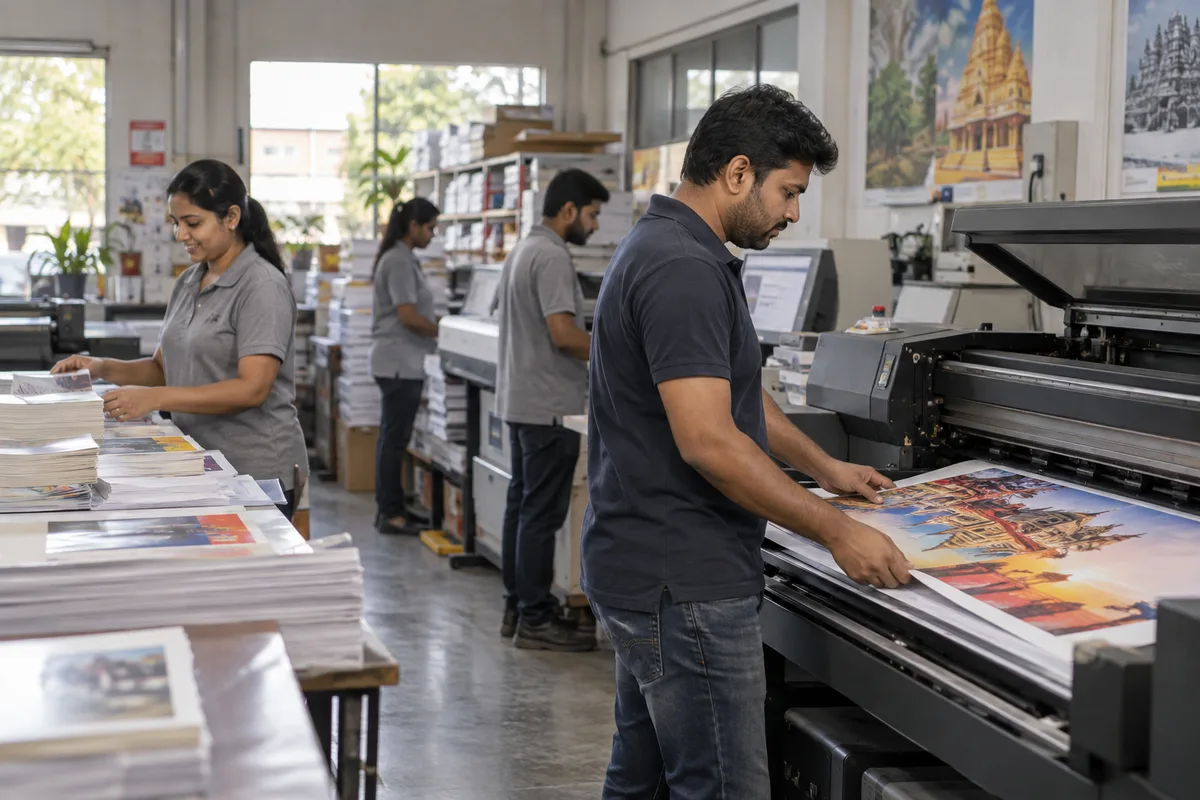
What search engine optimisation means
Search engine optimisation (SEO) is the work of getting your website to appear when a buyer searches Google for what you sell. GullySales builds pages around real search terms, fixes technical issues that block ranking, and tracks which searches actually bring enquiries.
Also for printing businesses
- Local SEO for printing businesses
- Website for print shops
- PPC ads for printing businesses
- Lead generation for printing businesses
- Digital marketing for printing businesses
- Reputation management for printing businesses
- Branding and identity for printing businesses
- Social media marketing for printing businesses
Sales and marketing for printing businesses, the overview.
Last updated 5 Oct 2026.
For printing businesses
Where it usually goes wrong, and what we would do.
“The search names the job, the quantity and often the material”
Buyers type things like 300 gsm visiting cards or monocarton printing, and a page headed printing services matches none of it.
“Nobody searches for an offset press”
The machine you own is not what the buyer knows. The words are the product they need, so the pages belong to cards, boxes, banners and invitations.
“A specification page beats a photo gallery”
A buyer comparing printers wants paper weight, finish options, minimum quantity and turnaround, and the page that states them is the one that gets the call.
What we do
What we deliver for printing businesses.
Every deliverable, what it covers for you, and the result it is there to produce. Nothing here is an extra.
A page for each job type you quote
Separate pages for visiting cards, brochures, monocartons, labels, banners and invitations, each written for the buyer of that job.
Result: Every job type can be found on its own.
Specifications written on every page
Paper stock, GSM, finish options, minimum quantity and normal turnaround stated in plain words on each job page.
Result: A buyer self-qualifies before calling you.
Artwork requirements published once
A page stating bleed, resolution, colour mode and the file formats you accept, linked from every job page.
Result: Files arrive printable and the job starts sooner.
Technical repairs to a slow site
Page speed, broken links and missing headings fixed, since print shop sites are usually heavy with uncompressed sample images.
Result: Good pages stop being held back by the site.
Structured data for the shop and its services
Markup describing the press, its services, address and hours so search engines read the shop correctly, not only the visible text.
Result: Search engines understand what the shop actually does.
A report by job type page
Search position and enquiries for each job page compared with the figures noted before the work began.
Result: You can see which job type search is bringing in.
How the result is measured
- Ranking positions
- Organic traffic
- Enquiries from organic search
Recorded as a baseline before work starts, so every later report has an honest comparison.
Searches your buyers type
What a buyer types when a print job is due, and the page that answers it.
- wedding invitation cards printing near me
- A wedding page. Show real cards with the paper, the finish and the foil, list the options in a table, and say what you need from a family: the text, the language and the date of the event.
- corrugated box printing for small business
- A box printing page. Say the board you print on, the ink and colour options, the plate or die charge, the minimum order and what artwork format you take.
- flex banner and signage printing
- A signage page. List the materials, the sizes and the finishing such as eyelets, and say how the artwork is checked, how proofs are approved and whether you install.
- bulk t-shirt printing for company event
- A garment page. Describe the print methods you use, the fabrics, the colour limits of each method, the order size you take and the sample you show before the run.
- brochure printing for company in four colour
- A corporate page. List the paper weights, the finishes and the binding, send a sample pack to a buyer who asks, and say what a marketing manager sends for a quote.
- sticker and label printing roll form
- A label page. State the materials, the sizes, the roll direction and the die options, and how a food or pharma brand supplies approved artwork. Show finished rolls from your press.
Who it is for
This is written for these printing businesses.
- Commercial offset printing businesses
- Digital and quick-print shops
- Packaging and label printing businesses
- Large format and signage printers
- Wedding and event stationery printers
- Corporate stationery and print suppliers
- Textile and garment printing businesses
- Print-on-demand and personalised merchandise printers
Not for
It is not the right fit if.
- You cannot quote most job types from a specification, so a page would draw enquiries your estimator cannot price.
- The press works mainly on contract jobs for a few regular clients and has no wish to meet new buyers by search.
How it works
How the search engine optimisation work runs
The work itself, in order. How an engagement starts, from your brief to a written scope, is set out on our method page.
- 1
Audit and baseline
We record where the site stands today: positions, traffic, technical faults and the enquiries search currently produces. Nothing starts until this number is written down.
- 2
Decide what to rank for
We map the searches your buyers use, in your words and theirs, and pick the ones worth the effort for your margin and your capacity.
- 3
Fix the foundations
Technical faults first, because the cheapest gains are there. Then the Business Profile and directory consistency.
- 4
Build the pages
A page for each thing you do, written to answer the question it is searched for, with a clear next step at the end.
- 5
Publish and earn mentions
Content goes out on the calendar. Links and mentions are earned from real relationships, not bought.
- 6
Measure, report, adjust
At an interval agreed in writing we report what moved and what did not, and change the plan when the numbers say so.
Where this fits
Three pieces of sales work, in this order.
This work sits inside sales process design, at stage 1, prospecting and lead generation. The audit comes before it, and sales management keeps it running.
Step 1
Sales audit
Find where deals are being lost and what to fix first.
Start here if you cannot say where orders are lost.
Step 2 · you are here
Sales process design
One written way to sell, from first enquiry to repeat order.
Start here if every salesperson sells differently.
Step 3
Sales management
A target, a review routine and someone who owns the number.
Start here if the team has targets and no routine.
FAQ
Questions owners ask before they call.
Not here? More answers, or ask on WhatsApp.
When would a print buyer start finding us in search?
Should we write pages for jobs we rarely do?
Should we post prices for the standard jobs?
Should we write a page for each paper and finish?
How long is the contract?
How soon will we see results?
Who will actually do the work?
What do you need from us?
What if we are not happy with the work?
From the blog
Further reading for printing businesses.
 6 min read · 18 Aug 2026Why your business is growing but profit is notRevenue rising while profit stays flat usually means discounts, the wrong customers or an uncalculated acquisition cost, all visible in your own records.
 7 min read · 18 Aug 2026How to get printing orders that repeat every monthPrinting orders come from local searches, corporate and institutional buyers who reorder, and fast quotes. Pick the jobs you print best, show prices, and chase the reorder before the customer runs out.
 6 min read · 8 Apr 2025How to create a sales process for a small businessA sales process is the stages a real order already passes through, each with what must be true before a deal can leave it, reviewed weekly.
More for printing businesses
Everything else we would do for you.
Closest to this: search and visibility
Also for printing businesses
Or start from the overview: sales and marketing for printing businesses.
Your next practical step
Tell us what you are trying to grow, and we will read it before we call.
Eight short steps, mostly taps. Skip anything you would rather answer on the call.