Printing businesses · Pay per click advertising
Bid on the jobs with margin, not on the visiting cards you lose on price.
Pay-per-click (PPC) advertising for a printing business buys the enquiries worth having: packaging runs, large format and urgent work with a deadline. GullySales builds campaigns around those job types, keeps them running in shop hours, and counts the orders rather than the clicks.
Scope, fee, reporting and term are agreed in writing after we have read your brief and spoken to you.
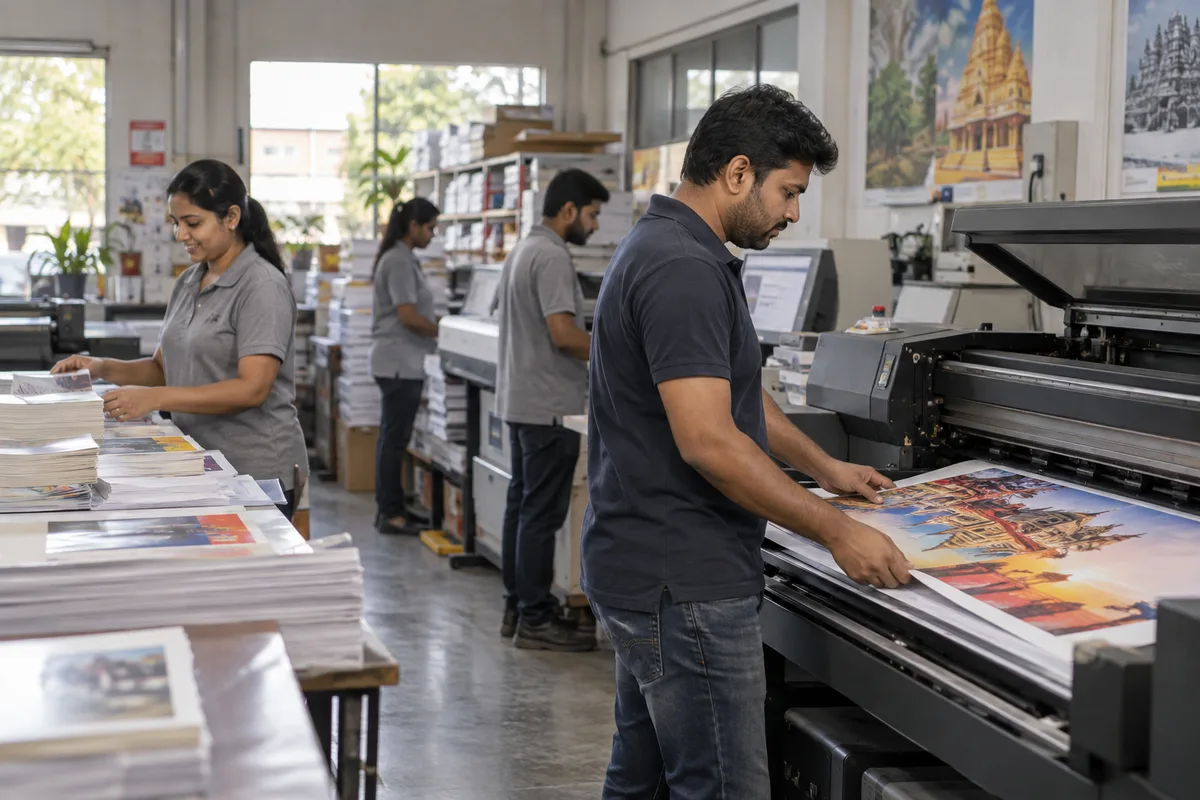
What pay per click advertising means
Pay per click advertising (PPC) is paying a fee each time someone clicks your advert on Google or another platform. It puts you at the top of a search page immediately, instead of waiting for ranking to build. GullySales sets the targeting, writes the ad text and checks spend against enquiries received.
Also for printing businesses
- SEO for printing businesses
- Lead generation for printing businesses
- Digital marketing for printing businesses
- Reputation management for printing businesses
- Local SEO for printing businesses
- Branding and identity for printing businesses
- Social media marketing for printing businesses
- Content marketing for printing businesses
Sales and marketing for printing businesses, the overview.
Last updated 5 Oct 2026.
For printing businesses
Where it usually goes wrong, and what we would do.
“Online printers will always outbid you on visiting cards”
A national printer can pay more for that click than the job is worth to your press, so the budget belongs on packaging, signage and next-day work.
“The buyer is on a deadline, so the phone must be answered”
An enquiry for a banner needed tomorrow is worth nothing if the advertisement runs at midnight and the call reaches a switched-off phone.
“One campaign cannot cover a wedding card and a monocarton”
A family printing invitations and a factory buying cartons have different budgets and different words, and mixing them wastes both.
What we do
What we deliver for printing businesses.
Every deliverable, what it covers for you, and the result it is there to produce. Nothing here is an extra.
Campaigns split by job type
Separate campaigns for packaging, large format, invitations and corporate stationery, each with its own words and daily budget.
Result: Spend moves to the job type that returns it.
Ads scheduled to shop hours
Search ads running only when someone is at the counter to answer, with call buttons on mobile results.
Result: A deadline enquiry reaches a person, not a voicemail.
Negative keyword work
Searches for printer cartridges, printing jobs, printer repair and home printers excluded, since they cost money and never become orders.
Result: Your budget stops paying for the wrong kind of search.
Landing pages carrying specifications
Each campaign pointed at a page showing samples, paper options, minimum quantity and turnaround for that exact job.
Result: The click lands on the answer the buyer wanted.
Order tracking against ad spend
Every ad enquiry logged with the job type, the quantity and whether it became an order, reviewed against the baseline taken at the start.
Result: You know the cost of a packaging order, not the cost of a click.
How the result is measured
- Cost per click
- Cost per enquiry
- Enquiries from paid search
Recorded as a baseline before work starts, so every later report has an honest comparison.
Searches to bid on and block
The searches from a business needing print, and the ones from people who want the cheapest visiting card online.
- Printing press near me and offset printing, plus the area
- Bid. A business wanting brochures or stationery wants a local press it can visit. Put your area and the job types you do in the advert, and add a call button.
- Wedding cards, invitation printing and card design
- Bid before the wedding season, on its own campaign. A family wants to see samples and fix a date. Ask the number of cards and the event date, and show real card photos.
- Visiting cards online, cheap and one day
- Block, or bid only on one narrow offer. Online printers will outbid you, and most buyers want the lowest price. Add cheap, online, one day, template and design as negatives.
- Printing jobs, printing course, machine and free design
- Block. Add job, operator, course, machine, second hand, free, template and download as negatives. Job seekers and machine buyers type your words.
- Where the click lands
- Send it to a page for the job type with sample prints and a form that takes the size, quantity and artwork file. A buyer on a deadline wants to send the file and get a quote.
- Counting a real enquiry
- Count an enquiry with a size, a quantity and a date, or a call asking for a quote on a named job. Log it, and mark which ones became a proof and a paid order.
Who it is for
This is written for these printing businesses.
- Commercial offset printing businesses
- Digital and quick-print shops
- Packaging and label printing businesses
- Large format and signage printers
- Wedding and event stationery printers
- Corporate stationery and print suppliers
- Textile and garment printing businesses
- Print-on-demand and personalised merchandise printers
Not for
It is not the right fit if.
- Nobody picks up the phone when the press is running, so a paid click from a buyer with a deadline would go to voicemail.
- Your rates on visiting cards and flyers cannot match online printers and you have not decided which jobs carry margin.
- The site has no page for the job an ad would promote, so the click would land on a generic home page.
How it works
How the pay per click advertising work runs
The work itself, in order. How an engagement starts, from your brief to a written scope, is set out on our method page.
- 1
Agree the whole budget
We fix the total paid budget across platforms, who owns each ad account, and how much is open to moving.
- 2
Audit tracking and accounts
We check that conversions fire once, that calls and WhatsApp chats are counted, and that your enquiry sheet matches what the platforms say.
- 3
Set one definition of success
You and we agree what a qualified enquiry is and what an order is, so every platform is judged the same way.
- 4
Build and launch the plan
Campaigns are structured across platforms with shared naming and tags from day one.
- 5
Read search terms and lead quality
We review the queries that triggered ads and the enquiries that arrived, and remove waste before moving money.
- 6
Reallocate and report
Budget moves toward what is earning, within agreed limits. Results are reported against the baseline, at the frequency agreed in writing.
Where this fits
Three pieces of sales work, in this order.
This work sits inside sales process design, at stage 1, prospecting and lead generation. The audit comes before it, and sales management keeps it running.
Step 1
Sales audit
Find where deals are being lost and what to fix first.
Start here if you cannot say where orders are lost.
Step 2 · you are here
Sales process design
One written way to sell, from first enquiry to repeat order.
Start here if every salesperson sells differently.
Step 3
Sales management
A target, a review routine and someone who owns the number.
Start here if the team has targets and no routine.
FAQ
Questions owners ask before they call.
Not here? More answers, or ask on WhatsApp.
How much should a print shop put into ads?
Are ads worth it for wedding invitations?
Should we keep a separate number for adverts?
Is it worth bidding on printing-related words for corporate stationery?
How long is the contract?
How soon will we see results?
Who will actually do the work?
What do you need from us?
What if we are not happy with the work?
From the blog
Further reading for printing businesses.
 6 min read · 18 Aug 2026Why your business is growing but profit is notRevenue rising while profit stays flat usually means discounts, the wrong customers or an uncalculated acquisition cost, all visible in your own records.
 7 min read · 18 Aug 2026How to get printing orders that repeat every monthPrinting orders come from local searches, corporate and institutional buyers who reorder, and fast quotes. Pick the jobs you print best, show prices, and chase the reorder before the customer runs out.
 6 min read · 8 Apr 2025How to create a sales process for a small businessA sales process is the stages a real order already passes through, each with what must be true before a deal can leave it, reviewed weekly.
More for printing businesses
Everything else we would do for you.
Or start from the overview: sales and marketing for printing businesses.
Your next practical step
Tell us what you are trying to grow, and we will read it before we call.
Eight short steps, mostly taps. Skip anything you would rather answer on the call.