Rubber manufacturers · Branding
Look like a certified, capable factory, not a generic supplier listing.
Branding for a rubber manufacturer means a consistent, professional presentation across your website, directory listings and trade fair stand that signals real manufacturing capability to a technical buyer. GullySales builds this around certifications, machine capability and past project categories rather than a consumer-style visual identity.
Scope, fee, reporting and term are agreed in writing after we have read your brief and spoken to you.
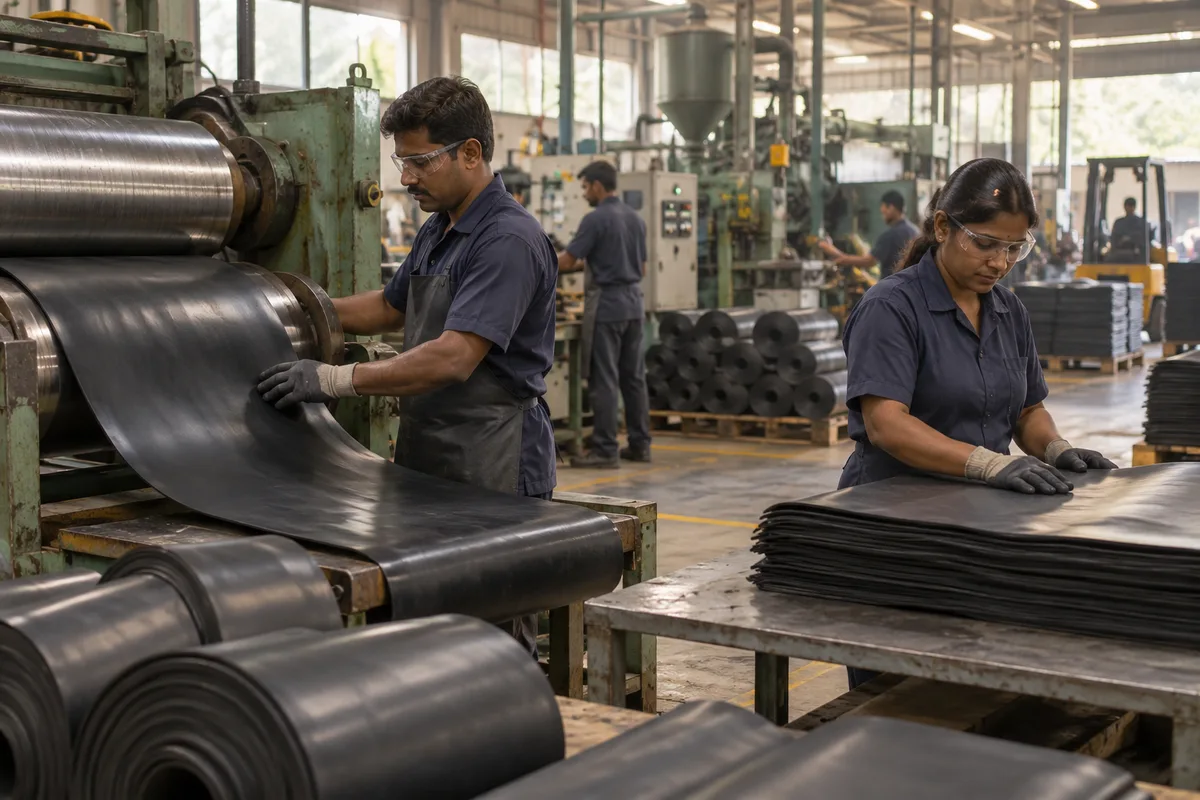
What branding means
Branding is what a customer remembers about your business beyond the product, including your name, colours, tone of voice and what you are known for locally. GullySales sets or corrects this once and applies it consistently across your website, signage and adverts so the business looks like one company everywhere.
Also for rubber manufacturers
- Answer engine optimisation for rubber manufacturers
- Content marketing for rubber manufacturers
- Digital marketing for rubber manufacturers
- Email marketing for rubber manufacturers
- Google Business Profile for rubber manufacturers
- Influencer marketing for rubber manufacturers
- Lead generation for rubber manufacturers
- Marketing strategy for rubber manufacturers
Sales and marketing for rubber manufacturers, the overview.
Last updated 5 Oct 2026.
For rubber manufacturers
Where it usually goes wrong, and what we would do.
“Certifications are a core part of the brand here”
An ISO certification or a specific quality standard displayed prominently does more to build trust with a technical buyer than a polished logo alone.
“The trade fair stand is the first real brand impression”
A buyer walking a trade fair floor forms an opinion of a supplier's seriousness within seconds, based on how organised and specific the stand's materials are.
“Consistency across directories matters more than in consumer branding”
A buyer cross-checking your IndiaMART listing against your website expects the same name, certifications and capability claims, and any mismatch reads as carelessness.
What we do
What we deliver for rubber manufacturers.
The work available for this need. We agree the deliverables and responsibilities for your engagement in writing.
Certifications displayed the same way everywhere
Your ISO certification or quality standard shown consistently on the website, IndiaMART listing and trade fair stand.
Result: A technical buyer sees proof of standards before asking for it.
Trade fair stand built for a serious impression
Stand signage, brochures and sample display organised around your certifications and product categories, not a generic banner.
Result: A buyer walking the floor reads your stand as a serious operation.
Directory and website identity matched exactly
Name, certifications and capability claims aligned across your IndiaMART listing and your own website, so no mismatch reads as carelessness.
Result: A buyer cross-checking listings finds nothing to doubt.
Identity set for each product line you make
A consistent way of naming and presenting each product line, such as gaskets or O-rings, across every listing and document.
Result: A buyer comparing categories understands your range at a glance.
Identity refresh triggered by a new certification
A checklist to update the website, directories and stand materials whenever a new certification or machine capability is added.
Result: Your listings never lag behind what the factory can actually do.
How the result is measured
- Recognition in customer feedback
- Consistency across channels
- Repeat enquiries by name
Recorded as a baseline before work starts, so every later report has an honest comparison.
Positioning in one sentence
We make this kind of rubber part in these compounds for these industries, and here is the proof an engineer can check.
- Who it is for: the buyer who sends the drawing
- Name the industry that sends you RFQs, for example automotive, pump and valve makers or railway suppliers. A purchase manager at a pump maker wants a different supplier from one at a food-processing line.
- What you do: process and compound together
- Write the process and the polymer in the same line, such as compression moulded NBR and EPDM seals, or rubber-to-metal bonded mountings. 'All types of rubber products' cannot be compared with a drawing and is skipped.
- What a buyer gets that the nearest supplier does not
- Pick something you do on every order: a compound data sheet with each batch, first-article samples with an inspection report, tooling made in-house. Do not write it if it happens only sometimes.
- The proof you can show
- Your ISO or IATF certificate with the scope as it reads, a list of part families made, tooling photographs, and the test equipment on the shop floor. A purchase team checks these before it checks the price.
- Words every rubber catalogue repeats
- 'Superior quality', 'competitive prices' and 'customer satisfaction' tell an engineer nothing. Replace them with the hardness range you mould, the largest part you can press and the tolerance class you hold.
Who it is for
This is written for these rubber manufacturers.
- Custom moulded rubber component manufacturers
- Industrial gasket and seal manufacturers
- Conveyor belt manufacturers
- Tyre retreading material suppliers
- Rubber-to-metal bonded parts manufacturers
- Export-oriented OEM suppliers
Not for
It is not the right fit if.
- You hold no certificate yet and are hoping a new logo will stand in for one at the buyer's audit
- The owner and the sales team still give three different company descriptions to buyers, and that needs settling before any design work
Before you decide
Agree the work. Know how to judge it.
Branding for rubber manufacturers: use these checks to prepare, choose the scope, and review what changes.
Bring the right evidence
Collect the sales presentation, website, quotations, and other material buyers actually see. Mark where the description of the business changes or where a claim has no supporting evidence.
Make the scope clear
Agree whether the work concerns the offer, the words, the visual identity, or all of them. List the formats that need updating and who owns the final approval.
Check the work in use
Test the proposed direction on a real sales page or proposal. A buyer should be able to tell who the offer is for, what is different, and what evidence supports it.
Know when to change course
A new identity will not fix an unresolved service problem. Put the delivery issue right before making a stronger public promise about it.
These are discussion points, not a fixed package. GullySales confirms the deliverables, responsibilities, fee, and term in writing after reading your brief and speaking with you.
How it works
How the branding work runs
The work itself, in order. How an engagement starts, from your brief to a written scope, is set out on our method page.
- 1
Scope and decision-maker agreement
You send the requirements brief, then we discuss the business decision behind the work. The written scope identifies the buyer segment and approver, alongside the fee and term.
- 2
Evidence handover
Your team shares relevant enquiries and lost-quote notes, and arranges customer introductions. We agree which competitors matter before reviewing their public material.
- 3
Position choice
We present the findings and a proposed position with its supporting evidence. You decide which buyer needs to prioritise and which claims or customer types to leave out.
- 4
Sales conversation check
Your sales lead tries the draft in real buyer conversations and records objections or confusion. We revise wording that does not hold up when a buyer asks for proof.
- 5
Approval and rollout handover
The authorised decision-maker approves the final strategy. Your sales lead and marketing team receive the same rollout brief, with unresolved proof questions clearly marked.
Where this fits
Three pieces of sales work, in this order.
This work sits inside sales process design, at stage 1, prospecting and lead generation. The audit comes before it, and sales management keeps it running.
Step 1
Sales audit
Find where deals are being lost and what to fix first.
Start here if you cannot say where orders are lost.
Step 2 · you are here
Sales process design
One written way to sell, from first enquiry to repeat order.
Start here if every salesperson sells differently.
Step 3
Sales management
A target, a review routine and someone who owns the number.
Start here if the team has targets and no routine.
FAQ
Questions owners ask before they call.
Not here? More answers, or ask on WhatsApp.
Do we need a new logo?
How does branding affect RFQ response rates?
Should the brand name include 'rubber' or 'polymers'?
Which of our names should appear on IndiaMART and the website?
How much does it cost?
How long is the contract?
How soon will we see results?
Who will actually do the work?
What do you need from us?
What if we are not happy with the work?
From the blog
Further reading for rubber manufacturers.

More for rubber manufacturers
Related work to consider.
Or start from the overview: sales and marketing for rubber manufacturers.
Your next practical step
Tell us what you are trying to grow, and we will read it before we call.
Eight short steps, mostly taps. Skip anything you would rather answer on the call.