Rubber manufacturers · Lead generation
Get in front of the OEM buyer before their RFQ ever gets written.
Lead generation for a rubber manufacturer means building visibility with design engineers and purchase managers at target OEMs, before a formal RFQ process even starts. It combines directory presence, search and trade fair outreach. GullySales builds this pipeline around your actual product categories.
Scope, fee, reporting and term are agreed in writing after we have read your brief and spoken to you.
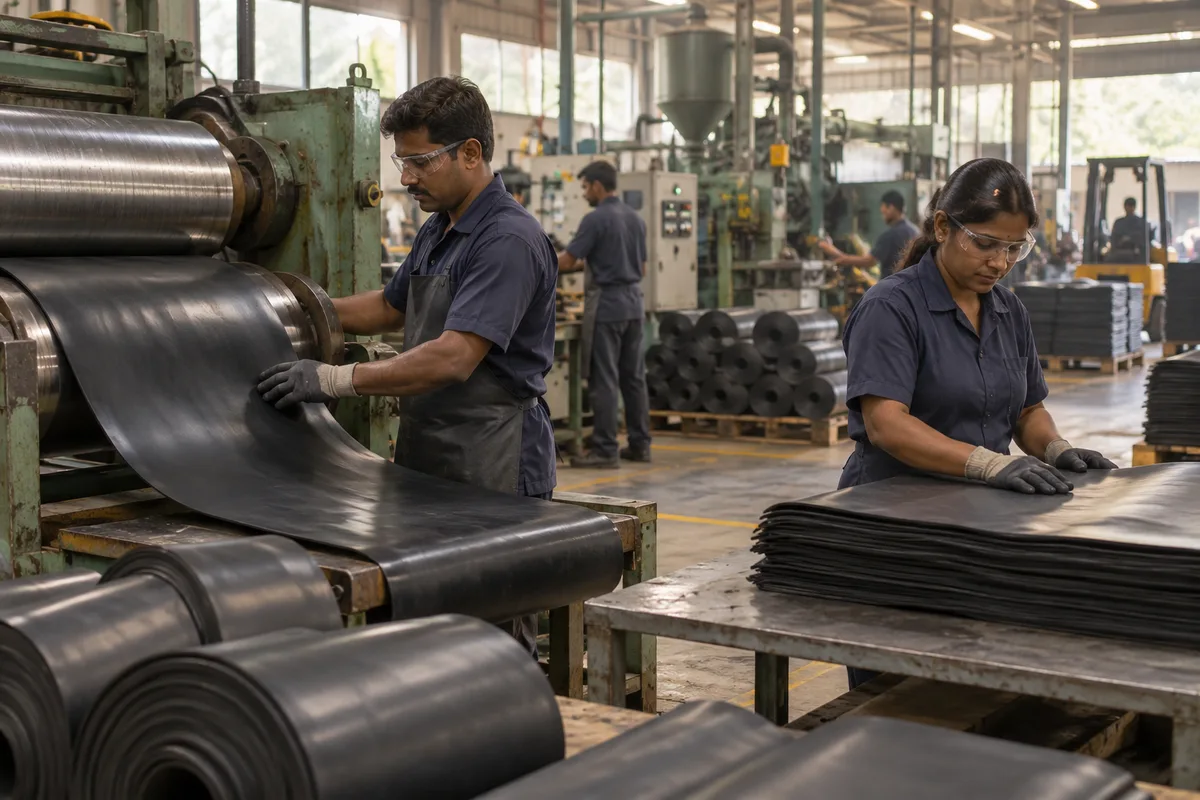
What lead generation means
Lead generation is the combined work of every channel that brings in a new enquiry, whether from search, adverts, referrals or a stall at an exhibition. GullySales runs these channels together and reports the number of enquiries each one produced, not the activity behind it.
Also for rubber manufacturers
- CRM for rubber manufacturers
- Follow-up systems for rubber manufacturers
- Answer engine optimisation for rubber manufacturers
- Branding for rubber manufacturers
- Content marketing for rubber manufacturers
- Digital marketing for rubber manufacturers
- Email marketing for rubber manufacturers
- Google Business Profile for rubber manufacturers
Sales and marketing for rubber manufacturers, the overview.
Last updated 5 Oct 2026.
For rubber manufacturers
Where it usually goes wrong, and what we would do.
“Directory listings still generate real leads in this industry”
IndiaMART and TradeIndia enquiries remain a significant lead source for industrial buyers, and an incomplete or generic listing quietly loses leads a competitor is capturing instead.
“Trade fairs justify targeted follow-up, not just attendance”
A stand at an industry exhibition generates business cards and conversations, but the leads convert only if followed up promptly and specifically afterward.
“Export buyers search differently from domestic ones”
An overseas buyer searches through international B2B platforms and sourcing agents, a separate channel from the domestic search and directory presence most manufacturers focus on.
What we do
What we deliver for rubber manufacturers.
The work available for this need. We agree the deliverables and responsibilities for your engagement in writing.
Complete, specific listings on IndiaMART and TradeIndia
A full rewrite of your directory listings with specific product and capability detail, instead of the generic listing a competitor is relying on.
Result: Leads a thin listing was quietly losing start reaching you instead.
Trade fair follow-up plan for every contact
A written plan for contacting every business card collected at an exhibition within a set window, instead of leaving it to memory.
Result: The cards collected at an exhibition end up in the enquiry record.
Export enquiry channel through international platforms
Presence built on international B2B platforms and, where relevant, sourcing agent relationships, separate from the domestic search and directory work.
Result: Overseas buyers find you through the channels they actually use.
Design engineer outreach before the RFQ stage
Content and outreach aimed at design engineers at target OEMs before a formal RFQ process starts, built around your product categories.
Result: You are already known when the buyer's RFQ process finally begins.
RFQ pipeline reported by source
A report against your baseline showing RFQs by directory, search and trade fair, so you know where the pipeline is actually built.
Result: You know which lead source is worth the continued investment.
How the result is measured
- Enquiries generated
- Cost per enquiry
- Enquiries by source
Recorded as a baseline before work starts, so every later report has an honest comparison.
Where enquiries come from
The routes by which an enquiry for moulded parts or gaskets reaches your works.
- IndiaMART and TradeIndia enquiries
- Record the product searched, the quantity asked and the buyer's company, and tag the platform. Reply with the compound, hardness and tolerance you can hold, not a price list.
- An RFQ email with a drawing attached
- Log the drawing number, material, hardness, quantity and delivery location the day it lands. Missing details go back in one reply, so the buyer is not asked twice.
- Visiting cards from a trade fair
- Enter each card within a few days of the stand, with what the buyer was looking at and a sample or call you promised. A card in a bag is an unlogged enquiry.
- A design engineer asking for samples
- Record the part, the application and the approval stage. This enquiry comes before the RFQ, so note whose drawing it is and when the buyer expects to finalise the supplier.
- An export buyer or sourcing agent
- Note the country, the standard they work to and any certification they ask for. Overseas queries can name a material grade, so match it to your compound before replying.
- An OEM reorder or repeat order
- A repeat part number from an existing customer is the cheapest lead. Record last order date and quantity, and ask about the next part due, since reorders hide new requirements.
Who it is for
This is written for these rubber manufacturers.
- Custom moulded rubber component manufacturers
- Industrial gasket and seal manufacturers
- Conveyor belt manufacturers
- Tyre retreading material suppliers
- Rubber-to-metal bonded parts manufacturers
- Export-oriented OEM suppliers
Not for
It is not the right fit if.
- Nobody on the sales side can read a technical drawing, so a drawing-led enquiry would sit unanswered
- Your moulds and presses are fully booked with current customers, and you cannot take on a new part
Before you decide
Agree the work. Know how to judge it.
Lead generation for rubber manufacturers: use these checks to prepare, choose the scope, and review what changes.
Bring the right evidence
Define the organisations or buyers you can serve and the reasons they would consider a conversation. Bring examples of accepted and rejected prospects so the selection rule is visible.
Make the scope clear
Agree the research sources, contact approach, qualification rules, and handover. Clarify which meetings count as accepted and what happens to replies that are not ready to buy.
Check the work in use
Review why a prospect was selected and what was learned from the response. Count held, relevant conversations separately from contacts found, messages sent, or meetings booked.
Know when to change course
If the same objection appears repeatedly, adjust the offer or buyer group before increasing outreach. Respect a request to stop contact and keep the exclusion in the record.
These are discussion points, not a fixed package. GullySales confirms the deliverables, responsibilities, fee, and term in writing after reading your brief and speaking with you.
How it works
How the lead generation work runs
The work itself, in order. How an engagement starts, from your brief to a written scope, is set out on our method page.
- 1
Requirements and capacity decision
Send the requirements brief, then discuss your offer and available sales capacity with us. You receive the scope, fee, and term in writing before committing to the work.
- 2
Source review and baseline approval
We review available enquiry records and channel dashboards. You confirm the starting figures for enquiries by source, reply time, conversion, and cost per order, including gaps in the records.
- 3
Offer and capture approval
Your sales lead approves the audience and the questions needed before a call. Page copy and contact-use wording go through your internal review before publication.
- 4
Test enquiry and sales handoff
We test the agreed routes from submission to the shared record and first reply. The person responsible for sales checks that the record contains enough information to act.
- 5
Launch and source decisions
Traffic starts on the approved channels. We compare enquiry quality with the baseline and use your sales outcomes to decide which sources need changes or less spend.
Where this fits
Three pieces of sales work, in this order.
This work sits inside sales process design, at stage 1, prospecting and lead generation. The audit comes before it, and sales management keeps it running.
Step 1
Sales audit
Find where deals are being lost and what to fix first.
Start here if you cannot say where orders are lost.
Step 2 · you are here
Sales process design
One written way to sell, from first enquiry to repeat order.
Start here if every salesperson sells differently.
Step 3
Sales management
A target, a review routine and someone who owns the number.
Start here if the team has targets and no routine.
FAQ
Questions owners ask before they call.
Not here? More answers, or ask on WhatsApp.
Which channel matters most for us?
How do we reach export buyers specifically?
Should we buy the paid buyer leads on IndiaMART?
What counts as a qualified RFQ for a moulded part?
How much does it cost?
How long is the contract?
How soon will we see results?
Who will actually do the work?
What do you need from us?
What if we are not happy with the work?
From the blog
Further reading for rubber manufacturers.

More for rubber manufacturers
Related work to consider.
Closest to this: leads and follow-up
Also for rubber manufacturers
Or start from the overview: sales and marketing for rubber manufacturers.
Your next practical step
Tell us what you are trying to grow, and we will read it before we call.
Eight short steps, mostly taps. Skip anything you would rather answer on the call.