Rubber manufacturers · Follow up systems
Chase the quote, the sample and the audit, not only the first enquiry.
A follow-up system for a rubber manufacturer is a set of agreed next steps and owners after each stage of a long B2B sale, from the RFQ reply to the trade fair card. GullySales writes the steps, the messages and the reminders so that silence from a buyer triggers a call, not a shrug.
Scope, fee, reporting and term are agreed in writing after we have read your brief and spoken to you.
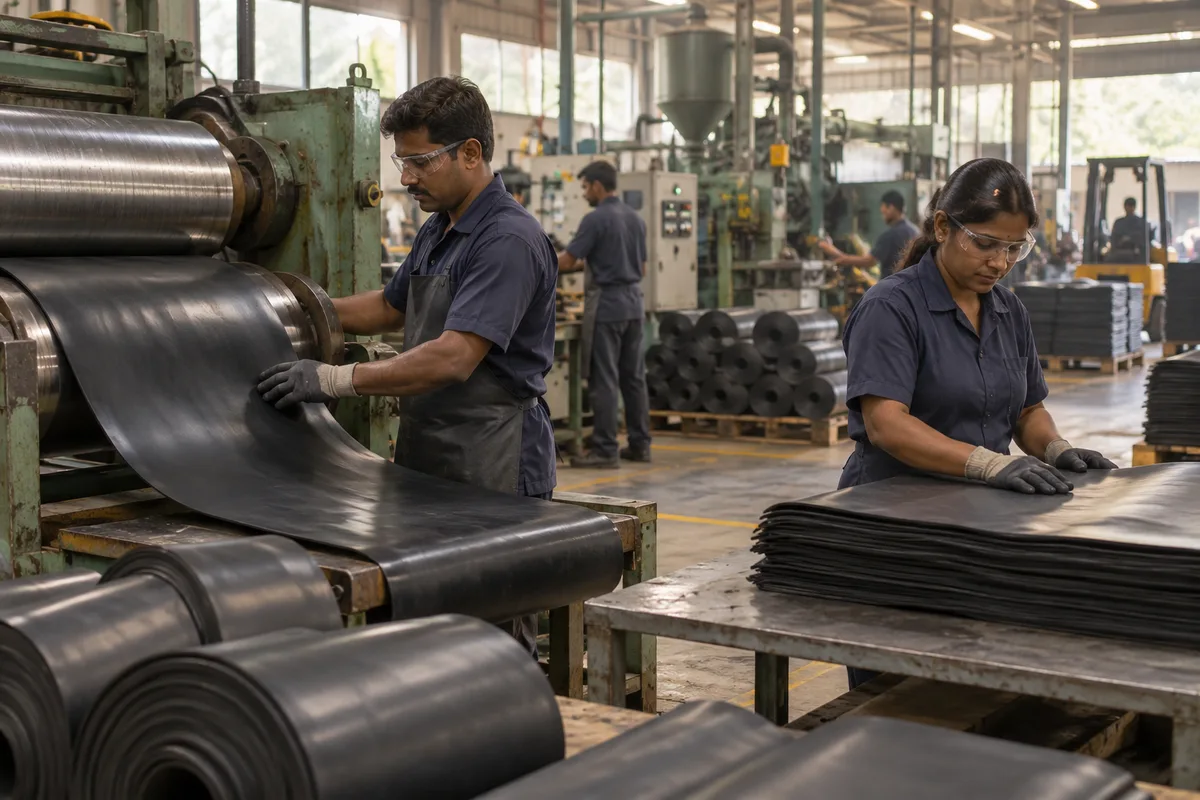
What follow up systems means
A follow-up system is the set routine for calling, messaging or emailing an enquiry more than once, since most buyers do not decide on the first conversation. GullySales sets the number and timing of follow-ups so an undecided buyer keeps hearing from you until they decide either way.
Also for rubber manufacturers
- Lead generation for rubber manufacturers
- CRM for rubber manufacturers
- Answer engine optimisation for rubber manufacturers
- Branding for rubber manufacturers
- Content marketing for rubber manufacturers
- Digital marketing for rubber manufacturers
- Email marketing for rubber manufacturers
- Google Business Profile for rubber manufacturers
Sales and marketing for rubber manufacturers, the overview.
Last updated 5 Oct 2026.
For rubber manufacturers
Where it usually goes wrong, and what we would do.
“The quote goes out and the follow-up stops”
Some plants treat sending the quotation as the end of the job. The buyer is comparing three suppliers and decides on whoever stayed in touch with a clear question. A planned call after the quote keeps your price in the conversation.
“A sample sent with no follow-up question teaches you nothing”
The part ships, the customer tests it, and weeks pass. Asking what was measured and what failed gives you the revision that wins the order. Without that call, the sample is a cost with no result.
“OEM contracts need contact through the audit and negotiation”
A supply agreement passes through procurement, engineering and quality, each on its own schedule. A supplier who goes quiet between the factory visit and the price discussion lets a competitor fill the gap.
“Fair contacts cool off in a bag of visiting cards”
A good stand conversation carries an unspoken promise to follow up. If the cards are entered late, or never, the buyer who asked about bonded parts hears nothing and remembers the supplier who did write.
What we do
What we deliver for rubber manufacturers.
The work available for this need. We agree the deliverables and responsibilities for your engagement in writing.
Post-quotation follow-up routine
A set next step on every quotation: who calls, what they ask and what gets recorded.
Result: Every open quote has an owner and a next action.
Sample feedback call script
A short list of questions about fit, hardness, tolerance and test results, asked after every sample.
Result: Each sample returns information you can use on the next revision.
Long-cycle contact plan for OEM deals
A plan of useful touches during audit, costing and negotiation: certificate updates, plant news, answers to open points.
Result: The buyer hears from you at each stage of a slow decision.
Trade fair follow-up sequence
A message and a call for every card collected, written for the product the visitor asked about.
Result: Show-floor conversations become tracked enquiries.
Reminder rules in the CRM
Date-based reminders for quote validity, sample reviews and repeat-order timing for regular parts.
Result: The system prompts the team before an account goes quiet.
Lost-quote review
A short routine for contacting buyers who chose another supplier, to record the reason in plain words.
Result: Reasons for losing build up into a list you can act on.
How the result is measured
- Follow-up completion rate
- Average number of follow-ups before close
- Enquiries closed after repeat follow-up
Recorded as a baseline before work starts, so every later report has an honest comparison.
What to capture or send
Record these moments so the quote, the sample and the audit each get a reply.
- Quote sent, no reply
- Note the quote number and the buyer's role. The follow-up asks whether the drawing, the tooling charge or the price needs a second look, rather than whether they received it.
- Sample dispatched
- Record the courier receipt and the date of dispatch. Ask for the buyer's inspection result on the part, not just whether it arrived.
- Sample failed an inspection
- Log which dimension or property failed and who at the buyer found it. A revised sample goes out only after the cause is written down.
- Audit date agreed
- Note the documents the buyer asked to see. Send the list of what you will have ready, so the visit does not stall on a missing certificate.
- Fair contact with a part question
- Enter the visiting card with the part they asked about. The first message refers to that part by name, not a general introduction.
- Order placed, repeat gap
- Record the date of the last order for each part. A buyer who ordered a gasket and then went quiet gets a message about that gasket.
Who it is for
This is written for these rubber manufacturers.
- Custom moulded rubber component manufacturers
- Industrial gasket and seal manufacturers
- Conveyor belt manufacturers
- Tyre retreading material suppliers
- Rubber-to-metal bonded parts manufacturers
- Export-oriented OEM suppliers
Not for
It is not the right fit if.
- Nobody owns the quotes list, so a reminder would be raised with no one responsible for acting on it
- You send a quote and never record that you sent it, so there is nothing for a reminder to be triggered from
Before you decide
Agree the work. Know how to judge it.
Follow-up systems for rubber manufacturers: use these checks to prepare, choose the scope, and review what changes.
Bring the right evidence
Trace recent enquiries from arrival to the last recorded action. Include a won enquiry, an unsuitable one, and one that went quiet, with personal details removed for the initial discussion.
Make the scope clear
Agree who accepts each enquiry, what makes it qualified, and how ownership changes. Include a rule for missed replies and a clear reason for closing an enquiry.
Check the work in use
Pick an enquiry at random and ask the team to find its owner, latest conversation, and next action. Check that the record agrees with what actually happened.
Know when to change course
If no one has capacity to respond, assign that responsibility before buying more leads. Automation can support the owner, but it cannot replace an unresolved handover.
These are discussion points, not a fixed package. GullySales confirms the deliverables, responsibilities, fee, and term in writing after reading your brief and speaking with you.
How it works
How the follow up systems work runs
The work itself, in order. How an engagement starts, from your brief to a written scope, is set out on our method page.
- 1
Record access and baseline agreement
You provide recent enquiry records and nominate the person responsible for sales. We compare arrival times with replies and agree which records are reliable enough for the baseline.
- 2
Response and closure decisions
Your sales lead approves response targets and follow-up gaps against available capacity. We also agree when to close an enquiry, pause contact, or refer a question to someone else.
- 3
Message and question approval
Your team reviews the reply library and first-call questions before use. Any technical answer or commercial promise needs approval from the person authorised to give it.
- 4
Task testing and team handover
We set up the agreed records and reminders, then test an incoming enquiry through to its next action. Your team checks ownership, including what happens when the assigned person is absent.
- 5
Results review and routine changes
We compare results with the baseline and identify missed steps. Changes to targets or messages are agreed with your sales lead; reporting frequency is agreed in writing.
Where this fits
Three pieces of sales work, in this order.
This work sits inside sales process design, at stage 2, qualification. The audit comes before it, and sales management keeps it running.
Step 1
Sales audit
Find where deals are being lost and what to fix first.
Start here if you cannot say where orders are lost.
Step 2 · you are here
Sales process design
One written way to sell, from first enquiry to repeat order.
Start here if every salesperson sells differently.
Step 3
Sales management
A target, a review routine and someone who owns the number.
Start here if the team has targets and no routine.
FAQ
Questions owners ask before they call.
Not here? More answers, or ask on WhatsApp.
How hard should we chase a buyer who has gone silent?
Who in the plant should make the follow-up calls?
Can WhatsApp be used for follow-up with industrial buyers?
Who should keep the follow-up record when the owner does most of the selling?
How much does it cost?
How long is the contract?
How soon will we see results?
Who will actually do the work?
What do you need from us?
What if we are not happy with the work?
From the blog
Further reading for rubber manufacturers.

More for rubber manufacturers
Related work to consider.
Closest to this: leads and follow-up
Also for rubber manufacturers
Or start from the overview: sales and marketing for rubber manufacturers.
Your next practical step
Tell us what you are trying to grow, and we will read it before we call.
Eight short steps, mostly taps. Skip anything you would rather answer on the call.