Rubber manufacturers · Google Business Profile
Let a nearby buyer or a plant visit request find your factory in a search.
A Google Business Profile for a rubber manufacturer helps a nearby buyer, a logistics partner or a visiting auditor find your factory directly, where the factory receives visitors. It states your hours and contact details alongside your IndiaMART and website presence. GullySales checks the address qualifies, then sets it up correctly for a manufacturing location, not a retail one.
Scope, fee, reporting and term are agreed in writing after we have read your brief and spoken to you.
What Google Business Profile means
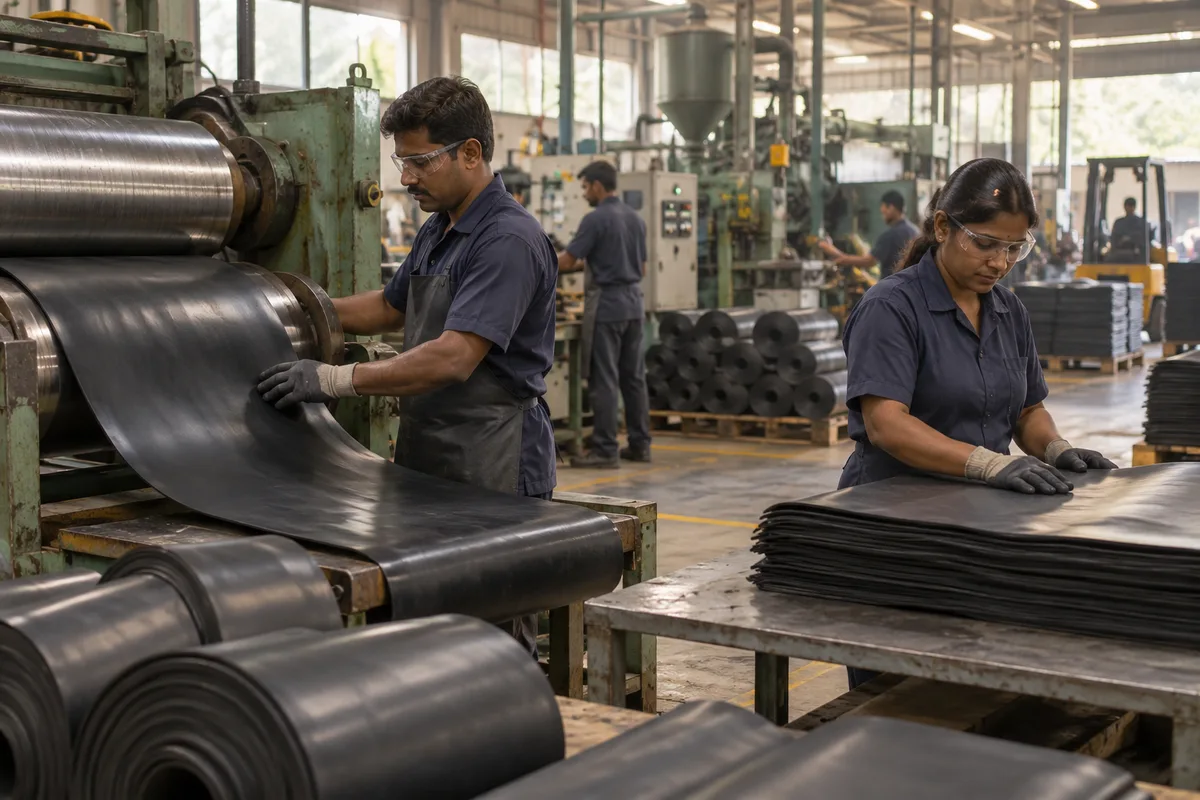
A Google Business Profile is the free listing that shows your address, hours, photos and reviews when someone searches for your business or a nearby competitor on Google and Maps. GullySales sets it up correctly, keeps it updated and posts to it regularly so it works as a steady source of calls and direction requests.
Also for rubber manufacturers
- Answer engine optimisation for rubber manufacturers
- SEO for rubber manufacturers
- Website design for rubber manufacturers
- Branding for rubber manufacturers
- Content marketing for rubber manufacturers
- Digital marketing for rubber manufacturers
- Email marketing for rubber manufacturers
- Influencer marketing for rubber manufacturers
Sales and marketing for rubber manufacturers, the overview.
Last updated 5 Oct 2026.
For rubber manufacturers
Where it usually goes wrong, and what we would do.
“Category and description matter more here than for a retail listing”
Choosing the correct manufacturing categories and writing a specific, technical description helps the profile appear for relevant local B2B searches rather than generic ones.
“Photographs of the factory build a different kind of trust”
Photographs of machinery, the production floor and quality checks reassure a buyer researching before an audit visit, which stock imagery cannot replicate.
“This profile supports the audit visit, not just discovery”
A buyer's team confirming your address and hours ahead of a factory audit uses this profile as a basic, practical reference point before the visit even happens.
What we do
What we deliver for rubber manufacturers.
The work available for this need. We agree the deliverables and responsibilities for your engagement in writing.
Manufacturing categories set for local B2B searches
Correct manufacturing categories and a specific, technical description, instead of a generic listing, so the profile appears for relevant local searches.
Result: A nearby buyer or logistics partner finds the factory in a search.
Factory photographs for pre-audit research
Photographs of machinery, the production floor and quality checks added to the profile, for a buyer researching before an audit visit.
Result: A visiting auditor arrives already reassured by what they saw online.
Address and hours confirmed for visiting teams
Accurate address, hours and contact details kept current, used by a buyer's team confirming details ahead of a factory audit.
Result: A visit is not delayed by wrong or missing basic information.
Profile aligned with IndiaMART and website details
Contact details and description matched to your IndiaMART and website presence, so nothing about the profile looks inconsistent.
Result: A buyer researching you across platforms sees one consistent picture.
Profile updated with each certification added
A routine update to categories and photographs whenever a certification, machine or capability changes on the factory floor.
Result: The profile never shows an out-of-date version of the factory.
How the result is measured
- Profile views
- Calls from the listing
- Direction requests
Recorded as a baseline before work starts, so every later report has an honest comparison.
What the profile needs
What a rubber factory's profile needs so a visiting buyer or transporter reaches the right gate.
- The gate that receives visitors
- Some factories have a separate truck entrance and visitor gate. Name the visitor gate in the description, with a landmark, so auditors and drivers do not end up at the wrong one.
- A category from Google's list
- Choose the rubber or gasket category closest to what you make, from Google's current list. A generic manufacturing label brings searches for products you do not supply.
- Product families written as buyers search
- List oil seals, O-rings, gaskets, rubber-to-metal parts or conveyor belts as separate services, whichever you really make. Add the compound types you mould, such as nitrile or EPDM.
- Floor photographs without proprietary detail
- Show the moulding presses, the compound store and finished gaskets in labelled bins. Keep customer part drawings and formulation sheets out of every frame.
- Visit requirements in the questions
- Answer what a visitor needs: an appointment, an ID, safety shoes in the shop floor, and the hours the gate is staffed. This saves a wasted trip for the buyer's team.
- Name and number as on your documents
- Use the registered name and a number answered during gate hours. A buyer cross-checking GST details or the IndiaMART listing should find the same name.
Who it is for
This is written for these rubber manufacturers.
- Custom moulded rubber component manufacturers
- Industrial gasket and seal manufacturers
- Conveyor belt manufacturers
- Tyre retreading material suppliers
- Rubber-to-metal bonded parts manufacturers
- Export-oriented OEM suppliers
Not for
It is not the right fit if.
- Your factory sits in an industrial estate with no signage or visitor entry, so a map listing would send people to a locked gate
- Your buyers are all overseas and none will ever visit, so the audit visit is not what you need to support
Before you decide
Agree the work. Know how to judge it.
Google Business Profile for rubber manufacturers: use these checks to prepare, choose the scope, and review what changes.
Bring the right evidence
Confirm the real business address, service area, contact details, and who controls the business listings. Keep examples of calls that came from the wrong location or asked for a service you do not provide.
Make the scope clear
Choose the locations you actually serve and the information each needs. Agree who approves listing changes, responds to enquiries, and keeps opening hours accurate.
Check the work in use
Check the journey from a local search to a call or enquiry on a phone. The address, service area, and description should agree across your website and listings.
Know when to change course
Do not create an office claim for a place where you only serve customers remotely. Clear service coverage is more useful than a misleading local presence.
These are discussion points, not a fixed package. GullySales confirms the deliverables, responsibilities, fee, and term in writing after reading your brief and speaking with you.
How it works
How the google business profile work runs
The work itself, in order. How an engagement starts, from your brief to a written scope, is set out on our method page.
- 1
Scope and branch responsibilities
You send the requirements brief, then we discuss the profiles and problems involved. The written scope identifies locations, approval contacts, fee, and term before work starts.
- 2
Access and verification handoff
We identify existing profiles and account access. Your authorised representative handles verification steps or supplies requested evidence; unresolved access issues are recorded before dependent changes proceed.
- 3
Branch detail approval
The branch contact confirms the proposed details, including the entrance pin and receiving phone number. We record the baseline before making approved corrections.
- 4
Content and response approval
Your team supplies current photos and service information. Agreed reviewers approve posts and review replies, with complaint details passed privately to the person responsible.
- 5
Issue review and sales comparison
Profile changes and notices are checked within the agreed scope. We compare available activity with enquiry outcomes; reporting frequency is agreed in writing before work starts.
Where this fits
Three pieces of sales work, in this order.
This work sits inside sales process design, at stage 1, prospecting and lead generation. The audit comes before it, and sales management keeps it running.
Step 1
Sales audit
Find where deals are being lost and what to fix first.
Start here if you cannot say where orders are lost.
Step 2 · you are here
Sales process design
One written way to sell, from first enquiry to repeat order.
Start here if every salesperson sells differently.
Step 3
Sales management
A target, a review routine and someone who owns the number.
Start here if the team has targets and no routine.
FAQ
Questions owners ask before they call.
Not here? More answers, or ask on WhatsApp.
Is this worth it for a B2B manufacturer with no walk-in customers?
What photographs should we include?
We have a factory and a warehouse in another town. Do both need profiles?
Our profile was suspended without a clear reason. What do we do?
How much does it cost?
How long is the contract?
How soon will we see results?
Who will actually do the work?
What do you need from us?
What if we are not happy with the work?
From the blog
Further reading for rubber manufacturers.

More for rubber manufacturers
Related work to consider.
Closest to this: search and visibility
Also for rubber manufacturers
Or start from the overview: sales and marketing for rubber manufacturers.
Your next practical step
Tell us what you are trying to grow, and we will read it before we call.
Eight short steps, mostly taps. Skip anything you would rather answer on the call.