Valve manufacturers · Lead generation
Bring in valve enquiries that carry a size, a rating and a quantity.
Lead generation for a valve maker means attracting enquiries that match the range you cast, machine and test, from consultants, EPC firms, plant purchase teams and traders. GullySales works on the sources, the pages and the screening that bring in enquiries your estimator can price.
Scope, fee, reporting and term are agreed in writing after we have read your brief and spoken to you.
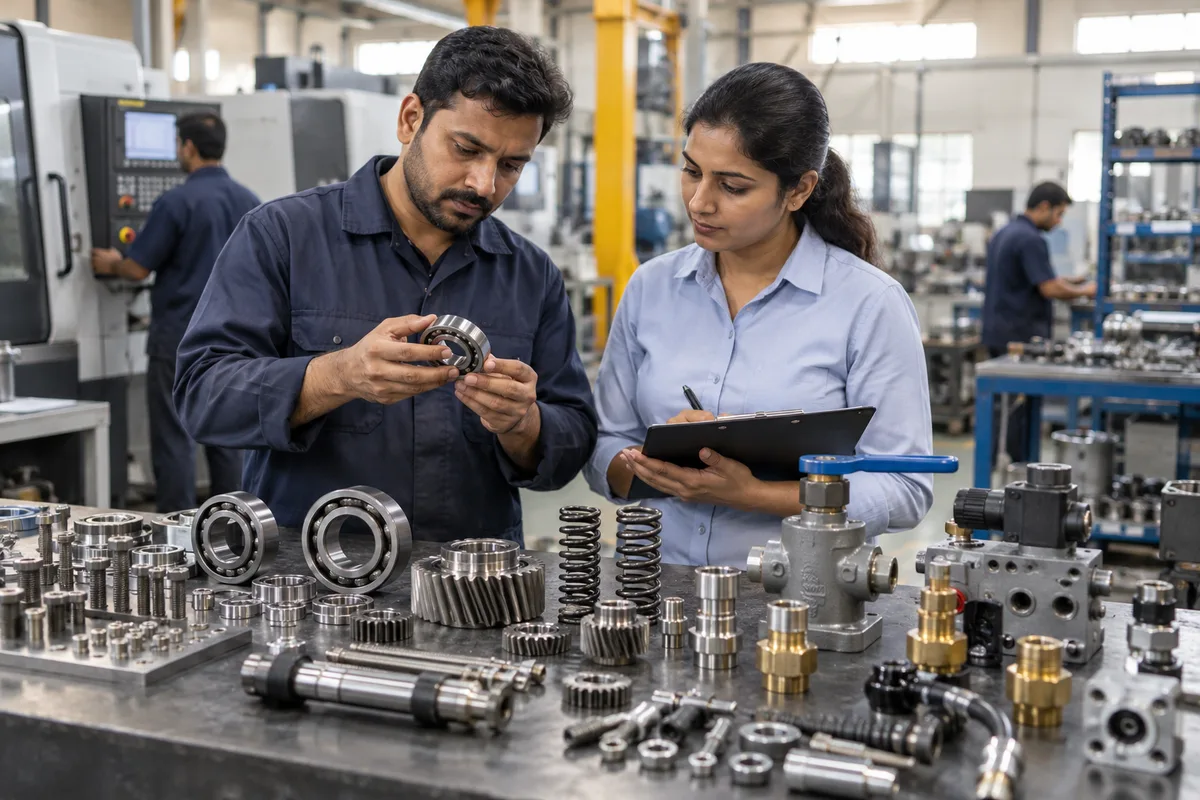
What lead generation means
Lead generation is the combined work of every channel that brings in a new enquiry, whether from search, adverts, referrals or a stall at an exhibition. GullySales runs these channels together and reports the number of enquiries each one produced, not the activity behind it.
Also for valve manufacturers
- CRM for valve manufacturers
- Follow-up systems for valve manufacturers
- SEO for valve manufacturers
- Social media marketing for valve manufacturers
- Content marketing for valve manufacturers
- Buyer personas for valve manufacturers
- WhatsApp marketing for valve manufacturers
- Digital marketing for valve manufacturers
Sales and marketing for valve manufacturers, the overview.
Plan the next part of the work
Last updated 21 Nov 2026.
For valve manufacturers
Where it usually goes wrong, and what we would do.
“A one-line enquiry costs the estimator an afternoon”
A message that says 'send price for gate valves' gives no size, class, material or end connection. The estimator either guesses or writes back with questions, and the buyer, who sent the same line to five makers, has already moved on to whoever replied with a clear form.
“Plant buyers and traders ask different questions”
A plant purchase engineer wants a datasheet, a test certificate format and past supply to similar service. A trader wants a price sheet and stock. One enquiry route for both wastes the time of each, so the sources need separate handling from the first contact.
“Marketplace enquiries arrive in volume and quality varies”
Listings on industrial directories bring requests from small workshops, students and brokers alongside real buyers. Without a person who sorts them against your range, the good ones sit among the rest and the buyer calls the maker who picked up first.
“Consultants are leads that never fill a form”
A process consultant who adds your name to a vendor list will not send an enquiry. They send an RFQ later, to the whole list. The lead is the introduction itself, and it needs a record so nobody forgets the name behind it.
What we do
What we deliver for valve manufacturers.
The work available for this need. We agree the deliverables and responsibilities for your engagement in writing.
Enquiry form built on valve parameters
Fields for type, size, pressure class, body material, trim, end connection and quantity, with an option to attach the schedule.
Result: The estimator receives enquiries that can be priced without a call back.
Separate routes for plant buyers and traders
One path that offers datasheets and approval documents, another that offers a price sheet and stock list.
Result: Each enquiry lands with the person who answers that kind of buyer.
Marketplace enquiry sorting
A short checklist to mark each directory enquiry as plant, trader, export or not a fit, with a named owner.
Result: Every directory enquiry carries a label and a reply status.
Consultant and EPC introduction list
A list of process consultants and EPC purchase teams in your sectors, with the date and result of each introduction.
Result: You can see who has your pack and who has never heard of you.
Source tracking
A record of where each enquiry came from: directory, website, referral, exhibition or trader.
Result: The owner can see which source produced orders, not only enquiries.
How the result is measured
- Relevant enquiries by source
- Duplicate and unsuitable enquiries
- Time to the first response
- Accepted enquiries reaching an agreed next step
Recorded as a baseline before work starts, so every later report has an honest comparison.
What to capture or send
Capture these on every valve enquiry before an estimator opens it.
- Valve type and size
- Gate, globe, ball, butterfly or check, with the nominal bore. Without these the estimator cannot tell whether the enquiry falls inside the range you cast.
- Pressure class and body material
- Class rating and cast steel, stainless or bronze. It decides the pattern, the foundry route and the test bench, so it is asked before price.
- End connection and trim
- Flanged, screwed or butt-weld, plus seat and stem material. A reply that skips these comes back as a revised quotation.
- Buyer type
- Plant purchase, EPC, consultant, trader or export. It sets whether the reply carries datasheets and approvals or a price sheet and stock.
- Attached schedule or tag list
- The buyer's own valve schedule, saved against the enquiry so each line can be quoted and the lost lines can be traced later.
Who it is for
This is written for these valve manufacturers.
- Industrial gate, globe and check valve makers
- Ball and butterfly valve makers for process lines
- Cast steel and stainless steel valve foundries
- Bronze and brass valve makers for building services
- Control valve and actuated valve assemblers
- Safety relief valve makers
- Valve makers focused on water, irrigation and municipal lines
- Oil, gas and chemical plant valve specialists
- Valve refurbishment and testing firms that also manufacture
Before you decide
When this may not be the right fit.
- Your estimator already takes several days to price one RFQ, so more enquiries would only sit unanswered.
- Your foundry or test bench cannot take new orders for the sizes you list, so enquiries would have to be refused.
Before you decide
Agree the work. Know how to judge it.
Lead generation for valve manufacturers: use these checks to prepare, choose the scope, and review what changes.
Bring the right evidence
Define the organisations or buyers you can serve and the reasons they would consider a conversation. Bring examples of accepted and rejected prospects so the selection rule is visible.
Make the scope clear
Agree the research sources, contact approach, qualification rules, and handover. Clarify which meetings count as accepted and what happens to replies that are not ready to buy.
Check the work in use
Review why a prospect was selected and what was learned from the response. Count held, relevant conversations separately from contacts found, messages sent, or meetings booked.
Know when to change course
If the same objection appears repeatedly, adjust the offer or buyer group before increasing outreach. Respect a request to stop contact and keep the exclusion in the record.
These are discussion points, not a fixed package. GullySales confirms the deliverables, responsibilities, fee, and term in writing after reading your brief and speaking with you.
Before we start
What to have ready before the work starts.
The records, access and decisions this work needs from valve manufacturers. Anything missing is noted in the written scope, with who will supply it.
- Twelve recent RFQs, won and lost
- We use real enquiries to learn what a good one looks like for your range. Printouts or forwarded emails are fine, with buyer names left in. If they are missing, the form is built from general valve parameters and will need correcting after the first few weeks of live use.
- The cast range and its size limits
- The sizes, pressure classes and materials you cast, machine and test in your own works. A one-page list is enough. Without it, the form may invite requests you cannot supply, and the estimator spends time declining them.
- Marketplace and directory logins
- Access to the industrial directory and marketplace accounts that send you enquiries. View access is enough at the start. If you cannot share it, we sort only the enquiries you forward, and the source sheet will understate what those platforms bring.
- A named person for each enquiry route
- One person for plant buyers and consultants, and one for traders. They need authority to answer within the limits you set. If a single person covers both, the routes still work but the log shows that desk as the pinch point.
- Your list of valves you will refuse
- Sizes, materials, standards or quantities that you decline to quote. Writing this down stops the form from attracting the wrong enquiries. If you leave it open, the team will keep spending afternoons on requests that end in a polite no.
How it works
How the lead generation work runs
The work itself, in order. How an engagement starts, from your brief to a written scope, is set out on our method page.
- 1
Sit with the estimator over old RFQs
We start with a folder of recent RFQs, won and lost, and read them beside your estimator. We note which ones carried size, rating, material and quantity, which arrived as a single line, and which took the longest to price. You decide which valve families you want more enquiries for and which you would turn away. That decision becomes the filter for everything later.
- 2
Count where enquiries came from last year
We go through the email inbox, the marketplace logins, the phone log and the sales engineers' visit notes to see where each enquiry first appeared. Some will have no recorded source, and we mark those as unknown rather than guess. You confirm which sources you pay for. The result is a plain sheet of sources against enquiries received and orders placed.
- 3
Draft the enquiry form with the works manager
The form asks for valve type, size, pressure class, body material, end connection, quantity and the standard the buyer works to. We draft it with your works manager so that every question is one your estimator really needs answered before pricing. You cut any field that your team never uses. We then write the short reply that goes out when a form arrives incomplete.
- 4
Split plant buyers from traders on the page
We set up two routes from the same page. A plant purchase team or consultant sees fields for specification and documents, while a trader sees size, stock and quantity. You name the person who answers each route and what that person may quote on the spot. Both routes land in one log that your sales head can open.
- 5
Send a dummy RFQ through each route
We submit test enquiries as a consultant, a plant buyer, a trader and a marketplace buyer, and watch where each one lands and who sees it. Your estimator replies as if it were real. Any delay, missing field or message that reaches the wrong desk is corrected before the routes are shown to anyone outside. You approve the final wording of the acknowledgement.
- 6
Read the log against last year's sheet
Once enquiries have been coming through the new routes for a while, we compare them with the source sheet made at the start. We look at how many arrived with usable parameters, how many your estimator could price without a call back, and which sources produced orders. You decide which sources to keep paying for and which to drop. We do not promise any rise in volume.
Where this fits
Three pieces of sales work, in this order.
This work sits inside sales process design, at stage 1, prospecting and lead generation. The audit comes before it, and sales management keeps it running.
Step 1
Sales audit
Find where deals are being lost and what to fix first.
Start here if you cannot say where orders are lost.
Step 2 · you are here
Sales process design
One written way to sell, from first enquiry to repeat order.
Start here if every salesperson sells differently.
Step 3
Sales management
A target, a review routine and someone who owns the number.
Start here if the team has targets and no routine.
FAQ
Questions owners ask before they call.
Not here? More answers, or ask on WhatsApp.
Which enquiries should we refuse?
Do we pay for more directory listings?
Can lead generation replace the sales engineer's visits?
Can we take enquiries for valve sizes we do not cast?
Who answers the enquiry once the form is live?
What do we do with old enquiries that never got a reply?
How much does it cost?
How long is the contract?
How soon will we see results?
Who will actually do the work?
More for valve manufacturers
Related work to consider.
Closest to this: leads and follow-up
Also for valve manufacturers
Or start from the overview: sales and marketing for valve manufacturers.
Your next practical step
Tell us what you are trying to grow, and we will read it before we call.
Eight short steps, mostly taps. Skip anything you would rather answer on the call.