Valve manufacturers · Digital marketing
Put the right pieces of your valve business in front of buyers in the right places online.
Digital marketing for a valve maker is the combined use of the website, search, directories, email, LinkedIn and chat to reach consultants, plant buyers and traders. GullySales works on choosing the channels that fit how valves are bought and on connecting them so enquiries are tracked.
Scope, fee, reporting and term are agreed in writing after we have read your brief and spoken to you.
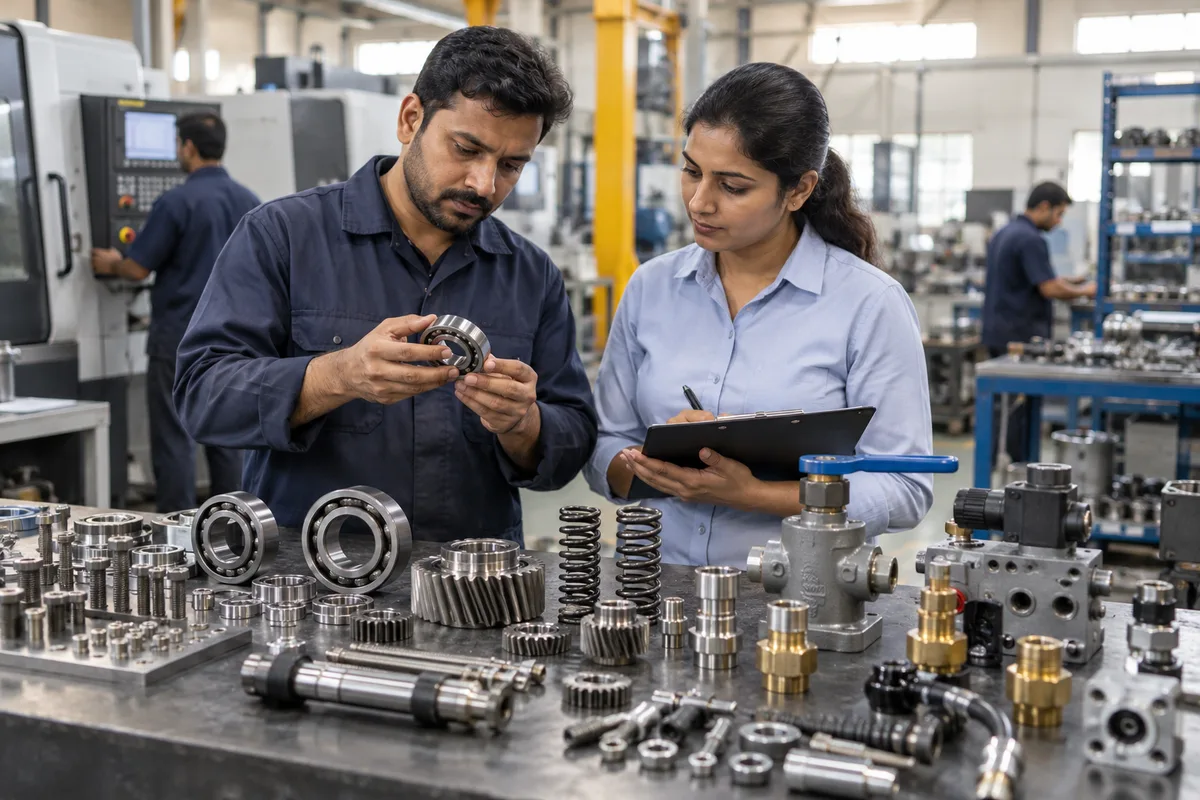
What digital marketing means
Digital marketing is the combined work of search, social media, advertising and website channels running together rather than as separate projects with separate people. GullySales runs these as one connected system so a change in one channel, such as a new offer, is reflected everywhere at once.
Also for valve manufacturers
- Buyer personas for valve manufacturers
- Lead generation for valve manufacturers
- SEO for valve manufacturers
- Social media marketing for valve manufacturers
- Content marketing for valve manufacturers
- CRM for valve manufacturers
- Follow-up systems for valve manufacturers
- WhatsApp marketing for valve manufacturers
Sales and marketing for valve manufacturers, the overview.
Last updated 14 Nov 2026.
For valve manufacturers
Where it usually goes wrong, and what we would do.
“Valve buying is spread across several channels”
The same company may find a maker on a directory, check the website, read the LinkedIn page and then send an email. Work on one channel alone leaves gaps in the path the buyer actually takes.
“Paid ads suit some valves and not others”
Search ads for small building services valves can bring trader enquiries. Large project valves are bought through lists and consultants, so ad spend there reaches the wrong audience. The channel must match the order type.
“Nobody can tell what worked”
If enquiries arrive by phone, chat and email with no source recorded, the owner cannot say whether the directory, the site or a referral produced the order. Spending decisions then rest on guesses.
“Digital work must back the sales engineer”
A good page or listing gets an enquiry, but the sales engineer closes it. If the reply is slow or the quote is vague, the digital work is wasted. The two need to be planned together.
What we do
What we deliver for valve manufacturers.
The work available for this need. We agree the deliverables and responsibilities for your engagement in writing.
Channel plan by order type
A plan that matches each type of buyer, project, plant, trader and export, to the channels they actually use.
Result: Every channel is given a purpose and a named person.
Directory and marketplace profiles
Complete and accurate company profiles with product lists, photographs and certificates on the directories your buyers use.
Result: Your listings tell the same story as your website.
Email outreach
Plain introductory emails to consultants, EPC firms and plant purchase teams with a link to the introduction pack.
Result: Each outreach contact is logged with a result.
Enquiry source tracking
A way to note the source on every enquiry, whether form, call, chat or email.
Result: The owner can compare sources by orders, not only by enquiries.
Reading and adjusting
A reading of what each channel produced, so effort moves towards what brings orders.
Result: Spend and time follow the channels that led to quotes and sales.
How the result is measured
- Enquiries across channels
- Cost per enquiry overall
- Channel mix by contribution
Recorded as a baseline before work starts, so every later report has an honest comparison.
Searches your buyers type
Each of these buyer searches points to a place where a valve maker should be present.
- industrial valve manufacturer in your city
- The Google Business profile and a works page with the address and capability, so a local plant buyer can place you on a map.
- ball valve supplier with test certificate
- A ball valve family page with a sample certificate, because the buyer is checking documents as much as the product.
- valve suppliers for oil and gas vendor registration
- A capability page for the sector with approvals listed and a contact route, for the vendor-registration forms buyers ask you to fill.
- bulk valve price for traders
- A trader page with the price sheet request, the range held in stock and an enquiry form that separates it from plant buyers.
- valve exporter from India
- An export page with packing, inspection options and shipping documents, found by the buyer outside the country who compares makers.
Who it is for
This is written for these valve manufacturers.
- Industrial gate, globe and check valve makers
- Ball and butterfly valve makers for process lines
- Cast steel and stainless steel valve foundries
- Bronze and brass valve makers for building services
- Control valve and actuated valve assemblers
- Safety relief valve makers
- Valve makers focused on water, irrigation and municipal lines
- Oil, gas and chemical plant valve specialists
- Valve refurbishment and testing firms that also manufacture
Before you decide
When this may not be the right fit.
- Your enquiry handling is slow, so paid or organic traffic would add enquiries you cannot price in time.
- You have no datasheets or capability statement to send, so a buyer reached online would have nothing to check.
Before you decide
Agree the work. Know how to judge it.
Digital marketing for valve manufacturers: use these checks to prepare, choose the scope, and review what changes.
Bring the right evidence
Bring a recent won order and an enquiry that went nowhere. Trace how each buyer found you, what they asked, and who handled the next step. A channel list alone will not explain the difference.
Make the scope clear
Choose one offer and one buyer group first. Agree which part needs attention: being found, getting a useful enquiry, or turning an enquiry into an order. Separate recommendations from the work required to carry them out.
Check the work in use
A useful plan names the first change, its owner, the evidence behind it, and the number that will show whether it worked. Ask what has deliberately been left out and why.
Know when to change course
If your team cannot answer the enquiries it already receives, improve that handover before buying more traffic. If the offer itself is unclear, test it with buyers before adding channels.
These are discussion points, not a fixed package. GullySales confirms the deliverables, responsibilities, fee, and term in writing after reading your brief and speaking with you.
Before we start
What to have ready before the work starts.
The records, access and decisions this work needs from valve manufacturers. Anything missing is noted in the written scope, with who will supply it.
- Three order histories from your own files
- Email threads or notes showing how three real orders began. They tell us where buyers actually find you. If you cannot trace them, the plan rests on assumption and the first weeks are spent finding out.
- Logins to every directory and marketplace
- Access, or the email address each is registered to, for all the listings you pay for or hold. Without them, we cannot correct details or see which listing sends enquiries.
- A budget decision, even a rough one
- An amount you are willing to spend on listings, tools or paid reach, and a person who approves it. We do not state figures, but the plan changes shape depending on the answer.
- A list of consultants and EPC contacts
- Names and firms you have dealt with or wish to reach. Email outreach starts from known contacts. If the list is short, we help build it from public sources, which takes longer.
- One person to own the enquiry reading
- A named staff member who opens the enquiry log, compares it with the plan and tells us what they noticed. If no one owns it, the data gathers and no one acts.
How it works
How the digital marketing work runs
The work itself, in order. How an engagement starts, from your brief to a written scope, is set out on our method page.
- 1
Trace three recent orders back to their start
We take three orders, one project, one plant and one trader order, and follow each back to the first contact. Your sales head tells us who found whom, through which channel. These histories show which channels actually produced business, and they set the starting point for the plan.
- 2
List the profiles that already exist
We search for your company on the directories, marketplaces, LinkedIn and map listings and note which ones are claimed, which carry wrong details and which you did not know of. You tell us which logins you hold and which listings were set up by a former employee or an agency. Duplicates, old addresses and a stale phone number are listed for correction before any new channel is added, since a wrong detail on a directory sends a buyer to the wrong desk.
- 3
Pick the two or three channels that fit
From the histories and the profile check, we propose the channels that suit how valves are bought, perhaps the website, directories and direct email to consultants. You decide, and name the person responsible for each. We say plainly which channels we are leaving out and why, so that nobody on your side wonders later why a social page or a paid advertisement was not started.
- 4
Write the message once, with the engineers
We set down in one page what you make, who it is for and what proof you can show, using your engineers' words. The same wording is then adapted for each channel. Your director approves it before use, so a buyer meets one company wherever they look, and the same range, works and standards appear in the same words on the directory, the website and the email to a consultant.
- 5
Build the profiles and the outreach list
We correct the directory and marketplace profiles and prepare the list of consultants and EPC firms for email outreach, taken from your own contacts and public sources. Your sales head removes anyone they would not write to. A first email is drafted for your approval.
- 6
Reconcile channels with enquiries and orders
Once channels are live, we match each enquiry to its source in the CRM or the enquiry log and compare with the starting histories. Your sales head confirms which sources led to quotations, and which only produced enquiries that went nowhere. We recommend which channel to continue and which to stop, and we do not promise results.
Where this fits
Three pieces of sales work, in this order.
This work sits inside sales process design, at stage 0, foundation. The audit comes before it, and sales management keeps it running.
Step 1
Sales audit
Find where deals are being lost and what to fix first.
Start here if you cannot say where orders are lost.
Step 2 · you are here
Sales process design
One written way to sell, from first enquiry to repeat order.
Start here if every salesperson sells differently.
Step 3
Sales management
A target, a review routine and someone who owns the number.
Start here if the team has targets and no routine.
FAQ
Questions owners ask before they call.
Not here? More answers, or ask on WhatsApp.
Where should a valve maker start?
How much should we spend?
Do we need an agency and an in-house person?
Are industrial directories a part of digital marketing for us?
Should we run paid advertising for a valve business?
Who writes the emails to consultants?
How long is the contract?
How soon will we see results?
Who will actually do the work?
What do you need from us?
More for valve manufacturers
Related work to consider.
Closest to this: strategy and research
Also for valve manufacturers
Or start from the overview: sales and marketing for valve manufacturers.
Your next practical step
Tell us what you are trying to grow, and we will read it before we call.
Eight short steps, mostly taps. Skip anything you would rather answer on the call.