Welding fabrication companies · Content marketing
Publish what you know about weld jobs so buyers trust you before the first call.
Content marketing for a fabricator means writing and showing what your shop knows about materials, weld problems, fit-up and inspection, in a form a buyer reads before they invite a quote. GullySales works with your engineers to turn that knowledge into pages, guides and job write-ups.
Scope, fee, reporting and term are agreed in writing after we have read your brief and spoken to you.
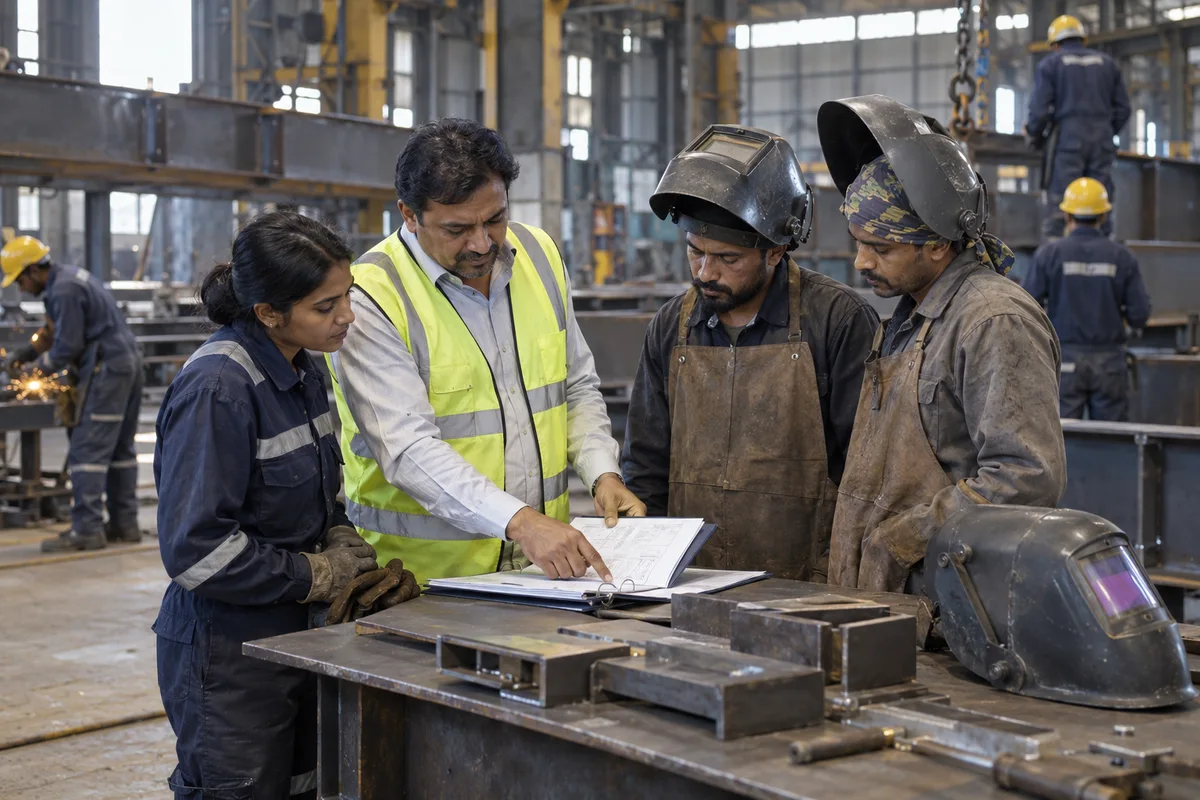
What content marketing means
Content marketing is writing articles, guides and pages that answer the questions buyers search before they are ready to enquire. This makes your business visible and trusted before the first call. GullySales plans this content from the first conversation onward, choosing topics that match real search demand rather than guesses.
Also for welding fabrication companies
- Social media marketing for welding fabrication companies
- Lead generation for welding fabrication companies
- SEO for welding fabrication companies
- Local SEO for welding fabrication shops
- Buyer personas for welding fabrication companies
- CRM for welding fabrication companies
- Follow-up systems for welding fabrication companies
- WhatsApp marketing for welding fabrication companies
Sales and marketing for welding fabrication companies, the overview.
Last updated 14 Nov 2026.
For welding fabrication companies
Where it usually goes wrong, and what we would do.
“Buyers want proof that you understand the problem”
A plant engineer with a distortion issue on a thin stainless sheet wants a fabricator who has met it. A short article on how your shop controls distortion shows that knowledge better than a claim.
“Your own jobs are the best material”
A write-up of a tank, a platform or a spool, with the material, requirement and inspection method, is content nobody else can copy. It also answers the first question of every new buyer.
“Technical text needs an engineer's check”
Welding content that gets a procedure or code detail wrong loses an informed reader at once. Every line is confirmed by your engineers before it goes live, and general statements replace specifics where unsure.
“A document pack is content too”
Welder records, inspection methods and equipment lists are what a tender reader looks for. Laid out cleanly, the pack becomes a downloadable page and a sales tool.
What we do
What we deliver for welding fabrication companies.
The work available for this need. We agree the deliverables and responsibilities for your engagement in writing.
Job write-up library
Short anonymised descriptions of past jobs by type, each stating material, weld requirement, inspection and delivery.
Result: A library of write-ups a salesperson can send in reply to an enquiry.
Buyer guides
Plain guides such as what to send for a fabrication quote, or how to choose between mild steel and stainless for a tank.
Result: Guides that answer questions buyers ask before they call.
Capability pack page
A downloadable, tidy summary of equipment, processes, qualifications and inspection methods.
Result: One pack a buyer can download without a request.
Engineer-reviewed article set
A short set of articles from your engineers' own experience, edited for clarity and checked by them.
Result: Each article carries an engineer's review before publishing.
Content calendar for the team
A simple list of topics, owners and what to photograph on upcoming jobs.
Result: The team knows what to capture while a job is under way.
How the result is measured
- Pages published
- Organic traffic
- Enquiries from content pages
Recorded as a baseline before work starts, so every later report has an honest comparison.
Posts and pieces to plan
These are the pieces a fabrication shop can write from its own floor.
- Controlling distortion on thin stainless
- A technical note on fixtures, tack sequence and heat control, with photographs from your own job.
- What a weld procedure record covers
- A plain explainer for buyers on the record you keep, with a blank sample, so contractors know what to ask for.
- Choosing mild steel or stainless for a tank
- A guide to cost, cleaning and the product held, written by the estimator, for a plant buying a tank.
- How a site measurement becomes a quote
- A walk through of what the estimator checks on a visit and what the buyer should have ready.
- Inspection options for a welded vessel
- A page listing tests by name and what each reveals, so a buyer can specify the right one.
Who it is for
This is written for these welding fabrication companies.
- Structural steel and platform fabricators
- Stainless steel tank and vessel fabricators for food, dairy and pharma
- Pipe spool and piping fabrication shops
- Machine frame and base fabricators for OEMs
- Heavy fabrication for cement, steel and power plants
- Aluminium and stainless welding for kitchens and architectural work
- Maintenance and shutdown fabrication contractors
- Trailer, tipper and truck body builders
Before you decide
When this may not be the right fit.
- No one in the shop can check the technical statements, so the pieces would carry guesses.
- You have not decided which tests and standards you will quote, so a page would commit you before the owner agrees.
- The estimator has no time to answer the questions the pieces will bring.
Before you decide
Agree the work. Know how to judge it.
Content marketing for welding fabrication companies: use these checks to prepare, choose the scope, and review what changes.
Bring the right evidence
Bring questions from sales calls and examples of objections that delay a decision. Choose a subject expert who can check the substance, and identify evidence that can be published.
Make the scope clear
Agree the reader, buying question, format, and distribution route for each piece. Set the approval process and distinguish new research from rewriting material you already have.
Check the work in use
Ask a colleague to use the draft in a real buyer conversation. It should answer the question, support its claims, and make the next step clear without requiring a sales pitch to explain it.
Know when to change course
If the same unanswered question appears in several articles, improve the strongest page before commissioning another. More words are not a substitute for missing evidence.
These are discussion points, not a fixed package. GullySales confirms the deliverables, responsibilities, fee, and term in writing after reading your brief and speaking with you.
Before we start
What to have ready before the work starts.
The records, access and decisions this work needs from welding fabrication companies. Anything missing is noted in the written scope, with who will supply it.
- Two or three recent job folders
- Each folder should hold the drawing, the quote, photographs and any inspection paper. They are the source of the write-ups. Without them we can only write general guides, which tell the buyer nothing about your shop. Include the rejected or reworked piece if there was one, because buyers trust a shop that explains how a fault was found and put right.
- A named engineer for factual review
- Choose a person who will read drafts promptly and mark errors in plain words. A senior welder is acceptable. If no one is named, we hold back every technical article and publish only the simple descriptions.
- Test certificates you may cite
- Gather weld procedure records, welder qualification papers and material test reports that you are allowed to mention. We check each before it appears. If none can be shown, the article describes the method without naming a standard.
- Permission to describe client jobs
- A line from the client that the job may be written up, with or without their name. We keep it. If the client has not agreed, we write the job as an unnamed example, which carries less weight with buyers. The permission should say whether photographs of the plant itself, not only of your piece, can appear.
- The questions buyers ask on calls
- List the five questions your estimator answers again and again, in the buyer's own words. They become the buyer guides. If the list is empty, we invent nothing and begin from the quotes you have sent.
How it works
How the content marketing work runs
The work itself, in order. How an engagement starts, from your brief to a written scope, is set out on our method page.
- 1
Interview the estimator about the last quote
We sit with your estimator and talk through a recent job from the drawing to the price, noting what questions the plant asked and what you had to explain. You choose which jobs are worth writing about. That conversation supplies the real material for the articles, and it needs no writing from you. We also ask what the plant engineer wanted proved before signing, because that question is the heading of the best article.
- 2
Agree who checks technical sentences
We name one engineer or senior welder who reads every draft before release, and we agree what they look for: material grades, processes, inspection methods and any claim about standards. You decide what is off limits, such as client names. This protects the shop from printing something a plant engineer would catch.
- 3
Collect photographs, drawings and test papers
From the job folders we gather clean photographs, the drawings that can be shown with details removed, and test certificates or inspection reports you are allowed to cite. You approve each item. What exists afterwards is a source folder from which every article draws, so nothing is written from memory.
- 4
Write the first job write-ups
We draft each write-up in the order a buyer thinks: the problem, the specification, the way the piece was built, how it was checked and handed over. The estimator reads it for facts. We rewrite any paragraph the estimator marks as wrong before the next one starts. The estimator also tells us what was left out of the quote on purpose, such as painting or erection, so the write-up does not suggest work that was not done.
- 5
Assemble the capability pack page
We bring the processes, materials, bay sizes, inspection methods and sample drawings onto one page that a purchase team can download and forward. You decide which documents sit behind a request and which are open. The pack then goes with each quote, saving your team from sending separate files.
- 6
Read what buyers opened and asked for
We look at which articles were read, which downloads were taken and which enquiries mention a piece of content, against the figures taken at the start. You tell us which buyers brought it up in a call. We then choose the next topics from what buyers asked and drop the ones nobody opened.
Where this fits
Three pieces of sales work, in this order.
This work sits inside sales process design, at stage 0, foundation. The audit comes before it, and sales management keeps it running.
Step 1
Sales audit
Find where deals are being lost and what to fix first.
Start here if you cannot say where orders are lost.
Step 2 · you are here
Sales process design
One written way to sell, from first enquiry to repeat order.
Start here if every salesperson sells differently.
Step 3
Sales management
A target, a review routine and someone who owns the number.
Start here if the team has targets and no routine.
FAQ
Questions owners ask before they call.
Not here? More answers, or ask on WhatsApp.
We are busy with orders. Who writes this?
Should we write about codes and standards?
Does content bring orders directly?
Should an article name the standard we weld to?
Who owns the articles after they are written?
Can we reuse the same content in quotes and on WhatsApp?
How much does it cost?
How long is the contract?
How soon will we see results?
Who will actually do the work?
More for welding fabrication companies
Related work to consider.
Closest to this: content and social
Also for welding fabrication companies
Or start from the overview: sales and marketing for welding fabrication companies.
Your next practical step
Tell us what you are trying to grow, and we will read it before we call.
Eight short steps, mostly taps. Skip anything you would rather answer on the call.