Welding fabrication companies · Social media
Show the weld, the fit-up and the finished tank where engineers and owners are scrolling.
Social media for a fabricator means showing real jobs on the platforms where plant engineers, contractors and owners spend time, mainly LinkedIn, plus WhatsApp and a short video channel. GullySales works on what to post, in what form, and how to turn attention into a drawing request.
Scope, fee, reporting and term are agreed in writing after we have read your brief and spoken to you.
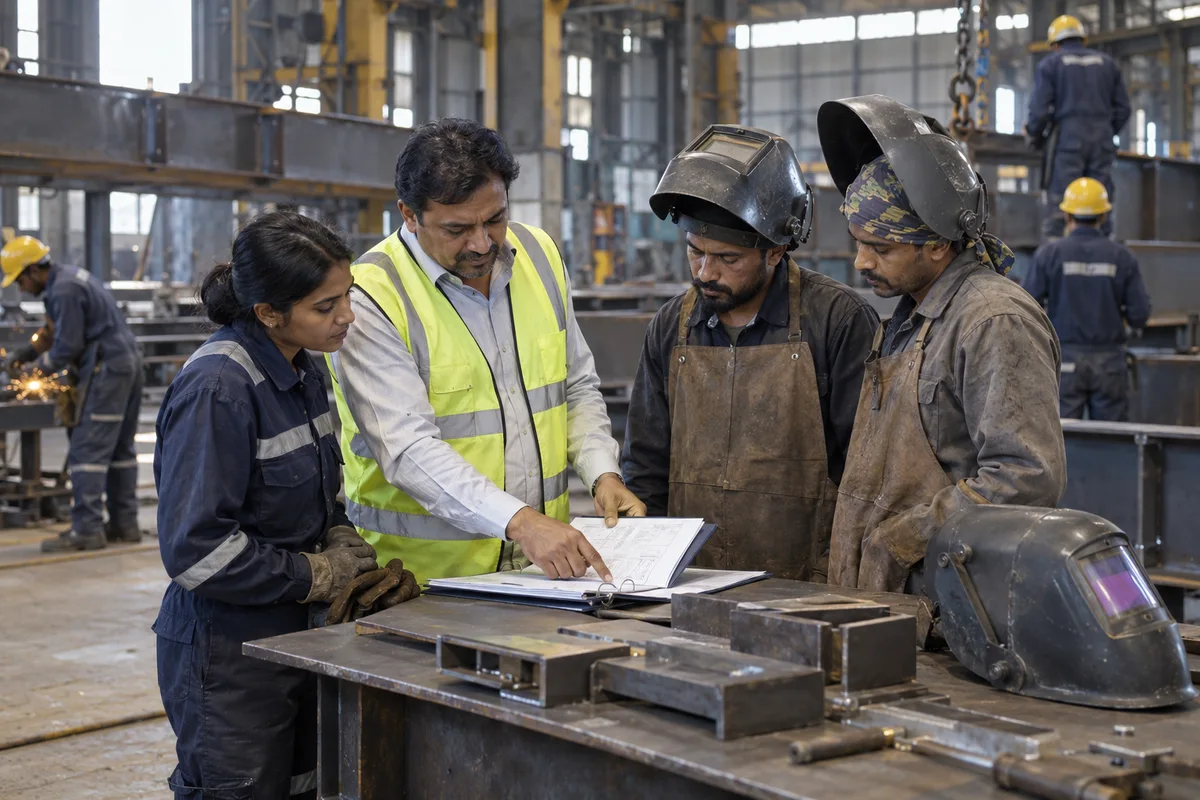
What social media means
Social media is the ongoing posting your business does on platforms such as Instagram, Facebook and LinkedIn to stay visible to customers and prospects between purchases. GullySales plans a posting calendar, writes captions and designs the images so the page looks active and answers what a visitor would ask.
Also for welding fabrication companies
- Content marketing for welding fabrication companies
- Lead generation for welding fabrication companies
- SEO for welding fabrication companies
- Local SEO for welding fabrication shops
- Buyer personas for welding fabrication companies
- CRM for welding fabrication companies
- Follow-up systems for welding fabrication companies
- WhatsApp marketing for welding fabrication companies
Sales and marketing for welding fabrication companies, the overview.
Last updated 14 Nov 2026.
For welding fabrication companies
Where it usually goes wrong, and what we would do.
“Engineers judge a shop by the weld bead”
A close photo of a clean weld, a fit-up check or a pressure test speaks to an engineer more than a stock image. Show the work as it is on the floor, with a line on material and purpose.
“LinkedIn reaches the buyers who sign”
Purchase heads, project managers and plant engineers sit on LinkedIn. A company page and a few personal profiles from your team showing finished jobs reach the people who shortlist fabricators.
“A reel needs a story of one job”
A short clip of a vessel from cutting to delivery holds attention better than a collage. One job, one clip, a plain caption on what it was for.
“Posting with no follow-through wastes the audience”
Someone reacts to a post about a stainless tank. If nobody replies or sends a direct message, the interest ends there. A named person must watch comments and messages.
What we do
What we deliver for welding fabrication companies.
The work available for this need. We agree the deliverables and responsibilities for your engagement in writing.
Job-story post format
A repeatable layout: the job, the material, the weld requirement, the inspection and the outcome, with client names withheld unless agreed.
Result: Each post follows one format the team can fill in.
LinkedIn company page and team profiles
A set-up of the company page and guidance for owners and engineers on posting from their own profiles.
Result: The company and key people show consistent, current profiles.
Short video guide
A plan for filming on the floor with a phone: what to shoot, how long, and what to say in a caption.
Result: The team knows what to film on an ordinary working day.
Photo permission and safety check
A checklist so images show safe practice, avoid customer-confidential parts and respect agreed privacy.
Result: Nothing goes out that a client or a safety officer would object to.
Message-handling routine
A rule for who replies to comments and direct messages and how a reply turns into a drawing request.
Result: Every message has a named person who replies.
How the result is measured
- Posts published
- Engagement rate
- Enquiries from social profiles
Recorded as a baseline before work starts, so every later report has an honest comparison.
Posts and pieces to plan
These are the posts a fabrication shop can plan from the shop floor.
- A clean TIG weld on stainless
- A close photograph with a line on the grade, thickness and purpose. Engineers judge the bead and read the caption.
- Fit-up check before welding
- A short clip of the gap and alignment check. It shows the care that happens before the arc is struck.
- Pressure or leak test
- A post showing the test done on a vessel or spool, with the inspector's role. Do not name the client without consent.
- A repair done during a shutdown
- A before and after of the work done, described as a job, with permission from the plant.
- Meet the qualified welder
- A post introducing a welder and their qualification as held. It shows buyers who will be doing the work.
Who it is for
This is written for these welding fabrication companies.
- Structural steel and platform fabricators
- Stainless steel tank and vessel fabricators for food, dairy and pharma
- Pipe spool and piping fabrication shops
- Machine frame and base fabricators for OEMs
- Heavy fabrication for cement, steel and power plants
- Aluminium and stainless welding for kitchens and architectural work
- Maintenance and shutdown fabrication contractors
- Trailer, tipper and truck body builders
Before you decide
When this may not be the right fit.
- You may not show your client's plant or product, and you have no cleared photographs, so the feed would show nothing real.
- Nobody on the floor can take a clear photograph without stopping the work.
- You have no one to answer a direct message from an engineer, so the posts would lead to silence.
Before you decide
Agree the work. Know how to judge it.
Social media marketing for welding fabrication companies: use these checks to prepare, choose the scope, and review what changes.
Bring the right evidence
Review the posts that produced useful conversations, not only the ones with the most views. Gather buyer questions and decide which team member can contribute credible material.
Make the scope clear
Choose the audience and channel before setting a posting volume. Agree who supplies material, approves posts, and handles messages, including complaints or questions the agency cannot answer.
Check the work in use
Follow a post through to the profile, website, and response. A useful report explains the quality of conversations and enquiries, alongside reach and engagement.
Know when to change course
If publishing takes time away from unanswered buyer messages, fix the response routine first. Do not expand to another channel without a clear reason for being there.
These are discussion points, not a fixed package. GullySales confirms the deliverables, responsibilities, fee, and term in writing after reading your brief and speaking with you.
Before we start
What to have ready before the work starts.
The records, access and decisions this work needs from welding fabrication companies. Anything missing is noted in the written scope, with who will supply it.
- Admin access to the LinkedIn company page
- We need at least one named admin, and it should be the owner, not an outsider. A page held by a former employee blocks publishing. If access is lost, we recommend creating a fresh page and moving the contacts across.
- A folder of dated job photographs
- Photos from the shop floor, taken on a phone, with the job type written in the file name. They are the raw material for every post. Without them we would post stock images, which engineers recognise at once.
- Written permission from clients you wish to show
- A message or a mail from the plant that says the job may be shown is enough. We keep it on file. Missing, we describe the work without the client name or the site. Keep the message or mail in the job folder, so that a later question about permission has a written answer.
- Names of welders who agree to appear
- Ask each person, and note the answer. Faces and names are used only with consent. If nobody agrees, posts show hands, work and the finished piece, which is still enough for an engineer.
- The person who answers the messages
- Someone on your side checks the inbox during the working day and replies in your voice. Give us a name and a mobile. Without one, a purchase engineer's message sits for days and the buyer moves on.
How it works
How the social media work runs
The work itself, in order. How an engagement starts, from your brief to a written scope, is set out on our method page.
- 1
Choose the platform where your buyers sit
We ask who actually buys from you: plant heads, EPC purchase staff, OEM engineers or small unit owners. Together we decide whether LinkedIn, Instagram, YouTube or only WhatsApp status deserves the effort. You choose one platform to begin with, and we give up the rest for now, so the work stays small enough to be kept up.
- 2
Collect photos from the last three jobs
Your works manager or a supervisor sends photographs and short clips from recent jobs: fit-up, welding in progress, finished piece, dispatch. We sort them by job type and note which show safety gear and clean work. You mark any that show a client's name or an unsafe practice, and those are set aside. We also ask which shots were taken for a client file, since those may carry marks that cannot be shown outside the plant.
- 3
Check client and worker permission
Before any job is posted we ask whether the client has agreed, and whether the welders in the frame are comfortable. You make the call, and where a plant has rules against photography, we post nothing from that site. The result is a short list of jobs that can be shown, and a note on what is off limits.
- 4
Draft the first job stories with the engineer
We write each post as the story of one job: the problem the plant had, what was fabricated, and what the shop did in plain words. Your engineer reads the draft for technical accuracy. A post with a sentence the engineer would not stand behind is rewritten, not published.
- 5
Set who replies to messages
We agree who watches the page and answers a message or a comment from a buyer, and what they say when someone asks for a rate. We write the opening replies and the question about the drawing. You name the person, and we show them the routine. We also agree what happens to a message sent late at night or on a holiday, so the buyer is told when a reply will come without any promised time.
- 6
Read profile visits and messages against the starting figures
We compare followers who are buyers, profile visits, messages with a drawing and enquiries naming the platform with the figures taken before the first post. You tell us which of the messages became quotes. From there we decide which post types to repeat and which to leave.
Where this fits
Three pieces of sales work, in this order.
This work sits inside sales process design, at stage 0, foundation. The audit comes before it, and sales management keeps it running.
Step 1
Sales audit
Find where deals are being lost and what to fix first.
Start here if you cannot say where orders are lost.
Step 2 · you are here
Sales process design
One written way to sell, from first enquiry to repeat order.
Start here if every salesperson sells differently.
Step 3
Sales management
A target, a review routine and someone who owns the number.
Start here if the team has targets and no routine.
FAQ
Questions owners ask before they call.
Not here? More answers, or ask on WhatsApp.
Is social media worth it for a B2B fabrication shop?
Which platform first?
Can we show client jobs?
Can we post a job done for a large plant?
Can we post about a job for a large plant that has strict rules?
How does a post lead to an order?
How much does it cost?
How long is the contract?
How soon will we see results?
Who will actually do the work?
More for welding fabrication companies
Related work to consider.
Closest to this: content and social
Also for welding fabrication companies
Or start from the overview: sales and marketing for welding fabrication companies.
Your next practical step
Tell us what you are trying to grow, and we will read it before we call.
Eight short steps, mostly taps. Skip anything you would rather answer on the call.