Spiritual centres · Non-profit
Make the first visit to your centre easy for a stranger.
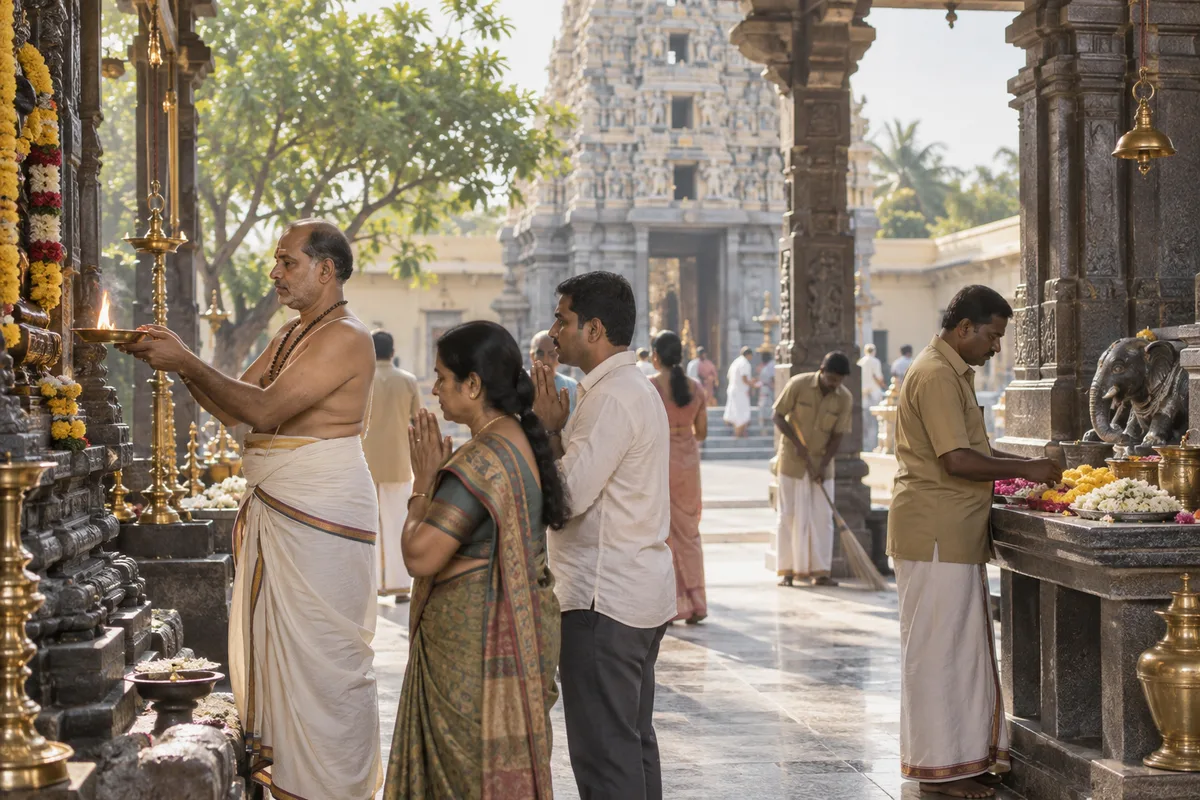
A software engineer in Whitefield has had a bad year and types 'satsang near me' into Google Maps at eleven at night. Three listings come up. One has timings that match a Sunday morning, a photograph of the hall and a WhatsApp number that answers; the other two have an old phone number and nothing else.
Scope, fee, reporting and term are agreed in writing after we have read your brief and spoken to you.
In one paragraph
A spiritual centre is a place where a teacher or a lineage holds satsang, discourses, prayer or guidance for people who come to learn and belong. Spiritual centre marketing gets a first-time visitor through the door. Sales is the invitation and follow-up that turns a visit into a regular seeker. GullySales builds the pages and the reply routine.
A spiritual centre does not sell anything in the usual sense, and its people dislike the word marketing. But a stranger still has to find the place, trust the people and feel welcome in the first ten minutes, and those steps are lost to silence, an old phone number or a missing greeting, not to any fault of the teaching.
Last updated 18 Oct 2026.
How buyers decide
How spiritual centres are chosen.
Seekers come by word of mouth first, then check. A friend mentions the centre, a colleague posts a discourse clip, or someone searches for satsang, bhajan or a teacher's name near them. They look for the day and time, whether newcomers are welcome, whether there is a dress or food custom, and whether the teaching speaks to them.
The choice is made over a few visits. A seeker attends once, watches how they are treated, and returns if someone greets them and says when the next gathering is. A first visit with no greeting and no word about the next gathering is where a seeker is easily lost.
Many seekers are cautious about gurus and centres that ask for money early or make large claims. A plain page that says who teaches, what is taught and what a visit involves does more than a promise of transformation.
The problem
What usually goes wrong for spiritual centres.
What owners tell us on the first call, in their words.
“People attend once and never return”
Nobody took their number, nobody sent a message, and the next satsang happened without them knowing.
“Our Google listing shows the wrong timings”
A newcomer arrives on a day when the hall is closed for a festival and does not try again.
“The discourses are recorded but nobody can find them”
Hundreds of talks sit in a phone gallery or an unnamed YouTube channel with no titles or search words.
“Questions come on WhatsApp at all hours and one volunteer answers them”
When that volunteer is travelling, enquiries wait for days.
“Our teaching can be misread as something it is not”
A visitor expecting a cure or a miracle goes away disappointed, or a worried relative thinks it is a cult.
“Older members do not understand why we need a website”
Younger seekers cannot find us, and the people who could help are not asked.
What we do
What we do for spiritual centres.
Everything included for spiritual centres.
A first-visit page
What happens when you arrive, how long it lasts, what to wear, whether you can sit on a chair, whether food is served and who will greet you.
Google Business Profile that matches the calendar
Timings, festival closures, entrance photographs and a route for people who come on public transport, updated whenever the schedule changes.
A welcome message that gets sent
A WhatsApp note after the first visit that thanks the person, says when the next gathering is and names a volunteer they can ask.
A findable discourse library
Recorded talks titled, grouped by theme and verse, with short written summaries so search can find them.
Volunteer enquiry rota
A shared rota for who answers WhatsApp and the phone, with a few standard replies in the centre's own voice.
Plain statements of what the centre is
A page that says who the teacher is, which tradition the teaching follows, how the centre is funded and what is expected of members.
Report against the baseline
Enquiries, first visits and returning visitors counted against the baseline recorded before the work began.
How the result is measured
- First-time visitors against returning visitors
- Enquiries by source
- WhatsApp enquiries answered against enquiries received
- Online satsang attendance
- Course enrolments from beginner evenings
- Searches that lead to a Maps call or direction request
Recorded as a baseline before work starts, so every later report has an honest comparison.
Every service, written for spiritual centres
Each has its own page: what it involves for spiritual centres, what you get, and what it is measured on.
- Lead generationBring in the seeker who is ready to attend a first gathering.
- SEOBe the page a seeker finds when they search for a teaching, not only a place.
- Local SEOMake the Maps listing true on the Sunday a stranger decides to come.
- Social mediaPost what a visit feels like, and let the clips point to the room.
- Content marketingTurn the talks you already give into pages a seeker can read at midnight.
- Seeker personasKnow who walks through the door, and what each of them is wary of.
- CRMKeep a simple record of every person who has asked about the centre.
- Follow-up systemsMake sure every first-time visitor hears from a person before the next gathering.
- WhatsAppAnswer the seeker who messages at midnight, and invite the one who asked to hear more.
- Digital marketingPut the centre where a seeker looks, then keep the invitation honest.
- WebsiteBuild the page a nervous newcomer reads before deciding to walk in.
Worth a page and a campaign of their own
Weekly satsang and discourse timings · Beginner sessions and introductory talks · Festival and guru-purnima gatherings · Study courses on scriptures · Online satsang for members elsewhere · Volunteer and seva roles · Visiting teacher programmes · Book, audio and video sales at the centre · Hall hire for community events
Priority campaigns
Campaigns for what spiritual centres most want to sell.
Each one planned around when your buyers decide, and measured against the baseline.
Introductory talk series
A set of open evenings for beginners, promoted with a landing page, Google Business Profile posts and WhatsApp invitations that members forward.
Guru purnima and festival invitation
Invitations and an agenda published weeks before the festival, with a clear note on seating, parking and prasad.
Short clips from discourses
One-minute clips with the teacher's consent and captions in the language spoken at the centre, posted to YouTube and Instagram with the centre's address in the description.
Online satsang for members abroad
A joining page, time zones in plain words and a reminder routine for members in the Gulf, the UK and the US.
Study course enrolment
A page per course, a short enquiry form and a follow-up call from a senior student.
Beyond search
Where we reach buyers of spiritual centres, beyond Google.
Search matters, but it is rarely the only way this industry's buyers find a supplier.
Neighbourhood groups and resident associations
A short note for resident welfare associations and senior citizen clubs near the centre, with timings and a named contact.
Yoga studios, counsellors and bookshops
A polite introduction for places whose customers ask about the inner life, offered as a referral, not as a pitch.
College and office spiritual clubs
A request to host a talk at a college or an IT campus group, sent with a plain outline of the session.
Other centres in the same tradition
Sister centres in nearby towns, with a simple way to share events and visiting teachers.
Local language media and temple notice boards
Event notices for regional papers, radio and community boards, where older seekers still look.
Who it is for
This is written for these spiritual centres.
- Satsang and bhajan centres of a living teacher
- Vedanta and scriptural study groups
- Centres of a guru lineage with local chapters
- Bhakti and kirtan communities
- Sufi, Sikh and Christian prayer fellowships open to visitors
- Spiritual counselling and guidance centres
- Adhyatmic libraries and discourse halls
- Centres serving NRIs through online satsang
- Interfaith and universal prayer centres
- Youth and college spiritual clubs
Not for
It is not the right fit if.
- You want a guaranteed Google ranking or a guaranteed number of leads. Nobody honest can promise either.
- You need enquiries by next week and have nobody to answer them.
- You want posts and reach reported, not enquiries and orders.
How it works
How the work runs for spiritual centres
The work itself, in order. How an engagement starts, from your brief to a written scope, is set out on our method page.
- 1
Visit and listen
The centre's talks, timings and enquiry history, and a conversation with a long-standing member and a newcomer about what first brought them.
- 2
Fix the front door
The Google listing, the first-visit page and a single phone and WhatsApp number that someone answers.
- 3
Set up the welcome
A message and a rota so every first-time visitor hears from a person, not a form letter.
- 4
Make the teaching findable
Titles, summaries and video pages for the talks the teacher is happy to publish.
- 5
Invite and follow up
Open evenings and festival invitations, each followed by a note to the people who came.
Where this fits
Three pieces of sales work, in this order.
GullySales builds every engagement from three pieces of sales work. This page is not one of them, but the same three steps apply to the business behind it.
Step 1
Sales audit
Find where deals are being lost and what to fix first.
Start here if you cannot say where orders are lost.
Step 2
Sales process design
One written way to sell, from first enquiry to repeat order.
Start here if every salesperson sells differently.
Step 3
Sales management
A target, a review routine and someone who owns the number.
Start here if the team has targets and no routine.
FAQ
Questions spiritual centres ask before they call.
Not here? More answers, or ask on WhatsApp.
Is it right to market a spiritual centre?
Can you promote our teacher's miracles or healing?
We have no money to spend on ads. What should we do first?
Our satsang is in Kannada and Sanskrit. Will the pages work?
Can members share clips of the teacher without asking?
How much does it cost?
How long is the contract?
How soon will we see results?
Who will actually do the work?
What do you need from us?
Part of Non-profit. See the other industries in the sector.
Your next practical step
Tell us what you are trying to grow, and we will read it before we call.
Eight short steps, mostly taps. Skip anything you would rather answer on the call.