Destination wedding planners · Follow up systems
Keep a family warm through the long gap between enquiry and contract.
A follow-up system for a destination wedding planner is the set of agreed next steps after an enquiry, a site visit and a proposal. GullySales works on the messages, the reminders and the rule for when a quiet family is asked again.
Scope, fee, reporting and term are agreed in writing after we have read your brief and spoken to you.
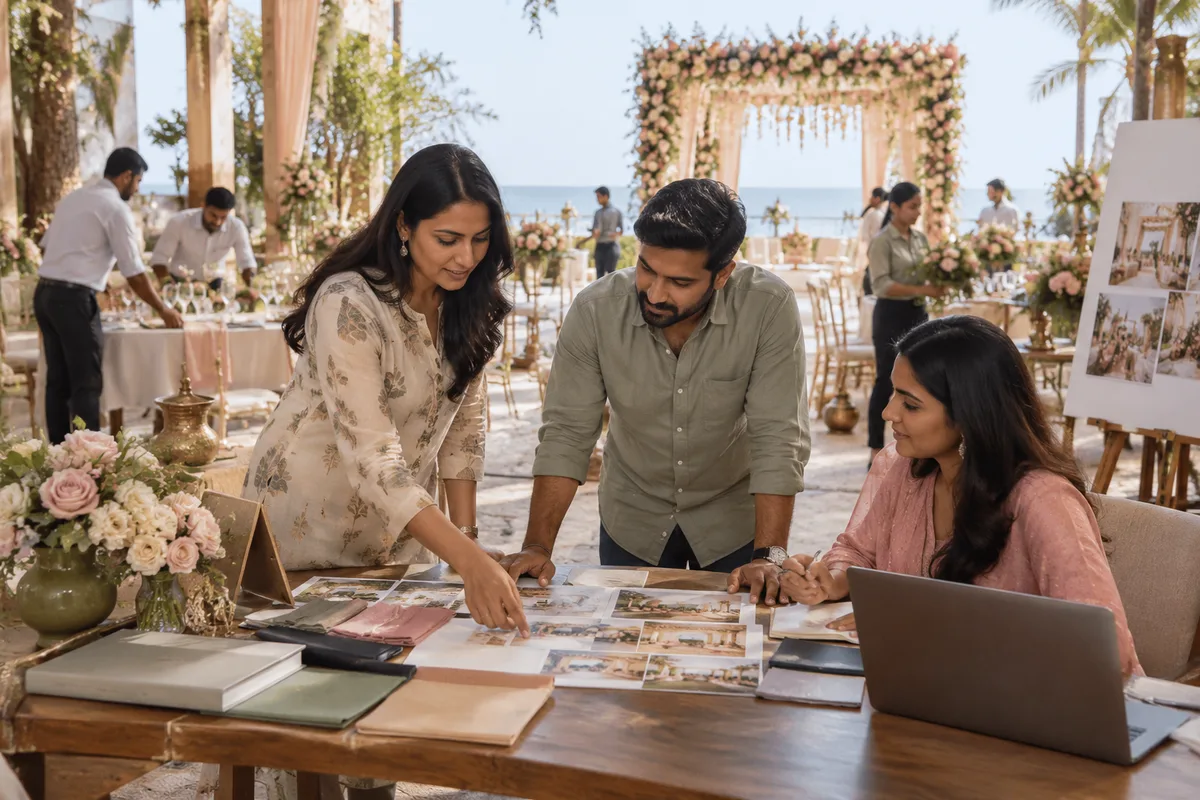
What follow up systems means
A follow-up system is the set routine for calling, messaging or emailing an enquiry more than once, since most buyers do not decide on the first conversation. GullySales sets the number and timing of follow-ups so an undecided buyer keeps hearing from you until they decide either way.
Also for destination wedding planners
- Lead generation for destination wedding planners
- CRM for destination wedding planners
- SEO for destination wedding planners
- Social media marketing for destination wedding planners
- Content marketing for destination wedding planners
- Buyer personas for destination wedding planners
- WhatsApp marketing for destination wedding planners
- Digital marketing for destination wedding planners
Sales and marketing for destination wedding planners, the overview.
Last updated 18 Oct 2026.
For destination wedding planners
Where it usually goes wrong, and what we would do.
“Families decide slowly and in committee”
After a proposal, the family discusses it with relatives in several cities. Silence is normal, and a planner who never follows up is forgotten by the family that was about to sign.
“The first message after a site visit matters”
A couple who has travelled to see venues expects a note while the visit is fresh. A message that recalls the venue they liked and the question they raised keeps the planner ahead.
“Follow-up must respect the family”
A string of identical reminders irritates a parent. Each message should add something: a date update, a venue photograph or an answer to the question asked.
“Lost families sometimes return”
A family that chose another planner may come back when something goes wrong. A polite closing message leaves the door open.
What we do
What we deliver for destination wedding planners.
Every deliverable, what it covers for you, and the result it is there to produce. Nothing here is an extra.
A follow-up map by stage
What is sent after the call, the visit, the proposal and the revision.
Result: Each stage has a named next message.
Message wording
Short WhatsApp and email messages that add a fact, not a nudge.
Result: The team has wording ready for each stage.
A rule for quiet families
When to ask again, when to send something useful and when to close politely.
Result: The team knows what to do when a family goes silent.
Reminders tied to the record
Each family's next follow-up kept in the same place as their record.
Result: The next step is visible beside the family.
A review of lost enquiries
A list of families who did not sign and the last message each received.
Result: You can see where the conversation stopped.
How the result is measured
- Follow-up completion rate
- Average number of follow-ups before close
- Enquiries closed after repeat follow-up
Recorded as a baseline before work starts, so every later report has an honest comparison.
Who it is for
This is written for these destination wedding planners.
- Planners who handle weddings at palace hotels and heritage properties in Rajasthan
- Beach wedding specialists in Goa and on the Konkan and Kerala coast
- Planners for NRI families who marry in India while living in the US, UK or Gulf
- Outbound destination planners who take Indian weddings to Thailand, Bali, Dubai or Sri Lanka
- Hill and forest resort weddings in Uttarakhand, Himachal and Coorg
- Boutique planners who take on a few weddings a year and run each themselves
- Larger planning companies with in-house decor, travel desk and hospitality teams
- Planners that sell guest travel and room-block management as a separate line
How it works
How the follow up systems work runs
The work itself, in order. How an engagement starts, from your brief to a written scope, is set out on our method page.
- 1
Measure today's reply time
From last month's enquiries, we measure how long each waited for a first reply and how many follow-ups it got.
- 2
Agree targets and the sequence
We set reply targets and the follow-up sequence with your team, based on its real hours and workload.
- 3
Set up templates, tasks and ownership
Templates, first-call questions, CRM tasks and named owners go live, with cover for leave and weekends.
- 4
Track and adjust every month
Reply time and follow-up completion are reported against the baseline, and the routine is changed where it is not kept.
Where this fits
Three pieces of sales work, in this order.
This work sits inside sales process design, at stage 2, qualification. The audit comes before it, and sales management keeps it running.
Step 1
Sales audit
Find where deals are being lost and what to fix first.
Start here if you cannot say where orders are lost.
Step 2 · you are here
Sales process design
One written way to sell, from first enquiry to repeat order.
Start here if every salesperson sells differently.
Step 3
Sales management
A target, a review routine and someone who owns the number.
Start here if the team has targets and no routine.
FAQ
Questions owners ask before they call.
Not here? More answers, or ask on WhatsApp.
How often should we message a family after a proposal?
Should the planner or an assistant follow up?
How much does it cost?
How long is the contract?
How soon will we see results?
Who will actually do the work?
What do you need from us?
What if we are not happy with the work?
More for destination wedding planners
Everything else we would do for you.
Closest to this: leads and follow-up
Also for destination wedding planners
Or start from the overview: sales and marketing for destination wedding planners.
Your next practical step
Tell us what you are trying to grow, and we will read it before we call.
Eight short steps, mostly taps. Skip anything you would rather answer on the call.