Environmental testing laboratories · Other
Be the lab a plant calls when the sampling is due, and the one it keeps for the year.
An EHS officer at a pharma unit has a consent renewal coming and a stack monitoring report that is due. The file shows last year's lab, but its sampling schedule is full. So the officer searches for an air and water testing lab nearby.
Scope, fee, reporting and term are agreed in writing after we have read your brief and spoken to you.
In one paragraph
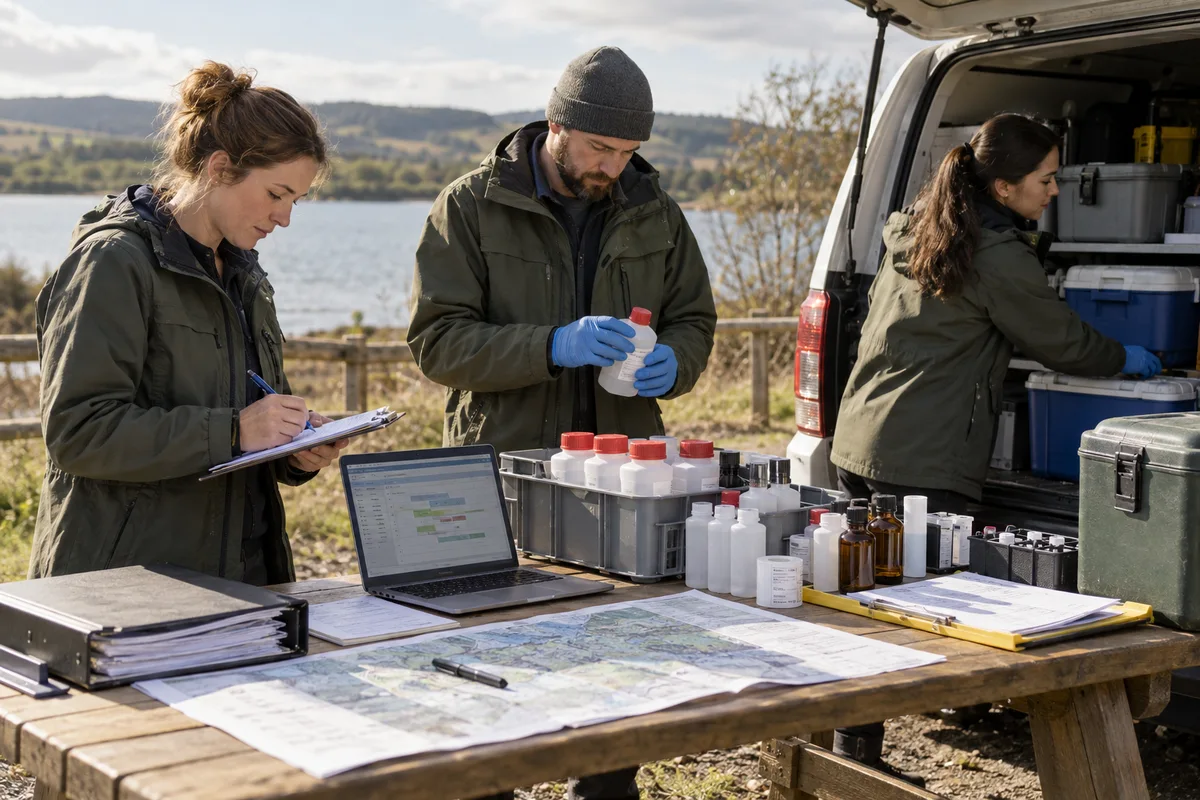
An environmental testing laboratory samples and analyses water, wastewater, air, soil, noise and waste for factories, builders and institutions, and issues the reports they must show to authorities and buyers. Marketing brings sampling enquiries and repeat contracts. GullySales builds the pages, listings and quotation follow-up that turn a request for a test into an annual arrangement.
Quotes come in. Every parameter is compared line by line against the last report, because a missing one means a second sampling visit. What is needed is a report to attach, from a lab whose name the board will accept.
Labs are bought on trust in the report. Buyers cannot judge the analysis, so they judge the paperwork around it: the accreditation shown, the sampling visit, the clarity of the report and how the lab responds when a figure is questioned. A lab that explains what it tests and what the plant should prepare has an edge over one that only quotes a rate.
Last updated 18 Oct 2026.
How buyers decide
How environmental testing laboratories are chosen.
Factory EHS officers and plant managers choose a lab when a statutory or customer requirement falls due: consent renewals, environment statements, stack and ambient air monitoring, effluent checks and customer audits. They search by test name and place, ask other plants, and check that the lab's accreditation covers the parameters they need. Rules and recognition requirements differ by state and authority and change, so a good lab says what it covers and what to confirm with the board.
Builders, hotels, hospitals and institutions buy tests for drinking water, sewage treatment plant outlets, noise and indoor air, through a consultant or a facility manager. Their first question is how soon someone can come to collect samples and how the report will look.
Consultants and equipment suppliers send a steady stream of work to labs that reply quickly and report clearly. A lab on a consultant's list is the one called when a project needs baseline data, and a slow reply to an email moves the call to the next lab.
The problem
What usually goes wrong for environmental testing laboratories.
What owners tell us on the first call, in their words.
“Our enquiries are for a single test and we never see the customer again”
A plant sends one water sample before an audit. We do the job, send the report and hear nothing until the next audit.
“Our website lists parameters and says nothing a buyer can use”
An EHS officer wants to know whether we test stack emissions and what sampling visit involves. The page offers a table of methods and no answer.
“Quotes take a day and the plant picks the first reply”
Plants ask three labs and compare the replies. A slow or unclear quote drops out.
“Consultants send work to other labs”
Environmental consultants use two or three labs they know. We have never met them and have no way of staying in touch.
“Sample collection and pickup is chaotic”
Calls come from different people at the same plant. Nobody has recorded what was promised, and the field team may learn of it the night before.
“Annual contract customers drift away”
A client's monitoring schedule sits in their own file. We hear when a rival has already visited.
What we do
What we do for environmental testing laboratories.
Everything included for environmental testing laboratories.
A page for each test type and each requirement
Pages for effluent, stack emissions, ambient air, drinking water, soil and noise, each listing the parameters covered, what the sampling visit involves and what the plant should keep ready.
A quotation sheet that is quick to send
A standard format for quotes covering parameters, sampling visits, report format and payment, with a prompt to follow up on every quote sent.
A consultant introduction pack
A two-page note listing the tests you do, the accreditations and recognitions you hold, and how consultants can book sampling, for those who send you work.
Annual schedule and reminder routine
A record of each client's required tests and their due dates, with a reminder drafted for each.
Sampling booking record
A simple booking sheet for every sampling visit with the plant contact, the tests agreed, the date and what the field team needs to carry.
Google Business Profile and listings in order
Profiles that list your tests, your area of service, your accreditation as it stands and real photographs of the laboratory and the field team.
A what-to-keep-ready sheet for the plant
A one-page list sent with each quote: sampling point access, a person to receive the field team, plant running condition on the day, last year's report and the consent number if one applies.
How the result is measured
- Enquiries by source and by test type
- Quotes sent against quotes won
- One-time clients converted to annual contracts
- Consultant referrals received
- Sampling visits booked against enquiries
- Quotes that named every parameter the plant needed
Recorded as a baseline before work starts, so every later report has an honest comparison.
Every service, written for environmental testing laboratories
Each has its own page: what it involves for environmental testing laboratories, what you get, and what it is measured on.
- Lead generationA sampling enquiry is worth more when the lab knows which plant and which due date sit behind it.
- SEOWrite a page for each test, because the buyer searches for the test and not for the lab.
- Local SEOShow up for the plant down the road who needs a sampler on site before the day ends.
- Social media marketingPost what a sampling visit looks like, because buyers cannot see inside a lab.
- Content marketingWrite the guide the plant officer wishes the last lab had sent before the visit.
- Buyer personasEach buyer of a test, from officer to consultant to facility manager, chooses a lab for a different reason.
- CRMRecord each plant's test cycle so the next due date is not discovered by accident.
- Follow-up systemsChase the quotation and the renewal with a routine, not with someone's memory.
- WhatsApp marketingUse WhatsApp for the sampling schedule and the quote, where the plant already talks.
- Digital marketingPut the lab where a plant searches, and keep one record of who came from where.
- WebsiteA lab website earns its keep when an officer finds the test, the scope and the contact in one visit.
Worth a page and a campaign of their own
Effluent and wastewater testing · Stack emission and ambient air monitoring · Drinking water testing · Soil and solid waste testing · Noise and workplace monitoring · Annual testing contracts · Baseline studies for clearances · Sampling visits and field monitoring · Customer audit and supplier compliance reports
Priority campaigns
Campaigns for what environmental testing laboratories most want to sell.
Each one planned around when your buyers decide, and measured against the baseline.
Consent renewal season campaign
Email and WhatsApp to past and prospective clients before their consent and statement dates, with a plain list of tests and a booking contact.
Drinking water testing campaign for institutions
Search ads and pages aimed at hotels, hospitals, schools and housing societies, with the tests and how a sample is collected.
Annual monitoring contract offer
A written offer to existing clients that bundles their yearly tests into a single schedule agreed in writing.
Consultant relationship programme
Notes and visits for environmental consultants and engineering firms in your region.
Cluster-specific campaign
A campaign aimed at a single cluster, such as textile processing, pharma or food plants near you, speaking about their own effluent and air issues.
Beyond search
Where we reach buyers of environmental testing laboratories, beyond Google.
Search matters, but it is rarely the only way this industry's buyers find a supplier.
EHS officers and plant managers
The person who books the lab is the EHS officer, not the owner. Factories near you that carry a consent are listed with the EHS officer, or the plant manager where there is none.
Environmental consultants
A consultant preparing a clearance file needs baseline data from a lab that answers email. The introduction lists your parameters and how a sampling visit is booked.
Builders, hotels and institutions
A facility manager at a hotel or hospital wants drinking water and sewage plant outlet tests, and asks first who will collect the sample.
Equipment and treatment plant suppliers
The firm that installs an effluent or sewage plant needs a lab to verify outlet quality at handover, so a two-way referral note suits both sides.
Industry associations
Cluster associations, such as textile processors or pharma units, circulate notes to members who face the same consent cycle. A one-page note on the tests that cycle needs fits their circular.
Who it is for
This is written for these environmental testing laboratories.
- Water and wastewater testing laboratories for factories and housing societies
- Stack emission and ambient air monitoring agencies
- Soil, sludge and hazardous waste testing laboratories
- Noise, workplace air and occupational hygiene monitoring firms
- Drinking water laboratories serving packaged water, hotels and hospitals
- Laboratories that support consultants with baseline data for clearances
- Mobile and field laboratories that sample at the site
- Laboratories that serve a single industrial cluster such as textile, pharma or food
Not for
It is not the right fit if.
- You want a guaranteed Google ranking or a guaranteed number of leads. Nobody honest can promise either.
- You need enquiries by next week and have nobody to answer them.
- You want posts and reach reported, not enquiries and orders.
How it works
How the work runs for environmental testing laboratories
The work itself, in order. How an engagement starts, from your brief to a written scope, is set out on our method page.
- 1
List the tests, scope and accreditation you hold
The tests you offer, the accreditation you hold, your field team and the clients you want more of are talked through and written down first.
- 2
Audit the enquiry-to-contract path
Where enquiries come from, how quotes are sent and followed, and how many one-time clients become annual ones are recorded as the starting point.
- 3
Build the pages and the sheets
Pages for each test, the quotation sheet, the booking record and the consultant pack.
- 4
Reach plants and consultants
Outreach to EHS officers, consultants and institutions begins, with search for the tests people look for.
- 5
Find the sources of annual clients
Annual contracts are traced back to the consultant, search or plant contact that started them, and those routes get the effort.
Where this fits
Three pieces of sales work, in this order.
GullySales builds every engagement from three pieces of sales work. This page is not one of them, but the same three steps apply to the business behind it.
Step 1
Sales audit
Find where deals are being lost and what to fix first.
Start here if you cannot say where orders are lost.
Step 2
Sales process design
One written way to sell, from first enquiry to repeat order.
Start here if every salesperson sells differently.
Step 3
Sales management
A target, a review routine and someone who owns the number.
Start here if the team has targets and no routine.
FAQ
Questions environmental testing laboratories ask before they call.
Not here? More answers, or ask on WhatsApp.
Can you show our accreditation on the website?
Will you write about which tests the board requires?
Is marketing useful when our clients come through consultants?
Can you help us turn one-time tests into annual contracts?
How is this different from marketing for an environmental consulting firm?
How much does it cost?
How soon will we see results?
Who will actually do the work?
What do you need from us?
What if we are not happy with the work?
Part of Other. See the other industries in the sector.
Your next practical step
Tell us what you are trying to grow, and we will read it before we call.
Eight short steps, mostly taps. Skip anything you would rather answer on the call.