Greenhouse farming companies · Search engine optimisation
Be the page a sourcing manager or a farmer finds when they search for greenhouse supply.
SEO for a greenhouse company means writing pages that answer the searches of produce buyers and of farmers considering a polyhouse. GullySales plans those pages, fixes how the site is built and keeps the two audiences on separate paths.
Scope, fee, reporting and term are agreed in writing after we have read your brief and spoken to you.
What search engine optimisation means
Search engine optimisation (SEO) is the work of getting your website to appear when a buyer searches Google for what you sell. GullySales builds pages around real search terms, fixes technical issues that block ranking, and tracks which searches actually bring enquiries.
Also for greenhouse farming companies
- Website for greenhouse farming companies
- Lead generation for greenhouse farming companies
- Social media marketing for greenhouse farming companies
- Content marketing for greenhouse farming companies
- Buyer personas for greenhouse farming companies
- CRM for greenhouse farming companies
- Follow-up systems for greenhouse farming companies
- WhatsApp marketing for greenhouse farming companies
Sales and marketing for greenhouse farming companies, the overview.
Last updated 18 Oct 2026.
For greenhouse farming companies
Where it usually goes wrong, and what we would do.
“A farmer searches by crop and structure”
Searches like polyhouse for capsicum or greenhouse for cut flowers name a crop and a structure together. A page that covers only greenhouse farming in general matches neither.
“A buyer searches for a supplier, not a farm”
A sourcing manager looks for coloured capsicum supplier or exotic vegetable supplier in a city. A page about your farm's story does not answer that search, but a crop page with quantities and delivery days does.
“Scheme questions bring traffic that needs honest answers”
Farmers search for subsidy and loan information before they search for builders. A plain page that explains the kinds of support and sends the reader to the right office earns trust, and a page that promises approval loses it.
“Photographs of a working site carry weight”
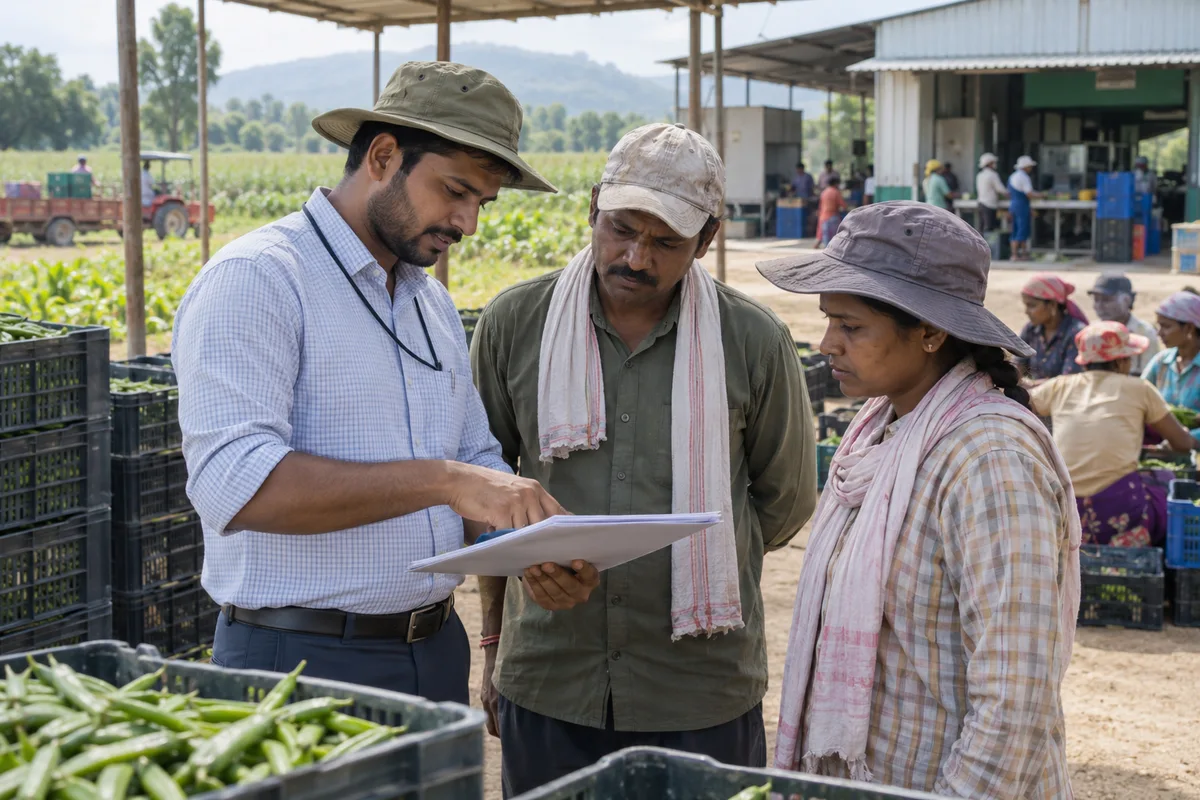
Search results reward pages that people stay on. A page with real photographs of your structures, crops and washing area gives the reader proof, and gives the search engine something distinct to read.
What we do
What we deliver for greenhouse farming companies.
Every deliverable, what it covers for you, and the result it is there to produce. Nothing here is an extra.
A keyword plan for crops and structures
A list of the phrases farmers and buyers use, grouped by crop, structure and city, with the page each phrase belongs to.
Result: Every page on the site has a stated search it answers.
Crop pages for produce buyers
One page per crop with size, packing, delivery days and handling, written for a sourcing manager.
Result: A buyer reaches a page that answers their supply question.
Project pages for farmers
Pages for each structure type and crop, covering what a project involves and what support follows handover.
Result: A farmer reaches a page that matches their crop and land.
A scheme and finance explainer
A plain page on the kinds of support farmers ask about, stating that rules differ by state and naming who to confirm with.
Result: One honest page answers the question you otherwise answer by phone.
Technical fixes
Page speed on mobile, clean addresses, image descriptions and a sitemap, checked on a phone because farmers search there.
Result: The site loads and reads properly on a phone.
How the result is measured
- Ranking positions
- Organic traffic
- Enquiries from organic search
Recorded as a baseline before work starts, so every later report has an honest comparison.
Who it is for
This is written for these greenhouse farming companies.
- Greenhouse growers of capsicum, cucumber and tomato for retail chains
- Cut flower and ornamental greenhouse growers
- Companies that design, build and hand over polyhouses to farmers
- Turnkey greenhouse operators who also manage the crop for the owner
- Nursery and seedling greenhouse businesses
- Tissue culture and plant propagation units
- Greenhouse farms supplying herbs, leafy greens and salad crops
- Greenhouse equipment and climate-control suppliers
How it works
How the search engine optimisation work runs
The work itself, in order. How an engagement starts, from your brief to a written scope, is set out on our method page.
- 1
Audit and baseline
We record where the site stands today: positions, traffic, technical faults and the enquiries search currently produces. Nothing starts until this number is written down.
- 2
Decide what to rank for
We map the searches your buyers use, in your words and theirs, and pick the ones worth the effort for your margin and your capacity.
- 3
Fix the foundations
Technical faults first, because the cheapest gains are usually there. Then the Business Profile and directory consistency.
- 4
Build the pages
A page for each thing you do, written to answer the question it is searched for, with a clear next step at the end.
- 5
Publish and earn mentions
Content goes out on the calendar. Links and mentions are earned from real relationships, not bought.
- 6
Measure, report, adjust
At the interval agreed at the start we report what moved and what did not, and change the plan when the numbers say so.
Where this fits
Three pieces of sales work, in this order.
This work sits inside sales process design, at stage 1, prospecting and lead generation. The audit comes before it, and sales management keeps it running.
Step 1
Sales audit
Find where deals are being lost and what to fix first.
Start here if you cannot say where orders are lost.
Step 2 · you are here
Sales process design
One written way to sell, from first enquiry to repeat order.
Start here if every salesperson sells differently.
Step 3
Sales management
A target, a review routine and someone who owns the number.
Start here if the team has targets and no routine.
FAQ
Questions owners ask before they call.
Not here? More answers, or ask on WhatsApp.
Will SEO put us at the top of search results?
Do we need separate pages for each crop?
Can we write about subsidies?
How much does it cost?
How long is the contract?
Who will actually do the work?
What do you need from us?
What if we are not happy with the work?
More for greenhouse farming companies
Everything else we would do for you.
Closest to this: search and visibility
Also for greenhouse farming companies
Or start from the overview: sales and marketing for greenhouse farming companies.
Your next practical step
Tell us what you are trying to grow, and we will read it before we call.
Eight short steps, mostly taps. Skip anything you would rather answer on the call.