Mineral processing companies · Other
Send the sample that matches the buyer's specification, with its certificate.
A tile maker in Morbi needs a feldspar powder at a specific fineness and whiteness and finds three suppliers on IndiaMART. Each is asked for a sample and a certificate of analysis.
Scope, fee, reporting and term are agreed in writing after we have read your brief and spoken to you.
In one paragraph
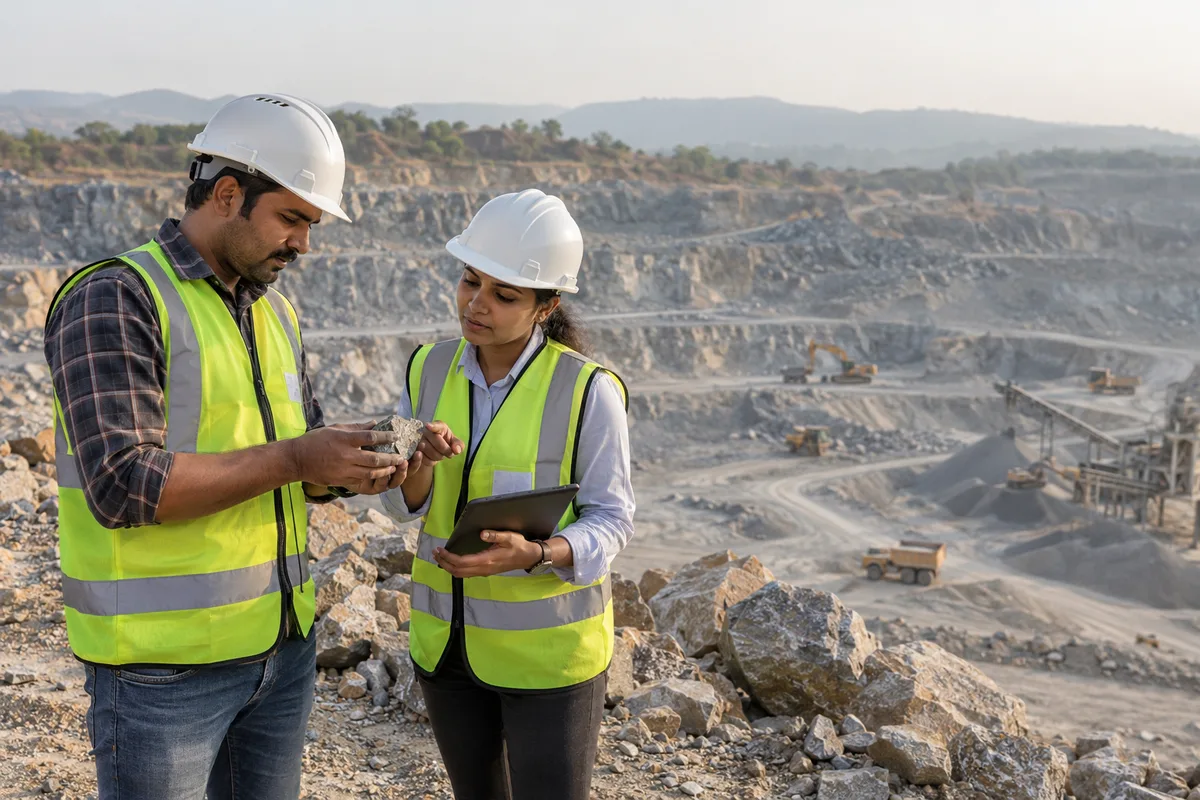
A mineral processing company crushes, grinds, washes and grades raw minerals such as quartz, feldspar, talc or barytes into powders and sizes for ceramic, glass, paint, paper and foundry users. Sales turn on specification and sample. GullySales builds the grade pages, the sample and certificate routine and the lot records behind repeat consignments.
One sends a pack with a printed sheet of mesh size, moisture and whiteness for that lot. One sends a bag with a handwritten note. One does not reply. Only the first gives the tile maker something to test against the specification.
Processing plants grow by adding grades, and each grade has a different buyer. If your unit sells quartz to a glass maker, a paint or foundry buyer needs the same mineral with different limits. An enquiry may arrive with a specification your plant has never run, and how you answer decides whether you add a new line.
Last updated 18 Oct 2026.
How buyers decide
How mineral processing companies are chosen.
A processing buyer reads the specification sheet before anything else: particle size or mesh, whiteness or colour, moisture, and the limits on impurities. The buyer asks for a sample and tests it in the unit's own process. Price, packing and delivery come up only after the sample works.
Consistency decides repeat orders. A ceramic or paint unit that finds the second consignment different from the first drops the supplier. A plant that tests each lot, keeps the certificate and can send the same number again earns the standing order.
The problem
What usually goes wrong for mineral processing companies.
What owners tell us on the first call, in their words.
“Enquiries arrive with specifications we cannot read quickly”
A buyer sends a grade name and a mesh figure and the reply takes days because nobody knows who decides.
“Samples go out with no certificate”
The buyer has no figures to hold against the specification, so the bag is set aside unopened.
“Every grade is sold by a different person”
The same buyer is quoted two different rates for two grades by two people.
“Our online listing says only 'mineral powder'”
Buyers search by mineral and use, and our listing matches neither.
“Buyers split their orders and we do not hear why”
A regular buyer buys half from us and half from a rival, and we do not know what the rival offered.
“Packing and dispatch complaints are not tracked”
A bag split in transit is a note on a phone and appears again in the next consignment.
What we do
What we do for mineral processing companies.
Everything included for mineral processing companies.
A grade page for each mineral and use
Quartz, feldspar, talc and the rest, each with its sizes, typical limits and the industries that buy it.
A sample and certificate pack
A standard sample bag with a one-page certificate for the lot and a record of who received it.
A lot and test register
Each lot with its test results, packing and dispatch details.
A single grade and rate sheet
One list of grades, packing sizes and rates that all salespeople follow.
An industry buyer list
Ceramic, glass, paint, paper, foundry and rubber units within your delivery range, with the minerals they use.
A dispatch and complaint log
Packing and transit problems recorded by lot and fed back to the packing line.
How the result is measured
- Enquiries by mineral and industry
- Samples sent with certificates
- Samples that became trial orders
- Repeat consignments by buyer
- Complaints by cause
- Buyers who split or stopped orders
Recorded as a baseline before work starts, so every later report has an honest comparison.
Every service, written for mineral processing companies
Each has its own page: what it involves for mineral processing companies, what you get, and what it is measured on.
- Lead generationBring in buyers whose specification your plant already runs.
- SEORank for the grade and the use, and the right purchase head finds the page.
- Social media marketingShow the plant, the lab and the lot so a buyer trusts the powder before the sample.
- Content marketingWrite what a purchase head checks, and the plant becomes the supplier who explains.
- Buyer personasKnow who tests the sample and who signs the order before you pitch either.
- CRMKeep every buyer, grade, sample and lot in one record the whole desk can read.
- Follow-up systemsAsk for the test result, then ask for the next consignment, every time.
- WhatsApp marketingSend the certificate and the lot photograph on the chat where the buyer already asks.
- Digital marketingPut the grades, the certificate routine and the buyer list in one connected plan.
- WebsiteBuild the site as a specification library that ends in a sample request.
Worth a page and a campaign of their own
A grade list with the specification for each · A sample and certificate routine · Ceramic, glass and paint buyer outreach · Foundry and rubber buyer outreach · Standing order follow-up · Packing and dispatch records · Listings that match how buyers search · Cross-sale of related grades
Priority campaigns
Campaigns for what mineral processing companies most want to sell.
Each one planned around when your buyers decide, and measured against the baseline.
Sample-to-trial campaign
A standard pack sent to buyers who asked for a specification, with a named person who asks for the test result.
Industry-specific grade pages
Pages built for the ceramic, glass, paint or foundry buyer with a short list of grades and uses.
Ceramic cluster outreach
Direct calls and a grade sheet to purchase heads in the ceramic belt within reach.
Standing-order check
A message to buyers on a standing order, confirming grade, packing and the certificate for the lot being dispatched.
Cross-grade offer
A note to buyers of one grade about a related grade you also make.
Beyond search
Where we reach buyers of mineral processing companies, beyond Google.
Search matters, but it is rarely the only way this industry's buyers find a supplier.
Ceramic and tile makers
Grade sheets, samples and certificates for purchase and production heads.
Glass, paint and paper units
A paint maker asks for oil absorption and brightness, a glass maker for iron content. Each gets a page in its own terms, not a general mineral list.
Foundry and rubber buyers
A foundry cares about grain size and silica, a rubber unit about fineness and moisture. The sample goes out with a certificate that shows those figures.
Search and IndiaMART
Listings by mineral, grade and use, with a reply routine for each enquiry.
Traders and exporters
A grade and packing sheet, plus the lot certificate and bag marking an exporter's buyer will ask to see.
Who it is for
This is written for these mineral processing companies.
- Quartz and silica processors
- Feldspar and ceramic mineral grinders
- Talc and soapstone processors
- Barytes and calcite processors
- Clay and kaolin processors
- Bauxite, mica and other mineral units
- Pulverisers and micronising units
- Washing and beneficiation plants
Not for
It is not the right fit if.
- You want a guaranteed Google ranking or a guaranteed number of leads. Nobody honest can promise either.
- You need enquiries by next week and have nobody to answer them.
- You want posts and reach reported, not enquiries and orders.
How it works
How the work runs for mineral processing companies
The work itself, in order. How an engagement starts, from your brief to a written scope, is set out on our method page.
- 1
Read the grades and the enquiries
The grades you make and the specifications buyers send are laid side by side, and the point where replies stall is marked.
- 2
Build the grade and rate sheet
One list for your whole sales team, with the test limits your lab reports.
- 3
Set the sample and certificate routine
What goes in the pack, who sends it and who calls.
- 4
Publish the grade pages
Pages by mineral and by industry, checked by your lab head.
- 5
Read the lot register
The lot register shows which grades repeat and which complaints recur, and the grade pages and packing notes are changed to match.
Where this fits
Three pieces of sales work, in this order.
GullySales builds every engagement from three pieces of sales work. This page is not one of them, but the same three steps apply to the business behind it.
Step 1
Sales audit
Find where deals are being lost and what to fix first.
Start here if you cannot say where orders are lost.
Step 2
Sales process design
One written way to sell, from first enquiry to repeat order.
Start here if every salesperson sells differently.
Step 3
Sales management
A target, a review routine and someone who owns the number.
Start here if the team has targets and no routine.
FAQ
Questions mineral processing companies ask before they call.
Not here? More answers, or ask on WhatsApp.
Can you write the technical specifications for us?
Do you find buyers abroad?
Is IndiaMART worth it for mineral powders?
What about environmental and processing rules?
Can one page cover all our grades?
How much does it cost?
How long is the contract?
How soon will we see results?
Who will actually do the work?
What do you need from us?
Part of Other. See the other industries in the sector.
Your next practical step
Tell us what you are trying to grow, and we will read it before we call.
Eight short steps, mostly taps. Skip anything you would rather answer on the call.