Stone quarry companies · Other
Be the quarry a municipal contractor rings first for kerbs and rubble.
A contractor repairing a village road for the panchayat needs kerb stones and rubble for a retaining wall. The foreman names whoever supplied the last job, and the contractor rings three quarries.
Scope, fee, reporting and term are agreed in writing after we have read your brief and spoken to you.
In one paragraph
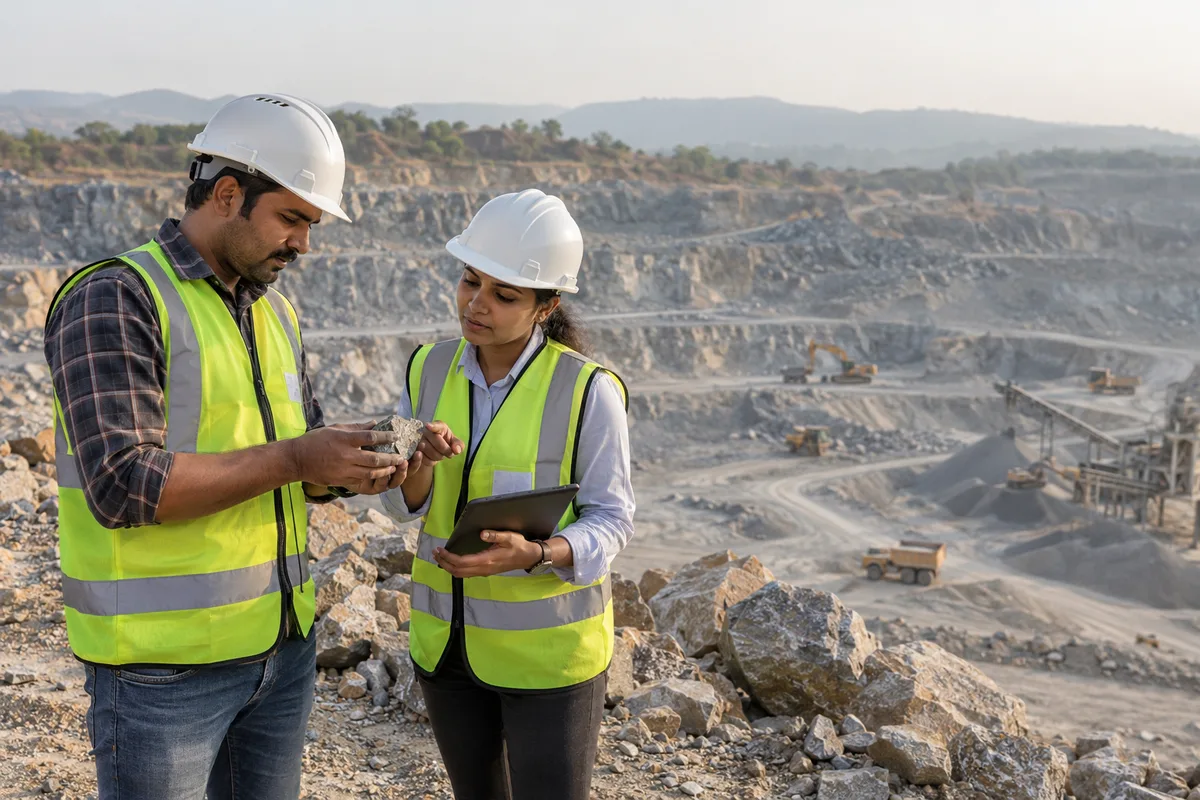
A stone quarry company breaks and dresses building stone such as rubble, boulders, kerbs, paving and compound-wall stone, and sells it by the truck to contractors, farmers and trusts. Marketing means being the quarry a site manager finds nearby and trusts to deliver. GullySales builds the product pages, the delivery map and the quote follow-up.
One picks up and quotes per truck with delivery to the site. One says the manager is away. One quotes ex-quarry and does not say what size the stones are. The first quarry is the one the contractor writes into the estimate.
A quarry that leans on a few contractors and a dry season has no wider list of buyers to turn to when work slows or a contractor changes supplier. It holds rock that nobody is asking for, and no one has written down who needed it last season.
Last updated 18 Oct 2026.
How buyers decide
How stone quarry companies are chosen.
A stone buyer asks three things: does the stone suit the work, can the truck reach the site and what is the rate on delivery. A contractor for a government job also needs the stone to match the sizes in the estimate. A farmer or a trust building a boundary wall asks only whether the quarry is close and whether the stone will stay put.
Local reputation does much of the work. A contractor who got fair loads and honest counts last time recommends the quarry. Weight, size and quantity are the usual points of dispute at the site, and a quarry that states them before dispatch gives the driver and the site clerk the same figures.
The problem
What usually goes wrong for stone quarry companies.
What owners tell us on the first call, in their words.
“Our stone sizes are not written anywhere”
A buyer asks what size the kerbs are and gets different answers depending on who picks up the phone.
“Delivery rates change with every call”
The owner quotes from memory and the manager quotes differently, so the buyer thinks the rate is negotiable and plays one off against the other.
“Government contractors find us late”
Estimates are prepared and suppliers chosen before we hear about the job, and we are brought in only for the lowest rate.
“Monsoon months have no orders”
Work slows and the quarry has no list of buyers to call for the season when the rain stops.
“Dispute at the site over counts”
The truck arrives, the buyer says the quantity is short and the load goes unpaid until it is resolved.
“No online presence for a district we know well”
A search for stone near the town shows other quarries and a directory listing with the wrong phone number.
What we do
What we do for stone quarry companies.
Everything included for stone quarry companies.
A product and size sheet
Rubble, boulders, kerbs, paving and wall stone, each with sizes, typical use and the way it is counted and loaded.
A delivery rate map
Rates by distance from the quarry, written once on a single page that the owner, the manager and the clerk all quote from.
A Google Business Profile that is correct
The right location, phone number, working hours and photographs of the dressing yard and loaded trucks.
A quote record
Each quote logged with site, material, quantity and the contractor's name.
A dispatch note
A simple slip stating count, size and load, signed at the quarry and carried by the driver.
A contractor register
Contractors, panchayat works and trusts you have supplied, with what they bought and when.
How the result is measured
- Calls and messages by stone type
- Quotes sent and quotes that became loads
- Loads with a signed dispatch note
- Site disputes over quantity
- Orders from repeat contractors
- Contractors who stopped ordering
Recorded as a baseline before work starts, so every later report has an honest comparison.
Every service, written for stone quarry companies
Each has its own page: what it involves for stone quarry companies, what you get, and what it is measured on.
- Lead generationFill the yard calendar with contractors who need stone for a named site.
- SEOLet a site manager searching for kerb stone by town name land on your quarry.
- Local SEOBe the quarry on the map when a foreman searches for stone near the work.
- Social media marketingShow finished walls and loaded trucks where contractors and trusts already look.
- Content marketingWrite down what the quarry knows about stone so a buyer trusts it before ringing.
- Buyer personasKnow the foreman, the engineer and the trust clerk as three different buyers.
- CRMKeep every contractor, site and quote in one place instead of in the manager's head.
- Follow-up systemsRing the contractor back before the estimate goes to another quarry.
- WhatsApp marketingSend the size sheet, the rate and the dispatch note where the foreman already reads.
- Digital marketingChoose the few online jobs that bring a contractor to the quarry gate.
- WebsiteA site that shows stone, sizes and delivery so the foreman calls with a quantity.
Worth a page and a campaign of their own
Product pages with sizes and uses · A fixed delivery rate by distance · Government and municipal contractor supply · Garden, trust and farm-wall buyers · A clean count and weight at dispatch · Off-season buyer calls · A correct Google Business Profile · A record of every quote and site
Priority campaigns
Campaigns for what stone quarry companies most want to sell.
Each one planned around when your buyers decide, and measured against the baseline.
Local search for stone near the town
A page and a profile built for the stone type and the town name, so a site manager nearby finds you first.
Pre-work-season message to contractors
A WhatsApp message and a call to every contractor in the register when the rain ends, with sizes in stock.
Estimate-stage introduction
A short sheet with your stone sizes for engineers and contractors who prepare estimates.
Trust and garden contractor outreach
Calls to temple trusts and garden and paving contractors with photographs of finished work using your stone.
Last-season buyer message
A WhatsApp message to buyers who ordered last season, naming the loads they took and what is now in the yard.
Beyond search
Where we reach buyers of stone quarry companies, beyond Google.
Search matters, but it is rarely the only way this industry's buyers find a supplier.
Civil and road contractors
A site foreman wants sizes, a per-truck rate to the site and one person who picks up. A sheet with all three can be handed to the next foreman.
Municipal and panchayat works
The junior engineer who writes the estimate picks the stone sizes, so the sheet reaches that engineer before tender, with a sample dispatch note attached.
Garden, path and boundary-wall buyers
Photographs of finished walls and paths and a page that explains the stone choices.
Search and Google Business Profile
A correct listing and pages for the stone types buyers ask for by name.
Trusts and builders in the district
A temple trust or a builder with a wall to raise wants a rate for the whole job, so the message states sizes, a truck count and the delivery rate for that site.
Who it is for
This is written for these stone quarry companies.
- Rubble and boulder quarries
- Kerb stone and paving stone quarries
- Compound-wall and building stone quarries
- Sandstone and Kota stone quarries
- Rural road and canal work suppliers
- Temple trust and garden-wall suppliers
- Yards that cut and dress stone
- Small owner-run quarries selling by the truck
Not for
It is not the right fit if.
- You want a guaranteed Google ranking or a guaranteed number of leads. Nobody honest can promise either.
- You need enquiries by next week and have nobody to answer them.
- You want posts and reach reported, not enquiries and orders.
How it works
How the work runs for stone quarry companies
The work itself, in order. How an engagement starts, from your brief to a written scope, is set out on our method page.
- 1
See the yard and the phone calls
How sizes and rates are quoted now, who takes calls and how a dispatch is recorded is noted at the quarry office.
- 2
Write the product sheet
One agreed sheet of sizes, uses and counting method, kept at the office and beside the phone.
- 3
Fix the listings
The profile, the pages and the delivery rate map, checked by you for accuracy.
- 4
Start the quote and dispatch records
A quote log and a dispatch note, small enough to use on a busy day.
- 5
Check which stones and sites repeat
The quote log and dispatch slips show which stones sold, which sites ordered again and which calls were lost.
Where this fits
Three pieces of sales work, in this order.
GullySales builds every engagement from three pieces of sales work. This page is not one of them, but the same three steps apply to the business behind it.
Step 1
Sales audit
Find where deals are being lost and what to fix first.
Start here if you cannot say where orders are lost.
Step 2
Sales process design
One written way to sell, from first enquiry to repeat order.
Start here if every salesperson sells differently.
Step 3
Sales management
A target, a review routine and someone who owns the number.
Start here if the team has targets and no routine.
FAQ
Questions stone quarry companies ask before they call.
Not here? More answers, or ask on WhatsApp.
Can you promote a small quarry that sells only to nearby sites?
Do you help with government contractor registrations?
Will an online page matter for a village-level buyer?
What about quarry lease and blasting rules?
Can you manage the rate list for us?
How much does it cost?
How soon will we see results?
Who will actually do the work?
What do you need from us?
What if we are not happy with the work?
Part of Other. See the other industries in the sector.
Your next practical step
Tell us what you are trying to grow, and we will read it before we call.
Eight short steps, mostly taps. Skip anything you would rather answer on the call.