Advertising film studios · Social media
Post the work and the craft so a creative head sees a director's eye in the feed.
Social media for an ad film studio is a public portfolio where creatives, producers and brand teams judge your taste and your crew. GullySales works on what to post, how to credit, and how client permission is checked before a film goes up.
Scope, fee, reporting and term are agreed in writing after we have read your brief and spoken to you.
What social media means
Social media is the ongoing posting your business does on platforms such as Instagram, Facebook and LinkedIn to stay visible to customers and prospects between purchases. GullySales plans a posting calendar, writes captions and designs the images so the page looks active and answers what a visitor would ask.
Last updated 18 Oct 2026.
For advertising film studios
Where it usually goes wrong, and what we would do.
“The audience is the trade itself”
Followers worth having are agency creatives, producers, casting directors and brand managers. A feed written for the general public draws the wrong crowd. Frames, process and credits show the people who commission films that your studio knows the work.
“Credit decides whether a film can be posted”
A finished film belongs to the client and the agency. Posting before written permission damages the relationship you wanted to build. A permission note on file for each film, and the agency named only when it agrees, protects the post and the next brief.
“Behind the scenes shows how a shoot is run”
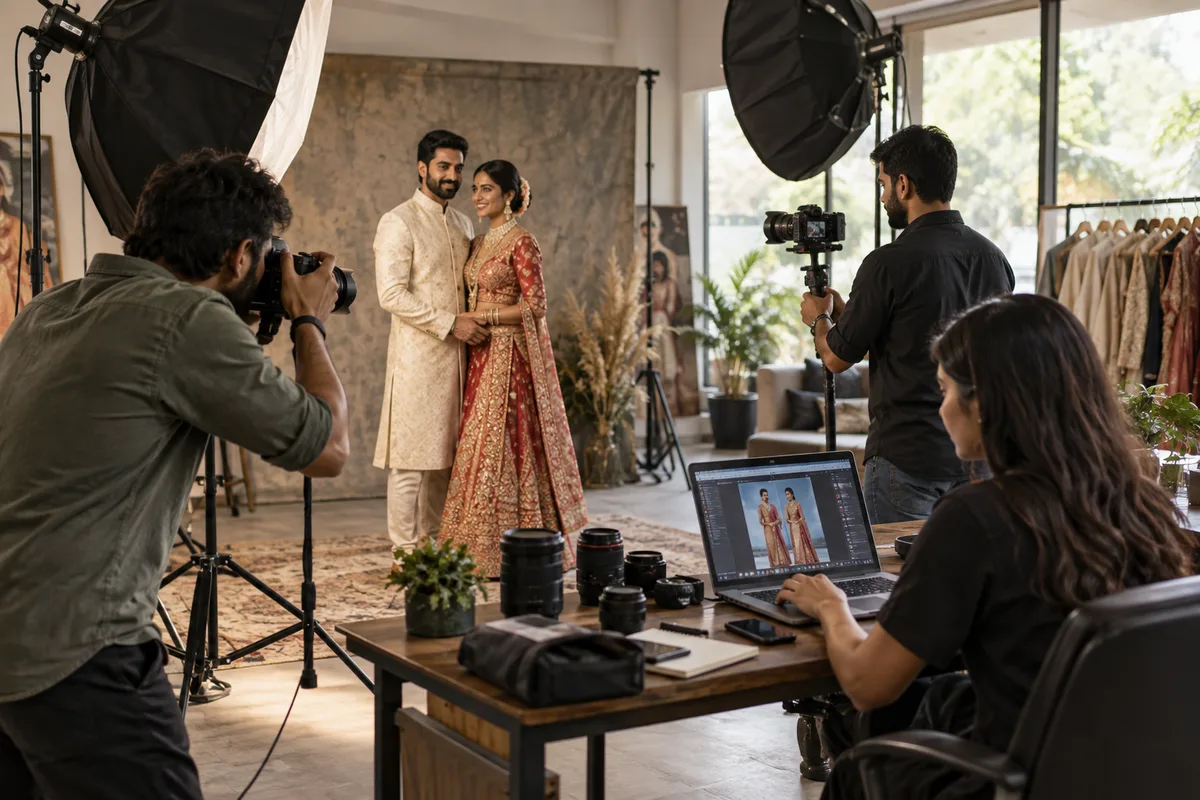
A producer choosing a house worries about the shoot day. Pictures of a calm set, a prepared location and a clear call sheet answer that worry better than a caption about passion. Crew appear only with their consent.
“Cut-downs suit the feed better than the full reel”
A full showreel is too long for a scroll. A short cut by director or by film type gives a viewer a reason to open the roster page. Each post should lead somewhere: the roster, a case sheet or the brief form.
What we do
What we deliver for advertising film studios.
Every deliverable, what it covers for you, and the result it is there to produce. Nothing here is an extra.
Content plan by purpose
A plan separating posts that show a director's style, posts that show the process and posts that announce new work.
Result: Every post has a purpose written beside it.
Permission register
A record of which films are cleared for public posting, who cleared them, and whether the agency or brand may be named.
Result: Anyone on the team can check a film's status before posting.
Director spotlights
Short posts built around one director, with a frame, a line on style and a link to that director's page.
Result: Each director has a spotlight that leads to the roster.
Profile set-up
Instagram, LinkedIn and YouTube profiles given one name, one description and one roster link.
Result: Every profile points to the roster and the brief form.
Shoot-day capture brief
A short instruction for the unit photographer or an assistant on what to photograph on a shoot, with crew consent noted.
Result: Each shoot leaves a folder of usable stills labelled by film.
How the result is measured
- Posts published
- Engagement rate
- Enquiries from social profiles
Recorded as a baseline before work starts, so every later report has an honest comparison.
Posts and pieces to plan
Posts an ad film studio can plan around cleared work.
- Director's eye on a single frame
- A still from a cleared film with the director's note on the lens and light. It needs the credit line the agency has approved.
- Shoot-day set tour
- A short clip of a set before the actors arrive, with the crew's roles named. It must not show unreleased product or packaging.
- Cut-down of a cleared film for the feed
- A vertical edit with the brand's and agency's written permission on file. Tag both and keep the permission note with the post.
- A producer explains how a bid is costed
- A talking-head post by the line producer, covering crew, location and post, with no real client numbers shown.
- Regional-language reel
- A film in a regional language with subtitles in English, cleared for posting, that shows the studio's range to a national agency.
Who it is for
This is written for these advertising film studios.
- Full-service ad film houses with a director roster
- Boutique production houses led by one director
- Digital-first film studios making social and performance ads
- Product and food film specialists
- Corporate film and brand documentary studios
- Production service companies that execute for agency-led shoots
- Fashion and lifestyle ad film houses
- Regional-language ad film studios
Not for
It is not the right fit if.
- No one keeps a record of which films are cleared, so a post could go out for a brand that has not agreed.
- You have no director willing to appear on camera, and the feed would then show logos instead of the people agencies hire.
- You plan to post unreleased campaign stills from a shoot, which breaks the agency's launch plans.
How it works
How the social media work runs
The work itself, in order. How an engagement starts, from your brief to a written scope, is set out on our method page.
- 1
Confirm audience, platforms and access
We note which platforms your buyers use and check that the pages sit under your own business accounts, with you as owner and us as added roles.
- 2
Review the current presence
We read the existing pages, the posts that drew replies and the gaps in posting.
- 3
Build the calendar
Themes, formats and dates are set out for your approval, with space for offers and news.
- 4
Create, approve and publish
Posts are made, approved by you and scheduled. Replies to the public are handled in your voice.
- 5
Record enquiries and adjust
Enquiries are logged against the post or platform where they began, and the mix changes to follow what brings them.
Where this fits
Three pieces of sales work, in this order.
This work sits inside sales process design, at stage 0, foundation. The audit comes before it, and sales management keeps it running.
Step 1
Sales audit
Find where deals are being lost and what to fix first.
Start here if you cannot say where orders are lost.
Step 2 · you are here
Sales process design
One written way to sell, from first enquiry to repeat order.
Start here if every salesperson sells differently.
Step 3
Sales management
A target, a review routine and someone who owns the number.
Start here if the team has targets and no routine.
FAQ
Questions owners ask before they call.
Not here? More answers, or ask on WhatsApp.
Should we tag the agency and the brand?
Do we need to be on every platform?
How do we credit a film made for an agency?
Is a vertical cut-down the studio's own work?
How much does it cost?
How long is the contract?
How soon will we see results?
Who will actually do the work?
What do you need from us?
What if we are not happy with the work?
More for advertising film studios
Everything else we would do for you.
Closest to this: content and social
Also for advertising film studios
Or start from the overview: sales and marketing for advertising film studios.
Your next practical step
Tell us what you are trying to grow, and we will read it before we call.
Eight short steps, mostly taps. Skip anything you would rather answer on the call.