Drip irrigation providers · Content marketing
Publish what a grower needs to know before choosing who designs the system.
Content marketing for a drip provider means writing and filming the answers a farmer wants before a survey: what a layout includes, how a filter is cleaned, how water source affects design. GullySales builds that library from your own installers' knowledge and your real plots.
Scope, fee, reporting and term are agreed in writing after we have read your brief and spoken to you.
What content marketing means
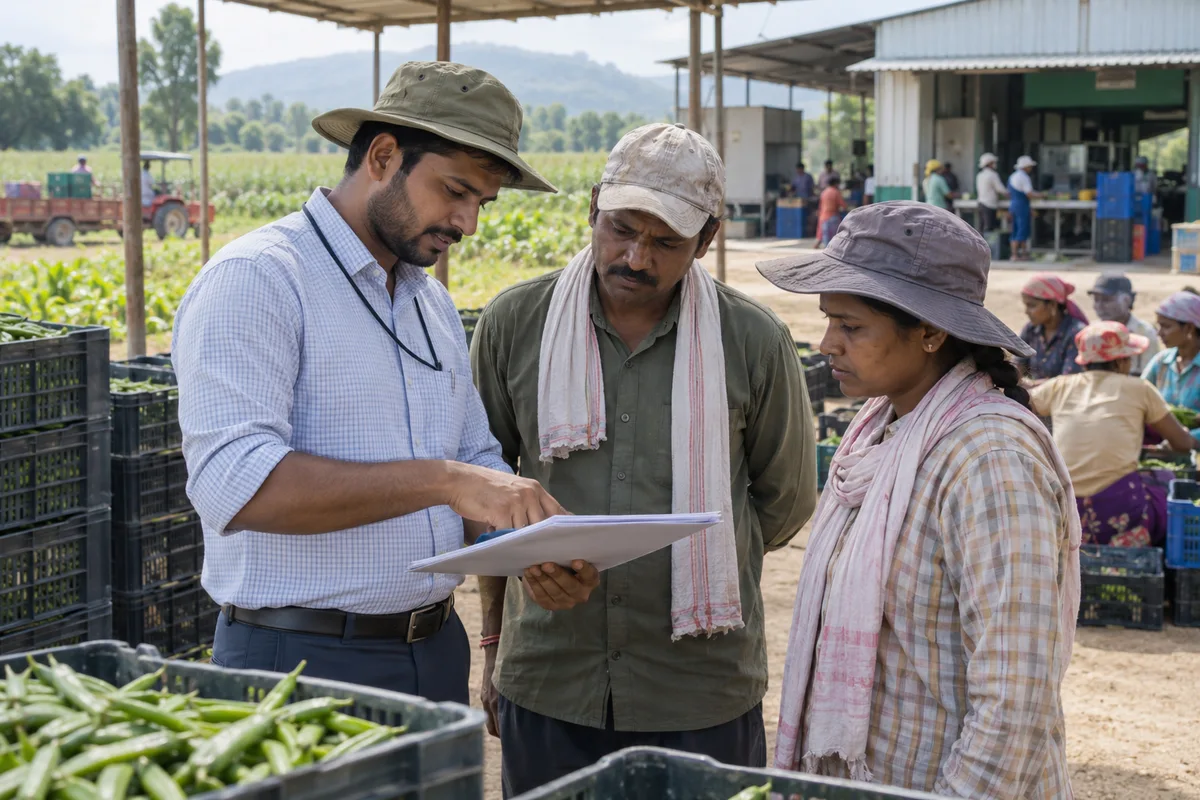
Content marketing is writing articles, guides and pages that answer the questions buyers search before they are ready to enquire. This makes your business visible and trusted before the first call. GullySales plans this content from the first conversation onward, choosing topics that match real search demand rather than guesses.
Also for drip irrigation providers
- Social media for drip irrigation providers
- Lead generation for drip irrigation providers
- SEO for drip irrigation providers
- Local SEO for drip irrigation providers
- Buyer persona for drip irrigation providers
- CRM for drip irrigation providers
- Follow-up systems for drip irrigation providers
- WhatsApp marketing for drip irrigation providers
Sales and marketing for drip irrigation providers, the overview.
Last updated 18 Oct 2026.
For drip irrigation providers
Where it usually goes wrong, and what we would do.
“The farmer is comparing quotes without a method”
A grower with several quotes cannot tell which is complete. A page that explains the parts of a drip system and the work of survey and design hands the grower a checklist. The provider who wrote it looks like the one who knows.
“Each crop has its own questions”
A grape grower asks about spacing and the main line. A sugarcane grower asks about laterals and the row length. A polyhouse grower asks about fertigation. One general article answers none of them well, and a crop-wise set answers each.
“Water source changes the design”
A borewell with falling levels, a farm pond and a canal give different problems for filters and pressure. A grower who reads about their own water source arrives at the survey with better questions, and the survey goes further.
“Installer knowledge stays in heads”
The senior installer knows why a lateral blocks and what to check first. That knowledge is told to one farmer at a time. Written and filmed once, it answers the second-year call before it is made.
What we do
What we deliver for drip irrigation providers.
Every deliverable, what it covers for you, and the result it is there to produce. Nothing here is an extra.
A what-a-quote-includes guide
A plain page and a printable sheet explaining survey, design, main line, filters, laterals, emitters and installation.
Result: A guide you can send with every quote.
Crop-wise articles
One article for each crop you install on, written from your installers' notes and plots.
Result: A set of crop articles that each name real layouts.
A water-source series
Short pieces on borewell, pond and canal supply and what each means for filters and pressure.
Result: A set of pieces a grower can read before the visit.
A filter and flush how-to
A short video and picture sheet, in the district language, on cleaning a filter and flushing a line.
Result: A clip the service team can forward when a farmer calls.
An installer interview library
Recorded conversations with your installers about common problems, turned into short written answers.
Result: A question bank that shows what the team knows.
How the result is measured
- Pages published
- Organic traffic
- Enquiries from content pages
Recorded as a baseline before work starts, so every later report has an honest comparison.
Posts and pieces to plan
Write the pieces a grower reads before choosing a designer.
- What a drip quotation should include
- A page that lists survey, design, main line, laterals, filters and fittings so a grower can check every quote against it.
- Drip layout for grapes versus sugarcane
- A comparison that explains spacing and row length for each crop, with a photograph of a plot you laid out.
- Looking after filters in the first season
- A care guide with images, which shows the farmer that service is planned and not an afterthought.
- Documents for a drip subsidy file
- A checklist of land and bank papers, with a reminder that scheme rules change and the agriculture office has the current list.
- A polyhouse fertigation walkthrough
- A piece for nursery and polyhouse growers on how injection and dosing are planned into the layout.
Who it is for
This is written for these drip irrigation providers.
- Drip and micro irrigation design and installation firms
- Companies that install sprinkler and drip together
- Providers working mainly with orchards, such as grapes, pomegranate and banana
- Providers working with sugarcane, cotton and vegetable growers
- Providers installing for polyhouses and nurseries
- Providers that handle subsidy and bank documents for farmers
- Providers that serve plantations and large estates
- Provider businesses attached to a dealer or an equipment brand
Not for
It is not the right fit if.
- You have no one who can check the technical detail, and a wrong spacing or pressure note would cost you the grower's trust.
- Your team cannot answer the enquiries the pieces bring in, so growers who read and call would get no reply.
- You want writing about your products only, which gives a farmer comparing quotes nothing to use.
How it works
How the content marketing work runs
The work itself, in order. How an engagement starts, from your brief to a written scope, is set out on our method page.
- 1
Agree the plan
Topics and formats come from the content strategy and the buyer-question list. The volume goes into the written scope, agreed with you, not into a number quoted on a call.
- 2
Brief and draft
Each piece starts from its one-page brief and a short conversation with your technical person, recorded if they allow it, so the draft uses their words.
- 3
Check the facts
Your person marks the draft for accuracy and we correct it. Regulated subjects also go to your own adviser, because restrictions on claims apply to articles as much as to advertisements.
- 4
Publish and distribute
The piece goes live on your site, then out through the channels where your buyers already are.
- 5
Read the enquiries and adjust
Results are reported against the baseline recorded before work began. Topics that brought readers but no enquiries are changed or dropped. How often you are reported to is agreed in writing.
Where this fits
Three pieces of sales work, in this order.
This work sits inside sales process design, at stage 0, foundation. The audit comes before it, and sales management keeps it running.
Step 1
Sales audit
Find where deals are being lost and what to fix first.
Start here if you cannot say where orders are lost.
Step 2 · you are here
Sales process design
One written way to sell, from first enquiry to repeat order.
Start here if every salesperson sells differently.
Step 3
Sales management
A target, a review routine and someone who owns the number.
Start here if the team has targets and no routine.
FAQ
Questions owners ask before they call.
Not here? More answers, or ask on WhatsApp.
Do we need to publish on a fixed day?
Can we use another company's product pictures?
How do we avoid promising results?
Should the pieces be written in the local language?
How much does it cost?
How long is the contract?
Who will actually do the work?
What do you need from us?
What if we are not happy with the work?
More for drip irrigation providers
Everything else we would do for you.
Closest to this: content and social
Also for drip irrigation providers
Or start from the overview: sales and marketing for drip irrigation providers.
Your next practical step
Tell us what you are trying to grow, and we will read it before we call.
Eight short steps, mostly taps. Skip anything you would rather answer on the call.