Drip irrigation providers · Lead generation
Bring in farmers who want a survey for a plantation they are about to plant.
Lead generation for a drip provider means reaching growers who are planning a plot, a new crop or an added acreage, and who are ready to have the field measured. GullySales works on the crop pages, the dealer and nursery referrals and the survey request that turn a farmer's interest into a booked visit.
Scope, fee, reporting and term are agreed in writing after we have read your brief and spoken to you.
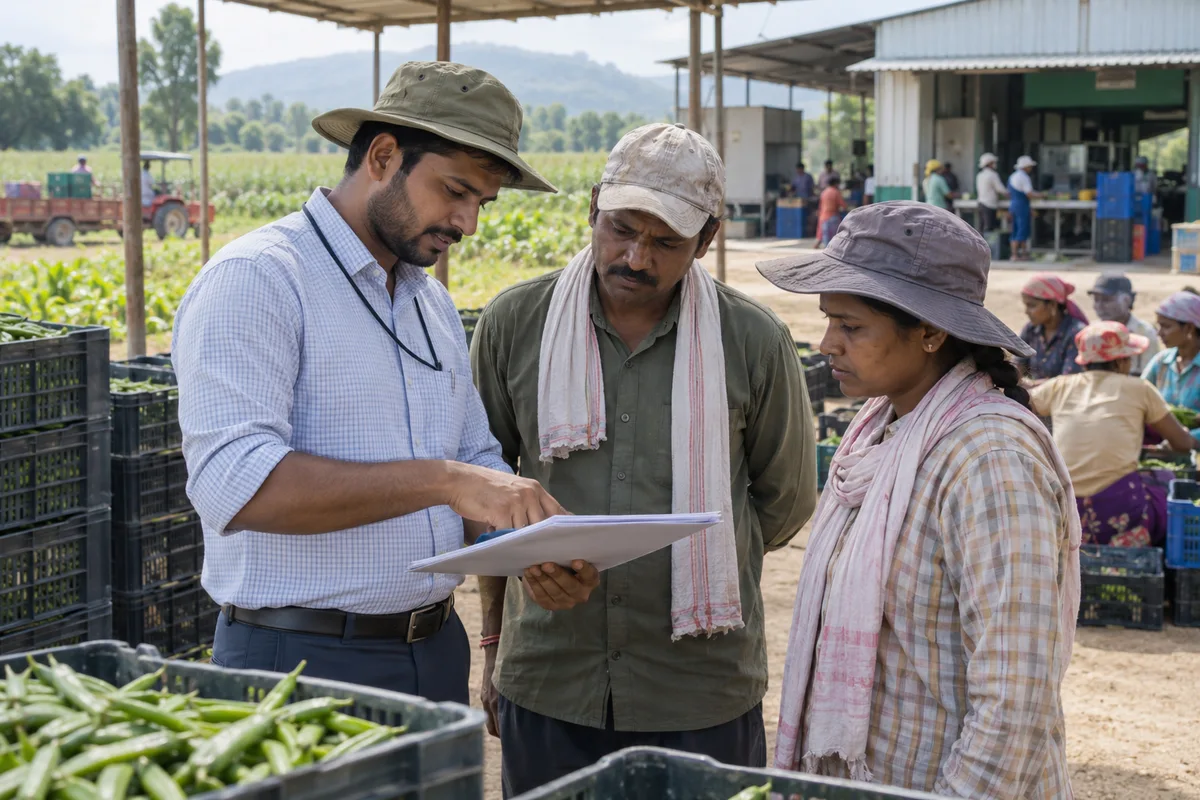
What lead generation means
Lead generation is the combined work of every channel that brings in a new enquiry, whether from search, adverts, referrals or a stall at an exhibition. GullySales runs these channels together and reports the number of enquiries each one produced, not the activity behind it.
Also for drip irrigation providers
- CRM for drip irrigation providers
- Follow-up systems for drip irrigation providers
- SEO for drip irrigation providers
- Local SEO for drip irrigation providers
- Social media for drip irrigation providers
- Content marketing for drip irrigation providers
- Buyer persona for drip irrigation providers
- WhatsApp marketing for drip irrigation providers
Sales and marketing for drip irrigation providers, the overview.
Last updated 18 Oct 2026.
For drip irrigation providers
Where it usually goes wrong, and what we would do.
“A survey request is the real lead”
A farmer who asks for a price list is browsing. A farmer who gives a village, a crop and an acreage and asks you to come to the plot is a lead. The enquiry route should ask for exactly those details, so the survey team knows what the visit is for.
“The planting date sets the clock”
Drip is ordered before planting, not after. A farmer who is clearing a plot for banana or pomegranate talks to providers while the land is being prepared. Enquiries that arrive after the saplings are in the ground are for repairs or added lines, and need a different reply.
“Dealers and nurseries see the plan first”
The nursery owner who sells the saplings and the input dealer who supplies the seed hear about a new plantation before any provider does. A farmer asks them what to use for water. A provider who has left a clear referral note with them is the name they give.
“Past farms hold the next acre”
A grower with some acres under drip and more still unplanted is closer to a sale than a stranger. Every installed farm is a lead for added land, for a neighbour's plot and for service, but only if the provider keeps a record of who installed what and when.
What we do
What we deliver for drip irrigation providers.
Every deliverable, what it covers for you, and the result it is there to produce. Nothing here is an extra.
Crop-wise survey request pages
One page for each crop you install on, ending in a short request for the village, crop and acreage, in the language the farmer reads.
Result: A farmer reading about drip for grapes can ask for a survey without a phone call first.
A dealer and nursery referral note
A one-page note about your survey service that an input dealer or nursery owner can hand over or forward on WhatsApp, with your area of work.
Result: A list of dealers and nurseries who have the note, with a date against each.
A source column in the survey register
Every survey is recorded with how the farmer found you: neighbour, dealer, nursery, search, advert or a reference plot.
Result: The register shows which source brought surveys and which brought orders.
Pre-planting campaign messages
Advert copy and WhatsApp messages written for farming districts before the planting window, offering a farm visit.
Result: Ready copy and a booking form for farmers still choosing a system.
An added-acreage list
A list of installed farms with the area still unplanted, built from your own installation records.
Result: A list you can call when a new planting season opens.
How the result is measured
- Enquiries generated
- Cost per enquiry
- Enquiries by source
Recorded as a baseline before work starts, so every later report has an honest comparison.
What to capture
Record these details before the survey team sets out.
- Village and taluk of the plot
- Tells the survey team whether the plot is in a belt you serve, and lets one drive cover several plots in the same area.
- Crop and the date of planting
- Drip is ordered before planting, so the planting date sets how soon the farmer needs a layout and a quotation.
- Acreage and plot shape
- Gives a rough sense of the main line and lateral work before anyone drives out, and shows whether the plot is one block or split.
- Water source and pump details
- A borewell, a farm pond and a canal feed need different filters and pressure planning, so ask before the visit.
- Who will pay and how
- Own funds, a bank loan or a subsidy scheme change what documents the quote must wait for, and who in the family to speak to.
Who it is for
This is written for these drip irrigation providers.
- Drip and micro irrigation design and installation firms
- Companies that install sprinkler and drip together
- Providers working mainly with orchards, such as grapes, pomegranate and banana
- Providers working with sugarcane, cotton and vegetable growers
- Providers installing for polyhouses and nurseries
- Providers that handle subsidy and bank documents for farmers
- Providers that serve plantations and large estates
- Provider businesses attached to a dealer or an equipment brand
Not for
It is not the right fit if.
- You have no survey team free to visit within the planting window, so more farm enquiries would only be left waiting.
- You do not yet serve villages beyond your own taluk, so a district-wide campaign would bring plots you cannot reach.
- Your quotation still lists materials only, so farmers would compare it against cheaper pipe-and-emitter offers and leave.
How it works
How the lead generation work runs
The work itself, in order. How an engagement starts, from your brief to a written scope, is set out on our method page.
- 1
Understand your capacity
We ask how many enquiries your team can answer well, who answers after hours, and what a good enquiry looks like. Without this, the system fills a funnel nobody is watching.
- 2
Audit current sources
We read your call log, WhatsApp chats, enquiry sheet and platform dashboards. The baseline is recorded: enquiries by source, reply time, conversion and cost per order.
- 3
Strategise the channel mix
Search and maps are chosen for people ready to buy, ads for people who are not yet looking, and content and referrals for trust.
- 4
Implement capture and follow-up
Pages, forms, tags, the lead record and the first-reply message are built and tested end to end. We submit test enquiries ourselves before any media money is spent.
- 5
Measure and optimise
Enquiries are traced to source and judged by what became orders, not by volume alone. Channels that fill the sheet with poor enquiries are cut back. How often you are reported to is agreed in writing.
Where this fits
Three pieces of sales work, in this order.
This work sits inside sales process design, at stage 1, prospecting and lead generation. The audit comes before it, and sales management keeps it running.
Step 1
Sales audit
Find where deals are being lost and what to fix first.
Start here if you cannot say where orders are lost.
Step 2 · you are here
Sales process design
One written way to sell, from first enquiry to repeat order.
Start here if every salesperson sells differently.
Step 3
Sales management
A target, a review routine and someone who owns the number.
Start here if the team has targets and no routine.
FAQ
Questions owners ask before they call.
Not here? More answers, or ask on WhatsApp.
Should we advertise to every farmer in the district?
Is a dealer referral worth the effort?
How do we know which lead source works?
What should we ask a farmer on the first call?
How much does it cost?
How long is the contract?
How soon will we see results?
Who will actually do the work?
What do you need from us?
What if we are not happy with the work?
More for drip irrigation providers
Everything else we would do for you.
Closest to this: leads and follow-up
Also for drip irrigation providers
Or start from the overview: sales and marketing for drip irrigation providers.
Your next practical step
Tell us what you are trying to grow, and we will read it before we call.
Eight short steps, mostly taps. Skip anything you would rather answer on the call.