Skip to content
GullySales

Drip irrigation providers · Outsourced sales and business development

Keep sales calls and follow-up moving while you prepare to hire.

Outsourced sales and business development means assigning a defined part of your selling to an outside team, such as outbound calls or enquiry follow-up. GullySales runs that work within an agreed scope, records conversations in your CRM, and passes qualified opportunities to your named sales owner, with a handover plan for your future hire.

Scope, fee, reporting and term are agreed in writing after we have read your brief and spoken to you.

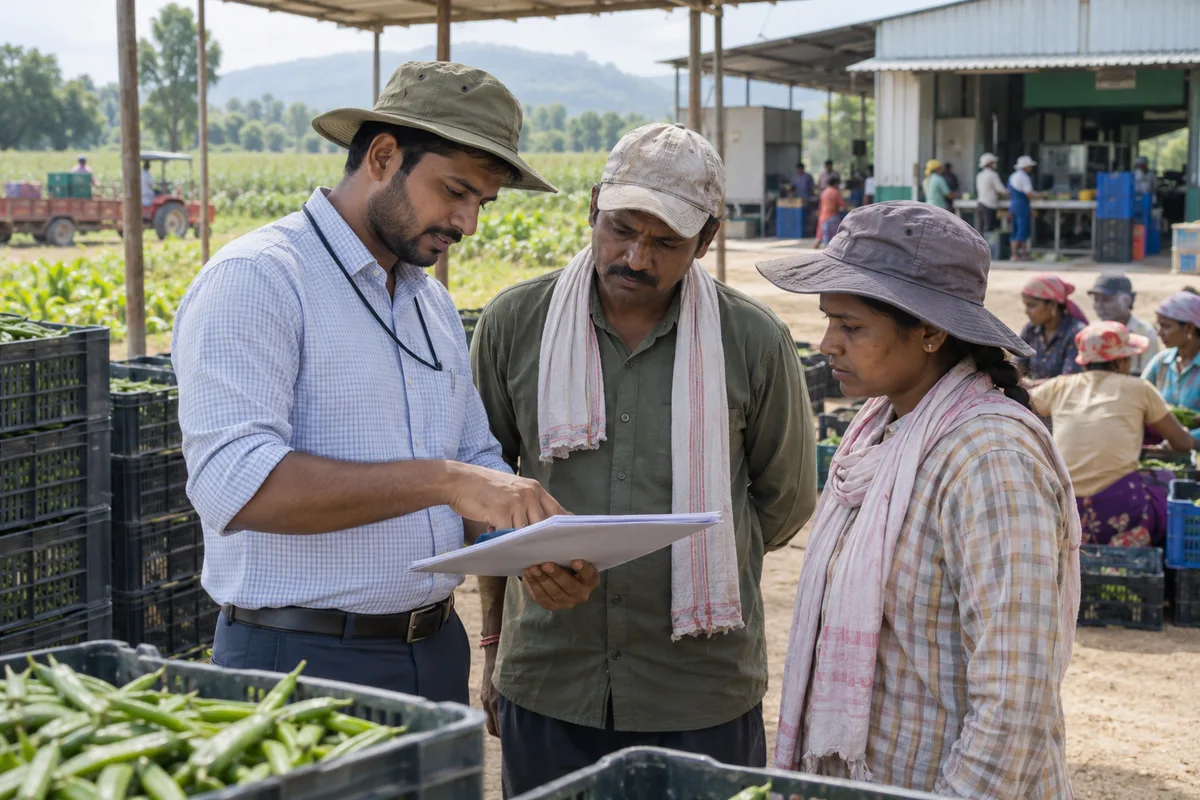
An agribusiness field officer reviewing a seasonal crew roster with supervisors at a crop collection point

Start with the buying decision

Which opportunities deserve the team’s effort?

Industry membership alone does not establish fit. The service exclusions, your operating model, and the records available determine the scope after your requirements brief.

Your team approves the scope and any commitments to buyers. GullySales does not assume authority over pricing, staffing, or delivery promises unless a specific responsibility is agreed in writing.

The context for Drip irrigation providers

Start with the decisions in your own enquiry records.

Compare the stated requirement with completed work and the effort needed to deliver it. Keep assumptions about demand separate from evidence in the records.

How people choose in this industry

The farmer hears about a provider from a neighbour whose crop did well, from a dealer, or from a company representative in a crop that needs drip. Two or three providers get a call and a request to visit, and the layouts and quotes are set side by side. Price counts, but so does the question of who will fix it in the second year.

Your farmer may need help with a bank loan or a government scheme for micro irrigation. The provider who can explain the document list in plain words, and who has worked with the local office before, is trusted. Schemes and rules differ by state and change, so the farmer should always confirm with the department or bank.

After installation, the farmer judges the company on the first season: whether the lines run evenly, whether the filter is simple to clean, and whether someone answers when a lateral blocks. That season decides whether the neighbour is told to call you.

The decision before implementation

The owner approves segment priorities and commercial boundaries before the team changes its approach.

Existing industry priorities to review

  • Farm survey booking and follow-up
  • Crop-wise design and installation pages
  • Subsidy and loan file tracking
  • Farmer reference visits to completed plots
  • Year-two service and cleaning visits

These describe the industry's wider priorities. The written scope identifies which this service will address.

Industry application review

Test the service against a problem in your own records.

These review scenarios connect the industry context to a possible output and a checkable next step. They are scope questions, not client results or a promise that every industry problem belongs in this engagement.

Farmers compare us on price per acre before they know what we design

The cheapest quote is a package of pipe and emitters with no layout, but ours includes the survey and design, and that is not visible in the number.

Confirm the scope first

Check whether this issue belongs in the outsourced sales and business development engagement or requires different work. The industry problem alone does not establish that this service will solve it.

What to bring

Bring a completed opportunity record, its requirement and outcome, and the assumptions used to prioritise it.

Proposed completion check

Record the scope decision and its reason. If the issue is outside this engagement, identify the responsible team or the separate work required.

Site visits take a day and end in no order

We drive two hours, measure, send a quote, and the farmer is never reached again.

Confirm the scope first

Check whether this issue belongs in the outsourced sales and business development engagement or requires different work. The industry problem alone does not establish that this service will solve it.

What to bring

Bring a completed opportunity record, its requirement and outcome, and the assumptions used to prioritise it.

Proposed completion check

Record the scope decision and its reason. If the issue is outside this engagement, identify the responsible team or the separate work required.

The problem

What outsourced sales and business development is meant to address.

  • “A salary before a tested sales approach”

    You are ready to hire but cannot yet explain which accounts the person should call or what makes a conversation worth pursuing. A defined calling scope gives you evidence to inform that role.

  • “Customer history on one person's phone”

    A salesperson leaves, and nobody knows what each buyer was promised. Shared CRM records keep the next action visible to whoever takes over.

  • “Outbound calls behind everything else”

    Dispatch problems take priority, so prospecting keeps slipping. An agreed calling responsibility makes the work someone's job rather than an owner's spare-time task.

  • “Enquiries without a next action”

    A buyer asks for details, receives a brochure, and hears nothing more. Without a recorded next step, an enquiry remains open even after the buyer has moved on.

Who it is for

Check your operating model against the scope.

  • Manufacturers testing a buyer segment before appointing their first salesperson
  • B2B service firms with enquiries waiting for a proper response
  • Owners still handling every introductory sales call themselves
  • Companies rebuilding follow-up after a salesperson has left
  • Businesses preparing to bring an established calling approach in-house

Before you decide

When this may not be the right fit.

  • You need someone to own high-stakes, in-person customer relationships for the long term. That responsibility belongs in your own team.
  • Your team cannot provide approved product information, prices, or access to shared sales records.
  • Every opening conversation requires a detailed technical demonstration from your engineers, with no useful calling work to separate out.

Choose the right scope

Start with the work your business needs.

  1. First sales role preparation

    Start with one defined buyer group and offer before committing to a hire. The resulting scripts and conversation records give your future salesperson a practical starting point, including objections that still need your input.

  2. Inbound enquiry follow-up

    Assign follow-up for agreed sources such as IndiaMART or JustDial. The work establishes what the buyer needs and records the next action before passing a qualified opportunity to your team.

  3. Sales vacancy cover

    Keep an agreed portion of calling active while you replace a salesperson. Existing records determine what can be picked up responsibly; missing customer history must be clarified rather than guessed.

  4. Defined outbound calling

    Approach a specified set of businesses, such as purchase teams in one industrial belt. This is scoped calling execution, not an assumed multichannel prospecting programme or a wider business development strategy.

What we do

Agree the outputs before work begins.

These are the outsourced sales and business development deliverables available for drip irrigation providers. Your written scope identifies the included work and responsibilities.

  1. Written operating scope

    A document naming the buyer group, products, locations, languages, and work retained by your team. You check the qualification criteria and handover point before calling begins.

  2. Approved call script

    An opening script and objection notes based on your product sheets and price list. Your product owner checks the claims and marks questions that need referral rather than an improvised answer.

  3. Target contact list

    A working list drawn from your customer records, enquiries, and public business directories. You approve the sources and exclusions; your adviser reviews the proposed outreach requirements before use.

  4. Calling and follow-up records

    The agreed calls and follow-up messages, carried out under the identity approved with you. Each record shows the response and next action, including when the buyer declines further contact.

  5. CRM conversation history

    Call notes and next steps entered through a login with agreed permissions. You can inspect a contact's history without asking the caller to reconstruct it from memory.

  6. Opportunity handover rules

    Written criteria for a ready opportunity, a named recipient, and an agreed response expectation. The handover includes the buyer's requirement and any unanswered questions.

  7. Baseline and results record

    A starting record of enquiries by source, reply time, conversion, and cost per order where records support it. Reporting separates calling activity from qualified opportunities and orders confirmed by your team.

  8. In-house handover pack

    The approved scripts, objection notes, and CRM history prepared for your hire. You review open opportunities and ownership before responsibility changes.

How the result is measured

  • Calls and follow-ups completed against the agreed scope
  • Conversations with the intended buyer
  • Enquiry reply time by source
  • Qualified opportunities handed over and accepted by your team
  • Opportunity conversion into completed orders confirmed by your team
  • Cost per order where spend and order records support the calculation

Recorded as a baseline before work starts, so every later report has an honest comparison.

Industry baseline

Keep the industry's wider measures beside the service measures.

Use the existing baseline to understand the context. These figures are not all targets for this engagement, and a change must not be attributed to the service without evidence.

  • Survey requests by source and village
  • Surveys completed against quotes sent
  • Quotes won against quotes waiting on subsidy or loan
  • Reference plot visitors recorded
  • Service visits done against due
  • Referrals from installed farmers

This or a nearby service

Which piece of work fits your situation.

These services sit close to each other. The line between them, in plain words.

Outbound sales prospecting
Choose outbound sales prospecting when the main gap is a target list and outreach messaging for companies that have not enquired. Choose outsourced sales and business development when an outside team should also carry enquiry follow-up and vacancy cover under your named sales owner.
Fractional head of sales
Choose a fractional head of sales when your reps lack a leader who reviews live deals and owns the sales process. Choose outsourced sales and business development when the gap is selling capacity, such as calls and follow-up that nobody has time to do.
Dedicated sales team services
Choose dedicated sales team services when you want a group of sellers assigned to your offer under your brand and targets. Choose outsourced sales and business development when only a defined part of selling moves outside, with a handover plan for your own future hire.

A sample of the output

An operating scope sheet says which selling tasks move outside and who keeps the rest.

This sheet is written for a pump dealer that wants calling and enquiry follow-up handled outside. Read each row as a task, who performs it, and the point where the work returns to your own sales owner.

Illustrative example, not client data. Yours is built from your own records.
TaskDone byStops whenReturns to
Calls to listed contractorsOutside teamContact asks for a quotation or declinesNamed sales owner
Follow-up on website enquiriesOutside teamBuyer confirms a site visit is wantedNamed sales owner
Price discussionYour sales ownerNot handed outside at any pointNot applicable
Technical questions about pump sizingYour engineerOutside team logs the question and stopsNamed sales owner
Updating the CRM after each callOutside teamEvery conversation has an outcome recordedShared sales records
Contacts who ask not to be calledOutside teamContact is marked and never listed againContact list owner

Before we start

What we need from you.

The work depends on these. Each says why it is needed and what happens when it is missing.

One named sales owner
The outside team passes qualified opportunities to a person, not a mailbox. Choose someone with time to respond and authority to quote. Without this person, opportunities wait unanswered and the calling work has no point.
Approved product and price information
Callers can only say what you have approved. Supply current product facts and the price rules for what may be quoted by phone. If this is missing or out of date, calls stay general and buyers get vague answers.
Access to your CRM or shared sheet
Conversations are recorded where your own team can read them later. Give the outside team accounts with the right permissions. Without shared records, the history leaves with the work and a future hire starts blind.
A contact list you may lawfully call
You confirm that the people listed can be contacted and that consent or opt-out rules are met. A list without that check is held back, and the calling work does not start until it is settled.
A decision on the future hire
Say whether you plan to hire and for which role. The handover pack is written for that person. If the plan is undecided, the work still runs, but the handover stays general.

Marketing and sales together

Your sales owner receives a buyer record with a clear next action.

A handover is more than a phone number marked interested. The CRM record states the requirement and what the caller has already discussed, with unresolved questions flagged for your sales owner. Your team records whether it accepts the opportunity and what happens through to an order or a lost decision, so calling volume is not mistaken for sales.

Decisions to make before the work starts

  1. Product authority

    Accurate calling depends on current product sheets and approved prices. Your team retains technical demonstrations and commitments outside the caller's written authority; regulated offers require your own compliance review.

  2. System boundaries

    This scope uses your CRM with agreed permissions. A CRM implementation or data migration is separate work, as are sales management and a wider founder-to-team transition.

  3. Workload and handover capacity

    The buyer group, languages, and follow-up workload affect the scope and fee. Your team must also have capacity to receive opportunities; more calling will not resolve a queue of buyers waiting for your quotation.

How it works

How outsourced sales and business development runs

The work itself, in order. How an engagement starts, from your brief to a written scope, is set out on our method page.

  1. 1

    Scope approval

    You send the requirements brief, then we discuss the work to assign. The scope, fee, and term go in writing, including the point at which your team takes responsibility.

  2. 2

    Access and information approval

    Your team provides approved product material and CRM access with defined permissions. We record the baseline and flag missing information before it becomes a buyer's unanswered question.

  3. 3

    List and script approval

    You review the target list and calling approach. Your own adviser handles any required compliance review, and your product owner approves what callers can say about the offer.

  4. 4

    Initial call review

    An initial set of calls tests the opening and qualification questions. You review the notes, correct misunderstandings, and approve changes before the wider agreed work continues.

  5. 5

    Opportunity transfer

    Calling and follow-up continue within scope, with records kept in your CRM. A conversation meeting the agreed criteria passes to the named person on your side with its next action.

  6. 6

    Continuation or handover decision

    Results are reviewed against the baseline at the agreed points. You decide whether to adjust the scope, continue it, or transfer the work to your hire using the documented history.

Approval and acceptance

Use an observable check before accepting an output.

These are proposed review checks for the named outputs. Agree the final conditions in the written scope, then record any missing requirement before accepting the handover.

  • Written operating scope

    Trace the output back to the selected source record. The reviewer distinguishes confirmed information from assumptions and records any unmet requirement before accepting the handover.

  • Approved call script

    Use the draft in the selected enquiry scenario. The reviewer can identify the intended reader, verify the statements against supplied facts, and point to the next action without adding an explanation.

  • Target contact list

    Check that each proposed priority has a stated reason, a responsible person, and a next decision. Record any unsupported assumption before the owner approves the plan.

  • Calling and follow-up records

    Inspect a sample record against the original information. Check required fields, duplicate handling, the responsible owner, and who is permitted to access it.

  • CRM conversation history

    Inspect a sample record against the original information. Check required fields, duplicate handling, the responsible owner, and who is permitted to access it.

  • Opportunity handover rules

    Walk the selected record through the proposed steps. Identify who acts at each handover, what information they receive, and how an exception is assigned without inventing a missing step.

  • Baseline and results record

    Inspect a sample record against the original information. Check required fields, duplicate handling, the responsible owner, and who is permitted to access it.

  • In-house handover pack

    Walk the selected record through the proposed steps. Identify who acts at each handover, what information they receive, and how an exception is assigned without inventing a missing step.

FAQ

Questions owners ask before they call.

Not here? More answers, or ask on WhatsApp.

How is outsourced sales and business development scoped for drip irrigation providers?
Industry membership alone does not establish fit. The service exclusions, your operating model, and the records available determine the scope after your requirements brief. The owner approves segment priorities and commercial boundaries before the team changes its approach.
Will you close orders or only pass leads to us?
The written scope sets the stopping point; do not assume it includes final negotiation or closing. We can take responsibility for agreed calling and follow-up, while your named person handles decisions outside that authority. Price exceptions and technical commitments remain with whoever you authorise.
Will buyers know they are speaking to an outsourced team?
We agree the introduction with you before the first call. Calling under your business name or as your sales desk must use an accurate description of the role. If a buyer asks directly who is speaking, we answer honestly.
Can we use this instead of hiring permanently?
This service is designed to test and run a defined slice of selling, with an in-house handover planned from the start. It is not a substitute for long-term ownership of important customer relationships. The term and any continuation are agreed in writing.
What happens to our records when the work ends?
Your contact list, scripts, and conversation history stay yours. Work is logged in your CRM through agreed access permissions, so the record does not depend on our caller remaining involved. Open opportunities are included in the handover.
Who checks whether our contact list can be called?
Your own adviser must review the proposed list sources and outreach approach for applicable requirements. We document the approved approach before calling starts. A public business listing alone is not treated as your adviser's approval.

Your brief

Tell us what you need, and we will read it before we call.

Eight short steps about your business, what you want and who decides. Most questions are a tap, and you can skip any you would rather answer on the call.