How people choose in this industry
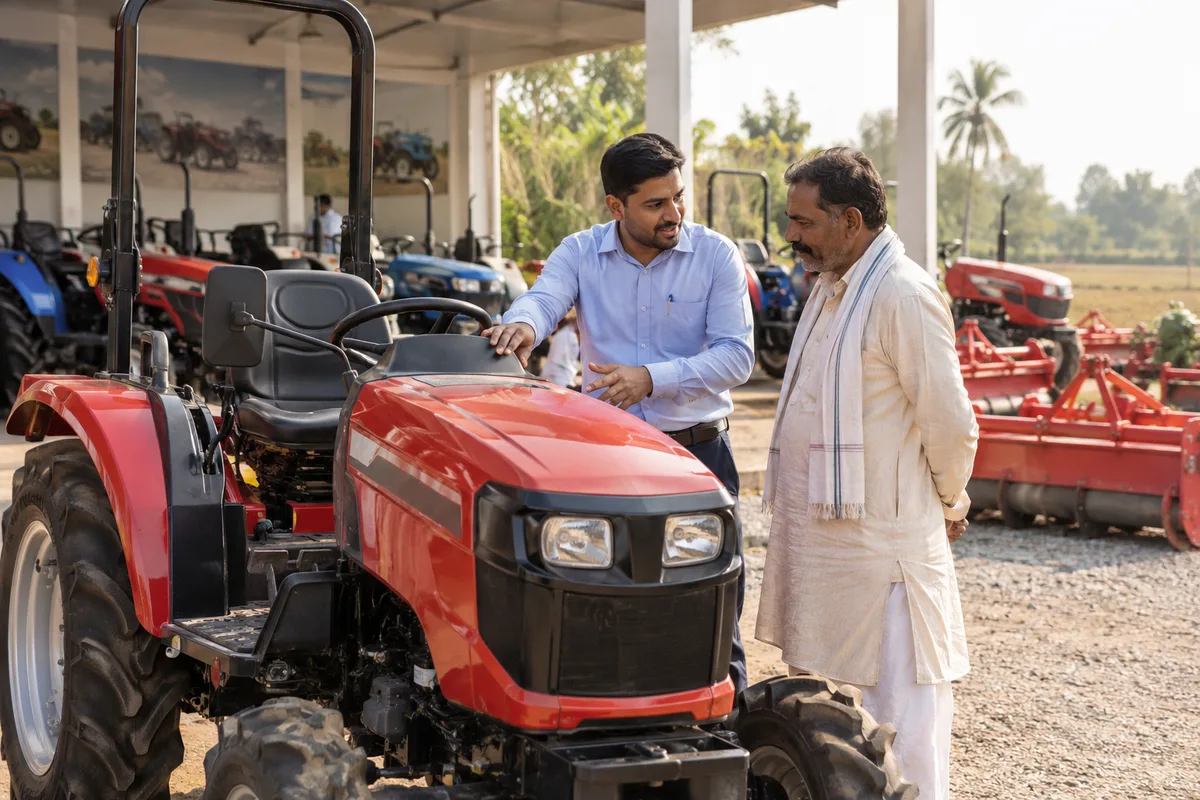
Farmers buy a tractor about as rarely as they build a house, so they ask around. They ask other farmers on the same canal or the same borewell line, the mechanic who services the old machine, the agri-input shop owner and the bank or finance company manager who will lend against it. They watch reviews in their own language, and what they see decides which brand they ask about. The dealer is chosen last, on who can arrange the loan, who delivers before the sowing window and who can be reached after the sale.
For implements, the choice is faster and closer to the field. A rotavator, a cultivator, a trolley or a sprayer is bought when the soil is ready, from whoever has it in stock and can fit it on the tractor. Spare parts and service are chosen by distance and by whether the workshop answers the phone during harvest, when a breakdown costs a day's work in the field.
The decision before implementation
The owner approves segment priorities and commercial boundaries before the team changes its approach.
Existing industry priorities to review
- New tractor sales by horsepower range
- Rotavators, cultivators and tillage implements
- Harvesters and sowing equipment
- Used tractor sales and exchange
- Genuine spare parts and service camps
These describe the industry's wider priorities. The written scope identifies which this service will address.