Pet service businesses · Buyer journey
The journey starts with a new puppy and only ends when the dog is old.
The pet parent journey runs across a dog's life: the first vaccination, the first groom at a few months, training, the anxious first boarding and then senior care. Each stage is a separate decision with its own worry. GullySales maps your own stages and fixes the point where enquiries stop.
Scope, fee, reporting and term are agreed in writing after we have read your brief and spoken to you.
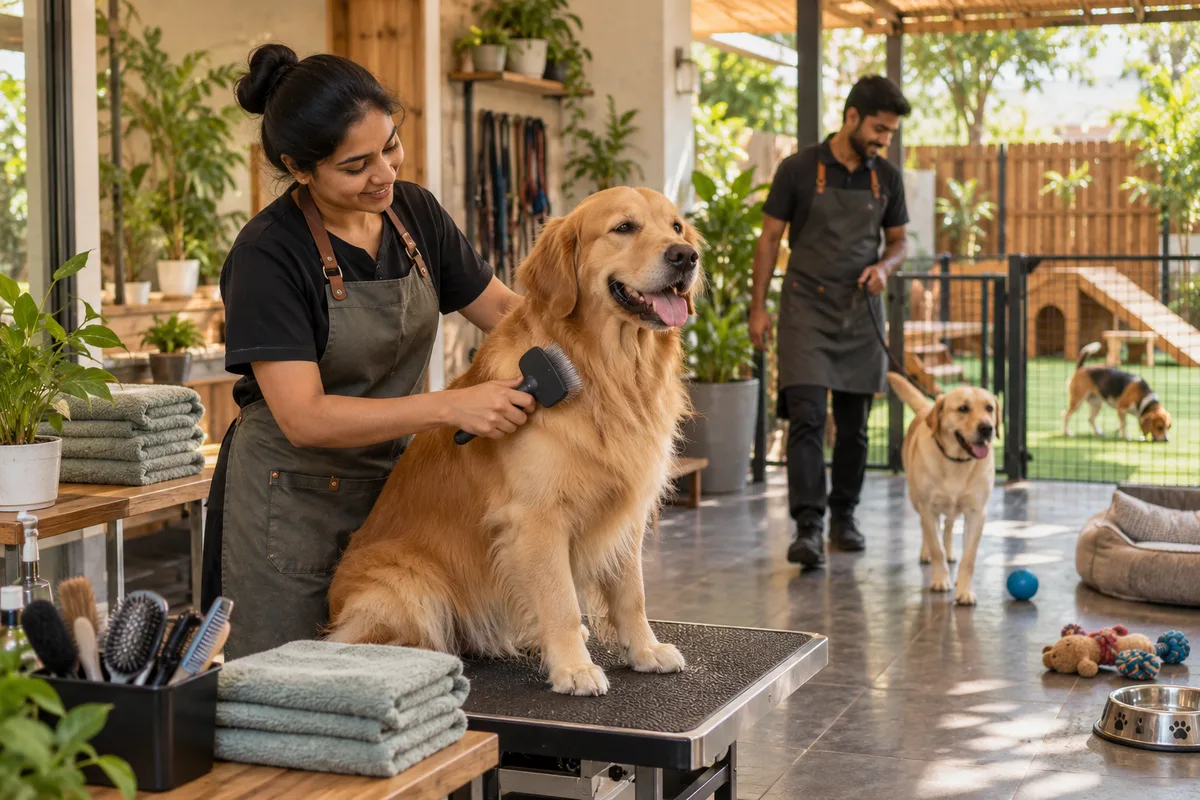
What buyer journey means
The buyer journey is the sequence of steps a customer actually takes, from first hearing about you to deciding to buy, which is rarely a single visit or call. GullySales maps this sequence for your business and checks that something useful happens at each step instead of only at the final call.
Also for pet service businesses
- Digital marketing for pet service businesses
- Marketing strategy for pet service businesses
- Buyer persona for pet services
- Answer engine optimisation for pet service businesses
- Branding and identity for pet service businesses
- Content marketing for pet service businesses
- Email marketing for pet service businesses
- Google Business Profile for pet service businesses
Sales and marketing for pet service businesses, the overview.
Last updated 5 Oct 2026.
For pet service businesses
Where it usually goes wrong, and what we would do.
“A new puppy owner does not know what to ask for”
A new pet parent searches for vaccination and feeding advice before searching for a groomer. The business that answered the early question is the one they message when the coat starts matting at four months.
“The first boarding enquiry is a trust decision, not a price one”
Leaving a dog for the first time is the hardest step in the whole journey. A trial day, photographs of the actual run and a named person who will be there at night move a parent past it. A rate card does not.
“Each stage has a different worry, so the page must too”
A puppy owner worries about socialisation, a groomer's customer about whether a nervous dog will be handled roughly, and a senior pet's owner about medication during a stay. One services page answers none of them properly.
What we do
What we deliver for pet service businesses.
Every deliverable, what it covers for you, and the result it is there to produce. Nothing here is an extra.
The stages mapped for your own business
Your services set out against the pet's life, from puppy enquiry and first groom through training and boarding to senior care, with the usual entry point for each.
Result: You can see which stage brings you customers and which you never reach.
Content written for the stage, not for the service
Pages and posts answering the question asked at each point, such as when a puppy can first be groomed or what a first boarding stay involves.
Result: A parent finds you at the stage before they need to buy.
A trial visit offered at the boarding stage
A short daycare day or a facility walkthrough built into the boarding enquiry reply, with the routine explained in the same message.
Result: The first boarding decision gets easier to say yes to.
Drop-off points found and owned
The evening message that went unanswered, the enquiry that never became a booking, the pet that came once and never returned, each with a named person to act.
Result: The leak has somebody responsible for it.
Next-stage prompts built into the record
A note on each pet of the services never used, so a grooming customer hears about training or boarding at the point it becomes relevant.
Result: One customer's pet uses more of what you offer.
How the result is measured
- Drop-off rate by step
- Time from first contact to sale
- Steps with no content
Recorded as a baseline before work starts, so every later report has an honest comparison.
Stages of the pet parent's journey
What a pet parent asks at each step, from the first puppy vaccination to senior care.
- New puppy or kitten
- The owner does not yet know what a groom, a boarding stay or training involves. Say plainly on your page what age you accept and which vaccination records you need.
- First groom
- The owner worries about the pet's stress and the cut. Show photos of the grooming area and describe what happens in the groom, step by step, and invite questions.
- Training enquiry
- The owner has a pulling, barking or biting problem and wants to know the method. Describe the trainer's approach and class size in plain words and offer a short assessment visit.
- First boarding
- This is a trust decision. Offer a visit to the kennels, show where the dog sleeps and plays, and write down the daily routine and who calls the owner if the pet is unwell.
- Repeat grooming and festival boarding
- The owner rebooks when the coat mats or a trip comes up. Record each pet's last visit and coat type, and message the owner when a rebook is due, before festival boarding fills.
- Senior pet
- An older dog needs gentler handling and sometimes help moving. State on the page whether you take senior and special-needs pets, and what changes in the groom or the stay.
Who it is for
This is written for these pet service businesses.
- Dog grooming salons
- Pet boarding and daycare centres
- Pet training academies
- Mobile grooming services
- Veterinary clinics offering allied services
- Pet taxi and transport services
- Multi-service pet care centres
- Cattery and exotic pet boarding
Not for
It is not the right fit if.
- You have not spoken to a recent customer about how they found you, so the map would be invented.
- You offer one service and one entry point, so the journey has no stages worth separating.
How it works
How the buyer journey work runs
The work itself, in order. How an engagement starts, from your brief to a written scope, is set out on our method page.
- 1
Understand the sales process
We walk through how a sale happens today, from the person who first answers an enquiry to the one who closes it.
- 2
Audit the data
Website analytics, call logs and CRM records are put together to see where people drop out. Where records are thin, we say so and mark the gap rather than guess.
- 3
Interview buyers and staff
Recent customers, and some who did not buy, plus the team who speak to them, explain the reasons behind the numbers.
- 4
Build the map
Stages, touchpoints, decision-makers and drop-off points are set out in one document everyone reads the same way.
- 5
Fix and measure
Each fix is made against the stage it addresses, and the drop-off at that stage is compared with the baseline afterwards.
Where this fits
Three pieces of sales work, in this order.
This work sits inside sales process design, at stage 1, prospecting and lead generation. The audit comes before it, and sales management keeps it running.
Step 1
Sales audit
Find where deals are being lost and what to fix first.
Start here if you cannot say where orders are lost.
Step 2 · you are here
Sales process design
One written way to sell, from first enquiry to repeat order.
Start here if every salesperson sells differently.
Step 3
Sales management
A target, a review routine and someone who owns the number.
Start here if the team has targets and no routine.
FAQ
Questions owners ask before they call.
Not here? More answers, or ask on WhatsApp.
What are the stages of a pet parent's journey?
Which stage should a small grooming business target first?
What do we say to a pet parent who asks the price and then goes quiet?
Who else decides on boarding besides the pet owner?
How long is the contract?
How soon will we see results?
Who will actually do the work?
What do you need from us?
What if we are not happy with the work?
From the blog
Further reading for pet service businesses.
 8 min read · 19 Aug 2026The pet parent journey: from the first search to regular visitsThe pet parent journey runs from the first anxious search to years of repeat visits. Here are the stages, and where Indian clinics lose owners.
 6 min read · 26 Aug 2026Pet grooming marketing: how to get grooming and boarding customersPet grooming marketing works on Maps, reviews, before and after photographs and fast replies. Boarding is won on trust. Here is how to fill both, and what a plan should cover.
 6 min read · 20 Jul 2026Seasonal and event-linked demand: planning for peaks and quiet monthsHow a specialist trade with busy and slow months can read its own year from past bookings, then time outreach and capacity ahead of each peak instead of after it.
More for pet service businesses
Everything else we would do for you.
Closest to this: strategy and research
Also for pet service businesses
Or start from the overview: sales and marketing for pet service businesses.
Your next practical step
Tell us what you are trying to grow, and we will read it before we call.
Eight short steps, mostly taps. Skip anything you would rather answer on the call.