Pet service businesses · Buyer persona
Write down who books the stay, because a first-time parent and a regular buy differently.
A buyer persona for a pet service describes the actual people who book: what they ask, what worries them and who else weighs in. GullySales builds the personas from your own booking records and enquiry chats, then uses them to shape the pages, the replies and the reminders.
Scope, fee, reporting and term are agreed in writing after we have read your brief and spoken to you.
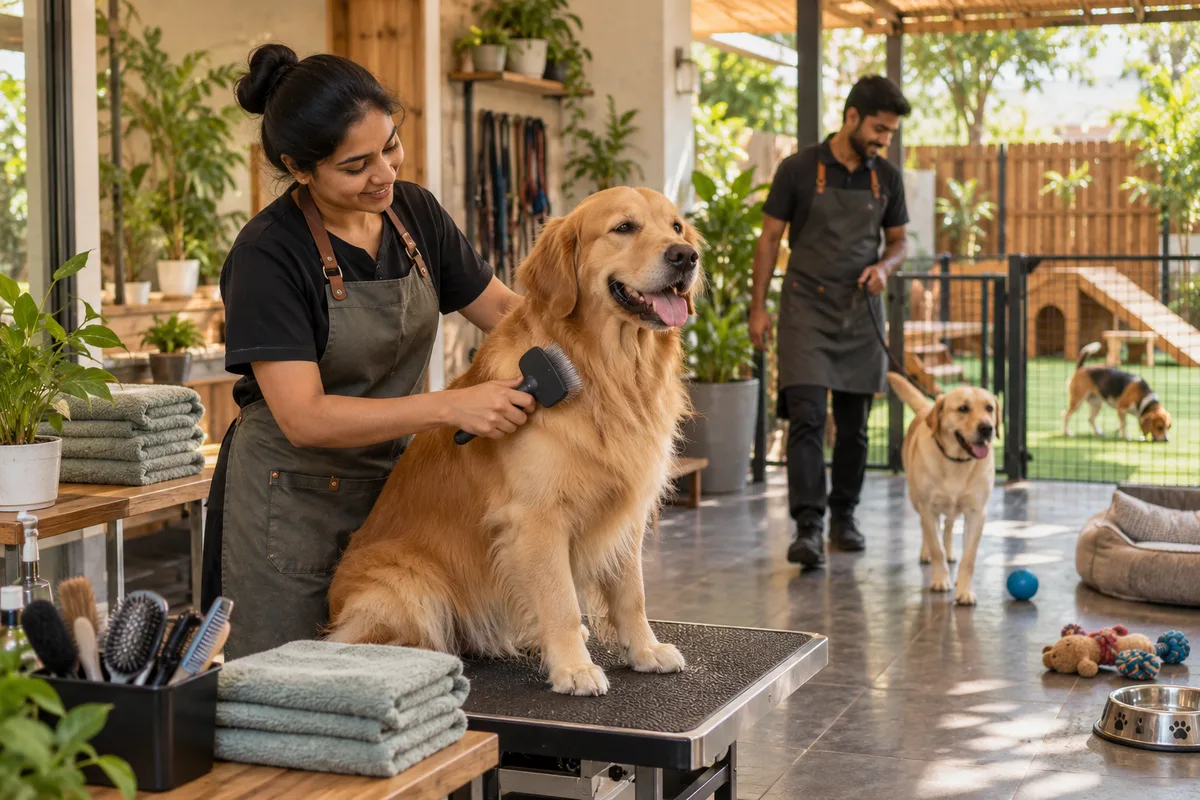
What buyer persona means
A buyer persona is a plain description of the kind of customer who actually buys from you. It includes what they search, what worries them and who else they ask before deciding. GullySales builds this from real enquiries and past sales rather than a generic template, then uses it to write every page and advert.
Also for pet service businesses
- Digital marketing for pet service businesses
- Marketing strategy for pet service businesses
- Buyer journey for pet service businesses
- Answer engine optimisation for pet service businesses
- Branding and identity for pet service businesses
- Content marketing for pet service businesses
- Email marketing for pet service businesses
- Google Business Profile for pet service businesses
Sales and marketing for pet service businesses, the overview.
Last updated 5 Oct 2026.
For pet service businesses
Where it usually goes wrong, and what we would do.
“The new puppy owner wants to be told what to do”
A first-time parent does not know the vaccination schedule, which groom to book or when training should begin. They respond to a centre that explains in plain steps and sends a gentle reminder, and they leave one that sounds like it assumes they know.
“The parent leaving for a trip is buying peace of mind”
Boarding is a purchase made while worried. The questions are who stays overnight, how the runs are cleaned and whether a photograph will arrive each day. Price comes after those answers, and a script that skips them loses the booking.
“The regular groomer client is buying a routine”
A parent with a double-coated breed returns when the coat needs it, if reminded. They value the same person remembering the dog's nervous corner, and a page built for a stranger does nothing for them. Their persona is a reminder and a rebooking, not a pitch.
“The decision has a second person in it”
One partner books while another drops off, or the family member who loves the dog most weighs in on the centre. Replies that answer both, with photographs the whole household can look at, move the booking forward.
What we do
What we deliver for pet service businesses.
Every deliverable, what it covers for you, and the result it is there to produce. Nothing here is an extra.
Personas drawn from your own records
Two or three written profiles built from past bookings and the questions asked on WhatsApp, each naming the service, the worry and the usual route in.
Result: The team can describe the person before replying.
The questions each persona asks, in order
A list per persona of what they ask first, second and last, taken from real chats, with the answer the desk gives today.
Result: Replies stop depending on who picks up the phone.
A reply script for each persona
Short, plain wording for the first message, so the new owner gets steps and the regular gets a quick rebooking.
Result: Staff answer each enquiry in the right tone.
A page or section for each persona
A boarding section for the worried traveller, a first-groom explainer for the puppy owner and a rebooking link for the regular.
Result: Each visitor finds the answer meant for them.
A reminder matched to each persona
The coat cycle reminder for the regular and the vaccine and training prompt for the puppy owner, written for WhatsApp.
Result: Each customer hears from you at the right moment.
A review of the personas against new bookings
A look at who actually booked since the personas were written, adjusting them where the records disagree.
Result: The personas stay true to your customers.
How the result is measured
- Enquiry match to persona
- Conversion rate by persona
- Content aligned to persona
Recorded as a baseline before work starts, so every later report has an honest comparison.
Who is asking
Each person who books asks a different question before the first call.
- First-time puppy owner
- Wants to know which vaccinations are needed before a first groom and whether a puppy can come at all.
- Parent leaving for a holiday
- Wants to see where the dog sleeps, who is on site at night and what happens if the dog falls ill.
- Regular grooming client
- Wants the same groomer, the same slot and a reminder before the coat becomes a problem.
- Owner of an anxious or reactive dog
- Wants to know whether the handler will be told about the temperament and how a stressed dog is separated.
- Cat owner enquiring about boarding
- Wants a quiet space away from dogs and a handler who is used to cats.
Who it is for
This is written for these pet service businesses.
- Dog grooming salons
- Pet boarding and daycare centres
- Pet training academies
- Mobile grooming services
- Veterinary clinics offering allied services
- Pet taxi and transport services
- Multi-service pet care centres
- Cattery and exotic pet boarding
Not for
It is not the right fit if.
- You have fewer than a handful of past customers to learn from, so the persona would be guesswork.
- You would write the persona once and never change the reply scripts, which makes the work decoration.
How it works
How the buyer persona work runs
The work itself, in order. How an engagement starts, from your brief to a written scope, is set out on our method page.
- 1
Understand the current view
We start with how your team currently describes the customer, since the gap between belief and reality is the finding itself.
- 2
Audit past enquiries and sales
We look at recent enquiries and closed deals to see who actually bought, not who was assumed to buy.
- 3
Interview customers and staff
Structured conversations with recent buyers, held as talk about the last purchase and not a questionnaire. We ask what happened before they called, who else was involved and what they compared. Customers agree before we contact them, and their answers are reported without names.
- 4
Build the personas
Findings are written into short, usable persona documents rather than a long report.
- 5
Apply to your marketing
We show where each persona should change a page, an ad or a script you already have. The sales team reads the drafts and says which ring true. A persona they do not recognise is rewritten.
Where this fits
Three pieces of sales work, in this order.
This work sits inside sales process design, at stage 0, foundation. The audit comes before it, and sales management keeps it running.
Step 1
Sales audit
Find where deals are being lost and what to fix first.
Start here if you cannot say where orders are lost.
Step 2 · you are here
Sales process design
One written way to sell, from first enquiry to repeat order.
Start here if every salesperson sells differently.
Step 3
Sales management
A target, a review routine and someone who owns the number.
Start here if the team has targets and no routine.
FAQ
Questions owners ask before they call.
Not here? More answers, or ask on WhatsApp.
How many personas does a pet centre need?
Where do we find the facts to write them?
Does a persona mean we ignore the pet?
What should the persona say about an owner who books through a domestic helper?
How much does it cost?
How long is the contract?
How soon will we see results?
Who will actually do the work?
What do you need from us?
What if we are not happy with the work?
From the blog
Further reading for pet service businesses.
 6 min read · 26 Aug 2026Pet grooming marketing: how to get grooming and boarding customersPet grooming marketing works on Maps, reviews, before and after photographs and fast replies. Boarding is won on trust. Here is how to fill both, and what a plan should cover.
 8 min read · 19 Aug 2026The pet parent journey: from the first search to regular visitsThe pet parent journey runs from the first anxious search to years of repeat visits. Here are the stages, and where Indian clinics lose owners.
 6 min read · 20 Jul 2026Seasonal and event-linked demand: planning for peaks and quiet monthsHow a specialist trade with busy and slow months can read its own year from past bookings, then time outreach and capacity ahead of each peak instead of after it.
More for pet service businesses
Everything else we would do for you.
Closest to this: strategy and research
Also for pet service businesses
Or start from the overview: sales and marketing for pet service businesses.
Your next practical step
Tell us what you are trying to grow, and we will read it before we call.
Eight short steps, mostly taps. Skip anything you would rather answer on the call.