Waste management and recycling companies · Sales process
Move a society or a factory from first call to signed contract in steps.
A sales process for a waste company is a short written set of steps from the first enquiry through visit, proposal, trial and contract to the first pickup. GullySales writes it with your team, so every committee and plant manager is treated the same way.
Scope, fee, reporting and term are agreed in writing after we have read your brief and spoken to you.
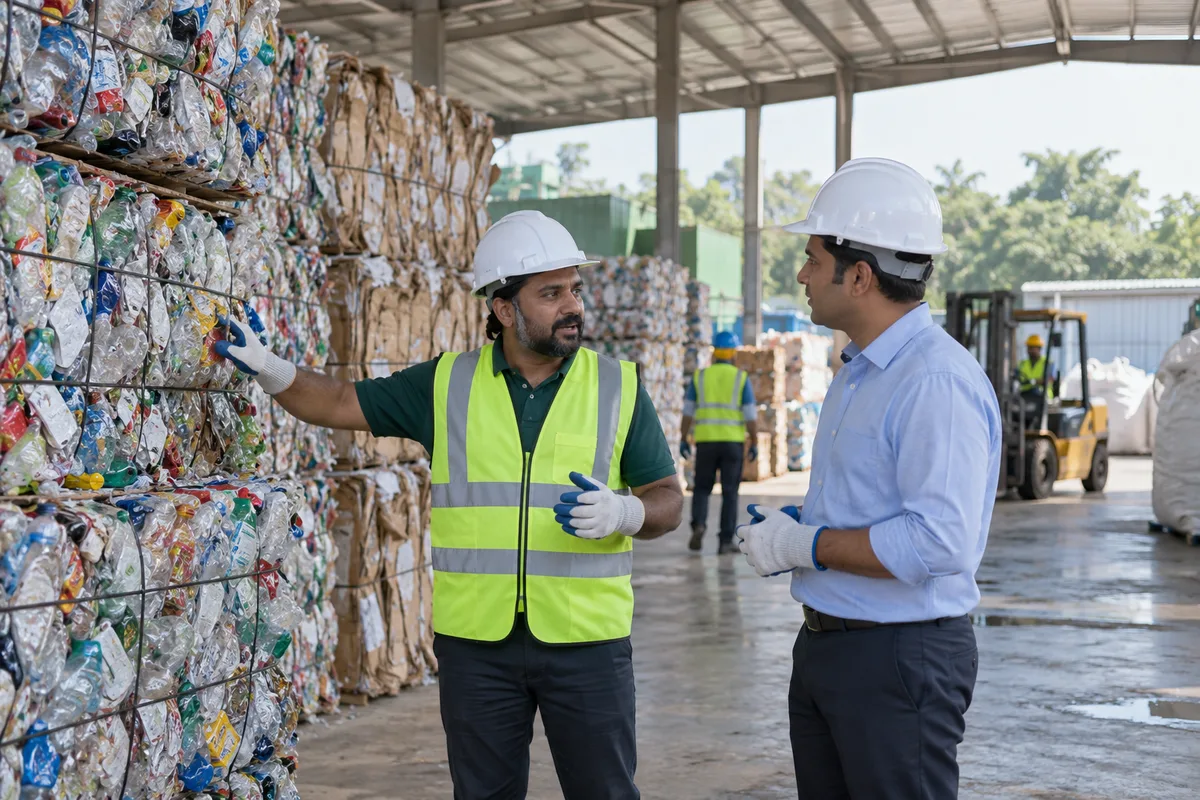
What sales process means
A sales process is the fixed sequence of steps, such as enquiry, site visit, quote and order, that every deal is expected to pass through in the same order. GullySales writes this sequence down for your business and checks that every salesperson actually follows it.
Also for waste management and recycling companies
- SEO for waste management and recycling companies
- local SEO for waste management and recycling companies
- lead generation for waste management and recycling companies
- WhatsApp marketing for waste management and recycling companies
- CRM for waste management and recycling companies
- referral marketing for waste management and recycling companies
- website development for waste management and recycling companies
- reputation management for waste management and recycling companies
Sales and marketing for waste management and recycling companies, the overview.
Last updated 11 Oct 2026.
For waste management and recycling companies
Where it usually goes wrong, and what we would do.
“Every committee gets a different proposal”
The scope, the records and the terms vary with who wrote it, so clients compare you unfairly.
“A trial is offered without a way to judge it”
A society tries one pickup, nobody records the result, and the committee decides on gossip.
“Handover to operations is informal”
The contract is signed and the driver learns the address from a phone call, so the first pickup goes wrong.
What we do
What we deliver for waste management and recycling companies.
Every deliverable, what it covers for you, and the result it is there to produce. Nothing here is an extra.
A written sales process
The steps from enquiry to contract and first pickup, with who does each and what is recorded.
Result: A new salesman or supervisor follows the same path.
A site visit checklist
What to look at, such as bin areas, access for vehicles, waste streams and existing staff, and what to photograph.
Result: A proposal is based on the site and not on a guess.
Proposal and scope templates
A clear scope, the records you provide, the client's duties, the terms and an exit route, for each buyer type.
Result: Clients compare the same things.
A trial and review routine
A defined trial, a record of each pickup and a short review with the committee or facility manager.
Result: The decision uses facts.
A contract handover checklist
Site details, pickup days, the contact, the vehicle and the first-day plan passed to operations in writing.
Result: The first pickup goes right.
A review of won and lost proposals
A short look at why proposals were won or lost, taken from the record.
Result: The process improves from real cases.
How the result is measured
- Deals following the process
- Time spent at each step
- Drop-off rate by step
Recorded as a baseline before work starts, so every later report has an honest comparison.
Steps of a sale
The steps of a waste contract sale, named the way the trade says them, and what to ask and record at each.
- Enquiry
- Reply the same day. Record the site, the waste type, the number of units or rooms, the current vendor and who decides.
- Qualify
- Check that you handle the waste, serve the area and can reach the decision maker. If not, say so and refer them; do not waste a visit.
- Site visit
- Walk the bin area and the vehicle route, meet the facility staff and note the streams. Photograph the site with permission.
- Proposal
- Send a scope, the records you provide, the client's duties and the price basis. Write the committee date and the next call on it.
- Trial and follow-up
- Offer a short trial where it suits, record every pickup, and call after the committee meets. Ask what stands between the client and a contract.
- Contract and handover
- Confirm scope and dates in writing, pass the site details to operations and call after the first pickup to check that all went well.
Who it is for
This is written for these waste management and recycling companies.
- Wet waste collection and composting companies
- Dry waste and plastic recyclers
- Scrap dealers and organised kabadiwala networks
- E-waste collectors and recyclers
- Construction and demolition waste handlers
- Industrial and factory waste managers
- Paper, cardboard and packaging waste recyclers
- Battery, tyre and used oil collectors
- Society and apartment waste management vendors
Not for
It is not the right fit if.
- Your pricing and what each pickup includes are not fixed, so a set sales process would force steps around terms that keep changing.
- You have no one to follow through after a trial, so a stage-by-stage process would stop at the first visit.
How it works
How the sales process work runs
The work itself, in order. How an engagement starts, from your brief to a written scope, is set out on our method page.
- 1
Study current deal flow
We trace how deals actually move today, comparing across reps and outcomes.
- 2
Define the stages
Clear stages and criteria are designed to match how deals genuinely progress and close.
- 3
Configure the CRM
The process is built into your CRM so it is enforced structurally, not just documented.
- 4
Train the team
Reps are trained on the new process and why each stage exists.
- 5
Review adoption
We check after rollout whether the process is being followed and adjust where it is not.
Where this fits
Three pieces of sales work, in this order.
This work sits inside sales process design, at stage 1, prospecting and lead generation. The audit comes before it, and sales management keeps it running.
Step 1
Sales audit
Find where deals are being lost and what to fix first.
Start here if you cannot say where orders are lost.
Step 2 · you are here
Sales process design
One written way to sell, from first enquiry to repeat order.
Start here if every salesperson sells differently.
Step 3
Sales management
A target, a review routine and someone who owns the number.
Start here if the team has targets and no routine.
FAQ
Questions owners ask before they call.
Not here? More answers, or ask on WhatsApp.
Who does which step, the owner or the salesman?
When should we send the proposal?
What do we do with a buyer who only asks for the lowest price?
What should we write down after each visit?
How long is the contract?
How soon will we see results?
What do you need from us?
What if we are not happy with the work?
More for waste management and recycling companies
Everything else we would do for you.
- SEO for waste management and recycling companies
- local SEO for waste management and recycling companies
- lead generation for waste management and recycling companies
- WhatsApp marketing for waste management and recycling companies
- CRM for waste management and recycling companies
- referral marketing for waste management and recycling companies
Or start from the overview: sales and marketing for waste management and recycling companies.
Your next practical step
Tell us what you are trying to grow, and we will read it before we call.
Eight short steps, mostly taps. Skip anything you would rather answer on the call.