Product and industrial design studios · Content marketing
Explain design for manufacture so the buyer knows what a studio is for.
Content marketing for a product design studio is writing and filming material that explains design to people who have never bought it. GullySales drafts from your projects and your notes, and your designers check every claim before it goes out.
Scope, fee, reporting and term are agreed in writing after we have read your brief and spoken to you.
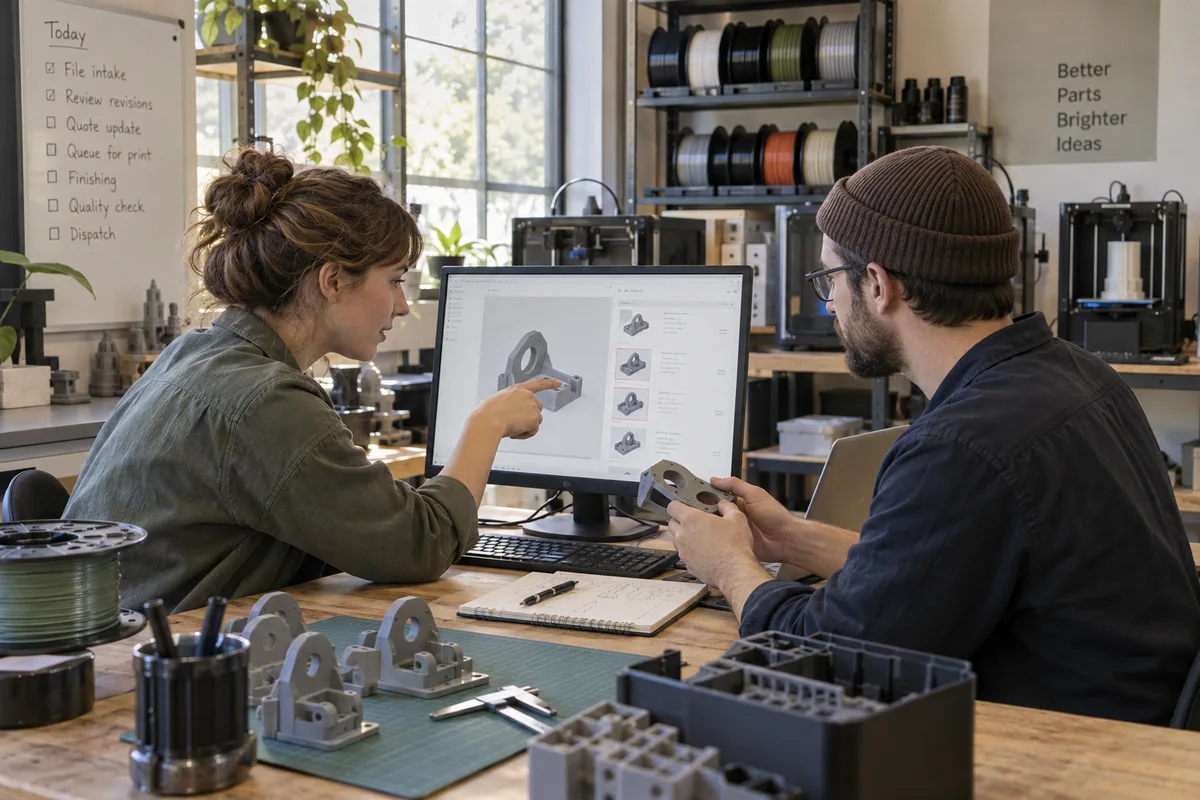
What content marketing means
Content marketing is writing articles, guides and pages that answer the questions buyers search before they are ready to enquire. This makes your business visible and trusted before the first call. GullySales plans this content from the first conversation onward, choosing topics that match real search demand rather than guesses.
Also for product and industrial design studios
- Social media marketing for product and industrial design studios
- Lead generation for product and industrial design studios
- SEO for product and industrial design studios
- Buyer personas for product and industrial design studios
- CRM for product and industrial design studios
- Follow-up systems for product and industrial design studios
- WhatsApp marketing for product and industrial design studios
- Digital marketing for product and industrial design studios
Sales and marketing for product and industrial design studios, the overview.
Last updated 14 Nov 2026.
For product and industrial design studios
Where it usually goes wrong, and what we would do.
“The buyer does not know what to ask”
A plant owner may not know the words draft angle, tooling or prototyping stage. Content that explains them gives the buyer a way to brief you. Define each term in a sentence for an owner who has never bought design, and show where it appears in your proposal.
“Behind-the-scenes beats a gallery”
A write-up of how a handle was changed to suit the mould teaches the reader and shows your standard. A gallery of finished work does not. Write one honest account of a change made for the mould, and the reader learns your standard without a claim.
“Design registration is a legal matter”
Content may mention that protection exists and should send the reader to a registered attorney. It must never say a design is protected. Tell readers that protection exists, that filings are made by a registered attorney, and that your studio does not give legal advice.
“Failures teach more than wins”
A prototype that cracked, and what changed afterwards, is evidence that you test. Keep client details out and tell the engineering story. Describe what failed in testing and what you changed, with every client detail removed.
What we do
What we deliver for product and industrial design studios.
The work available for this need. We agree the deliverables and responsibilities for your engagement in writing.
Guides for first-time buyers of design
What a design brief contains, how stages work and what to prepare before the first meeting.
Result: A buyer arrives with a better brief.
Design-for-manufacture articles
Short pieces on wall thickness, materials, tooling and assembly written for plant owners.
Result: Manufacturers see that you speak their language.
Project write-ups with permission
Stories of approved projects told through problem, decision and result, with no figures you cannot support.
Result: You show reasoning without exposing a client.
Prototype and test notes
Short accounts of what was tried, what failed and what changed.
Result: Buyers see how you test before tooling.
Review by your lead designer
Every piece read and corrected by a person who signs the drawings before it is published.
Result: No page carries a claim your studio has not checked.
Answers for the first meeting
The questions buyers ask in a first meeting written up as pages, so the same explanation is not repeated by hand each time.
Result: Meetings start from a better-informed buyer.
Plain-words glossary
A glossary of terms such as draft angle, wall thickness and tooling, explained for owners who have not bought design before.
Result: A buyer can read your proposal without a translator.
How the result is measured
- Pages published
- Organic traffic
- Enquiries from content pages
Recorded as a baseline before work starts, so every later report has an honest comparison.
Posts and pieces to plan
Guides that teach a maker what a product design studio does.
- What a concept stage contains
- A plain guide to sketches, form studies and a rough prototype, with what the buyer receives. Use your own stage names and deliverables.
- Designing a part for the tool room you already use
- A guide for manufacturers on checking draft, thickness and parting lines before a tool is cut. It shows the studio knows the shop floor.
- From idea to first sample: who does what
- A roles page covering founder, studio, toolmaker and assembler. It helps a first-time buyer see where the studio's work stops.
- A design that failed in sampling and what changed
- A candid case from the studio's own work, with the fault, the fix and the lesson. Failures teach more than finished renders do.
- Protecting a product design: questions to ask an adviser
- A short note that says design protection is a legal matter, lists what to take to a qualified professional and makes no claim about outcome.
- Choosing a finish for a consumer appliance
- A guide to finishes and what each means for tooling and unit cost, written from the studio's own project notes.
Who it is for
This is written for these product and industrial design studios.
- MSME manufacturers in clusters such as Rajkot, Coimbatore, Ludhiana and Pune
- Hardware and electronics startups after a seed round
- D2C brands moving from sourced goods to their own designed products
- Consumer appliance and kitchenware makers
- Medical device and diagnostic equipment makers
- Furniture and lighting manufacturers
- Auto component and two-wheeler accessory makers
- Packaging firms wanting structural design
Before you decide
When this may not be the right fit.
- Nobody on your team has time to explain a design decision in writing, and copied articles from other studios would add nothing true.
- Your projects are all confidential and the studio has no experiments or internal work to write from.
Before you decide
Agree the work. Know how to judge it.
Content marketing for product and industrial design studios: use these checks to prepare, choose the scope, and review what changes.
Bring the right evidence
Bring questions from sales calls and examples of objections that delay a decision. Choose a subject expert who can check the substance, and identify evidence that can be published.
Make the scope clear
Agree the reader, buying question, format, and distribution route for each piece. Set the approval process and distinguish new research from rewriting material you already have.
Check the work in use
Ask a colleague to use the draft in a real buyer conversation. It should answer the question, support its claims, and make the next step clear without requiring a sales pitch to explain it.
Know when to change course
If the same unanswered question appears in several articles, improve the strongest page before commissioning another. More words are not a substitute for missing evidence.
These are discussion points, not a fixed package. GullySales confirms the deliverables, responsibilities, fee, and term in writing after reading your brief and speaking with you.
Before we start
What to have ready before the work starts.
The records, access and decisions this work needs from product and industrial design studios. Anything missing is noted in the written scope, with who will supply it.
- Notes from the last ten first meetings
- These show what buyers ask and what confuses them. Bring emails, proposals or a diary. Without them, topics come from our guess, and guides miss what your buyers wish to know. Include the proposals that did not convert, because their questions show what the articles must explain.
- Prototype photographs and test notes
- Behind-the-scenes content needs real material from the bench. Bring photographs of models, tool trials and failures, with dates. If none exist, we start collecting from the next project. Add dates and the project name internally, so each photograph can be matched to a story the designer remembers.
- A lead designer's hours for review
- Technical errors damage trust with an engineer. Fix a time when the lead designer reads each draft. Without review time, articles stay in draft, however long they have waited. If the lead designer travels, name a second reader who understands moulding, sheet metal or casting.
- Client agreements for project write-ups
- A client's product is theirs to describe. Bring written permission, or a note that it is absent. Where it is absent, the write-up is general and names no client or product. Add a short list of projects that are ready to be written about, with the order you prefer.
How it works
How the content marketing work runs
The work itself, in order. How an engagement starts, from your brief to a written scope, is set out on our method page.
- 1
Collect the questions asked at first meetings
We read your notes from first meetings and proposals to see what buyers ask, such as what a concept stage is, who owns the drawings and when a toolmaker should join. These become the topics. You mark questions that should only be answered face to face. We also sort the questions by buyer type, because a founder and a plant owner ask about different risks.
- 2
Plan guides for people who have never bought design
We group topics into a small number of guides for first-time buyers: how a design project runs, what each stage delivers, what to bring and how to choose a studio. Each guide has one reader and one question. You and the lead designer agree the order. A guide on who owns the drawings and the tooling at handover is placed early, since that question decides the first meeting.
- 3
Draft from the designers' notes and test reports
Writers sit with the designers and read their notes, prototype photographs and test results, then draft articles on design for manufacture in plain words. The designer corrects each technical line. Failed prototypes are included when the client agrees, since they teach more than finished renders. Photographs of models and tool trials are captioned in the designer's own words, so an engineer reading them finds the real constraint.
- 4
Settle permissions and protection wording
Project write-ups need the client's written agreement, and any line about protecting a design is a legal matter. We keep such lines general and mark them for your own adviser to settle. Nothing is published that the client or adviser has not seen. Your adviser also reads any line that mentions registration, copyright or an agreement with a client.
- 5
Publish and give the sales partner a copy
Each article is published and also cut into a short note the partner can send after a first call. The same words then reach the buyer in the meeting and on the site. We read which articles were opened and which led to a meeting, and revise from that reading. The note sent after a first call links to the one article that answers what the buyer asked.
Where this fits
Three pieces of sales work, in this order.
This work sits inside sales process design, at stage 0, foundation. The audit comes before it, and sales management keeps it running.
Step 1
Sales audit
Find where deals are being lost and what to fix first.
Start here if you cannot say where orders are lost.
Step 2 · you are here
Sales process design
One written way to sell, from first enquiry to repeat order.
Start here if every salesperson sells differently.
Step 3
Sales management
A target, a review routine and someone who owns the number.
Start here if the team has targets and no routine.
FAQ
Questions owners ask before they call.
Not here? More answers, or ask on WhatsApp.
Who writes the articles?
Can we write about protecting a design?
Do we need video?
Can we write about a client's product after launch?
Who writes the articles, and how much of the designers' time does it take?
Can an article say anything about design protection?
How long is the contract?
How soon will we see results?
Who will actually do the work?
What do you need from us?
More for product and industrial design studios
Related work to consider.
Closest to this: content and social
Also for product and industrial design studios
- Lead generation for product and industrial design studios
- SEO for product and industrial design studios
- Buyer personas for product and industrial design studios
- CRM for product and industrial design studios
- Follow-up systems for product and industrial design studios
- WhatsApp marketing for product and industrial design studios
Or start from the overview: sales and marketing for product and industrial design studios.
Your next practical step
Tell us what you are trying to grow, and we will read it before we call.
Eight short steps, mostly taps. Skip anything you would rather answer on the call.