Product and industrial design studios · Follow up systems
Stay in touch with a proposal until the buyer's committee decides.
A follow-up system for a product design studio is the set of dated, useful contacts after a proposal is sent. GullySales writes the messages and the rules so the proposal does not disappear into the buyer's internal meetings.
Scope, fee, reporting and term are agreed in writing after we have read your brief and spoken to you.
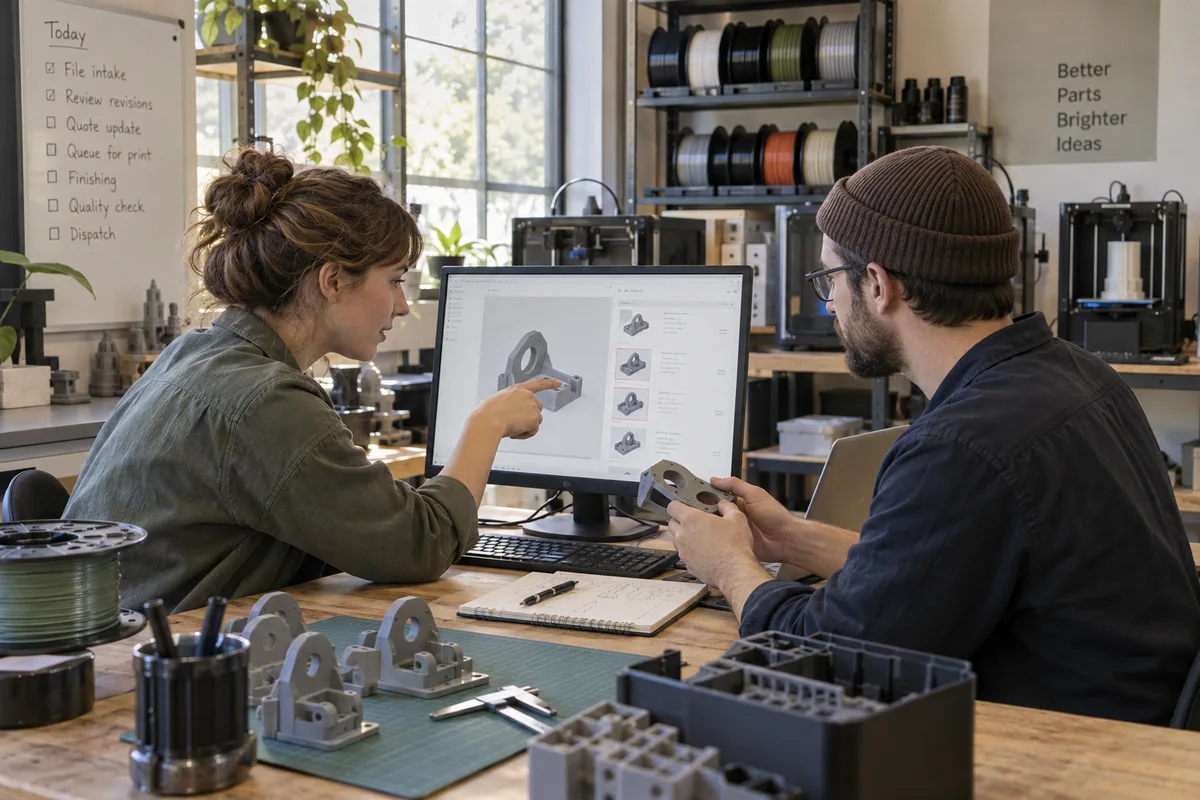
What follow up systems means
A follow-up system is the set routine for calling, messaging or emailing an enquiry more than once, since most buyers do not decide on the first conversation. GullySales sets the number and timing of follow-ups so an undecided buyer keeps hearing from you until they decide either way.
Also for product and industrial design studios
- Lead generation for product and industrial design studios
- CRM for product and industrial design studios
- SEO for product and industrial design studios
- Social media marketing for product and industrial design studios
- Content marketing for product and industrial design studios
- Buyer personas for product and industrial design studios
- WhatsApp marketing for product and industrial design studios
- Digital marketing for product and industrial design studios
Sales and marketing for product and industrial design studios, the overview.
Last updated 14 Nov 2026.
For product and industrial design studios
Where it usually goes wrong, and what we would do.
“Silence after a proposal is internal discussion”
The founder shows the document to a production head and a partner. A silent week is a meeting you cannot see. Plan the next contact around the meeting you cannot see, and offer to join it to explain the proposal.
“A nudge needs something new”
Checking in gives the buyer nothing. A note answering a question raised in the meeting or sharing a relevant material test carries a reason to reply. Answer a question raised in the meeting, or share a relevant test, so the reader has a reason to reply.
“Different readers need different answers”
The finance head asks what each stage costs. The production head asks about tooling. Send each one the part that concerns them. Send the fee structure to the finance head and the tooling notes to the production head, each in a short message.
“A declined proposal still has value”
A no tells you about price, timing or fit. A short, respectful question can bring a reason and sometimes a later yes. Ask politely what decided the matter, record the reply and revisit the buyer when the circumstances change.
What we do
What we deliver for product and industrial design studios.
The work available for this need. We agree the deliverables and responsibilities for your engagement in writing.
Follow-up map by stage
What to send after discovery, after the proposal, after a decline and after handover.
Result: Each stage has a defined next contact.
Reader-specific notes
Short messages for the owner, the production head and the finance head, each answering what that person asks.
Result: Every reader gets a relevant reply.
Proposal walkthrough offer
A prepared invitation to walk the buyer's team through the proposal in a meeting.
Result: The buyer's whole committee hears one explanation.
Decline review
A form for recording why a proposal was lost and what might change.
Result: You learn what price or scope lost the project.
Post-handover contact
A message after the handover asking about tooling, first production and a possible next product.
Result: Finished projects open the next conversation.
Meeting recap note
A short summary sent after every discovery or proposal meeting, listing questions asked and answers promised.
Result: The buyer has a written record to circulate.
Reactivation message for quiet prospects
A respectful note to proposals gone cold, offering a change of scope or a smaller first stage.
Result: Quiet prospects get one more honest chance.
How the result is measured
- Follow-up completion rate
- Average number of follow-ups before close
- Enquiries closed after repeat follow-up
Recorded as a baseline before work starts, so every later report has an honest comparison.
What to capture or send
The moments in a design proposal that need a message or a call.
- Proposal sent, no reply
- Send a note with one new item, such as a similar part the studio sampled. Silence means internal talk, so give the champion something to forward.
- Proposal read by a second person
- Offer a short call with the plant head or finance partner who has just joined. Ask what they need answered rather than repeating the pitch.
- Request for a fee change
- Reply with options by stage, not a lower total. Record which stage the buyer wanted dropped, because that shows how the buyer sees the work.
- Concept presented, no decision
- Send a one-page summary of the concept and the next stage, written for someone who was not in the room.
- Proposal declined
- Ask for the reason and note it. Keep the contact with a later check-in when the buyer's own product plan moves.
- Project handed over
- Ask the plant head how the first production run went and whether a second product is planned. A satisfied buyer is the studio's best new lead.
Who it is for
This is written for these product and industrial design studios.
- MSME manufacturers in clusters such as Rajkot, Coimbatore, Ludhiana and Pune
- Hardware and electronics startups after a seed round
- D2C brands moving from sourced goods to their own designed products
- Consumer appliance and kitchenware makers
- Medical device and diagnostic equipment makers
- Furniture and lighting manufacturers
- Auto component and two-wheeler accessory makers
- Packaging firms wanting structural design
Before you decide
When this may not be the right fit.
- Proposals leave the studio without a copy in any shared place, so a sequence would have nothing to follow.
- The partner who sells is also the lead designer and has no time to make a call the system flags.
Before you decide
Agree the work. Know how to judge it.
Follow-up systems for product and industrial design studios: use these checks to prepare, choose the scope, and review what changes.
Bring the right evidence
Trace recent enquiries from arrival to the last recorded action. Include a won enquiry, an unsuitable one, and one that went quiet, with personal details removed for the initial discussion.
Make the scope clear
Agree who accepts each enquiry, what makes it qualified, and how ownership changes. Include a rule for missed replies and a clear reason for closing an enquiry.
Check the work in use
Pick an enquiry at random and ask the team to find its owner, latest conversation, and next action. Check that the record agrees with what actually happened.
Know when to change course
If no one has capacity to respond, assign that responsibility before buying more leads. Automation can support the owner, but it cannot replace an unresolved handover.
These are discussion points, not a fixed package. GullySales confirms the deliverables, responsibilities, fee, and term in writing after reading your brief and speaking with you.
Before we start
What to have ready before the work starts.
The records, access and decisions this work needs from product and industrial design studios. Anything missing is noted in the written scope, with who will supply it.
- Proposals sent in the last season
- The routine starts from real proposals. Bring the list with dates, buyers and last contact. Without it, we cannot tell a quiet proposal from a lost one. Add which proposals had a second meeting, as those are the ones with real interest.
- Names of everyone who read each proposal
- A proposal may be passed to several readers. Bring any record of who attended meetings or was copied. If it is missing, the partner recalls the readers of the live ones.
- Material that can be shared without risk
- Follow-ups carry a note, a sample or a project example. Bring items you may send freely. Without them, messages rest on words alone. Add the licence terms of any sample, so the partner knows what may travel.
- A partner who owns each follow-up
- A contact from the person who met the buyer lands better than one from the office. Name the owner of each live proposal. Where no one is named, reminders go to the partner. Where two partners met the buyer, name one so the buyer hears from a single person.
- The studio's rule on declined proposals
- State whether a decline gets a thank-you note, a review call or nothing. Bring the rule, or choose one with us. Without it, declines pass unrecorded and their reasons are lost.
How it works
How the follow up systems work runs
The work itself, in order. How an engagement starts, from your brief to a written scope, is set out on our method page.
- 1
List proposals that went quiet
We start with the proposals sent in the last season that have no answer, from your ledger or email. For each we note the buyer, the people who read it and the last thing said. You mark those still worth a contact and those to close politely. We also note whether the buyer ever opened the proposal, if your system shows it.
- 2
Find what the buyer's committee needs next
A proposal sits with a person who must show it to partners, a plant head or an investor. We list who that is for each quiet proposal and what they would need, such as a cost note or a sample. You decide what can be sent without giving the work away. The note for a committee member who never joined the call is shorter than the one for the buyer who did.
- 3
Write contacts that carry something new
Each follow-up has a reason to exist: a relevant project note, an answer to an objection, an offer to walk through the proposal. We draft them for the designer or partner to send in their own voice. A message that only asks for a decision is not written. A message that links to a relevant finished project is preferred over one that only asks if the buyer has decided.
- 4
Set the cadence rule with the partners
With the partners we decide how many contacts follow a proposal, who sends them and when the studio stops. Different readers receive different messages. The rule is written down once, and you approve it before it is applied.
- 5
Rehearse a recap note and a decline reply
The partners practise the recap sent after a meeting and the reply to a buyer who declines. A decline handled well keeps the door open. We read the notes aloud and rewrite any line that sounds pushy. A decline reply thanks the buyer, asks what decided it and says the door is open for a later product.
- 6
Compare stalled proposals with the starting list
After the routine has run, we set the number of proposals answered, signed or closed against the list taken at the start. You see which contacts moved a proposal and which did not. The rule changes from that reading, and no result is promised.
Where this fits
Three pieces of sales work, in this order.
This work sits inside sales process design, at stage 2, qualification. The audit comes before it, and sales management keeps it running.
Step 1
Sales audit
Find where deals are being lost and what to fix first.
Start here if you cannot say where orders are lost.
Step 2 · you are here
Sales process design
One written way to sell, from first enquiry to repeat order.
Start here if every salesperson sells differently.
Step 3
Sales management
A target, a review routine and someone who owns the number.
Start here if the team has targets and no routine.
FAQ
Questions owners ask before they call.
Not here? More answers, or ask on WhatsApp.
How frequently should we follow up?
Should the designer or the sales person follow up?
Can messages be templates?
What do we say when the buyer goes quiet after a proposal?
How soon after a proposal should we follow up?
Should the designer or the sales partner follow up?
How much does it cost?
How long is the contract?
Who will actually do the work?
What do you need from us?
More for product and industrial design studios
Related work to consider.
Closest to this: leads and follow-up
Also for product and industrial design studios
- SEO for product and industrial design studios
- Social media marketing for product and industrial design studios
- Content marketing for product and industrial design studios
- Buyer personas for product and industrial design studios
- WhatsApp marketing for product and industrial design studios
- Digital marketing for product and industrial design studios
Or start from the overview: sales and marketing for product and industrial design studios.
Your next practical step
Tell us what you are trying to grow, and we will read it before we call.
Eight short steps, mostly taps. Skip anything you would rather answer on the call.