Clothing stores and boutiques · Branding
Be known for a style, not for being the next shop in the same street.
Branding for a boutique is the decision about what you are known for, carried through the label in the garment, the carry bag and the way the shop looks. GullySales settles what the shop stands for, then builds the label, packaging and photography that repeat it.
Scope, fee, reporting and term are agreed in writing after we have read your brief and spoken to you.
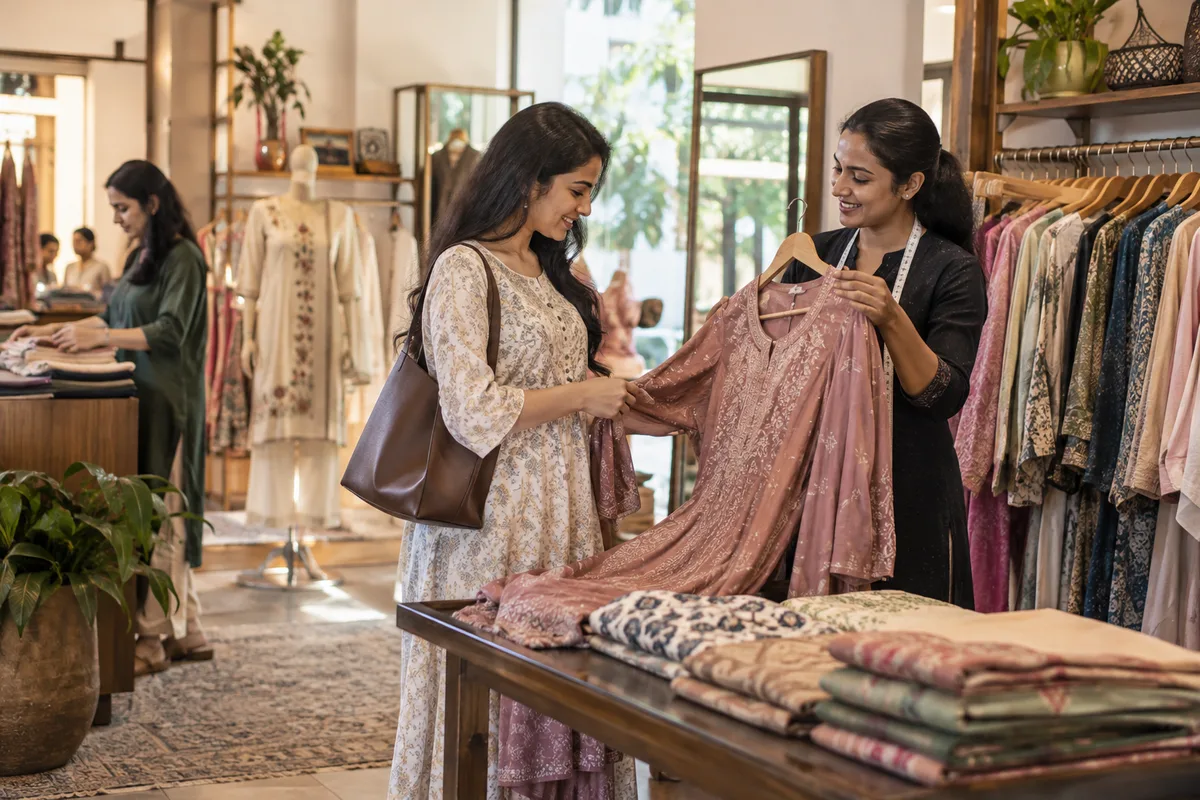
What branding means
Branding is what a customer remembers about your business beyond the product, including your name, colours, tone of voice and what you are known for locally. GullySales sets or corrects this once and applies it consistently across your website, signage and adverts so the business looks like one company everywhere.
Also for clothing stores and boutiques
- SEO for clothing stores and boutiques
- PPC ads for clothing stores and boutiques
- Lead generation for clothing stores and boutiques
- Digital marketing for clothing stores and boutiques
- Reputation management for clothing stores and boutiques
- Local SEO for clothing stores and boutiques
- Social media marketing for clothing stores and boutiques
- Content marketing for clothing stores and boutiques
Sales and marketing for clothing stores and boutiques, the overview.
Last updated 5 Oct 2026.
For clothing stores and boutiques
Where it usually goes wrong, and what we would do.
“The label sewn inside is the only thing that leaves the shop”
A customer wearing your lehenga at a wedding is asked where it came from, and the answer is whatever is printed on that tag.
“A boutique is chosen for a style, not a range”
Shops that stock everything are remembered for nothing, while the one known for Kanjivarams or for contemporary blouse work is named in a conversation.
“The carry bag travels further than the advertisement”
A printed bag goes home, to an office and to a function, and a plain one goes into the bin.
What we do
What we deliver for clothing stores and boutiques.
Every deliverable, what it covers for you, and the result it is there to produce. Nothing here is an extra.
A written statement of what the shop is for
One page fixing the style, the price range and the customer you dress, agreed with you and used for every decision afterwards.
Result: The shop stops trying to be all things.
A name, logo and stitched label
A wordmark that works on a garment tag, a shop board and a small screen, with the artwork files your printer and your tailor can use.
Result: Everything leaving the shop carries the same name.
Packaging that survives the journey
Carry bags, garment covers and tissue that hold a heavy lehenga and still look like your shop when they reach her home.
Result: Your name is in her wardrobe long after the purchase.
A photography style you can repeat
Background, lighting and framing fixed so a shop assistant photographing this week's arrivals produces pictures that match last month's.
Result: The feed looks like one shop, not five.
A shop front and interior that match the label
Board, signage, trial room and display guidance written down, so the shop a customer enters looks like the shop she saw online.
Result: The visit confirms the impression rather than undoing it.
How the result is measured
- Recognition in customer feedback
- Consistency across channels
- Repeat enquiries by name
Recorded as a baseline before work starts, so every later report has an honest comparison.
Positioning in one sentence
The sentence a boutique fills in so a shopper knows its style before reading a caption.
We sell [style, weave or cut] for [wearer and occasion], with [one service], and a customer gets [one thing] here that the next shop on this street does not give.
- Who it is for
- Name the wearer and the occasion: a bride's family for trousseau sarees, a working woman for office kurtas, a mother for children's festive wear. 'All women' puts you against the whole street.
- What you do
- Say what you make or curate: handloom sarees, blouse stitching with fittings, occasion wear designed in-house. Name weaves such as Kanchipuram or chanderi only if you really stock them.
- What a customer gets that the next shop does not
- Pick one habit you can repeat in wedding season: a fitting and alteration included, a stylist who remembers earlier purchases, fabric from named weavers.
- The proof you can show
- Show your own stock in natural light, weaver or supplier names with their permission and customers who agree to be photographed. Never post a customer's picture without asking.
- Words shops overuse and shoppers skim
- Strike 'latest collection', 'trendy' and 'exclusive'. Replace them with the weave, the fabric, the cut and the occasion.
- The name and tagline test
- Say the name over the phone, then spell it as an Instagram handle. A short name with the style word, such as 'sarees' or 'boutique', carries through the street and the feed. Use the same handle everywhere.
Who it is for
This is written for these clothing stores and boutiques.
- Women's ethnic wear and saree boutiques
- Designer and occasion wear studios
- Multi-brand clothing and accessories stores
- Men's wear and ethnic wear stores
- Custom tailoring and blouse stitching studios
- Kids' wear stores
- School uniform retailers and suppliers
- Corporate, hospital and hospitality uniform suppliers
- Fashion accessories and jewellery boutiques
How it works
From your first message to the first report.
No open-ended retainer. Every step gives you something in writing.
First
Your brief
You tell us what you need in a few short steps: your business, what you want, where enquiries come from and how they are handled.
After the brief
A conversation and a written scope
We read it, then talk with whoever handles your enquiries. If you want our help, the scope, the fee and the reporting come in writing, and nothing starts before you have read them.
Before work starts
Baseline recorded
The numbers this work is meant to move, such as enquiries, quotations, orders, visits or renewals, written down so every later report has an honest comparison.
After the baseline
The first fix goes live
The fix we agreed to start with is put in place and measured against the baseline, whether that is a reply, a follow-up, a page, a listing or the handover between marketing and sales.
As agreed
Report against the baseline
What moved, what did not, and what changes next, in plain words. How often you get it is set in writing before work starts.
At renewal
Renew on the numbers
The term ends and you decide whether to continue from the results. The length is agreed in writing before anything starts.
How the branding work runs
- 1
Interview customers and team
We talk to real buyers, won and lost, and to people inside the business who deal with customers daily.
- 2
Review the competitive field
We look at how the nearest competitors present themselves so the position is not accidentally identical.
- 3
Draft the position
A first version of the positioning statement and messaging pillars is written and checked against what customers actually said.
- 4
Test it against real conversations
The draft is tried out in a real sales call or two before it is finalised, since a position that does not survive a real conversation needs rework.
- 5
Hand over the rollout brief
The final position, pillars and not-for list are documented for your team and any agency to apply consistently.
Why us
Why owners pick GullySales over an agency.
Marketing and sales, as one job
Most agencies stop at the enquiry. We also fix what happens after it: the reply, the follow-up, the quote and the CRM.
The person on the first call does the work
No account managers in between. You are never handed to someone you have not met.
A baseline before anything starts
Your numbers are written down on day one, so every later report compares against something honest.
The fee in writing, split three ways
Our time, your media spend and production on separate lines. You always see what goes to us.
No guarantees we cannot keep
The term is agreed in writing and never a default twelve months. We never promise a ranking or a lead count, because nobody controls those.
One office, and we say so
Nagarbhavi, Bengaluru. We work across India by call and WhatsApp and travel when a session needs to be in person.
#257, 3rd floor, Sri Nanjundeshwara Complex, Nagarbhavi 8th Block, Outer Ring Road. How we work.
Your brief
Tell us what you need, and we will read it before we call.
Eight short steps about your business, what you want and who decides. Most questions are a tap, and you can skip any you would rather answer on the call.
FAQ
Questions owners ask before they call.
Not here? More answers, or ask on WhatsApp.
Do we need to change our shop name?
Is branding worth it for a single boutique?
Should the tags, bags and bills carry our name?
Should the look change with every festival?
How much does it cost?
How long is the contract?
How soon will we see results?
Who will actually do the work?
What do you need from us?
What if we are not happy with the work?
From the blog
Further reading for clothing stores and boutiques.
 5 min read · 29 Sept 2026Festival and wedding-season stock and promotion timing for retailersHow a retailer lines up the promotion window with the stock cycle in festival and wedding season: what to announce before, during and after, and when to stop advertising a line.
 6 min read · 21 Sept 2026Influencer marketing vs social media advertising: which one should you pay for?An ad is a message you control, shown to people you choose. A creator post is a recommendation you do not control, shown to people who chose the creator.
 8 min read · 21 Sept 2026How to write an influencer briefA brief fixes the claim, the offer and the disclosure, and then leaves the creator alone. Hand them a script and you have paid a premium for a bad advertisement.
More for clothing stores and boutiques
Everything else we would do for you.
Or start from the overview: sales and marketing for clothing stores and boutiques.
Your next practical step
Tell us what you are trying to grow, and we will read it before we call.
Eight short steps, mostly taps. Skip anything you would rather answer on the call.