Fabric shops and retailers · Reputation management
The complaint is the colour, and it is an honest one.
Reputation management for a cloth shop is what a buyer says after a shade read differently at home than on her phone. GullySales fixes the photography that causes it, prepares the reply to a shade or rate complaint, and puts the review ask at the billing counter.
Scope, fee, reporting and term are agreed in writing after we have read your brief and spoken to you.
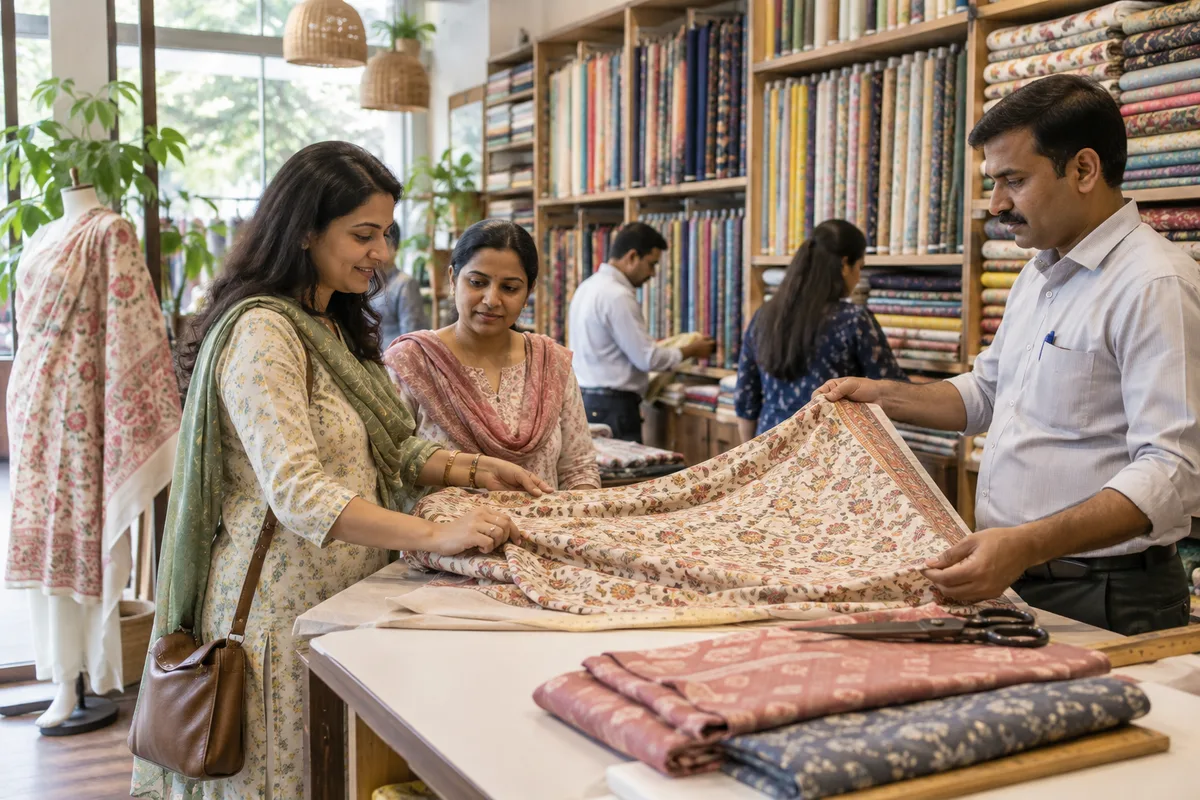
What reputation management means
Reputation management is watching what is said about your business across Google, social media and review sites, and responding to it before it changes a buyer's mind. GullySales monitors mentions, drafts responses to negative reviews and flags recurring complaints back to your team.
Also for fabric shops and retailers
- Review generation for fabric shops and retailers
- SEO for fabric shops and retailers
- PPC ads for fabric shops and retailers
- Lead generation for fabric shops and retailers
- Digital marketing for fabric shops and retailers
- Local SEO for fabric shops and retailers
- Branding and identity for fabric shops and retailers
- Social media for fabric shops and retailers
Sales and marketing for fabric shops and retailers, the overview.
Last updated 5 Oct 2026.
For fabric shops and retailers
Where it usually goes wrong, and what we would do.
“A shade argument is a photograph problem”
Cloth shot under a tube light reads warm, and every return and raised voice at the counter starts there rather than with the customer.
“A review about rate is not a service failure”
Somebody who expected to bargain and did not get a concession writes about it, and the reply has to be about what the quality actually is.
“The tailor's opinion never appears on any platform”
Your largest reputation sits with the master tailors who name a shop for lining and matching, and no rating exists for that.
What we do
What we deliver for fabric shops and retailers.
Every deliverable, what it covers for you, and the result it is there to produce. Nothing here is an extra.
A daylight photography standard that ends the complaint
Natural light, a white sheet, the width and weave noted, and a line on every picture saying the shade may read differently on a screen.
Result: Fewer sales turn into arguments at the counter.
A stated line on returns and exchanges
What happens with a cut length, a courier order and a shade the buyer disputes, written on the catalogue and repeated in the reply.
Result: Nobody is surprised at the counter.
Replies prepared for shade and rate complaints
Wording ready for a colour dispute, a rate compared with the showroom and a delay on a curtain order, approved once and reused.
Result: You answer in your own words, the same afternoon.
The review ask made at billing
A card or a message given while the bill is being cut and the buyer is pleased, rather than a chase sent to everyone who walked in.
Result: Reviews come from the sales that went well.
Monitoring on the shop and the market name
Alerts for the shop name, the common misspellings and the market, so a review is seen while it is still worth answering.
Result: Nothing sits unanswered for a season.
What each complaint was really about
New reviews, the rating and which counter, which fabric and which staff member they came from, read against the baseline.
Result: A repeated problem reaches the person causing it.
How the result is measured
- Average rating
- Response time to reviews
- Negative mentions resolved
Recorded as a baseline before work starts, so every later report has an honest comparison.
What to do with each review
How to answer each kind of review a fabric shop gets.
- Praise for matching a shade or finding a fabric
- Thank them and say what they were looking for, such as a blouse piece to match a saree. Ask whether they would add a photograph of the finished garment if they are happy to.
- A complaint that the metres were short
- Check the measuring at the counter and the bill. Reply that you measure in front of the customer, and offer to re-measure if the piece is brought back. Put the measuring tape in plain view.
- Fading or shrinking after the first wash
- Check the fibre on the bill, and what wash advice was given. Reply with the care advice for that cloth, such as cold wash or dry-clean only. Write it on the bill from then on.
- A claim that pure silk or cotton was not pure
- Pull the purchase invoice from your supplier and the fibre listed on the bill. If the label was wrong, refund. If it was right, offer to go through it with the customer.
- An unhappy review about not taking back cut cloth
- Reply with your cut-cloth policy and where it is shown at the counter. Check that the notice is visible. Offer what you can, such as exchange for an uncut piece.
- A review about cloth bought somewhere else
- Search the bill book by name and number. Customers sometimes review the shop nearest to their tailor. If there is no bill, say so politely, and report the review through the platform if it breaks the rules on fake reviews.
Who it is for
This is written for these fabric shops and retailers.
- Retail cloth shops selling suiting and shirting
- Saree and blouse-piece shops
- Dress material and unstitched wear shops
- Curtain, sofa and upholstery fabric houses
- Wholesale cloth merchants supplying tailors and boutiques
- Uniform cloth suppliers for schools, hotels and factories
- Handloom, khadi and silk outlets
- Online fabric sellers cutting to the metre and couriering
- Brand franchise counters for suiting and shirting
How it works
From your first message to the first report.
No open-ended retainer. Every step gives you something in writing.
First
Your brief
You tell us what you need in a few short steps: your business, what you want, where enquiries come from and how they are handled.
After the brief
A conversation and a written scope
We read it, then talk with whoever handles your enquiries. If you want our help, the scope, the fee and the reporting come in writing, and nothing starts before you have read them.
Before work starts
Baseline recorded
The numbers this work is meant to move, such as enquiries, quotations, orders, visits or renewals, written down so every later report has an honest comparison.
After the baseline
The first fix goes live
The fix we agreed to start with is put in place and measured against the baseline, whether that is a reply, a follow-up, a page, a listing or the handover between marketing and sales.
As agreed
Report against the baseline
What moved, what did not, and what changes next, in plain words. How often you get it is set in writing before work starts.
At renewal
Renew on the numbers
The term ends and you decide whether to continue from the results. The length is agreed in writing before anything starts.
How the reputation management work runs
- 1
Understand current perception
We start by actually searching your business name and reviewing what a stranger would currently see.
- 2
Audit existing mentions
We catalogue reviews, mentions and search results, flagging anything negative or inaccurate.
- 3
Plan responses
A calm, factual response is prepared for anything that needs one, agreed with you before posting.
- 4
Implement monitoring
Ongoing checks are set up so new mentions are caught promptly rather than discovered by accident.
- 5
Measure and report
Sentiment and response times are reported, with your business name searched again to see what has moved.
Why us
Why owners pick GullySales over an agency.
Marketing and sales, as one job
Most agencies stop at the enquiry. We also fix what happens after it: the reply, the follow-up, the quote and the CRM.
The person on the first call does the work
No account managers in between. You are never handed to someone you have not met.
A baseline before anything starts
Your numbers are written down on day one, so every later report compares against something honest.
The fee in writing, split three ways
Our time, your media spend and production on separate lines. You always see what goes to us.
No guarantees we cannot keep
The term is agreed in writing and never a default twelve months. We never promise a ranking or a lead count, because nobody controls those.
One office, and we say so
Nagarbhavi, Bengaluru. We work across India by call and WhatsApp and travel when a session needs to be in person.
#257, 3rd floor, Sri Nanjundeshwara Complex, Nagarbhavi 8th Block, Outer Ring Road. How we work.
Your brief
Tell us what you need, and we will read it before we call.
Eight short steps about your business, what you want and who decides. Most questions are a tap, and you can skip any you would rather answer on the call.
FAQ
Questions owners ask before they call.
Not here? More answers, or ask on WhatsApp.
A customer says the shade is different from the photograph. Who is right?
Should we reply to a review about our rates?
A customer says our 'pure silk' was not pure. How do we respond?
Can we ask our tailor accounts to write a review?
How much does it cost?
How long is the contract?
How soon will we see results?
What do you need from us?
What if we are not happy with the work?
More for fabric shops and retailers
Everything else we would do for you.
Closest to this: reputation
Also for fabric shops and retailers
Or start from the overview: sales and marketing for fabric shops and retailers.
Your next practical step
Tell us what you are trying to grow, and we will read it before we call.
Eight short steps, mostly taps. Skip anything you would rather answer on the call.