Home appliance stores · CRM
Keep a record of what each household owns, and when it was bought.
A CRM for an appliance store is the record of each household, the appliances they bought, the dates and the open enquiries. GullySales works on choosing a tool your counter will actually use and on what goes into it.
Scope, fee, reporting and term are agreed in writing after we have read your brief and spoken to you.
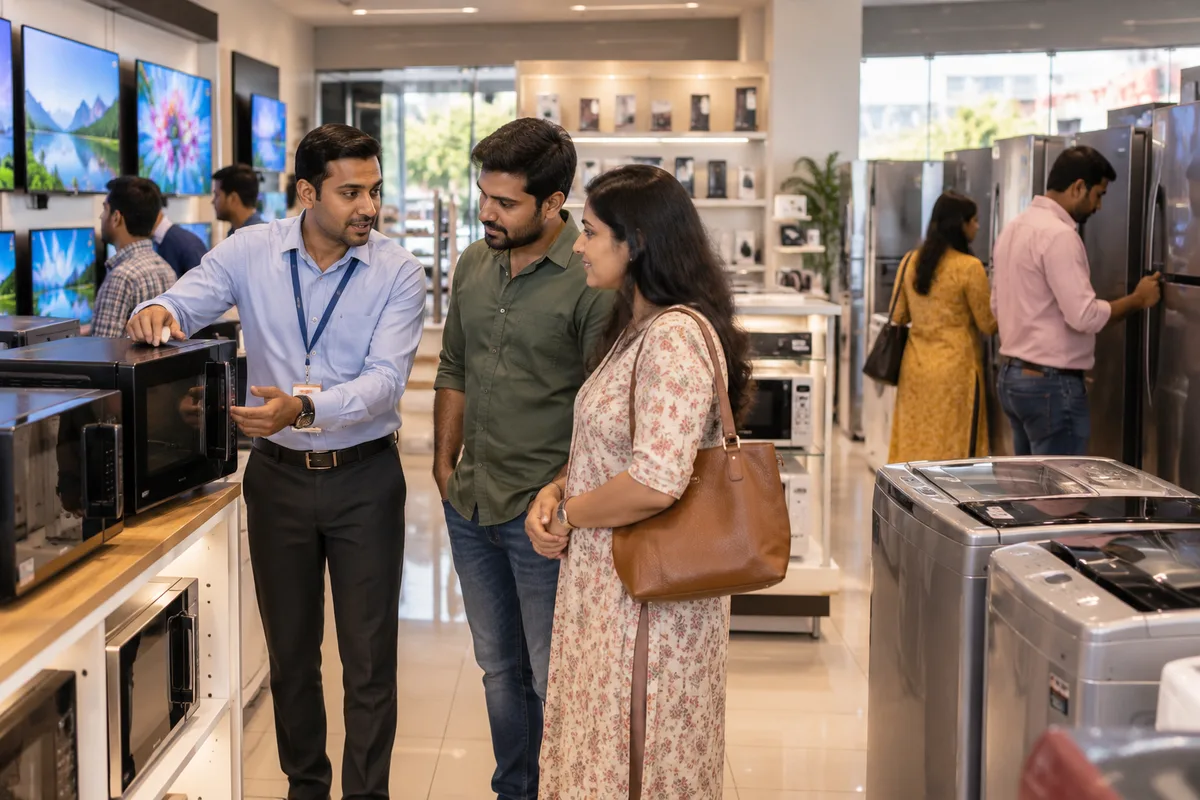
What CRM means
A CRM is the record where every enquiry, call and quote is kept against a customer, replacing separate notebooks, spreadsheets and memory. GullySales sets up or cleans an existing CRM and reports from it by enquiry outcome rather than by activity logged.
Also for home appliance stores
- Lead generation for home appliance stores
- Follow-up systems for home appliance stores
- SEO for home appliance stores
- Local SEO for home appliance stores
- Social media marketing for home appliance stores
- Content marketing for home appliance stores
- Buyer personas for home appliance stores
- WhatsApp marketing for home appliance stores
Sales and marketing for home appliance stores, the overview.
Last updated 18 Oct 2026.
For home appliance stores
Where it usually goes wrong, and what we would do.
“The bill register is not a customer record”
A paper or billing-software register holds names and amounts. It does not tell you that this family bought a washer some years back and might now want a dryer, so nobody calls.
“Warranty and service dates are sales dates”
A fridge warranty ending is the moment the family thinks about service contracts and, soon after, replacement. A record that flags that date gives the shop a reason to call.
“Staff change, memory leaves”
The salesperson who knew every regular customer moves on, and the knowledge goes with them. A shared record keeps it in the shop.
“A tool nobody updates is worse than a sheet”
A complicated CRM abandoned in a month leaves the shop with half-filled data. A simple sheet that every counter person fills in beats an expensive tool used by one.
What we do
What we deliver for home appliance stores.
Every deliverable, what it covers for you, and the result it is there to produce. Nothing here is an extra.
A customer record designed for appliances
Fields for the household, address and floor, each appliance bought, brand, date, warranty end and installer.
Result: One row answers what a family owns.
A tool chosen to fit your staff
A comparison of a sheet, a simple CRM and your billing software, recommended on how your counter works.
Result: The tool is one your staff open every day.
Past bills brought in
Billing history cleaned and loaded so repeat buyers are recognisable from the start.
Result: Previous buyers show their earlier purchases.
Reminder rules
Prompts for warranty end, seasonal needs and old units due for exchange.
Result: The record lists the households to call this week.
Counter habits written down
A short guide on what is entered at billing, at delivery and at service.
Result: Every new bill creates or updates a record.
How the result is measured
- Enquiries logged in the CRM
- Data completeness
- Reports generated from CRM data
Recorded as a baseline before work starts, so every later report has an honest comparison.
Who it is for
This is written for these home appliance stores.
- Multi-brand white goods and appliance showrooms
- Single-brand exclusive stores run by dealers
- Air conditioner specialists with installation teams
- Washing machine and fridge dealers in market streets
- Water heater, geyser and water purifier stores
- Appliance retailers selling mainly on instalments
- Showrooms supplying builders, hostels and guest houses in bulk
- Open-box and ex-display appliance outlets
How it works
From your first message to the first report.
No open-ended retainer. Every step gives you something in writing.
First
Your brief
You tell us what you need in a few short steps: your business, what you want, where enquiries come from and how they are handled.
After the brief
A conversation and a written scope
We read it, then talk with whoever handles your enquiries. If you want our help, the scope, the fee and the reporting come in writing, and nothing starts before you have read them.
Before work starts
Baseline recorded
The numbers this work is meant to move, such as enquiries, quotations, orders, visits or renewals, written down so every later report has an honest comparison.
After the baseline
The first fix goes live
The fix we agreed to start with is put in place and measured against the baseline, whether that is a reply, a follow-up, a page, a listing or the handover between marketing and sales.
As agreed
Report against the baseline
What moved, what did not, and what changes next, in plain words. How often you get it is set in writing before work starts.
At renewal
Renew on the numbers
The term ends and you decide whether to continue from the results. The length is agreed in writing before anything starts.
How the CRM work runs
- 1
Map the sales process
We record how a deal actually moves from enquiry to close in your business today.
- 2
Configure stages and fields
The CRM's pipeline and fields are built to match that process exactly, not a generic template.
- 3
Set up automations
Reminders, assignment rules and follow-up triggers are configured so routine steps happen without manual effort.
- 4
Test with real deals
We run the configuration against actual current deals to catch gaps before the whole team relies on it.
Why us
Why owners pick GullySales over an agency.
Marketing and sales, as one job
Most agencies stop at the enquiry. We also fix what happens after it: the reply, the follow-up, the quote and the CRM.
The person on the first call does the work
No account managers in between. You are never handed to someone you have not met.
A baseline before anything starts
Your numbers are written down on day one, so every later report compares against something honest.
The fee in writing, split three ways
Our time, your media spend and production on separate lines. You always see what goes to us.
No guarantees we cannot keep
The term is agreed in writing and never a default twelve months. We never promise a ranking or a lead count, because nobody controls those.
One office, and we say so
Nagarbhavi, Bengaluru. We work across India by call and WhatsApp and travel when a session needs to be in person.
#257, 3rd floor, Sri Nanjundeshwara Complex, Nagarbhavi 8th Block, Outer Ring Road. How we work.
Your brief
Tell us what you need, and we will read it before we call.
Eight short steps about your business, what you want and who decides. Most questions are a tap, and you can skip any you would rather answer on the call.
FAQ
Questions owners ask before they call.
Not here? More answers, or ask on WhatsApp.
Do we need paid software?
Is it fine to keep customers' phone numbers?
Who should update the record?
How much does it cost?
How long is the contract?
How soon will we see results?
Who will actually do the work?
What do you need from us?
What if we are not happy with the work?
More for home appliance stores
Everything else we would do for you.
Closest to this: leads and follow-up
Also for home appliance stores
Or start from the overview: sales and marketing for home appliance stores.
Your next practical step
Tell us what you are trying to grow, and we will read it before we call.
Eight short steps, mostly taps. Skip anything you would rather answer on the call.