Tile, flooring and bathware dealers · Branding
Look like a studio worth an hour, not a godown with a board.
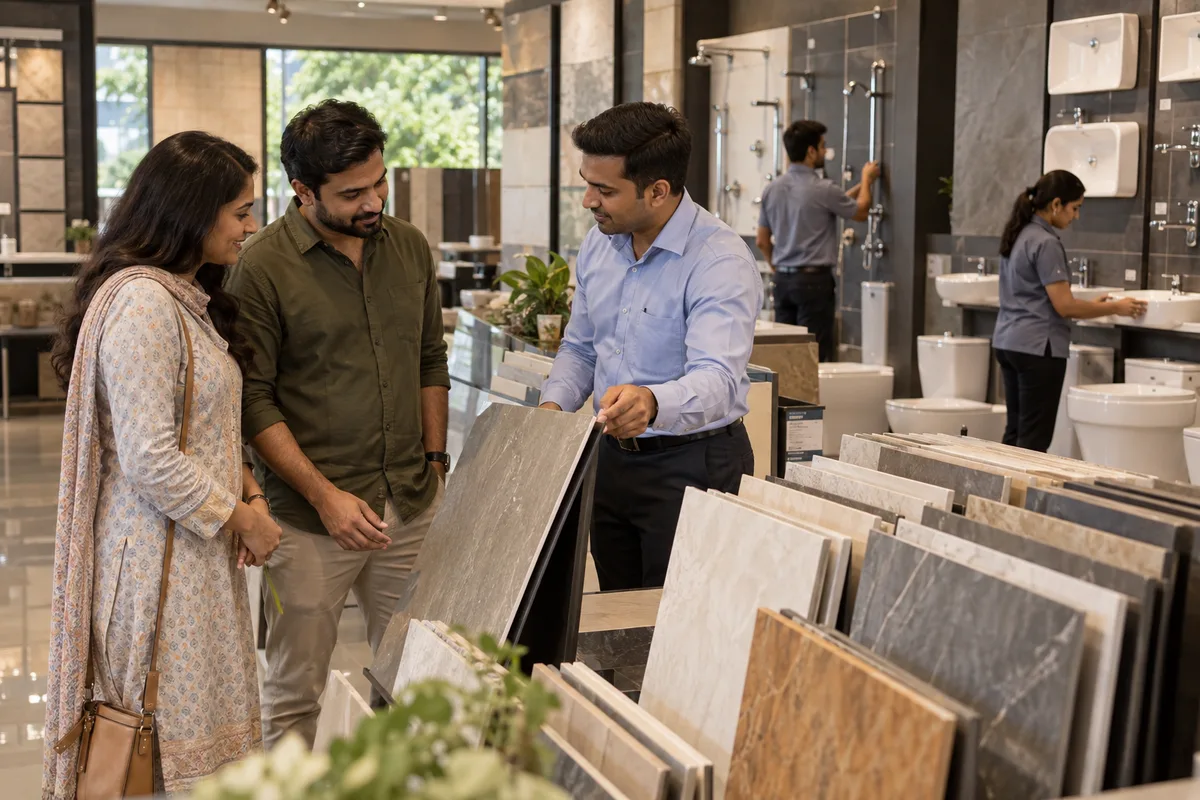
Branding for a tile and bathware dealer is what a family decides in the first ten seconds, from the board on the road to the sample bag they carry home. GullySales settles the name, the look and the material the trade sees, so a multi-brand dealer stops reading as a stockist.
Scope, fee, reporting and term are agreed in writing after we have read your brief and spoken to you.
What branding means
Branding is what a customer remembers about your business beyond the product, including your name, colours, tone of voice and what you are known for locally. GullySales sets or corrects this once and applies it consistently across your website, signage and adverts so the business looks like one company everywhere.
Also for tile, flooring and bathware dealers
- SEO for tile, flooring and bathware dealers
- PPC for tile, flooring and bathware dealers
- Lead generation for tile, flooring and bathware dealers
- Digital marketing for tile, flooring and bathware dealers
- Reputation management for tile, flooring and bathware dealers
- Local SEO for tile, flooring and bathware dealers
- Social media marketing for tile, flooring and bathware dealers
- Content marketing for tile, flooring and bathware dealers
Sales and marketing for tile, flooring and bathware dealers, the overview.
Last updated 5 Oct 2026.
For tile, flooring and bathware dealers
Where it usually goes wrong, and what we would do.
“Every board on the road carries somebody else's logo”
A multi-brand showroom ends up advertising eight manufacturers and itself last. The family remembers the brand and forgets which dealer they saw it at.
“The sample bag sits on a table for a fortnight”
A tile piece, a laminate chip and a tap go home while the family argues. Your name has to be on all three, not on the bag alone.
“Premium ranges need a room, not a discount”
Imported bathware sold from the same counter as parking tiles gets priced like parking tiles. Separating the space is a branding decision first.
“Designers judge you on the trade pack”
A rate list typed into WhatsApp says shop. A range sheet with sizes, finishes and trade terms says a firm can specify you.
What we do
What we deliver for tile, flooring and bathware dealers.
Every deliverable, what it covers for you, and the result it is there to produce. Nothing here is an extra.
A name and mark that work on a board and a bag
The showroom name set in one form, with a mark that reads from a moving car and prints on a sample bag, a quotation and a visiting card.
Result: Families can name the dealer they liked.
Signage and display zone plan
Board, entrance, zone names for bathroom, flooring and slabs, and the manufacturers' boards arranged so your own name is not lost among them.
Result: The showroom reads as one business, not eight brand corners.
Sample bags and a labelling system
Printed bags and labelled tile and laminate samples carrying the range name, the size and your number, handed to every family who takes one home.
Result: Your number is on the table while they decide.
The trade pack for architects and designers
A range sheet by size and finish, sample request steps, trade terms and a stated promise not to approach their client directly.
Result: A designer can put your ranges into a specification.
Quotation, invoice and delivery note in one look
The documents a family and a purchase team actually keep, set in the same type and colours as the board outside.
Result: The paperwork matches the showroom they visited.
How the result is measured
- Recognition in customer feedback
- Consistency across channels
- Repeat enquiries by name
Recorded as a baseline before work starts, so every later report has an honest comparison.
Positioning in one sentence
We are the showroom in this area for this kind of home and budget, and here is what a family or designer can see.
- Who it is for: homeowner, designer or builder
- Pick the buyer that drives most of your orders. A family wants a visualised room and a delivery date. A designer wants a trade price and a sample. A builder wants stock and credit terms.
- What you do: range, service and delivery in one line
- Include the parts beyond the display, such as room-wise quantity estimates, laying advice and delivery to the site on the day the mason is ready. Leave out what you do not do.
- What a buyer gets that a stockist does not
- Choose one: a salesperson who can measure a bathroom and suggest layouts, a sample bag with the actual tile and care instructions, a return rule written on the quote. Describe it as routine.
- The proof you can show
- Photographs of completed homes with permission, the brands you are authorised for, your showroom as a real room set rather than a catalogue wall. Show tile sizes, finishes and matching fittings.
- Words every showroom board uses
- 'Latest collection', 'wide variety' and 'best prices' are on every board on the road. Replace them with the brands you carry, the finishes you stock in depth, and a plain sentence for the service.
Who it is for
This is written for these tile, flooring and bathware dealers.
- Multi-brand tile and sanitaryware showrooms
- Single-brand exclusive tile galleries
- Bathware, CP fittings and bath accessories dealers
- Wooden, laminate and vinyl flooring retailers
- Granite, marble and natural stone dealers
- Tile distributors supplying builders and sub-dealers
- Premium imported tile and bathroom studios
- Flooring retail and installation businesses
How it works
From your first message to the first report.
No open-ended retainer. Every step gives you something in writing.
First
Your brief
You tell us what you need in a few short steps: your business, what you want, where enquiries come from and how they are handled.
After the brief
A conversation and a written scope
We read it, then talk with whoever handles your enquiries. If you want our help, the scope, the fee and the reporting come in writing, and nothing starts before you have read them.
Before work starts
Baseline recorded
The numbers this work is meant to move, such as enquiries, quotations, orders, visits or renewals, written down so every later report has an honest comparison.
After the baseline
The first fix goes live
The fix we agreed to start with is put in place and measured against the baseline, whether that is a reply, a follow-up, a page, a listing or the handover between marketing and sales.
As agreed
Report against the baseline
What moved, what did not, and what changes next, in plain words. How often you get it is set in writing before work starts.
At renewal
Renew on the numbers
The term ends and you decide whether to continue from the results. The length is agreed in writing before anything starts.
How the branding work runs
- 1
Interview customers and team
We talk to real buyers, won and lost, and to people inside the business who deal with customers daily.
- 2
Review the competitive field
We look at how the nearest competitors present themselves so the position is not accidentally identical.
- 3
Draft the position
A first version of the positioning statement and messaging pillars is written and checked against what customers actually said.
- 4
Test it against real conversations
The draft is tried out in a real sales call or two before it is finalised, since a position that does not survive a real conversation needs rework.
- 5
Hand over the rollout brief
The final position, pillars and not-for list are documented for your team and any agency to apply consistently.
Why us
Why owners pick GullySales over an agency.
Marketing and sales, as one job
Most agencies stop at the enquiry. We also fix what happens after it: the reply, the follow-up, the quote and the CRM.
The person on the first call does the work
No account managers in between. You are never handed to someone you have not met.
A baseline before anything starts
Your numbers are written down on day one, so every later report compares against something honest.
The fee in writing, split three ways
Our time, your media spend and production on separate lines. You always see what goes to us.
No guarantees we cannot keep
The term is agreed in writing and never a default twelve months. We never promise a ranking or a lead count, because nobody controls those.
One office, and we say so
Nagarbhavi, Bengaluru. We work across India by call and WhatsApp and travel when a session needs to be in person.
#257, 3rd floor, Sri Nanjundeshwara Complex, Nagarbhavi 8th Block, Outer Ring Road. How we work.
Your brief
Tell us what you need, and we will read it before we call.
Eight short steps about your business, what you want and who decides. Most questions are a tap, and you can skip any you would rather answer on the call.
FAQ
Questions owners ask before they call.
Not here? More answers, or ask on WhatsApp.
We sell eight brands. What is left for our own name to say?
Do we need to change our name after twenty years?
Should our showroom name use the brand names we carry?
Is it worth having a trade pack for designers?
How much does it cost?
How long is the contract?
How soon will we see results?
Who will actually do the work?
What do you need from us?
What if we are not happy with the work?
From the blog
Further reading for tile, flooring and bathware dealers.
 5 min read · 6 Oct 2026Why homeowners pick one quote out of threeInterior, kitchen, window, tile and AC buyers collect three quotes and choose the firm they understood and heard back from. Here is what they compare and where the quote loses.
 7 min read · 21 Sept 2026How to advertise to interior designersA designer does not buy your product. They specify it, and somebody else pays for it. That one fact changes what you advertise, when, and what you are actually asking for.
 8 min read · 21 Sept 2026How to advertise to contractorsA contractor is on site, on a phone, with one hand free. Work out first whether your product is chosen by him or by the person paying him, because that decides everything.
More for tile, flooring and bathware dealers
Everything else we would do for you.
- SEO for tile, flooring and bathware dealers
- PPC for tile, flooring and bathware dealers
- Lead generation for tile, flooring and bathware dealers
- Digital marketing for tile, flooring and bathware dealers
- Reputation management for tile, flooring and bathware dealers
- Local SEO for tile, flooring and bathware dealers
Or start from the overview: sales and marketing for tile, flooring and bathware dealers.
Your next practical step
Tell us what you are trying to grow, and we will read it before we call.
Eight short steps, mostly taps. Skip anything you would rather answer on the call.