Clothing stores and boutiques · Search engine optimisation
Be found for blouse stitching and bridal wear, not only your shop's name.
Search engine optimisation (SEO) for a boutique means appearing when a shopper types a garment and a locality, such as designer blouse stitching in their own area. GullySales builds a page for each garment and occasion you actually sell, and fixes the site that currently exists only as an Instagram link.
Scope, fee, reporting and term are agreed in writing after we have read your brief and spoken to you.
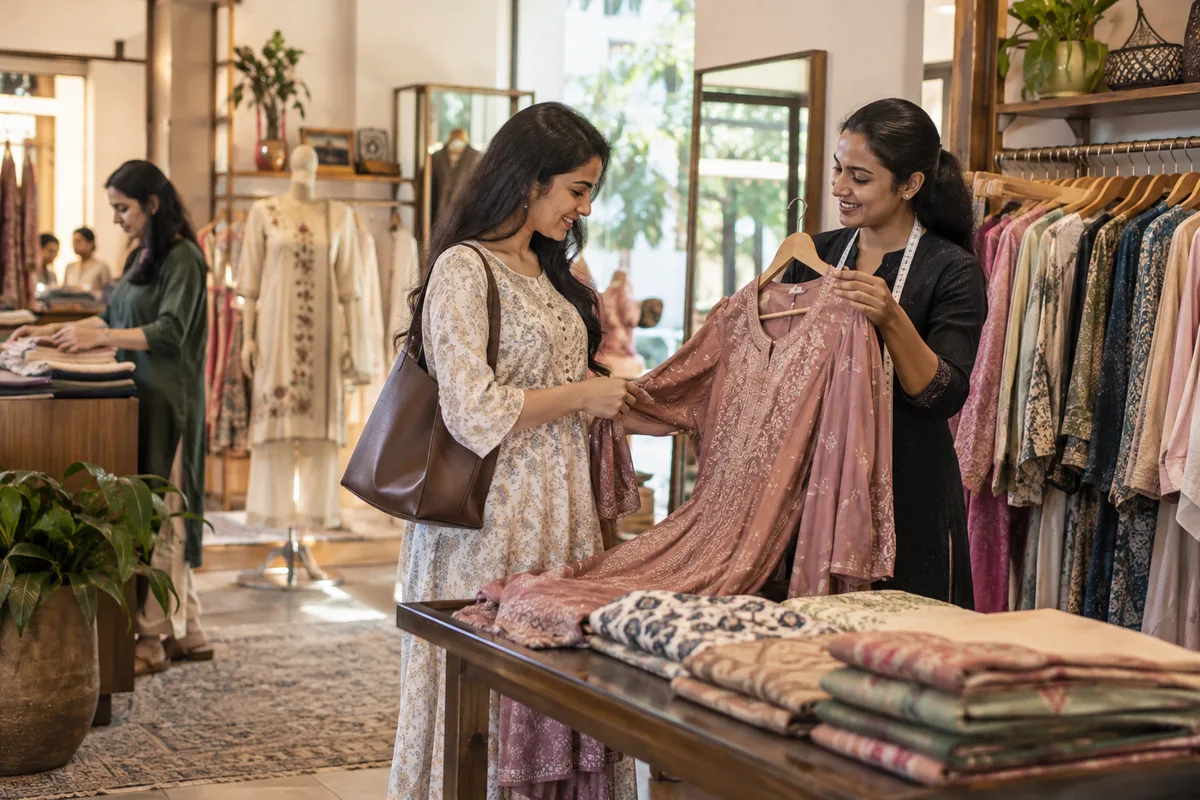
What search engine optimisation means
Search engine optimisation (SEO) is the work of getting your website to appear when a buyer searches Google for what you sell. GullySales builds pages around real search terms, fixes technical issues that block ranking, and tracks which searches actually bring enquiries.
Also for clothing stores and boutiques
- Local SEO for clothing stores and boutiques
- Website for clothing boutiques
- PPC ads for clothing stores and boutiques
- Lead generation for clothing stores and boutiques
- Digital marketing for clothing stores and boutiques
- Reputation management for clothing stores and boutiques
- Branding and identity for clothing stores and boutiques
- Social media marketing for clothing stores and boutiques
Sales and marketing for clothing stores and boutiques, the overview.
Last updated 5 Oct 2026.
For clothing stores and boutiques
Where it usually goes wrong, and what we would do.
“Shoppers search the garment, not the shop type”
Almost nobody searches for a clothing store. The words typed are the garment and the occasion, such as a lehenga for a reception or blouse stitching near a locality.
“An Instagram page cannot rank for a search”
Most boutiques put everything on Instagram and leave the website as a single contact page, so a shopper searching for a garment finds a marketplace listing instead.
“Stitching searches have almost no competition”
Shops rarely write about custom stitching, delivery timelines or measurement guidance, which leaves that search open to whoever publishes a proper page on it.
What we do
What we deliver for clothing stores and boutiques.
Every deliverable, what it covers for you, and the result it is there to produce. Nothing here is an extra.
A page for each occasion you dress
Separate pages for bridal wear, reception outfits, festival collections, kids' occasion wear and everyday wear, instead of one gallery of photographs.
Result: Each occasion can be found on its own search.
A custom stitching and alteration page
A page covering blouse stitching, lehenga fitting, alteration timelines and how measurements are taken, written for the questions a customer asks in the shop.
Result: Stitching enquiries arrive from search, not only from walk-ins.
Locality wording on the shop pages
Your market, street and nearby landmarks named in page titles and headings, matched to how shoppers in your city describe the area.
Result: A shopper looking in your area sees your shop before a marketplace.
Photographs given text a search engine can read
File names, alt text and captions describing the fabric, garment and occasion in each photograph, since boutique sites are mostly images.
Result: Your collection photographs start bringing in visits.
A search report by garment page
Position and enquiries for each garment page set against the figures recorded before the work started.
Result: You can see which collection page is worth the effort.
How the result is measured
- Ranking positions
- Organic traffic
- Enquiries from organic search
Recorded as a baseline before work starts, so every later report has an honest comparison.
Searches your shoppers type
What a shopper types before choosing a boutique, and the page that answers it.
- bridal blouse design stitching near me
- A stitching page. Show blouse styles and fabrics you work with, how fittings and trials run, the notice you need before a wedding date and how a customer sends measurements.
- lehenga for wedding in Coimbatore
- A bridal page. Say whether you sell, rent or customise, how trials and alterations work and how far ahead brides should come. Use photographs taken in the shop, with the wearer's consent.
- saree shop near me open on Sunday
- Hours and the Business Profile decide this one. List weekend and festival hours, the fabrics you hold, and whether a customer can see the catalogue on WhatsApp before visiting.
- school uniform supplier in Mysuru
- A uniform page. Name the schools you supply only with their consent, add a size chart, ordering windows and how exchanges work. Parents arrive by school name.
- sherwani for groom wedding
- A men's wedding page. Show styles, sizes, alterations, accessories and how far ahead the groom should order. Say whether items are bought or hired.
- alteration tailor near me
- An alteration page. List what you alter, how a customer sends or brings a garment, and how you quote. It brings new customers who later buy outfits from you.
Who it is for
This is written for these clothing stores and boutiques.
- Women's ethnic wear and saree boutiques
- Designer and occasion wear studios
- Multi-brand clothing and accessories stores
- Men's wear and ethnic wear stores
- Custom tailoring and blouse stitching studios
- Kids' wear stores
- School uniform retailers and suppliers
- Corporate, hospital and hospitality uniform suppliers
- Fashion accessories and jewellery boutiques
Not for
It is not the right fit if.
- You stitch only for a handful of regular families and take no new customers, so a page found by strangers adds nothing.
- Your shop has no photographs of its own work, and a page of supplier images would say nothing a rival's does not.
- Nobody can answer a call or a message from a new visitor, so a found shop would still lose the enquiry.
How it works
How the search engine optimisation work runs
The work itself, in order. How an engagement starts, from your brief to a written scope, is set out on our method page.
- 1
Audit and baseline
We record where the site stands today: positions, traffic, technical faults and the enquiries search currently produces. Nothing starts until this number is written down.
- 2
Decide what to rank for
We map the searches your buyers use, in your words and theirs, and pick the ones worth the effort for your margin and your capacity.
- 3
Fix the foundations
Technical faults first, because the cheapest gains are there. Then the Business Profile and directory consistency.
- 4
Build the pages
A page for each thing you do, written to answer the question it is searched for, with a clear next step at the end.
- 5
Publish and earn mentions
Content goes out on the calendar. Links and mentions are earned from real relationships, not bought.
- 6
Measure, report, adjust
At an interval agreed in writing we report what moved and what did not, and change the plan when the numbers say so.
Where this fits
Three pieces of sales work, in this order.
This work sits inside sales process design, at stage 1, prospecting and lead generation. The audit comes before it, and sales management keeps it running.
Step 1
Sales audit
Find where deals are being lost and what to fix first.
Start here if you cannot say where orders are lost.
Step 2 · you are here
Sales process design
One written way to sell, from first enquiry to repeat order.
Start here if every salesperson sells differently.
Step 3
Sales management
A target, a review routine and someone who owns the number.
Start here if the team has targets and no routine.
FAQ
Questions owners ask before they call.
Not here? More answers, or ask on WhatsApp.
How long before we see search enquiries?
Should we build a website when Instagram already works?
Should every outfit be a product page?
Can we use the supplier's photographs and descriptions?
How much does it cost?
How long is the contract?
Who will actually do the work?
What do you need from us?
What if we are not happy with the work?
From the blog
Further reading for clothing stores and boutiques.
 5 min read · 29 Sept 2026Festival and wedding-season stock and promotion timing for retailersHow a retailer lines up the promotion window with the stock cycle in festival and wedding season: what to announce before, during and after, and when to stop advertising a line.
 6 min read · 21 Sept 2026Influencer marketing vs social media advertising: which one should you pay for?An ad is a message you control, shown to people you choose. A creator post is a recommendation you do not control, shown to people who chose the creator.
 8 min read · 21 Sept 2026How to write an influencer briefA brief fixes the claim, the offer and the disclosure, and then leaves the creator alone. Hand them a script and you have paid a premium for a bad advertisement.
More for clothing stores and boutiques
Everything else we would do for you.
Closest to this: search and visibility
Also for clothing stores and boutiques
- PPC ads for clothing stores and boutiques
- Lead generation for clothing stores and boutiques
- Digital marketing for clothing stores and boutiques
- Reputation management for clothing stores and boutiques
- Branding and identity for clothing stores and boutiques
- Social media marketing for clothing stores and boutiques
Or start from the overview: sales and marketing for clothing stores and boutiques.
Your next practical step
Tell us what you are trying to grow, and we will read it before we call.
Eight short steps, mostly taps. Skip anything you would rather answer on the call.