Clothing stores and boutiques · Digital marketing
Plan the year around weddings, festivals and school reopening.
Digital marketing for a boutique is the plan that decides what runs before each occasion, from the wedding season to the week schools reopen. GullySales sets the calendar, splits the budget between search, Instagram and WhatsApp, and records which occasion actually filled the shop.
Scope, fee, reporting and term are agreed in writing after we have read your brief and spoken to you.
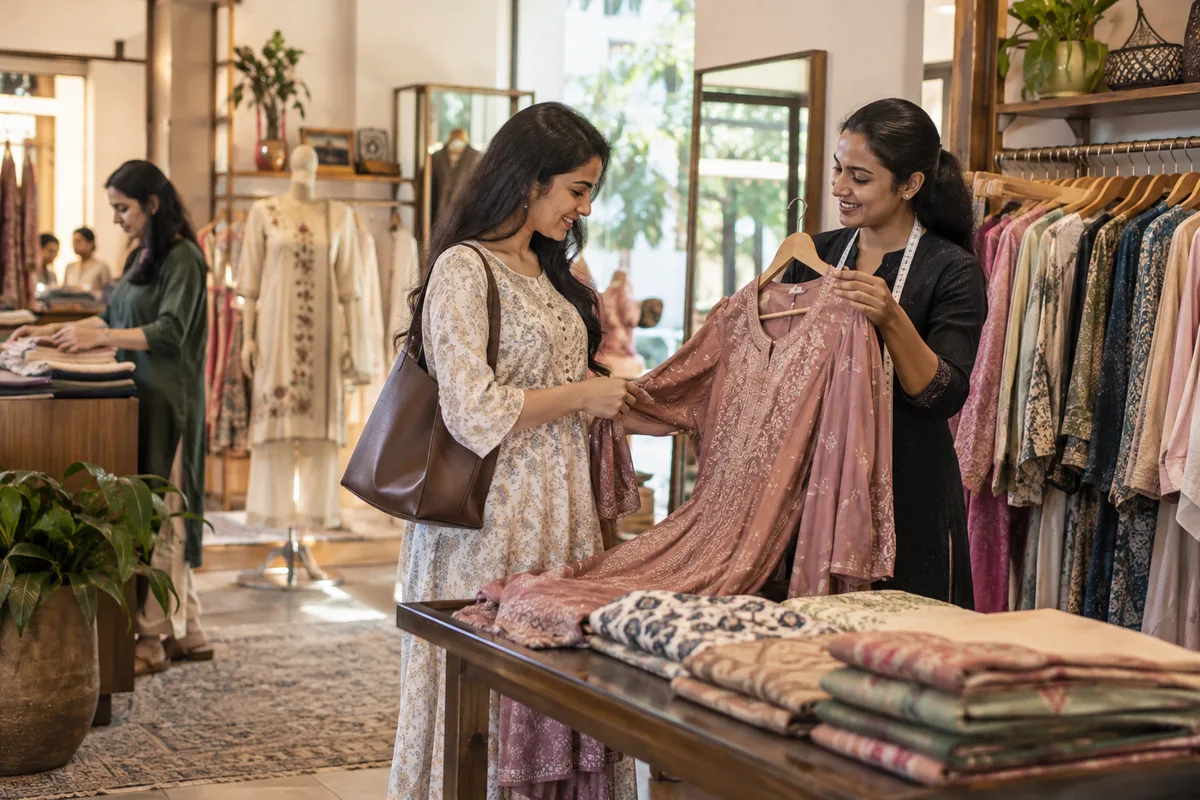
What digital marketing means
Digital marketing is the combined work of search, social media, advertising and website channels running together rather than as separate projects with separate people. GullySales runs these as one connected system so a change in one channel, such as a new offer, is reflected everywhere at once.
Also for clothing stores and boutiques
- Buyer personas for clothing boutiques
- SEO for clothing stores and boutiques
- PPC ads for clothing stores and boutiques
- Lead generation for clothing stores and boutiques
- Reputation management for clothing stores and boutiques
- Local SEO for clothing stores and boutiques
- Branding and identity for clothing stores and boutiques
- Social media marketing for clothing stores and boutiques
Sales and marketing for clothing stores and boutiques, the overview.
Last updated 5 Oct 2026.
For clothing stores and boutiques
Where it usually goes wrong, and what we would do.
“Your calendar is set by other people's dates”
Muhurtham dates, Onam, Durga Puja and the June school reopening decide when a boutique is busy, and none of them move to suit a posting schedule.
“Three very different buyers, one shop”
The bride's mother, the office worker buying a kurta and the school's purchase committee are reached on different channels and in different months.
“Spending evenly through the year wastes most of it”
Money spent in the flat months buys browsing, while the weeks before a festival are when a family is actually deciding where to shop.
What we do
What we deliver for clothing stores and boutiques.
Every deliverable, what it covers for you, and the result it is there to produce. Nothing here is an extra.
An occasion calendar for your region
A twelve-month plan built on the wedding dates, festivals and school dates that matter where your shop is, rather than a national list.
Result: You know in January what runs in September.
A channel split by buyer
Search for stitching and occasion wear, Instagram for collections, WhatsApp for past customers, and direct outreach for uniform orders.
Result: Each buyer is reached where the buyer is actually looking.
Budget weighted to the busy weeks
Media spend concentrated in the weeks before each occasion, with the flat months kept for content and past-customer messages.
Result: The money lands when families are buying.
One message across the shop front and the feed
The collection in the window, the reel and the WhatsApp broadcast kept the same in the same week, so a shopper sees one shop.
Result: A customer recognises the collection wherever the customer meets it.
A past-customer list used every season
Buyers grouped by what they bought and by the occasions coming up in their family, messaged before the next one.
Result: Regulars see the new collection before they shop elsewhere.
A read on what the season brought
Enquiries, walk-ins, fittings and orders by occasion, set beside the figures taken before the plan began.
Result: Next year's calendar is built on what happened, not a guess.
How the result is measured
- Enquiries across channels
- Cost per enquiry overall
- Channel mix by contribution
Recorded as a baseline before work starts, so every later report has an honest comparison.
Where a boutique starts
A boutique starts with the occasions its customers shop for and a catalogue that answers a WhatsApp enquiry.
- Business Profile with the current shop front
- Update the photos, hours, the categories you stock and the stitching or alteration service. Count calls and directions.
- WhatsApp catalogue
- Group designs by occasion, such as wedding, festival or office, with price bands and delivery lead times you can keep. Note requests.
- Customer record
- Write each customer's name, sizes, occasion and date of purchase in one sheet. Use it before the next occasion.
- Instagram for the new arrivals
- Show new pieces with price range and a link to message you. Track visits that began there.
- Order tracker for the busy weeks
- List each order, fitting date and delivery date, so no order is lost in wedding season.
- What to leave until later
- Leave paid ads on generic terms and a full online store until the record and catalogue work. Likes are not footfall.
Who it is for
This is written for these clothing stores and boutiques.
- Women's ethnic wear and saree boutiques
- Designer and occasion wear studios
- Multi-brand clothing and accessories stores
- Men's wear and ethnic wear stores
- Custom tailoring and blouse stitching studios
- Kids' wear stores
- School uniform retailers and suppliers
- Corporate, hospital and hospitality uniform suppliers
- Fashion accessories and jewellery boutiques
Not for
It is not the right fit if.
- You have no photographs of the shop or its outfits yet, so every channel would start with nothing to show.
- You are a few weeks from the busiest wedding dates and cannot take new orders on time, so a push would bring orders you would miss.
How it works
How the digital marketing work runs
The work itself, in order. How an engagement starts, from your brief to a written scope, is set out on our method page.
- 1
Agree the one aim
We settle what the campaign must achieve, such as enquiries for a launch or footfall for an event, and the date it must be live.
- 2
Check what is ready
We list the channels you already run, who runs them, and what each can produce in the time available. Anything that cannot be done properly is left out.
- 3
Write the idea and the message sheet
We draft the one-sentence idea, test it against each planned format, and fix the wording that all channels will copy.
- 4
Brief every channel from the same sheet
Your agency, freelancer or in-house person receives the message sheet and calendar. Their work is checked against the sheet before it goes out.
- 5
Run on the shared calendar
Channels go live together. If the offer changes, every channel is changed on the same day from the same sheet.
- 6
Measure as one campaign
Enquiries and orders are read against the baseline. The reporting schedule is agreed in writing with the scope.
Where this fits
Three pieces of sales work, in this order.
This work sits inside sales process design, at stage 0, foundation. The audit comes before it, and sales management keeps it running.
Step 1
Sales audit
Find where deals are being lost and what to fix first.
Start here if you cannot say where orders are lost.
Step 2 · you are here
Sales process design
One written way to sell, from first enquiry to repeat order.
Start here if every salesperson sells differently.
Step 3
Sales management
A target, a review routine and someone who owns the number.
Start here if the team has targets and no routine.
FAQ
Questions owners ask before they call.
Not here? More answers, or ask on WhatsApp.
Which channel matters most for a boutique?
We have no marketing person. Who runs this?
How do we price on WhatsApp without losing customers to a cheaper shop?
Should we sell online as well as in the shop?
How long is the contract?
How soon will we see results?
Who will actually do the work?
What do you need from us?
What if we are not happy with the work?
From the blog
Further reading for clothing stores and boutiques.
 5 min read · 29 Sept 2026Festival and wedding-season stock and promotion timing for retailersHow a retailer lines up the promotion window with the stock cycle in festival and wedding season: what to announce before, during and after, and when to stop advertising a line.
 6 min read · 21 Sept 2026Influencer marketing vs social media advertising: which one should you pay for?An ad is a message you control, shown to people you choose. A creator post is a recommendation you do not control, shown to people who chose the creator.
 8 min read · 21 Sept 2026How to write an influencer briefA brief fixes the claim, the offer and the disclosure, and then leaves the creator alone. Hand them a script and you have paid a premium for a bad advertisement.
More for clothing stores and boutiques
Everything else we would do for you.
Closest to this: strategy and research
Also for clothing stores and boutiques
Or start from the overview: sales and marketing for clothing stores and boutiques.
Your next practical step
Tell us what you are trying to grow, and we will read it before we call.
Eight short steps, mostly taps. Skip anything you would rather answer on the call.