Custom jewellery designers · Buyer persona
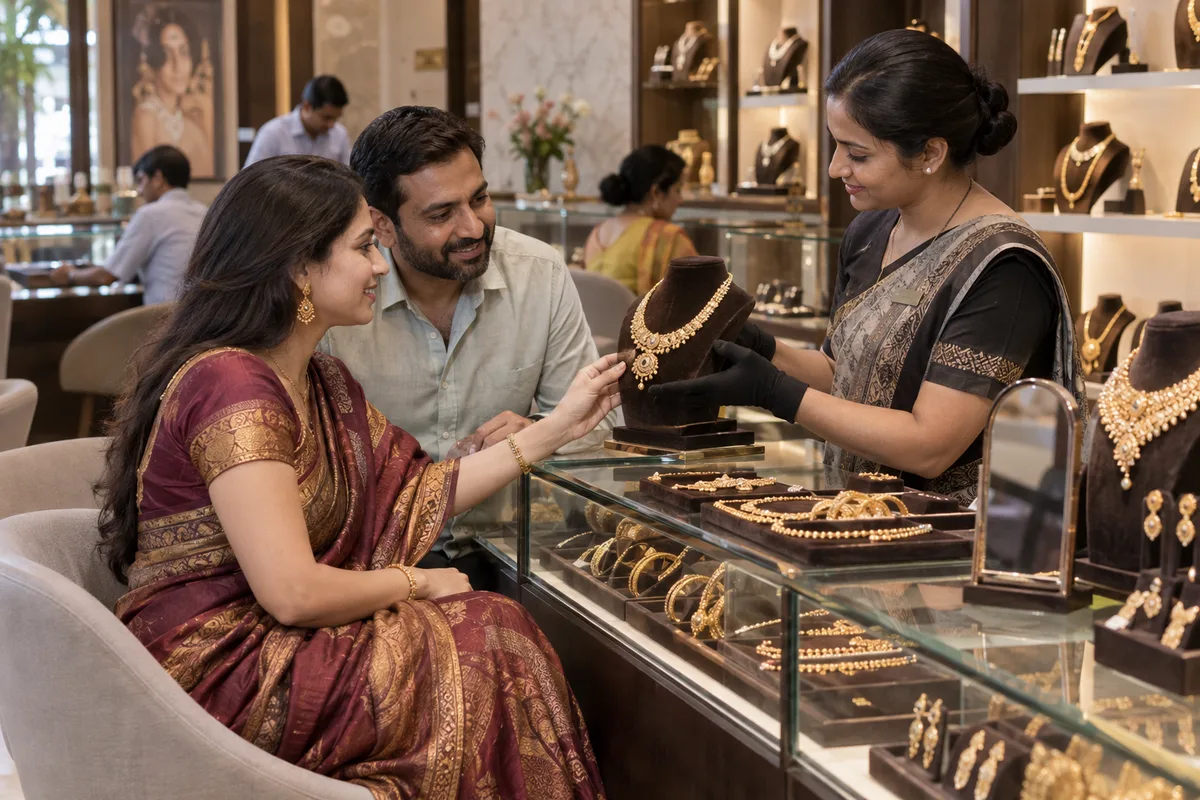
The couple, the bride's mother and the client abroad each buy a piece differently.
A buyer persona for a custom jewellery designer describes the person who commissions a piece: why they want it made, who else decides and what worries them. GullySales works on writing these personas from the studio's own past briefs, so pages and replies speak to the right person.
Scope, fee, reporting and term are agreed in writing after we have read your brief and spoken to you.
What buyer persona means
A buyer persona is a plain description of the kind of customer who actually buys from you. It includes what they search, what worries them and who else they ask before deciding. GullySales builds this from real enquiries and past sales rather than a generic template, then uses it to write every page and advert.
Also for custom jewellery designers
- Digital marketing for custom jewellery designers
- Lead generation for custom jewellery designers
- SEO for custom jewellery designers
- Local SEO for custom jewellery designers
- Social media marketing for custom jewellery designers
- Content marketing for custom jewellery designers
- CRM for custom jewellery designers
- Follow-up systems for custom jewellery designers
Sales and marketing for custom jewellery designers, the overview.
Last updated 14 Nov 2026.
For custom jewellery designers
Where it usually goes wrong, and what we would do.
“The couple choosing a ring”
Two people decide, with a budget and a date. They compare studios by portfolio, ask about stones and want to see a render. Their worry is a ring that looks different from the picture.
“The family planning bridal jewellery”
The decision includes parents and elders, and a set may mix new gold with family pieces. They care about purity, weight and tradition. A studio that speaks to the whole family, in the family's language, is trusted sooner.
“The owner of inherited gold”
This buyer holds an old necklace or bangles that no one wears. Their question is whether the gold will be safe and whether the new piece will carry the meaning. Reassurance about weight records matters most.
“The client abroad”
An NRI client cannot visit. They need video consultations, clear delivery and insurance details, and a studio that answers across time zones. Trust has to be built entirely through screens and written terms.
What we do
What we deliver for custom jewellery designers.
The work available for this need. We agree the deliverables and responsibilities for your engagement in writing.
Four written personas from real briefs
Each with the occasion, the decision maker, the worry and the question they ask first.
Result: The studio can say who it is writing to.
A map of questions by persona
What each persona asks at enquiry, consultation, sketch and advance.
Result: Replies match the stage and the person.
Persona-led page headings
Landing pages and posts that open with the persona's own situation.
Result: A visitor recognises their own brief.
A reply bank by persona
Short, ready answers for the couple, the family, the inheritor and the client abroad.
Result: Staff answer with the same care each time.
A review of past clients against the personas
A look at which persona produced the best briefs and referrals.
Result: The studio knows who to write for first.
How the result is measured
- Enquiry match to persona
- Conversion rate by persona
- Content aligned to persona
Recorded as a baseline before work starts, so every later report has an honest comparison.
Who is asking
The couple, the family and the client abroad ask different things.
- The couple choosing a ring
- Asks whether they can see sketches first, how much say they have and what happens if one dislikes the final design.
- The bride's family planning a set
- Asks about the order for several pieces, the fittings, alterations and how the designer works with the family jeweller.
- The owner of inherited gold
- Asks who weighs it, how much is lost in melting and whether the old piece can be kept in part.
- The client abroad
- Asks how the design is agreed on video, how the piece is sent and who to speak to if it needs adjusting.
- The man buying a ring or chain
- Asks about weight, thickness and engraving, and whether the design can be plain and still be personal.
- The planner or jeweller who refers
- Asks how the studio treats a referred client, whether they are credited and who deals with problems.
Who it is for
This is written for these custom jewellery designers.
- Independent jewellery designers working from a studio
- Studios with CAD design and a workshop
- Engagement and wedding ring specialists
- Specialists in remodelling inherited gold
- Designers of men's jewellery
- Temple, antique and heritage design makers
- Designers selling to NRI clients by video call
- Designers who work for jewellery stores on commission
Before you decide
When this may not be the right fit.
- You have fewer than a handful of past commissions, so the profiles would rest on guesses and not on the briefs you received.
- You serve one kind of client only, so splitting the pages by persona would add copies of the same page.
Before you decide
Agree the work. Know how to judge it.
Buyer personas for custom jewellery designers: use these checks to prepare, choose the scope, and review what changes.
Bring the right evidence
Write the decision the research must support, such as entering a market or choosing a buyer group. Separate what you know from sales records from what the team currently assumes.
Make the scope clear
Agree which buyers to speak to, which sources to review, and what access you can provide. Include lost enquiries and people who chose another supplier, where they are willing to take part.
Check the work in use
Look for source dates, sample limitations, and evidence that disagrees with the preferred answer. A recommendation should show how it follows from the findings.
Know when to change course
Do not treat a few positive conversations as proof of demand. Test the proposed offer with an actual buying decision before committing to a wider launch.
These are discussion points, not a fixed package. GullySales confirms the deliverables, responsibilities, fee, and term in writing after reading your brief and speaking with you.
Before we start
What to have ready before the work starts.
The records, access and decisions this work needs from custom jewellery designers. Anything missing is noted in the written scope, with who will supply it.
- Twenty past briefs, names removed
- The personas come from what clients asked. Bring chats, notes or the order register for twenty or so commissions. With fewer, the personas are marked as early and corrected after the next briefs. If briefs are scattered across Instagram messages and phone calls, we gather a sample together with you and note which gaps remain.
- Introductions to a few past clients
- Interviews need clients willing to talk. Ask three or four, including one who lives abroad if you have such clients. Without them, the sheets rest on the briefs and the studio's memory. A client who now lives abroad is especially useful, because the sheet for that person depends on how they judged a studio they could not visit.
- Your account of the client who did not proceed
- A client who walked away shows what the persona fears. Tell us about a few such briefs and what you think went wrong. Without them, the sheets describe only those who paid.
- Notes on who else joins the decision
- Parents, siblings, the planner and the partner shape a commission. Write who is involved for each type. Without it, the sheet describes only the client who contacted you.
- A view on the clients you wish to attract
- Decide whether you want more couples, more family commissions or more remodelling. The sheets cover all, but the page headings follow your wish. Without a view, the headings stay general. If you are unsure, we write the sheets for all groups and mark the one the plan favours after you have seen them.
How it works
How the buyer persona work runs
The work itself, in order. How an engagement starts, from your brief to a written scope, is set out on our method page.
- 1
Read the last twenty briefs in full
We go through the briefs and chats from recent commissions, noting who asked, for what occasion, who else was in the conversation and what stopped or hurried the decision. You tell us which clients you consider typical. What exists afterwards is a table of real briefs, with names removed, and a first guess at the groups they form. We also note the briefs that came by referral separately, because a referred client arrives with a different level of trust.
- 2
Choose the four people the pages should speak to
From the table we propose the couple choosing a ring, the family planning bridal jewellery, the owner of inherited gold and the client abroad, or whichever four your records show. You approve or change them. If a group has only one or two briefs behind it, we say so on its sheet. A fifth or sixth group is dropped unless at least a few real briefs sit behind it, so that every sheet rests on records.
- 3
Call a few past clients about how they chose
With your introduction, we speak to a few clients about how they found the studio, who they compared, what they feared and what made them pay the advance. You decide who is asked. Notes are kept without names, and clients may decline. We ask each client what they read or looked at before writing to the studio, since that tells us where the sheet should send the page's reader first.
- 4
Write the persona sheets in your studio's terms
Each sheet states who the person is, what they ask first, who else decides and what they worry about. You read them aloud and correct anything that does not sound like your clients. A gift buyer who cannot meet the recipient is noted as a variant.
- 5
Turn the sheets into headings and a reply bank
We match each persona to the heading on its landing page and a set of first replies for that person's usual questions. You choose the wording that sounds like you. Nothing here changes what you design; it changes how you introduce it.
- 6
Check the sheets against the next briefs
As new briefs arrive you mark which persona each fits. Before the work we recorded the mix of briefs and how many reached an advance. We compare the new mix with the sheets and correct them. You decide whether a fifth persona is needed or one should be merged. A persona that matches no new brief after a season is retired, and one that matches several new briefs is expanded.
Where this fits
Three pieces of sales work, in this order.
This work sits inside sales process design, at stage 0, foundation. The audit comes before it, and sales management keeps it running.
Step 1
Sales audit
Find where deals are being lost and what to fix first.
Start here if you cannot say where orders are lost.
Step 2 · you are here
Sales process design
One written way to sell, from first enquiry to repeat order.
Start here if every salesperson sells differently.
Step 3
Sales management
A target, a review routine and someone who owns the number.
Start here if the team has targets and no routine.
FAQ
Questions owners ask before they call.
Not here? More answers, or ask on WhatsApp.
How do I describe my buyer when I have no records?
Do I need a different page for each persona?
How do I build a persona with no data?
How should the persona treat a gift buyer who cannot meet the recipient?
Can I build a persona with no records at all?
How should the sheet treat a gift buyer?
How much does it cost?
How long is the contract?
How soon will we see results?
Who will actually do the work?
More for custom jewellery designers
Related work to consider.
Closest to this: strategy and research
Also for custom jewellery designers
Or start from the overview: sales and marketing for custom jewellery designers.
Your next practical step
Tell us what you are trying to grow, and we will read it before we call.
Eight short steps, mostly taps. Skip anything you would rather answer on the call.